-
Environmental Security Weekly Watch: September 8-12, 2025
›
A window into what we’re reading at the Stimson Center’s Environmental Security Program
New Report On Women’s Access to UN Indigenous and Community Land Rights Funding (Mongabay)
A study published by the Rights and Resources Initiative and the Women in the Global South Alliance reveals that despite the central role women play in conservation and community resilience, 50% of women’s organizations lack core funding and rely heavily on volunteer labor. The report assessed how network members are benefitting in real terms from the $1.7 billion in funding for Indigenous and community land rights pledged at the 2021 UN climate conference.
-
Environmental Security Weekly Watch: August 25-29, 2025
›
Amazon Nations Sign Political Blueprint for Rainforest Protection (Associated Press)
Presidents from South America’s Amazon nations gathered in Colombia’s capital to sign the Declaration of Bogotá on August 22, 2025,. This political blueprint establishes cooperation across a region that spans over 2.5 million square miles and has a crucial role in to play as a massive carbon sink that slows global warming. Signatories hope that it is a sign that the region will move past political rhetoric to concrete actions.
-
Deep Currents: Assessing Threats to the Indus Waters Treaty
›The Indus Waters Treaty of 1960 has kept two nuclear-armed rivals – India and Pakistan – in a stable river sharing arrangement for more than six decades. Yet that significant achievement now seems to be at risk.
India’s government has stated it is holding the treaty in abeyance and is threatening to cut off water to Pakistan after a terrorist attack killed more than 20 Indian citizens in late April 2025. India’s Prime Minister Narendra Modi described the treaty as a “blunder” and a “betrayal” of India’s dignity committed by then Prime Minister Jawaharlal Nehru, and proclaimed that “blood and water cannot flow together.”
-
Environmental Security Weekly Watch: August 11-15, 2025
›A window into what we’re reading at the Stimson Center’s Environmental Security Program
The Mining Town Funding Congo’s Rebels and Tech Giants (Reuters)
In April 2024, the M23 rebel group seized control of Rubaya, a mining town that produces 15% of the world’s coltan—a critical mineral worth used in mobile phones, computers, and aerospace components. Rebels imposed a parallel administration in the town, and placed a 15% tax on mineral traders that generates $800,000 monthly from levies. Thousands of impoverished miners in the town, however, still work 12-hour shifts in dangerous conditions earning just $5.15 per day.
-
Environmental Security Weekly Watch: July 28-August 1, 2025
›A window into what we’re reading at the Stimson Center’s Environmental Security Program
Low Political Will and Depleted Supplies: Inside Iran’s Water Crisis (The New York Times)
Water shortages are a day-to-day reality for many Iranians, as reservoirs shrink, taps run dry for hours, and water pressure remains so low that it doesn’t reach above the second floor. This acute water crisis is driven by a confluence of climatic changes and poor water policies, as Iran’s five-year drought has combined with overdevelopment, excessive dam development, and draining groundwater for agriculture to push already dwindling supplies to the brink.
-
Rebel Governance in an Age of Climate Change
›July 30, 2025 // By Elisabeth Gilmore, Kathleen Cunningham, Leonardo Gentil-Fernandes, Reyko Huang, Danielle F. Jung & Cyanne E. LoyleIn Myanmar’s resource-rich Kachin State, deforestation linked to illegal logging and mining has surged over the past decade. While the national government struggles to assert control, the Kachin Independence Organization (KIO)—a political organization seeking autonomy for Kachin State in Myanmar—has also stepped in to regulate land use, restrict timber harvests, and manage permits. These activities serve to conserve local ecosystems and extract revenue. KIO’s environmental governance is strategic, aiming to bolster civilian support and consolidate territorial control. It is also shaping how communities cope and adapt to climate change.
-
Somalia’s New Climate Roadmap as a Blueprint for Peace
›Somalia’s new Nationally Determined Contribution (NDC)—the country’s roadmap for climate mitigation and adaptation—does more than outline the country’s climate ambitions. It recognizes the connections between climate change and conflict and charts a course for peace.
-
The Mekong Dam Monitor Tracks a River Under Pressure
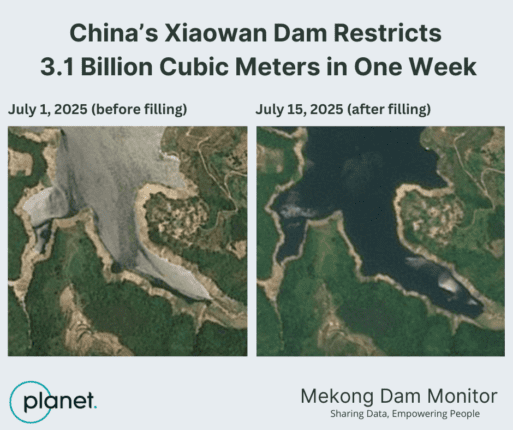
›The Mekong River’s seasonal floods nurture the world’s most productive inland fishery and irrigate rice paddies that feed millions. Approximately 70 million people live in the lower Mekong Basin, and 75% of them depend on fishing and farming for their livelihoods. But hydropower expansion and other development projects are fragmenting the river and disrupting its natural rhythms, with severe consequences for those living downstream.
Showing posts from category development.