

-
Population, Health, and Environment Approaches in Tanzania
›“Quality of life, human health, food security, and biodiversity are all connected,” said Elin Torell, research associate for the BALANCED Project and the University of Rhode Island Coastal Resource Center. Torell was joined at the Wilson Center on July 19 by Patrick Kajubili from the Tanzania Coastal Management Partnership, and Alice Macharia, director of the East Africa Program at the Jane Goodall Institute to discuss the importance of integrated population, health, and environment (PHE) initiatives that work to simultaneously improve health and livelihoods, manage natural resources, and conserve ecosystems in Tanzania.
Building Resilient Coastal Communities
The Coastal Resources Center’s work in Tanzania’s Saadani National Park provides an example of an integrated PHE approach that sustains the flows of environmental goods and services, maintains biological diversity, and empowers and improves the wellbeing of local residents, said Torell. Since 1996, the CRC has focused on protecting sea turtles, promoting energy-saving stoves, and tracking elephants, while at the same time improving livelihoods through savings and credit associations, eco-tourism, and beekeeping.
“Adding family planning makes a whole lot of sense,” said Torell. There is a high unmet need for family planning in Tanzania and the population is growing rapidly with an average number of 5.6 children per woman. Family planning not only helps families limit and space births but indirectly works to improve food security and human health, reduce demand for scarce natural resources, and empower women, she said.
“Integration is key,” concluded Torell: A coordinated and synergistic approach that meets the varied needs of local communities will be more effective and sustainable than if interventions were delivered independently.
Effective Integration in the Field
“Conceptual linking is not enough,” said Kajubili. “Integration also needs to happen at the organizational and field levels.”
On the ground, the Tanzania Coastal Management Partnership integrates family planning education and services into conservation work, said Kajubili. Peer educators deliver information about family planning, health, and coastal resources management; and community-based distributors deliver family planning services and supplies.
“Now people easily access reproductive health services,” said Kajubili. To date, the program has increased referrals to health centers, promoted contraceptive use, and reduced the distance that women need to travel to receive family planning services.
“Integration makes sense and cents,” said Kajubili. By combining resources, health and natural resource management organizations can potentially reach a broader population while sharing costs.
But “reinforcing the linkages between PHE of course takes time and education,” said Kajubili, highlighting a major challenge to implementing integrated approaches. “Advocacy is needed to overcome cultural and institutional barriers.”
“What About Our Needs?”
“Socio-economic development; family planning and AIDS education; sustainable forestry and agriculture practices; and water and sanitation all underpin and support sustainable natural resource management,” said Macharia.
The Lake Tanganyika Catchment Reforestation and Education Project (TACARE) led by the Jane Goodall Institute was initiated in 1994 to arrest the rapid degradation of land through tree planting and forest degradation, said Macharia. “But at some point, the communities raised the question: What about our own needs?” she said.
Community members prioritized the need for health services, education, clean water, and financial capital. But environmental degradation was not seen as a major issue, suggesting a need for a more integrated approach to TACARE’s conservation efforts.
“Integrated programs including population, health, and environment activities are cost-efficient and add value to conservation goals,” said Macharia. By responding to the needs of the community, the integrated approach adopted by TACARE has gained more credibility among local people, while a strong focus on building local capacity has helped to ensure sustainability of the program.
While there are many challenges to implementing and maintaining integrated PHE programs, “partnerships at the local, district, and national level are key to making this a success,” concluded Macharia.
Sources: Population Reference Bureau.
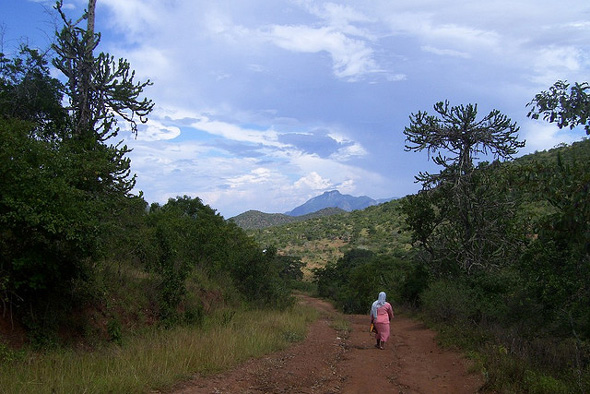
Photo Credit: “Environment near Vumari Village,” courtesy of flickr user treesftf. -
Maternal Health Challenges in Kenya: What New Research Evidence Shows
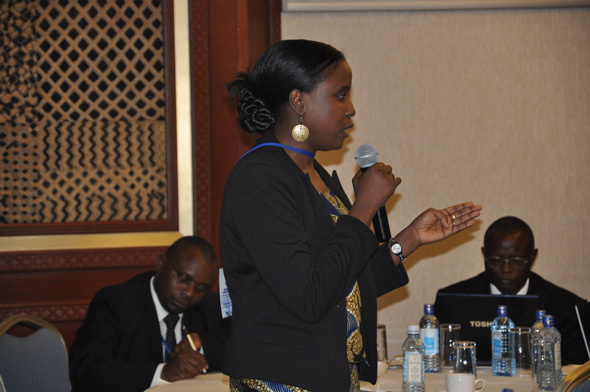
›“Although there have been improvements in the recent past, the status of maternal health care has not met the required international standards,” said Professor at the University of Nairobi Geoffrey Mumia Osaaji during a live video-conference from Nairobi on July 12.
As part of the 2011 Maternal Health Dialogue Series the Woodrow Wilson Center’s Global Health Initiative is partnering with the African Population and Health Research Center to convene a series of technical meetings on improving maternal health in Kenya. The 20 Kenyan experts attending the workshop in Nairobi also shared their strategies and action points with a live audience in Washington, DC during a video conference discussion. [Video Below]
Osaaji was joined by panelists Lawrence Ikamari, director of Population Studies and Research Institute (PSRI), and Catherine Kyobutungi, director of Health Systems and Challenges at the African Population and Research Center to discuss new maternal health research in Kenya. Panelists also shared recommendations for moving the maternal health agenda forward that came out of discussions during the two-day, in-country workshop with Kenyan policymakers, community health workers, program managers, media, and donors. Following the panelists’ presentations, Dr. Nahed Mattta, senior maternal and newborn health advisor at U.S. Agency for International Development (USAID) and John Townsend, vice-president of reproductive health program for Population Council provided reflecting remarks from the Woodrow Wilson Center during the live webcast.
Maternal Health Challenges in Rural Kenya
“Maternal mortality in rural Kenya is still very high,” said Ikamari. “Rural women in Kenya need to have increased access to maternal health services.” Ikamari discussed a number of factors that contribute to high rates of maternal mortality in rural Kenya, including lack of access to quality care and skilled birth attendants, the high burden of HIV/AIDS, and an unmet need for family planning.
Though nearly 90 percent of women in rural Kenya seek antenatal care, according to the UNFPA, many wait until the second or third trimester, limiting the benefits. Additionally, a majority of women in rural Kenya give birth outside of health facilities, oftentimes without the care of a skilled birth attendant, said Ikamari. In a recent survey, many rural women indicated that transportation to often distant health facilities prevented them from seeking adequate maternal health care, he added.
Additionally, “the burden of HIV is really felt in rural Kenya,” said Ikamari. Survey results show that HIV/AIDS prevalence is about seven percent in rural Kenya and because the majority of the Kenyan population lives in rural areas, this adds yet another layer of complications.
“Family planning saves lives,” said Ikamari, stressing the importance of contraception on maternal health outcomes. Only 35 to 40 percent of currently married Kenyan women use family planning, according to the last demographic and health surveys, and unmet need remains particularly high in rural areas. Promoting institutional delivery systems, improving antenatal and postnatal care, and finding other ways to increase access to family planning can help to improve maternal health outcomes and reduce preventable deaths in rural Kenya, concluded Ikamari.
Comparison of Urban and Rural Areas
“The interventions to address maternal health are well known: family planning, increased access to safe abortion services, skilled health workers, health facilities that are accessible, as well as referral systems that work,” said Kyobutungi. “Yet urban averages [of maternal mortality] are becoming either close or worse than rural averages.”
“As much as we appreciate the rural-urban divide that exists for most health indicators, the urban-urban divide (the fact that there are huge intra-urban differences) needs attention”
“Teenage pregnancy is a failure of family planning,” said Kyobutungi. Studies indicate that there are three times more teenagers that are pregnant among the urban poor, compared to the urban rich.
As in rural Kenya, access to quality health facilities and care is also limited in cities. “Health facilities are few and far between and the referral systems are weak,” said Kyobutungi, and “when you remove Nairobi from the numerator, the number of skilled physicians per population is in the decimals.”
Moving forward, there is a need to promote effective integration and improvement of health worker training and monitoring but also development of performance-based incentives to ensure successful programs are properly funded. “It’s not all gloom and doom in urban areas,” concluded Kyobutungi.
Innovative Ideas for Better Results
“By year 2025 there will be 25 percent more people [in Kenya],” said Townsend. “What that means is, when we are planning…we have to think about the scale of solutions that we are proposing in 2025 and 2050.” Therefore, it is essential to acquire new models of data and evidence to better predict future population growth and maternal needs, he suggested.
In addition to expanding services to meet the needs of a growing population, the panelists in Washington emphasized the need to support integration at all levels. Trends are moving in the right direction: Within the Obama administration’s Global Health Initiative, “there is a strong push and recommendation for integration among the health sectors,” said Matta.
But integration is not a magic bullet to improve maternal health, warned the panelists. “Integration is a terrific issue, but when the health sectors are weak, putting more burden on a local community health worker does not usually make sense; we have to think about smart integration,” said Townsend.
Focusing on Kenya’s health sector from all aspects, both at the private and public level, and improving family planning, institutional delivery care, as well as antennal care will help Kenya overcome its maternal health barriers. Additionally, thinking of ways to utilize new models of data and integrating the various sectors will yield substantial benefits, concluded Matta and Townsend.
Following the technical meeting, a public dialogue was held on July 13 in Nairobi to share the recommendations and knowledge gaps identified with members of Kenya’s Parliament, including Hon. Sofia Abdi, parliamentary health committee member; Hon. Ekwee Ethuro, chair of the parliamentary network for population and development; and Hon. Jackson Kiptanui. They joined a group of more than 50 maternal health experts, program managers, members of the media, and donors – such as the UK Department for International Development (DFID) – to identify real solutions and action points for improving maternal health in Kenya.
The formal report from the in-country technical meeting will be available in the near future.
See also the Maternal Health Task Force’s coverage of the event, here and here.
Sources: Kenya National Bureau of Statistics, UNFPA.
Photo Credit: Jonathan Odhong, African Population and Health Research Center. -
Preparing for the Impact of a Changing Climate on U.S. Humanitarian and Disaster Response
›Climate-related disasters could significantly impact military and civilian humanitarian response systems, so “an ounce of prevention now is worth a pound of cure in the future,” said CNA analyst E.D. McGrady at the Wilson Center launch of An Ounce of Preparation: Preparing for the Impact of a Changing Climate on U.S. Humanitarian and Disaster Response. The report, jointly published by CNA and Oxfam America, examines how climate change could affect the risk of natural disasters and U.S. government’s response to humanitarian emergencies. [Video Below]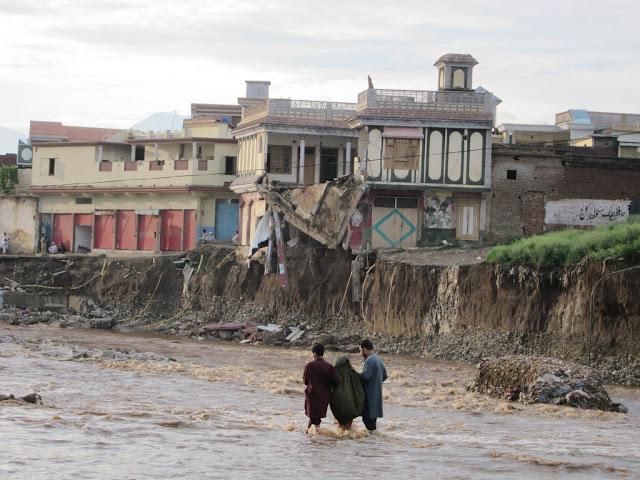
Connecting the Dots Between Climate Change, Disaster Relief, and Security
The frequency of – and costs associated with – natural disasters are rising in part due to climate change, said McGrady, particularly for complex emergencies with underlying social, economic, or political problems, an overwhelming percentage of which occur in the developing world. In addition to the prospect of more intense storms and changing weather patterns, “economic and social stresses from agricultural disruption and [human] migration” will place an additional burden on already marginalized communities, he said.
Paul O’Brien, vice president for policy and campaigns at Oxfam America said the humanitarian assistance community needs to galvanize the American public and help them “connect the dots” between climate change, disaster relief, and security.
As a “threat multiplier,” climate change will likely exacerbate existing threats to natural and human systems, such as water scarcity, food insecurity, and global health deterioration, said Vice Admiral Lee Gunn, USN (ret.), president of CNA’s Institute for Public Research. Major General Richard Engel, USAF (ret.), of the National Intelligence Council identified shifting disease patterns and infrastructural damage as other potential security threats that could be exacerbated by climate change.
“We must fight disease, fight hunger, and help people overcome the environments which they face,” said Gunn. “Desperation and hopelessness are…the breeding ground for fanaticism.”
U.S. Response: Civilian and Military Efforts
The United States plays a very significant role in global humanitarian assistance, “typically providing 40 to 50 percent of resources in a given year,” said Marc Cohen, senior researcher on humanitarian policy and climate change at Oxfam America.
The civilian sector provides the majority of U.S. humanitarian assistance, said Cohen, including the USAID Office of Foreign Disaster Assistance (OFDA) and the State Department’s Bureau of Population, Refugees, and Migration. These organizations provide leadership, funding, and food aid to developing countries in times of crisis, but also beforehand: “The internal rationale [of the Office of Foreign Disaster Assistance] is to reduce risk and increase the resilience of people to reduce the need for humanitarian assistance in the future,” said Edward Carr, climate change coordinator at USAID’s Bureau for Democracy, Conflict, and Humanitarian Assistance.
The U.S. military complements and strengthens civilian humanitarian assistance efforts by accessing areas that civilian teams cannot reach. The military can utilize its heavy lift capability, in-theater logistics, and command and control functions when transportation and communications infrastructures are impaired, said McGrady, and if the situation calls for it, they can also provide security. In addition, the military could share lessons learned from its considerable experience planning for complex, unanticipated contingencies with civilian agencies preparing for natural disasters.
“Forgotten Emergencies”
Already under enormous stress, humanitarian assistance and disaster response systems have persistent weaknesses, such as shortfalls in the amount and structure of funding, poor coordination, and lack of political gravitas, said Cohen.
Food-related aid is over-emphasized, said Cohen: “If we break down the shortfalls, we see that appeals for food aid get a better response than the type of response that would build assets and resilience…such as agricultural bolstering and public health measures.” Food aid often does not draw on local resources in developing countries, he said, which does little to improve long-term resilience.
“Assistance is not always based on need…but on short-term political considerations,” said Cohen, asserting that too much aid is supplied to areas such as Afghanistan and Iraq, while “forgotten emergencies,” such as the Niger food crisis, receive far too little. Furthermore, aid distribution needs to be carried out more carefully at the local scale as well: During complex emergencies in fragile states, any perception of unequal assistance has the potential to create “blowback” if the United States is identified with only one side of a conflict.
Engel added that many of the problems associated with humanitarian assistance will be further compounded by increasing urbanization, which concentrates people in areas that do not have adequate or resilient infrastructure for agriculture, water, or energy.
Preparing for Unknown Unknowns
A “whole of government approach” that utilizes the strengths of both the military and civilian humanitarian sectors is necessary to ensure that the United States is prepared for the future effects of climate change on complex emergencies in developing countries, said Engel.
In order to “cut long-term costs and avoid some of the worst outcomes,” the report recommends that the United States:
Cohen singled out “structural budget issues” that pit appropriations for protracted emergencies in places like Iraq, Afghanistan, and Darfur against unanticipated emergencies, like the 2010 earthquake in Haiti. Disaster-risk reduction investments are not a “budgetary trick” to repackage disaster appropriations but a practical way to make more efficient use of current resources, he said: “Studies show that the return on disaster-risk reduction is about seven to one – a pretty good cost-benefit ratio.”- Increase the efficiency of aid delivery by changing the budgetary process;
- Reduce the demand by increasing the resilience of marginal (or close-to-marginal) societies now;
- Be given the legal authority to purchase food aid from local producers in developing countries to bolster delivery efficiency, support economic development, and build agricultural resilience;
- Establish OFDA as the single lead federal agency for disaster preparedness and response, in practice as well as theory;
- Hold an OFDA-led biannual humanitarian planning exercise that is focused in addressing key drivers of climate-related emergencies; and,
- Develop a policy framework on military involvement in humanitarian response.
Edward Carr said that OFDA is already integrating disaster-risk reduction into its other strengths, such as early warning systems, conflict management and mitigation, democracy and governance, and food aid. However, to build truly effective resilience, these efforts must be tied to larger issues, such as economic development and general climate adaptation, he said.
“What worries me most are not actually the things I do know, but the things we cannot predict right now,” said Carr. “These are the biggest challenges we face.”
“Pakistan Floods: thousands of houses destroyed, roads are submerged,” courtesy of flickr user Oxfam International. -
Watch ‘Dialogue’ TV on Severe Weather and Climate Change: Is There a Connection?
›This week on Dialogue, host John Milewski is joined by Heidi Cullen and Edward Maibach for a discussion on whether recent severe weather outbreaks in the United States and around the world are directly tied to the latest data on climate change. [Video Below]Dialogue is an award-winning co-production of the Woodrow Wilson International Center for Scholars and MHz Networks that explores the world of ideas through conversations with renowned public figures, scholars, journalists, and authors. The show is also available throughout the United States on MHz Networks, via broadcast and cable affiliates, as well as via DirecTV and WorldTV (G19) satellite.
Heidi Cullen is a research scientist and correspondent for Climate Central where she also served as director of communications. Previously, she served as the Weather Channel’s first on air climate expert and is also a member of the National Oceanic and Atmospheric Administration Science Advisory Board. Edward Maibach joined the George Mason University faculty in 2007 to create the Center for Climate Change Communication. He is also a principal investigator of several climate change education grants funded by the National Science Foundation and the Robert Wood Johnson Foundation.
Find out where to watch Dialogue where you live via MHz Networks. You can send questions or comments on the program to dialogue@wilsoncenter.org.

Watch ‘Dialogue’ TV on the Future of Women and the Arab Spring

Moushira Khattab is a human rights activist who formerly served as Minister of Family and Population for Egypt. She also served as Assistant Minister of Foreign Affairs, Vice Chair of the UN Committee on the Rights of the Child, and was Egypt’s ambassador to South Africa during the Mandela era. Lilia Labidi is an anthropologist and professor at the University of Tunis who currently serves as Minister of Women’s Affairs in the Republic of Tunisia. Previously she was a visiting professor at the American University in Cairo and a fellow at the Wilson Center. Haleh Esfandiari is author of the book, My Prison My Home: One Women’s Story of Captivity in Iran. Haleh serves as the director of the Wilson Center’s Middle East Program.
Dialogue is an award-winning co-production of the Woodrow Wilson International Center for Scholars and MHz Networks that explores the world of ideas through conversations with renowned public figures, scholars, journalists, and authors. The show is also available throughout the United States on MHz Networks, via broadcast and cable affiliates, as well as via DirecTV and WorldTV (G19) satellite.
Find out where to watch Dialogue where you live via MHz Networks. You can send questions or comments on the program to dialogue@wilsoncenter.org.
Enhancing Public Engagement in Climate Change: The 2011 Climate Change Communicators of the Year
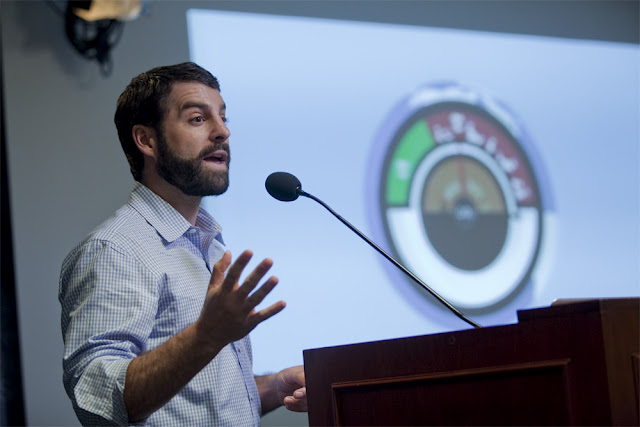
“Excellence in climate communication has to do with public engagement – communication that expands the portion of the public that is engaged in this issue and enhances their degree of engagement,” said Edward Maibach, director of the Center for Climate Change Communication at George Mason University. “Enhancing Public Engagement in Climate Change: The 2011 Climate Change Communicators of the Year,” was held jointly by the Environmental Change and Security Program (ECSP) and George Mason University on June 8 to present awards for excellence in climate change communication by Naomi Oreskes and the Alliance for Climate Education.
Shall the Religious Inherit the Earth?

“The world as a whole is getting more religious,” said Professor of Politics at the University of London Eric Kaufmann, speaking at the Wilson Center for the launch of his latest book, Shall the Religious Inherit the Earth? Due to their consistently higher birthrates, religious fundamentalists may reverse the tide of secularism within the next century, he said. [Video Below]
Helping Hands: An Integrated Approach to Development
“At the moment, the agendas of the growing population of people and the environment are too separate. People are thinking about one or the other,” said Sir John Sulston, Nobel laureate and chair of the Institute for Science, Ethics, and Innovation at the University of Manchester, in an interview with the Environmental Change and Security Program (ECSP).
“People argue about, ‘Should we consume less or should we have fewer people?’ The point is it’s both. We need to draw it together. It’s people and their activities.”
Many who research and work on population, health, and environment (PHE) issues are increasingly advocating integrated solutions. Such issues as population growth, natural resource management, and food security, are interrelated challenges that, if addressed concurrently, likely will yield better results and community trust.
With this notion in mind, ECSP launched the five-year HELPS (health, environment, livelihoods, population, and security) project in October 2010. The project focuses on integrated PHE programs and demographic security linkages. HELPS also looks at population’s links to global environmental priorities, media coverage of population, and related issues like gender, youth, and equity.
Funded by USAID’s Office of Population and Reproductive Health through its IDEA (Informing Decision-makers to Act) grant, the HELPS project builds on ECSP’s 14-year history of exploring nontraditional security issues.
Population-Environment Connection
A February event in the HELPS series featured Sir John Sulston, who said dialogue between population and environmental communities has received renewed attention and is reappearing on national agendas.
The Royal Society’s People and the Planet study, which will be completed by early 2012, will “provide policy guidance to decision-makers as far as possible” and aims to facilitate dialogue, he said. The HELPS Project is helping the working group gather evidence of population-environment connections and to identify solutions.
“What we should be aiming to do is to ensure that every individual on the planet can come to enjoy the same high quality of life whilst living within the Earth’s natural limits,” said Sulston. People are happier, healthier, and wealthier than ever before, according to human development indexes. But, Sulston said, 200 million women worldwide have an unmet need for family planning, ecosystems are degraded, biodiversity has decreased, and there are widespread shortages of food and water.
“Many times we tackle different development challenges through single sector programs: health programs, agriculture programs, water programs. Those single sector approaches can make sense,” said ECSP Director Geoff Dabelko on the Wilson Center’s Dialogue television program. “But, of course, poor people are facing all those life and death challenges at once. We have to find ways to help them meet those challenges together in an integrated fashion.”
On the same program, Roger-Mark De Souza, vice president for research and director of the Climate Program for Population Action International, said the drive for integrated development stems from the communities being served, not necessarily from outside aid groups. “We’ve seen that there’s a greater impact because there’s longer sustainability for those efforts that have an integrated approach,” he said. “There’s a greater understanding and a greater appreciation of the value that [PHE] projects bring.”
At an April 7 ECSP event, De Souza said rural communities in developing countries understand that high population growth rates, poor health, and environmental degradation are connected. An integrated approach to development, he said, is a “cost-effective intervention that we can do very easily, that responds to community needs that will have a huge impact that’s felt within a short period of time.”
Proponents of integrated development face significant barriers, but the tide may be turning. To fully harness this momentum, former ECSP Senior Program Associate Gib Clarke argues in his FOCUS brief, “Helping Hands: A Livelihood Approach to Population, Health, and Environment Programs,” that the PHE community must solidify its research base, reach out to new partners, and push for flexible funding and programming. He suggested changing the name PHE to HELP – health, environment, livelihoods, and population. By adding livelihoods, the glue that binds population, health, and the environment, he said, the HELP moniker might broaden its appeal to new donors and practitioners.
Case Study: Madagascar
In Madagascar, a key country for integrated PHE programs, “today’s challenges are even greater than those faced 25 years ago,” said Lisa Gaylord, director of program development at the Wildlife Conservation Society, at a March 28 Wilson Center event. As the country’s political situation has deteriorated since 2009, the United States and other donors pulled most funding, and some PHE programs were forced to discontinue environmental efforts.
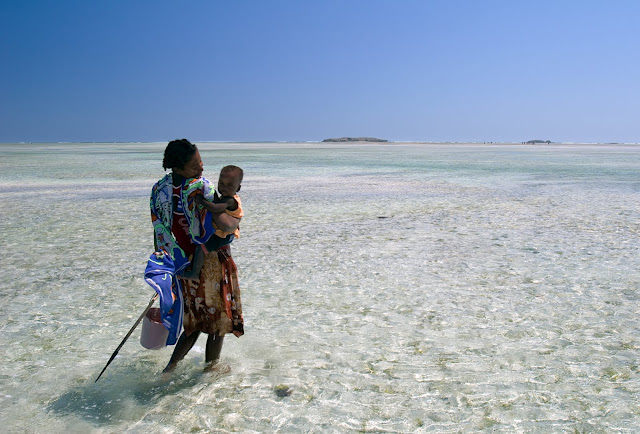
But other PHE programs are expanding: Based in southwestern Madagascar, the Blue Ventures program began as an ecotourism outfit, said Program Coordinator Matt Erdman, but has since grown to incorporate marine conservation, family planning, and alternative livelihoods. A major challenge is its rapidly growing population, which threatens the residents’ health and food security, as well as the natural resources on which they depend. More than half the island’s population is younger than 15, and the infant and maternal mortality rates are high, Erdman said.
In response, Blue Ventures set up a family planning program. The program uses a combination of clinics, peer educators, theater presentations, and sporting events, such as soccer tournaments, to spread information about health and family planning. The HELPS project will soon publish a Focus brief on Blue Ventures’ family planning efforts, titled: “To Live with the Sea.”
Erdman said, “If you have good health, and family size is based on quality, families can be smaller and [there will be] less demand for natural resources, leading to a healthier environment.”
Demographic Security
A country’s age structure can pose a challenge, said Jennifer Dabbs Sciubba, the Mellon Environmental Fellow with the Department of International Studies at Rhodes College, at a March 14 Wilson Center event. Countries with a large percentage of people younger than 30 “are [much] more likely to experience civil conflict than states with more mature age structures.”
Tunisia’s recent revolution, Sciubba said, could be understood as a “story about demography.” Countries with transitional age structures, such as India, Brazil, and South Africa, face different security challenges. With a majority of their populations between 15 and 60 years old, more people are contributing to the economy than are taking away, which could bolster these countries economically and politically. Global institutions will have to reform and include these countries, she advised, “or else become irrelevant.”
“Understanding population is critical to our success in being able to prevent conflict, and also managing conflict and crises once we’re involved,” said Kathleen Hicks, Deputy Undersecretary at the Department of Defense (DOD). However, the DOD does not “treat demographics as destiny,” she said, but instead as “one of several key trends, the complex interplay of which may spark or exacerbate future conflicts.”
Demography can also help predict political trends. In 2008, demographer Richard Cincotta predicted that between 2010 and 2020 the states along the northern rim of Africa – Morocco, Algeria, Tunisia, Libya, and Egypt – would each reach a demographically measurable point where the presence of at least one liberal democracy among the five would be probable. Recent months have brought possible first steps to validate that prediction.
Mathew Burrows, counselor at the National Intelligence Council, said Cincotta’s work demonstrates that “the demographic tool is essential” to analysts and policymakers. “There is a real appetite among policymakers” for understanding demography, he said, because it gives them more structure than political science narratives.
Yemen is another example of this trend. In March, tens of thousands of youth-led demonstrators demanded that their president resign. While numerous factors have sparked the “Arab Spring,” one driving force is Yemen’s dire demographic and environmental situation. Some experts say Yemen may be the first country to run out of groundwater. The average Yemeni woman has more than five children, and 45 percent of its population is below age 15. On May 18, Yemeni and international experts discussed these issues at the Wilson Center. Upcoming HELPS events include daylong conferences on Afghanistan and Nigeria.
There are solutions that can break the links between “youth bulges” and insecurity. In a recent video interview discussing the connection between demography and civil conflict, Elizabeth Leahy Madsen, a senior research associate at Population Action International, said, “Policies that have a major impact over time are ensuring education, especially for girls, and providing employment opportunities to the large and growing numbers of young people today.”
Dana Steinberg is the editor of the Wilson Center’s Centerpoint.
Photo Credit: Blue Ventures in Madagascar, courtesy of Garth Cripps.


