Showing posts from category From the Wilson Center.
-
Water: Asia’s New Battleground
›“Asia faces a daunting water crisis,” warns Brahma Chellaney, professor at the Center for Policy Research (New Delhi) and author of the new book, Water: Asia’s New Battleground. It is a crisis that imperils the region’s economic and political rise, and that deepens environmental risk in a part of the world marked by melting glaciers and densely populated coastal areas.
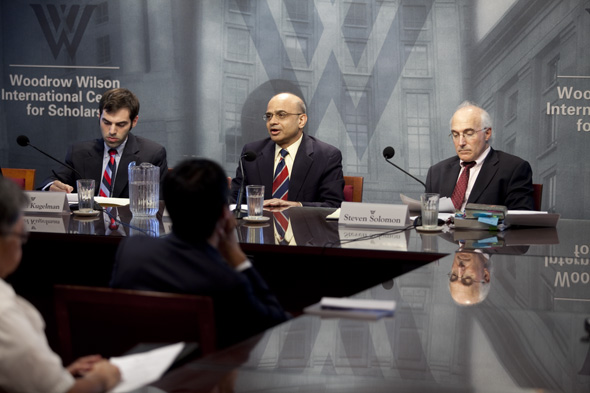
In his book, Chellaney, regarded as one of India’s most distinguished strategists, surveys the water landscape across Asia; examines the security implications of water-based territorial disputes; and offers policy recommendations to help prevent water conflict. On September 12, Chellaney spoke about Water at a Wilson Center event organized by the Asia Program and co-sponsored by the China Environment Forum and Environmental Change and Security Program. Steven Solomon, a journalist and author who last year published Water: The Epic Struggle for Wealth, Power, and Civilization, offered commentary.
According to Chellaney, Water “fills a void in the literature” by, for the first time, focusing on water issues across the entire continental region of Asia – an immense expanse that includes not only Northeast, Southeast, and South Asia, but also Central Asia and the Middle East. The book, he explained, defines Asia “as it looks on a map.”
The World’s Dam Center
What drives the water crisis in this vast region? One factor is population. Asia is the world’s largest and most populous continent but also the most water-deficient; its freshwater levels per capita are one-third those of Europe’s, and slightly less than Africa’s. Another is tied to economic development. Asia is the world’s fastest developing continent, yet its most rapidly developing nations, particularly India and China, are already afflicted by serious water challenges.
Rising income levels and attendant growth in consumption rates are additional drivers. Asians are consuming more resources, including meat, which requires prodigious amounts of water to produce. A fourth factor is intensive irrigation. Seventy percent of the world’s total irrigation originates in Asia, and 80 percent of the region’s “water withdrawals” are allocated to agriculture. (The latter figure is only 30 percent in Europe.) Such large-scale irrigation has enabled Asia to evolve from “a land of recurrent famine” to a major food exporter, yet it has also spawned ruinous agricultural conditions such as waterlogging and soil salinity.
Chellaney contended that Asia’s water ills can also be attributed to the “large-scale impoundment of water” by dams, barrages, and other storage-creating structures. Asia is the world’s “dam center,” he said, with China boasting half the world’s dams and now planning to construct “mega dams,” including one “higher than the Eiffel Tower.” Impounding water triggers riverwater depletion, which in turns promotes “the reckless use” of sub-surface groundwater resources, said Chellaney. With water tables plummeting, millions of groundwater pumps are depleting what used to be a pristine and plentiful resource.
“We Need Better Politics”
In a region rife with transboundary rivers yet devoid of mechanisms to promote transboundary water-sharing, Asia’s water troubles pose grave geopolitical risks.
According to Chellaney, “water wars” are already being waged across the region via non-military means, fostering mistrust and hampering efforts toward greater cooperation. He argued that in order to forestall water conflict, Asia must develop a set of norms on shared resources based on the 1997 UN Convention on the Non-Navigational Uses of International Watercourses – the only available instrument for international water management. Chellaney also called for the creation of “inclusive water institutions,” that emphasize transparency and dispute settlements, and for the adoption of “holistic planning” on central and provincial governmental levels that aim for better water efficiency.
Playing devil’s advocate, Solomon faulted Chellaney for according insufficient attention to Asia’s crisis of energy – a resource that, he pointed out, is “extraordinarily water-intensive.” He also countered Chellaney’s criticism of dams by observing that Asia desperately needs storage – a deficiency that makes the region highly vulnerable to drought. And he questioned whether China’s dam-building activities on the Brahmaputra River truly imperil lower riparian India’s water security, noting that only 15 percent of the river’s flows entering India are impacted by Chinese dams.
Ultimately, Chellaney said, alleviating Asia’s water crisis will also require improving the region’s poor political environment. While Asian economies are coming together, its politics are more divided. Transboundary water cooperation – and any treaty meant to undergird it – cannot be expected to last if co-riparians do not get along. “We need better politics,” he concluded.
Event ResourcesMichael Kugelman is a program associate with the Wilson Center’s Asia Program.
Photo Credit: David Hawxhurst/Wilson Center. -
Debts, Deficits, and Development
›The debates surrounding the U.S. national debt and deficit bring with them implications for both overall U.S. development policy and the budgets of USAID and the Department of State. These implications were the focus of the Wilson Center on the Hill event that took place on August 2, “Debts, Deficits, and Development,” moderated by Wilson Center Senior Scholar John Sewell. Sewell said that Congressional action on deficit reduction could potentially reduce funding for development-related initiatives just as the U.S. government “for the first time…is taking development and the notion of development very seriously.”
After an introduction from Sewell, Gordon Adams, distinguished fellow at the Henry L. Stimson Center, began by talking about the lack of attention that international affairs and the civilian side of U.S. international engagement usually receive in the government budget. He noted the growth in personnel and funding at USAID and the Department of State over the past ten years as a success, adding that a fair amount of this growth was related to the conflicts in Iraq and Afghanistan and the global effort against terrorist organizations.
“Foreign policy, development, foreign assistance, [and] diplomacy have increasingly been viewed as a key part of a broadly defined security budget,” said Adams. The first Quadrennial Diplomacy and Development Review had the potential to restructure the Department of State and USAID in line with these goals, he said, but lacked the force to prioritize programs and allocate funds effectively.
In post-conflict environments, Adams emphasized the need to build the capacity to govern effectively, efficiently, and accountably first. “Where we fall down,” added George Ingram, co-chair of the Modernizing Foreign Assistance Network, “is in rushing too much money in right as the conflict ends for two or three years and then getting distracted by other crises from year five to ten; when the country’s built up a capacity and probably could use the assistance, our interest falls off.” In his opinion, that sequencing should be reversed.
Focus on Priorities
Adams continued to emphasize the need for goals and priorities when he addressed the topic of belt-tightening at USAID or the Department of State. According to Adams, the four categories to consider in allocating resources are: security assistance; the individual priorities of foreign assistance and development funds; conflict prevention and resolution; and better preparation and training of personnel. He lauded the military’s commitment to training its servicemen and women throughout their careers and suggested a similar program for members of the Foreign Service. To coordinate these priorities, however, a coherent U.S. development strategy (currently lacking) is essential, said Ingram.
Focusing on how the current budget environment is impacting development, Ingram said that the decade of growth in the international affairs budget for development may have just hit a brick wall. He described the FY 2012 budget as “skewed heavily toward reducing the development accounts and protecting the security accounts,” resulting in an 11 percent overall cut from 2011 levels and some development accounts being reduced by 20 or 30 percent.
Ingram noted that USAID’s overall operating expenses were cut by 27 percent from FY 2011 levels. This operating expense reduction will likely halt planned increases in USAID staff and may ultimately lead to staff cuts. The failure to build up staff at USAID will reduce its ability to manage key development programs and slow the Department of Defense’s efforts to shift responsibilities for development work to civilian hands.
Adams added that in light of shrinking resources, legislators will probably ask supporters of development about the tangible outcomes of investment in development and about the link between development and American interests, so they should be prepared with answers. Ingram cited the successes of U.S. aid over the last decades – such as the Green Revolution and oral rehydration – and noted how they benefited from a long-term perspective rather than approaching development on a project-by-project basis.
Given the tumult in the Middle East since the start of the Arab Spring, the need for expertise in governance is high, said Adams. “The problem of governance in failing, fragile, weak, brittle authoritarian states,” he said, “is a great risk to stability.”
Event Resources:Erica Pincus is an intern at the Wilson Center’s Program on America and the Global Economy.
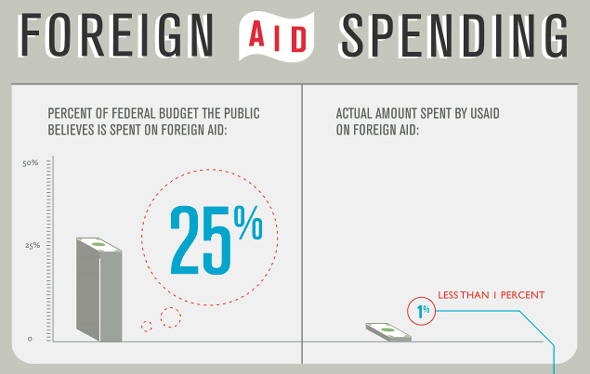
Image Credit: “Foreign Aid Spending,” courtesy of visual.ly user maggie, published by USAID. -
‘Dialogue’ TV: Revisiting Mr. Y and “A National Strategic Narrative”
›“We are, what I would call, very non-linear thinkers,” said U.S. Navy Captain Wayne Porter about the white paper he co-authored with U.S. Marine Colonel Mark Mykelby, “A National Security Narrative,” launched by Woodrow Wilson Center President Jane Harman at the Center in April. “We’re almost incapable of restricting ourselves to defense and security in isolation from a much larger perspective,” he told Dialogue TV.
“I think maybe that’s why Admiral Mullen has kept me around – I can offer a perspective that maybe he wouldn’t get from conventional strategists or from conventional planners,” said Porter, who served three out of four tours with the current chairman of the Joint Chiefs of Staff as a special assistant for strategy.
Dialogue host John Milewski sat down with Captain Porter and Robert Litwak, director of International Security Studies and vice president for programs at the Wilson Center, for a discussion about the white paper – published under the pseudonym “Mr. Y” (echoing George Kennan’s seminal “X” article) – and its contention that the United States should move away from an outmoded Cold War-era model of containment, deterrence, and control towards a “strategy of sustainability.”
The narrative has been well received, Porter said: “I think there is an appreciation that it’s a very complex strategic environment that we live in now and that maybe we need to re-look at all of the tools that we could use as a nation to pursue our enduring national interest.”
Inflection Points in History
“The timing of such conversations is cyclical,” said Litwak. “The original ‘X’ article emerged from the end of the Second World War and the advent of the Soviet threat, which required a new conception of international relations that Kennan articulated, as well as the National Security Act of 1947 to line up the U.S. government with this new environment.”
There have also been periods of concern about American decline. “I think what one sees in the current era are both of those trends coming together,” Litwak said:The system is changing – it’s a debatable proposition that the United States is in decline – but we see in the international system rising powers, notably China, as well as transnational trends that are beyond the sovereign control of any single state, which have called into question the nature of the international system…as well as a sense that…there’s something qualitatively different about this recession than the typical economic, cyclical recession and that has to do with the domestic sources of American strength.
These conditions, as well as the source of argument – coming from the military – combined to give particular resonance to the piece, Litwak said.
The Information/Globalization Age
“I think the thing that has changed materially to us is that the information age has brought about an awareness that our environment is completely interconnected,” Porter said. “There’s a complexity to this that can’t be analyzed linearly, that has to have new tools applied.”
“I’d honestly characterize it as significant as the Enlightenment in the 1600s,” he said.
“Certainly we’ve thought in silos and debates have been too often compartmentalized,” Litwak said. “One of the strengths of this piece is that it is truly synthetic – working across the continuum of instruments of power – and talks in a really powerful way about how hard power…has its place, but that the non-military dimensions of American power have been neglected.”
But, Porter said, it’s important to focus on being proactive, rather than reactive:The thing that bothered us most about the strategies that we see every day in our jobs on our side of the river and across the river is that they are almost universally based on anticipating and countering known risk and threat, and our sense is that we have entered an age in which we need to overcome that sense of fear and seize the opportunity to shape the environment of the future as opposed to simply being resilient to it.
As Litwak points out, Secretaries Gates (now former) and Clinton – in the form of the Quadrennial Defense Review, Quadrennial Diplomacy and Development Review, and numerous speaking engagements – have both called for closer integration between State and Defense, more resources for non-military levers of power, and more holistic concepts of security. But unfortunately the greater integration called for in these documents remains unrealized.
Dialogue is an award-winning co-production of the Woodrow Wilson International Center for Scholars and MHz Networks that explores the world of ideas through conversations with renowned public figures, scholars, journalists, and authors. The show is also available throughout the United States on MHz Networks, via broadcast and cable affiliates, as well as via DirecTV and WorldTV (G19) satellite.
Find out where to watch Dialogue where you live via MHz Networks. You can send questions or comments on the program to dialogue@wilsoncenter.org. -
Certification: The Path to Conflict-Free Minerals from Congo
›This summer, the Wilson Center’s Africa Program, in co-sponsorship with the Enough Project, assembled a panel of experts from American, British, and Congolese governments, private industry, and the NGO community to discuss the deplorable situation in the eastern Democratic Republic of the Congo (DRC) involving conflict minerals and certification as a way forward.
After introductory remarks by Wilson Center President Jane Harman, Africa Program Director Steve McDonald introduced John C. Bradshaw, executive director of the Enough Project, who moderated the panel discussion. [Video Below]
Under Secretary of State Robert D. Hormats began by saying the “extremely traumatic” humanitarian situation in the restive areas of the eastern DRC requires “a bold, resolute, and morally inspired response by the United States and other countries.”
Sasha Lezhnev, policy consultant for the Enough Project, explained how the demand for tin, tantalum, tungsten, and gold – for use in batteries, circuit boards, and screens in computers and cellphones – are, in effect, driving the conflict in the DRC.
However, Ambassador to the United States from the DRC Faida Mitifu pointed out that a significant 70 percent of the economy in the eastern regions of the country depends on mining, thus any initiative would have to take into account the livelihoods of the people. In order to assist those communities while a process is formulated, Lezhnev called for targeted development projects in the most affected regions.
The Kimberley Process: A Potential Model?
“If we want to have a lasting impact, we’re going to need a certification process,” Lezhnev said, and we must learn lessons from the Kimberley Process (KP) in order to implement a suitable framework in the DRC.
Clive Wright, who served as the diplomatic negotiator for the KP and head of the foreign policy team for the British High Commission in Ottawa, described the intricacies of the process and its genesis. Under the provisions of the KP, the trade of rough diamonds is permissible, provided that there is a certificate from the country of origin and complementary legislation is in place in the importing country. This agreement was made through consultations and dialogue between the private sector and civil society.
Though successful in certain respects, Wright listed several shortcomings of the KP: it is not legally binding, therefore there are no levers to pull that compel government action; the process is void of an independent monitoring mechanism; and a consensus clause allows one government to block any action which clears the way for the status quo to prevail.
To implement a policy similar to the KP that guarantees legitimate minerals trade in the DRC, Under Secretary Hormats highlighted four key actors that have critical roles independently and collaboratively: 1) regional governments; 2) industry; 3) civil society; and 4) the U.S. government.
Regional Governments
Governments in the region face considerable challenges, said Hormats, as rebel groups trade across borders and evade efforts to rein in the commerce of precious gems, minerals, and arms. The states surrounding the Great Lakes – including Uganda, Rwanda, Burundi, Zambia, Kenya, and the DRC – have coalesced around these issues and developed a plan that will require effective coordination to ensure credibility. Some countries have already established traceability schemes, which are crucial for states that share borders with the DRC, since smuggling is incessant.
With regard to rebel factions, Kinshasa has occasionally participated in joint operations with the governments of Rwanda and Uganda “to stabilize [and] contain the activities of armed groups,” said Ambassador Mitifu. Progress, though slow, has also been made in demilitarizing the mining areas in the Kivu provinces as well as Maniema and in weakening the Congrès National pour la Défense du Peuple’s (CNDP) parallel administration.
The government in Kinshasa has made significant steps toward a certification framework and taken punitive action against military personnel who have engaged in illicit trade, said Ambassador Mitifu. She outlined the efforts the Kabila administration has made to address the issue, including initiatives to put in place a credible certification system so that clean minerals can be exported. In conjunction with MONUSCO – the UN peacekeeping mission in the DRC – the Congolese government has introduced centers where miners can bring their products and feed them into a legitimate supply chain. Finally, Kinshasa is working closely with the private sector, international organizations, and local NGOs to minimize fraud and enhance cooperation. Nevertheless, governance and corruption represent a formidable roadblock in the implementation of any certification process.
Industry Responsibility
Tim Mohin, the director of corporate responsibility for Advanced Micro Devices – one of the largest semiconductor manufacturers in the world – argued that industry can positively influence the supply chain by creating conflict-free smelter programs and a due diligence bulwark where anyone along the supply chain can trace their resources back to a certified smelter.
Customers, Mohin said, are going to have to insist that businesses comply with this tracking system. Under Secretary Hormats agreed with this sentiment, saying that companies that look into the origin of their minerals send a powerful message to the region and the world. He also expressed hope that “companies [would] work to find ways to adhere to legislation [Dodd-Frank] and honor their obligations to their shareholders without shunning the region’s minerals entirely.”
The most difficult stretches along the supply chain are getting buy-in from the miners and the smelters; overcoming the constraints of socio-economic realities on the ground and geo-politics; and the lack of a sustainable tracing system that spans the spectrum of the supply chain. In addition to shored-up U.S. involvement, Mohin called for increased public-private sector partnerships with incentives reminiscent of the Fair Trade system, development aid to assist displaced people, and enhanced security for artisanal miners and their businesses.
Civil Society and Government
Hormats commended the pivotal role civil society has played and must continue to play in highlighting the humanitarian issues at stake, as governments and companies have been only “dimly aware of the link between human rights abuses and the minerals trade.” Furthermore, Wright encouraged civil society’s participation because it serves as a “great policeman” that monitors the bad behavior of governments, especially when the allure of profiteering seeps into deliberations. Moving forward on boosting security for civil society on the ground in the Congo will be essential.
The U.S. government, Hormats asserted, has to do its part to support initiatives on the table to create conflict-free supply chains. If more revenue is invested in legitimizing supply chains, a substantial portion of the problem would be solved. USAID and the State Department are working with civil society to take action against those responsible for illegitimate trade and exacerbating the conflict. Of course there remains work to be done, but as Under Secretary Hormats indicated “this is the most significant moral issue of our time.”
Derek Langford is a program assistant with the Wilson Center’s Africa Program.
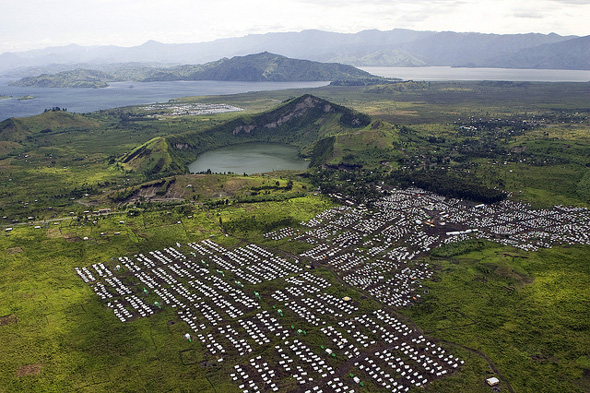
Photo Credit: “Aerial View of Camps for People Displaced by Conflict,” courtesy of flickr user United Nations Photo. -
The Role of Faith-Based Organizations in Maternal and Newborn Health Care
›Government and nongovernmental organizations have consistently played a key role in addressing maternal mortality. While these initiatives are well documented, the role of faith-based organizations (FBOs) in maternal and newborn health is less well understood.
In November, the Wilson Center’s Advancing Policy Dialogue to Improve Maternal Health series will bring diverse institutions together such as the Pakistan Initiative for Mothers and Newborns (PAIMAN) and Pathfinder International to discuss country experiences and evaluate opportunities for overcoming challenges.
According to the World Health Organization, FBOs own up to 70 percent of the health infrastructure in sub-Saharan African countries and often work in remote regions where government and NGO services are limited. FBO’s are critical to improving maternal health as they fill gaps in the health system – particularly in low-resource settings – and approaching culturally sensitive barriers that often prevent mothers from seeking health care.
The level of trust communities place on their religious leaders explains one of the main reasons why FBOs are attaining success. A study conducted by Pew Charitable Trust found that a vast majority of people in sub-Saharan Africa identify themselves as adherents of Christianity or Islam, and approximately 75 percent trust their religious leaders.
As partnerships with FBO’s increase, it is imperative that organizations share their lessons learned and identify capacity and knowledge gaps in order to improve effectiveness.
Pakistan Initiative for Mothers and Newborns
The Pakistan Initiative for Mothers and Newborns (PAIMAN), which started out as a six-year project funded by USAID and led by JSI Research and Training Institute, is a strong example of a program incorporating faith to improve maternal mortality rates. The project aims to ensure that women have access to skilled birth attendants during and immediately after giving birth. Additionally, the project focused on increasing the quality of care both in the public and health sectors. PAIMAN was able to achieve substantial success by utilizing various communication interventions such as mass media, community media, and advocacy efforts. One of the most successful initiatives PAIMAN organized was reaching out to 1,000 religious scholars, known as ulamas, to deliver frequent messages on maternal and newborn health care. Since its initiation, this project has “saved more than 30,000 newborn lives resulting in a 23 percent decrease in neonatal mortality,” according to their numbers.
Pathfinder International
Pathfinder International is another great example of an organization that has understood the value of FBOs and worked in collaboration with them to achieve results for maternal health. Pathfinder has worked in numerous countries including Nigeria, Ghana, Ethiopia, Egypt, Uganda, Kenya, and Bangladesh to educate religious leaders and communities on communication strategies for improving maternal health behaviors.
In Ethiopia, Pathfinder organized over 250 religious leaders representing the Orthodox Christian, Catholic, Protestant, Seventh Day Adventist, Mekaneyesus Christian, and Muslim faiths to educate them about maternal mortality. At the conclusion of the seminar, the religious leaders agreed to condemn a host of harmful traditional practices, including female genital cutting, marriage by abduction, early marriage, rape, and unsafe abortion and agreed that they are not required by the Bible or Korean. Religious leaders in Egypt also came to similar conclusions after participating in these types of seminars.
“By helping religious leaders see the links between reproductive health and families’ well-being, Pathfinder enables them to become committed advocates for positive reform,” wrote Mary K. Burke, technical communications associate at Pathfinder International in the 2006 report, Advancing Reproductive Health and Family Planning through Religious Leaders.
Challenges: Equipping and Encouraging
Despite the prevalence of success stories among FBOs to improve maternal mortality, challenges do exist. For instance, although religious leaders are highly respected by their communities, their teachings become useless, as pointed out by a USAID-sponsored Extending Service Delivery Project report, unless they are also properly trained and equipped with the latest service delivery systems and scientific information.
The report also describes the importance of cooperation and support from the government and decision-making representatives. If the private, public, and government sectors are fragmented and no formal recognition exists to acknowledge the work of religious leaders for improving maternal mortality, then success may be significantly hampered.
To learn more about the role of faith-based organizations in women’s health, be sure to check out the Global Health Initiative event on FBOs coming in November, with representatives from PAIMAN, Pathfinder International, and others.
Sources: Extending Service Delivery Project, JSI Research and Training Institute, Pathfinder International, Pew Charitable Trust, USAID, World Health Organization.
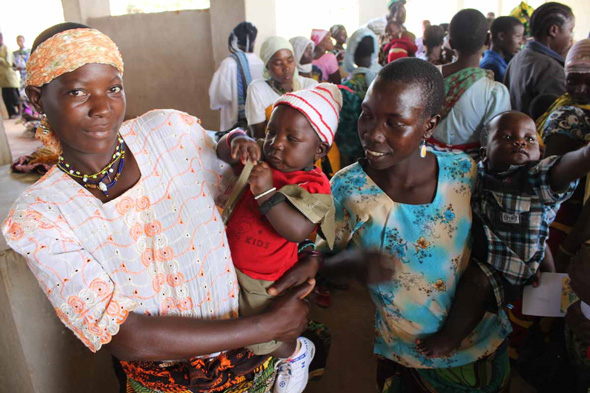
Photo Credit: “Woolly hats needed,” courtesy of flickr user Church Mission Society (CMS). -
International River Basins: Mapping Institutional Resilience to Climate Change
›Institutions that manage river basins must assess their ability to deal with variable water supplies now, said Professor Aaron Wolf of Oregon State University at the July 28 ECSP event, “International River Basins: Mapping Institutional Resilience to Change.” “A lot of the world currently can’t deal with the variability that they have today, and we see climate change as an exacerbation to an already bad situation.”
Wolf and his colleagues, Jim Duncan of the World Bank and Matt Zentner of the U.S. Department of Defense, discussed their efforts to map basins at risk for future tensions over water, as identified in their coauthored World Bank report, “Mapping the Resilience of International River Basins to Future Climate Change-Induced Water Variability.” [Video Below]
Floating Past the Rhetoric of “Water Wars”
Currently, there are 276 transnational water basins that cross the boundaries of two or more countries, said Wolf. “Forty percent of the world’s population lives within these waters, and interestingly, 80 percent of the world’s fresh water originates in basins that go through more than one country,” he said. Some of these boundaries are not particularly friendly – those along the Jordan and Indus Rivers, for example – but “to manage the water efficiently, we need to do it cooperatively,” he said.
Wolf and his colleagues found that most of the rhetoric about “water wars” was merely anecdotal, so they systematically documented how countries sharing river basins actually interact in their Basins at Risk project. The findings were surprising and counterintuitive: “Regularly we see that at any scale, two-thirds of the time we do anything over water, it is cooperative,” and actual violent conflict is extremely rare, said Wolf.
Additionally, the regions where they expected to see the most conflict – such as arid areas – were surprisingly the most cooperative. “Aridity leads to institutions to help manage aridity,” Wolf said. “You don’t need cooperation in a humid climate.”
“It’s not just about change in a basin, it’s about the relationship between change and the institutions that are developed to mitigate the impacts of change,” said Wolf. “The likelihood of conflict goes up when the rate of change in a basin exceeds the institutional capacity to absorb the change.”
Expanding the Database for Risk Assessment
Oregon State University’s Transboundary Freshwater Dispute Database (TFDD) tracks tabular and spatial information on more than 680 freshwater treaties along 276 transboundary river basins, said Jim Duncan. The team expanded the database to include recent findings on variability, as well as the impacts of climate change on the future variability of those basins. “We have a lot more information that we are able to work with now,” Duncan said.
Analyzing the institutional vulnerability of treaties along with hydrological hazards, they found the risk of tension concentrated in African basins: The Niger, Congo, and Lake Chad basins “popped out,” said Duncan. When predicting future challenges, they found that basins in other areas, such as Southeastern Asia and Central Europe, would also be at risk.
Duncan and his colleagues were able to identify very nuanced deficiencies in institutional resilience. “Over half of the treaties that have ever been signed deal with variability only in terms of flood control, and we’re only seeing about 15 percent that deal with dry season control,” said Duncan. “It’s not the actual variability, but the magnitude of departure from what they’re experiencing now that is going to be really critical.”
Beyond Scarcity
“Generally speaking, it’s not really the water so much that people are willing to fight over, but it’s the issues associated with water that cause people to have disagreements,” said Matt Zentner. Water issues are not high on the national security agendas of most governments; they only link water to national security when it actively affects other sectors of society, such as economic growth, food availability, and electric power, he said. Agricultural production – the world’s largest consumer of water – will be a major concern for governments in the future, he said, especially in developing countries economically dependent on farming.
Some experts think that current international treaties are not enough, said Zentner. Peter Gleick of the Pacific Institute has said that “the existing agreements and international principles for sharing water will not adequately handle the strain of future pressures, particularly those caused by climate change.”
How transboundary water treaties fare as the climate and consumption rates change is not as simple as measuring flow; the strength of governing institutions, the parties involved, and other variables all play major roles as well, said Zentner. “When you have flexibility built within [a treaty], it allows it to be a living, breathing, and important part of solving those [water] problems.”
Download the full event transcript here.
Sources: Oregon State University, Pacific Institute.
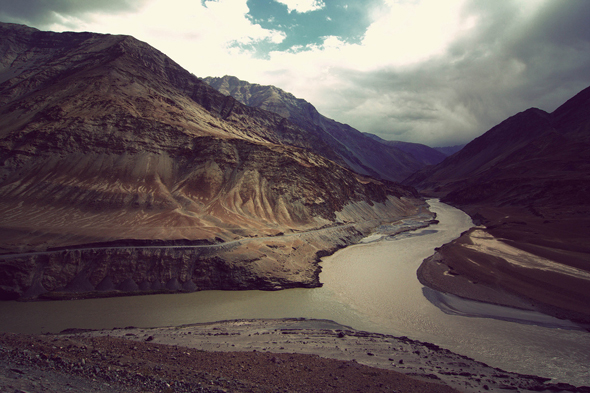
Photo Credit: “Confluence of the Zanskar and Indus,” courtesy of Flickr user Sanish Suresh. -
Environmental Cooperation for Peacebuilding in Sierra Leone
›Sierra Leone’s decade-long civil war led to a complete collapse of environmental management in the country, according to Oli Brown, an environmental affairs officer with the UN Environment Programme (UNEP). Speaking at the Wilson Center last month, Brown highlighted the country’s current environmental conditions and how they have evolved since the war ended in 2002, while also outlining UNEP’s support for rebuilding the country’s natural resource governance.
Despite its wealth of natural resources, Sierra Leone is plagued by high unemployment, a massive gap between the poor and wealthy, and extreme poverty – 70 percent of the population lives on $1.00 a day. The country is still “very fragile,” said Brown; the poor distribution of resources is partly responsible for the current problems facing the country.
Sierra Leone’s environmental future and prospects for improving its natural resource governance depend on the answers to three key questions, said Brown:
The first 5 to 10 years after a civil war are a critical time for peacebuilding efforts, Brown emphasized. Natural resources can help in this peace building process, but countries must recognize the value of their natural resources, and establish policies that are sustainable – environmentally, economically, and socially.- How can the countries bountiful natural resources be shared more equitably?
- How can the countries natural resources improve local livelihoods and provide jobs?
- How can the war’s legacies be properly addressed while minimizing their negative impact?
Potential in Abundance: Agriculture, Minerals, Fisheries, and Tourism
Today, agriculture – including rice, palm oil, and sugar cane – accounts for 50 percent of Sierra Leone’s GDP, but current production methods are extremely inefficient, said Brown. Farmers use slash-and-burn clearing techniques to grow crops with zero consideration for the environmental effects, a practice which has led to a high level of deforestation. Only four percent of the country’s original forest cover remains, he said.
As part of its plan, Sierra Leone’s government is actively seeking large-scale investment in agricultural products for export. However, access to land development is complicated by the fact that more than 100 different chiefs control land and leasing rights around the country.
Additionally, some fear that companies investing in Sierra Leone may be exploiting the situation to achieve maximum profit without providing local development benefits, such as employment.
Water is also crucial to agriculture development, but Sierra Leone’s government does not know how much they have, said Brown, so they cannot properly plan for addressing the needs of their people. Reforming the sector is critical, as palm oil and sugar cane in particular have great potential for increasing the country’s GDP.
Sierra Leone also has an abundant supply of minerals: Diamonds, iron, rutile, gold, and oil currently account for about 20 percent of GDP and approximately 250,000 jobs, said Brown.
The planned Tonkolili iron mine will be the largest of its type built over the past 20 years anywhere in the world. If successful, the mine could double Sierra Leone’s GDP, he said. But the government must monitor these mining operations to ensure that the environmental damage does not undermine the economic benefits, said Brown. For example, rutile mining without proper safety precautions has produced acid lakes, he said, some of which have been measure with a PH level of 3.7 or greater.
While fishing operations in Sierra Leone make up only 10 percent of GDP, fish provide 80 percent of the animal protein consumed in the country’s households. However, lack of regulation and enforcement has left the door open for rampant illegal and unregulated fishing, said Brown, which has depleted local fish stocks and reduced the size of fish that are caught threatening the country’s food security.
On a more positive note, environmental tourism could be a potential source of sustainable revenue. The large chimpanzee population and the national parks could be strong tourist draws. However, the country must overcome its “blood diamonds” stigma in order to take advantage of its potential.
UNEP is seeking to help Sierra Leone’s government develop its environmental regulations and planning, said Brown, such as ways to measure and regulate water usage. The regulation of agriculture, minerals, fisheries, and tourism industries will be vital steps toward helping Sierra Leone build a sustainable economy and a sustainable peace.
Sources: Awoko Newspaper, Delegation of the European Union to Sierra Leone, Infinity Business Media, The Oakland Institute, UNDP, USAID.
Photo Credit: “mining57,” courtesy of flickr user thehunter1184. -
Backdraft: Minimizing Conflict in Climate Change Responses
›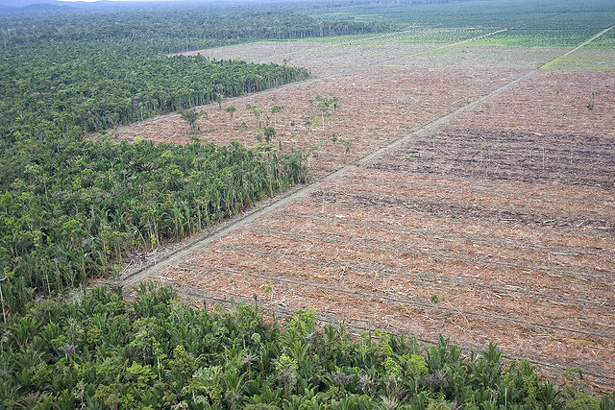
“What are the conflicts or risks associated with response to climate change?” asked ECSP Director Geoff Dabelko at the Wilson Center on July 18. “How we respond to climate change may or may not contribute to conflict,” he said, but “at the end of the day, we need to do no harm.”