• woodrow wilson center
  • ecsp

New Security Beat

Subscribe:
  • rss
  • mail-to
  • Who We Are
  • Topics
    • Population
    • Environment
    • Security
    • Health
    • Development
  • Columns
    • China Environment Forum
    • Choke Point
    • Dot-Mom
    • Friday Podcasts
    • Navigating the Poles
    • Reading Radar
  • Multimedia
    • Water Stories (Podcast Series)
    • Backdraft (Podcast Series)
    • Tracking the Energy Titans (Interactive)
  • Films
    • Water, Conflict, and Peacebuilding (Animated Short)
    • Paving the Way (Ethiopia)
    • Broken Landscape (India)
    • Scaling the Mountain (Nepal)
    • Healthy People, Healthy Environment (Tanzania)
  • Publications
  • Events
  • Contact Us

NewSecurityBeat

The blog of the Wilson Center's Environmental Change and Security Program
Showing posts from category From the Wilson Center.
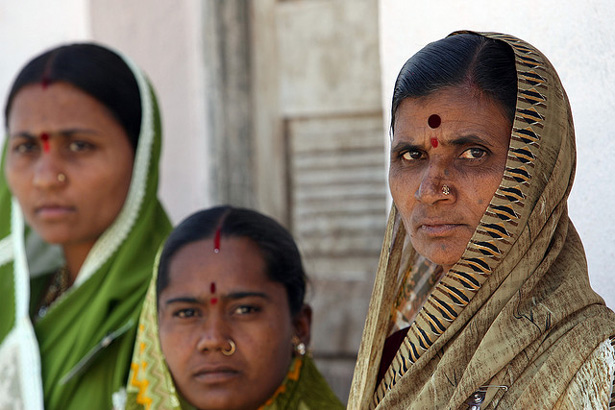
  • After the Disaster: Rebuilding Communities

    ›
    From the Wilson Center  //  April 12, 2012  //  By Lauren Herzer Risi
    Recent history has shown that no country, developed or developing, is immune to the effects of a natural disaster. The catastrophic tsunami that struck Indonesia in 2004, the earthquake and subsequent tsunami that struck Japan in 2011, the 2010 earthquake in Haiti, and Hurricane Katrina in the United States in 2005, are all reminders of the deep and long-lasting impacts that disasters can have from the local neighborhood all the way up to the national level. Each of these disasters also garnered international attention and response, showing that globalization is a game-changer in the worldwide response to community or regional-level crises.

    And yet, as evidenced by the continued challenges faced by each of the places above, the disaster response community still struggles with how to contribute most effectively to local level recovery. Recognizing this, the Wilson Center’s Comparative Urban Studies Project and Environmental Change and Security Program, and the Fetzer Institute recently brought together an international group of practitioners, policymakers, community leaders, and scholars to identify best practices and policy in disaster response that are based on community engagement. A subsequent publication, After the Disaster: Rebuilding Communities, highlights the complex nature of disaster response and explores ways to overcome the inherent tension between those responding to disasters and the local community.

    Voice, Space, Safety, and Time

    A key theme that emerged during the workshop was the importance of identifying the strengths of the post-disaster community and building responses based on those. So how can one identify the strengths of a community? In a previous Wilson Center/Fetzer Institute workshop on community resilience, participants emphasized the importance of civil society voice; the creation of space, both physical and political; and the assurance of safety and time.

    Not surprisingly, all of these aspects of resilience emerged in the post-disaster response discussion as avenues to access the strengths of a community. Finding and listening to the voices of the community, identifying the physical spaces or “centers of gravity” around which the community operates (often spiritual and cultural activities, or gatherings that bring women together), and providing safe and sustained support for healing, are necessary steps to engage with and meet the needs of communities.

    Having a voice means that people “feel that they have some way to participate meaningfully in decisions that are being made about their lives…[that] they have access, points of influence, and conversation,” explained John Paul Lederach, professor of international peacebuilding at the University of Notre Dame.

    Key to listening to the voices of the local community is acknowledging them as first responders. “An involvement and control of the relief and rehabilitation process empowers communities,” wrote Arif Hasan, founder and chairperson of the Urban Resource Centre in Karachi, Pakistan. “It improves their relationship with each other, makes it more equitable with state organizations, and highlights aspects of injustice and deprivation that have been invisible.”

    Technology is playing a growing role in giving local communities voice and helping relief workers to identify those centers of gravity. “Whether in conflict or even post-conflict reconstruction, technology gives us a possibility of having a collective history but also collective memory,” noted Philip Thigo, a program associate at Social Development Network in Nairobi. “I spoke in a conference where communities were able to map what was important for them and bring it to the public domain: This is who we are and what we are saying, therefore you, the government, have to interact with us within this space. In that sense technology begins to enable communities to say we exist.”

    Connecting to Community Points of Power

    At the same time, new technology isn’t paramount to connecting with a community, and just having the technology is not sufficient. Leonard Doyle, country spokesperson for the International Organization for Migration (IOM), shared the story of a simple but effective effort to encourage a national conversation in Haiti by enabling “a flow of information between affected communities, humanitarian actors, and local service providers.”

    IOM set up more than 140 information booths, complete with suggestion boxes, among the 1,300 camps where more than 1.5 million homeless people were housed after the 2010 earthquake. There was some doubt that the suggestion boxes would attract letters in a country with just a 50 percent literacy rate, but it didn’t take long for the letterboxes to fill up. In just three days, 900 letters were dropped into a booth in one of the poorest communities, Cité Soleil.

    “Amid the flotsam of emails and text messages that dominate modern life,” wrote Doyle, “these poignant letters had an authenticity that is hard to ignore….Urgent cases received a quick response; others became part of a ‘crowd-voicing’ effort to listen to those who had been displaced by the earthquake.”

    In the end, “the problem is when we NGOs [or other outside bodies] try to create new systems,” observed Thigo. “We do not look at what exists in the community as knowledge. We do not see how to plug our formal thinking into a structure that we may not understand but that we could perhaps simply try to enhance, to provide better services. We think power doesn’t exist in those communities. But there’s a structure of power. It could be leadership that is not necessarily within the formal context that we understand. The fundamental point is: How can we, even during disasters, connect to these points of power?”

    Download After the Disaster: Rebuilding Communities from the Wilson Center.
    MORE
  • One Country, Two Stories: Marc Sommers on Rwandan Youth’s Struggle for Adulthood

    ›
    From the Wilson Center  //  March 29, 2012  //  By Stuart Kent

    Almost an entire generation of Rwandans is confronting the prospect that they are going to be failed adults, said Marc Sommers, a fellow with Woodrow Wilson Center’s Africa Program and visiting researcher at Boston University’s African Studies Center.

    MORE
  • Hotspots: Population Growth in Areas of High Biodiversity

    ›
    From the Wilson Center  //  March 21, 2012  //  By Kate Diamond
    More than one-fifth of the world’s population lives in biodiversity hotspots – “areas that are particularly rich in biodiversity and endemic species,” said John Williams of the University of California, Davis, at the Wilson Center on February 29. And those populations are growing faster than the global average. Add to that the fact that “biodiversity continues to decline globally, despite increasing investments in conservation,” said David Lopez-Carr of the University of California, Santa Barbara, and the need for new approaches to conservation becomes evident. [Video Below]

    Williams and Lopez-Carr were joined by Dr. Vik Mohan, director of the sexual and reproductive health program for Blue Ventures, a London-based conservation nongovernment organization that works with communities on the remote western coast of Madagascar.


    To respond to the demands of the communities and to better protect biodiversity hotspots, the speakers argued that conservation efforts need to incorporate health and livelihood services directed at the growing populations living nearby.

    A Complex Relationship

    “The relationship between population and biodiversity loss or conservation is a pretty complex relationship,” said Williams.

    John Williams on helping people and preserving biodiversity
    He offered Latin America and the Caribbean as an example of the multiple factors that can affect how population and biodiversity interact. Population growth in the region has slowed, and agricultural expansion is driving habitat loss as the population ages and urbanizes and as increasing per capita GDP contributes to higher levels of consumption.

    In the Indo-Pacific region, stretching from East Asia to Australia, high population growth coupled with economic growth has coincided with an increase in the exploitation of rare species for illegal trade, according to Williams. And in Africa, where the population is growing quickly but without comparable economic growth and amid high levels of instability, subsistence drives ecological exploitation.

    Biodiversity and Family Planning in Madagascar

    “People who live in the biodiversity hotspots are typically poorer, typically have poorer access to healthcare than their counterparts in the cities or in the world at large, and typically have poorer health than those counterparts,” said Mohan.

    Blue Ventures has been working in Madagascar since 2003. The island is one of the most biodiverse areas in the world; 80 percent of its plant and animal life is endemic, meaning it exists there and nowhere else, said Mohan. At the same time, Madagascar is one of sub-Saharan Africa’s fastest growing countries, with a population growth rate of 2.9 percent and an average total fertility rate of 4.6 children per woman.

    Blue Ventures initially came to the country to improve conservation in the island’s coastal villages, where residents survive largely on subsistence fishing. But once there, the group quickly found that the population was “growing so rapidly that in spite of our best conservation efforts, the demand for those finite coastal resources [was] outstripping supply,” said Mohan.

    “The number of people who are going out to catch fish to feed their to feed their families is going up exponentially, and those fisherman are having to work harder and harder to catch smaller fish that are farther and farther down the food web.”

    Vik Mohan on Blue Ventures’ work in Madagascar
    Realizing that trend, Mohan said that “just by asking a few very basic questions, we unearthed a huge unmet need for healthcare and a huge unmet need for family planning in particular.”

    In response, Mohan and his colleagues opened up a family planning clinic in Andavadoaka, one of the villages Blue Ventures serves. On the clinic’s first day, Mohan said, “20 percent of all women of reproductive age came asking for contraception.” Following that opening, they “rapidly found [that] this unmet need was mirrored in every single village along the coast that we worked in,” he said. Since then, modern contraceptive prevalence, initially about seven percent, has increased four-fold, while birth rates have fallen by about one-third. All in all, Mohan said, the population of the Velondriake region, where Blue Ventures operates, is five percent smaller now than it would have been without the group’s family planning services.

    Rural Areas Driving Population Growth

    Across the developing world, Lopez-Carr said that unmet need for family planning “remains significantly higher” in biodiversity hotspots. Given that high unmet need, especially in Africa, it is easy to infer that “conservation may be less sustainable…if it does not consider health,” he said.

    In his ongoing research on population and biodiversity, Lopez-Carr looks at how fertility rates compare in and out of hotspot areas and between regional and local levels. At the country and province level, “high-value conservation areas do not have unusually high total fertility rates (TFRs),” he said. But at more localized levels, “in the most remote rural areas, TFRs remain high, and in many cases, in the most remote rural areas, the demand for family planning is still very low,” indicating that these areas are still in the early stages of their demographic transitions.

    The fact that the sub-state picture can look so different from the state-level picture means that there is more work for researchers to do, said Lopez-Carr. “Where the fertility rates are highest is where we have the least data,” he said, and that has significant implications for understanding future population growth.

    Looking at UN population projections, the world’s net population gains will be in its poorest cities, he said, but “virtually all this growth is going to be from migration, fueled by remaining high fertility in rural areas.” And “virtually all of that growth will be predicated upon the timing, magnitude, [and] pace of the fertility transition in rural areas.”

    Better understanding the demographic picture in rural areas is therefore critical – not just to improving health and preserving biodiversity in the world’s hotspots, but to honing down more accurate global population projections as well.

    Event Resources
    • David Lopez-Carr Presentation
    • Vik Mohan Presentation
    • John Williams Presentation
    • Photo Gallery
    • Video
    Photo Credit: “Fisherman Carries Day’s Catch,” courtesy of United Nations Photo.
    MORE
  • The Middle East Program

    Reflections on Women in the Arab Spring

    ›
    From the Wilson Center  //  March 16, 2012  //  By Wilson Center Staff
    The Arab Spring has fascinating and powerful demographic and gender undercurrents. Last year, demographer Richard Cincotta counseled observers to pay close attention to the demonstrations: if they featured young women – as opposed to being dominated by young men and boys – it’s a sign that democracy may be on its way. To mark the occasion of International Women’s Day last week, the Wilson Center’s Middle East Program gathered observations from a cross-section of regional voices on how women have fared thus far.

    Excerpted below is the entry from Moushira Khattab, former Egyptian ambassador to South Africa and the Czech and Slovak Republics, and former minister of family and population:
    As the global community celebrates International Women’s Day, we must hail the heroic and pivotal role Egyptian women played to make the January 25th Revolution an inspiration for the world. They joined men and took to Tahrir Square calling for freedom, dignity, and social justice. They rallied around the cause of pushing the train of political change. One year later, Egyptian women find that the train of change has not only left them behind, but has in fact turned against them. It is ironic that the revolution that empowered a country, and made every Egyptian realize the power of their voice, stopped short of women’s rights. Sadly, the only march that was kicked out of Tahrir Square was that of women celebrating 2011 International Women’s Day. Women were beaten, subjected to virginity tests, and stripped of their clothes in the very same Tahrir Square.

    Dormant conservative value systems are being manipulated by a religious discourse that denies women their rights. Calls for purging the sins of the old regime necessitate a reminder of the positive outcomes of laws that, although enacted under that old regime, have liberated and enhanced women’s status, including prohibiting female genital mutilation and child marriage. We also need a reminder that such gains are only a step towards these rights, and are the outcome of collective hard work along generations. Against the background of parliamentary elections, defenders of women’s rights have backed down, while young revolutionaries don’t have women’s rights on their agendas. The most telling indicator is the shameful and meager representation of women in Egypt’s post-revolution parliament. Among a handful of elected female MPs, one declared that her top priority is to repeal the law granting women the right to seek divorce.

    With religious parties controlling it, the question becomes: Will this parliament be willing and able to produce a constitution that guarantees equal rights to all Egyptians regardless of gender or religion? Dare we dream that Egyptians in 2012 could have a constitution equal to that put in place by South Africans in 1996?
    Download the full set of reflections from the Wilson Center’s Middle East Program.
    MORE
  • Women’s Health: Key to Climate Adaptation Strategies

    ›
    From the Wilson Center  //  March 13, 2012  //  By Stuart Kent

    The discussion about family planning and reproductive rights “needs to be in a place where we can talk thoughtfully about the fact that yes, more people on this planet – and we’ve just crossed seven billion – does actually put pressure on the planet. And no, it is not just black women or brown women or Chinese women who create that problem,” said Kavita Ramdas, executive director for programs on social entrepreneurship at Stanford University. [Video Below]

    MORE
  • Reaching Out to Environmentalists About Population Growth and Family Planning

    ›
    From the Wilson Center  //  March 7, 2012  //  By Stuart Kent
    “Promoting women’s empowerment is an effective strategy for looking at climate and the environment but also is important in its own right,” said the Sierra Club’s Kim Lovell at the Wilson Center on February 22. “Increasing access to family planning for women around the world is a climate adaptation and climate mitigation solution.” [Video Below]
    Drawing on research by Brian O’Neill (National Center for Atmospheric Research) and others Lovell explained that meeting the unmet need for family planning around the world could provide up to 16 to 29 percent of the emissions reductions required by 2050 in order to avoid more than two degrees of warming (the target set by nations to prevent the most damaging effects of climate change).

    For environmentalists and those concerned with climate change, “sometimes the idea has been that population is toxic, that we can’t talk about population growth,” said Nancy Belden of Belden Russonello and Stewart Consulting, but the results of a recent survey and several focus groups conducted in association with Americans for UNFPA demonstrate that there is great potential for engaging the environmental community in such a discussion.


    Belden and Lovell were joined by Kate Sheppard from Mother Jones to discuss how the population and environment communities can come together in the lead-up to the Rio+20 UN sustainable development conference.

    Besides providing a basic health commodity, empowering women through access to family planning also improves adaptation outcomes, said Lovell. “Climate change is already happening and women and families around the world are suffering from the effects of water scarcity [and] of erratic weather patterns,” she said. But “when women have the ability to plan their family size and have more choices about their families and about their reproductive health and rights, that makes it easier to adapt to those climate change effects that are already taking place.”

    Resonating With Environmental Priorities

    “The people who really care about the environment are generally the same people who care about access to contraception and birth control and family planning…they’re a ready audience to hear about these connections and they’re a ready audience to take action about them,” said Kate Sheppard. Reproductive rights issues are something that people can really connect with, she said; “most women, most men too…understand why it’s an important issue and they’ve understood it in their own life and they have [a] very strong response to it.”

    When we approach the linkages between environment and population, said Sheppard, it is important to recognize the role of empowering language – language about access to services, education, and resources for women.

    The aim of the Americans for UNFPA survey was to find out whether environmentalists can be engaged in discussions of population issues such as family planning and international voluntary contraception, and if so, how?

    The results show that “environmentalists are ready to talk about population, they’re ready to listen – it’s not toxic,” said Belden. She outlined three key findings:

    First, environmentalists prioritize the environment but they also give a high priority to empowering women, said Belden. “Population pressures are seen as an environmental problem…they don’t dismiss it,” yet the “strongest framework that we could come up with…for engaging people on the issues around voluntary family planning and contraception focuses on women.”

    Second, the environmental community is relatively optimistic about the potential outcomes of family planning programs and of foreign aid in general. When queried, half of the environmentalists strongly supported the idea of U.S. contributions to UN programs that provide voluntary access to contraception in developing countries, said Belden.

    When asked to mark their top priority among a list of possible outcomes of providing voluntary access to contraception, 47 percent of the environmentalists selected either “improving living conditions for women and their families” or “ensuring women have options and can make reproductive decisions” as their top priority. While a significant number are also concerned about stalling population growth, this integrative focus on improving the lives of women and their families is heartening, said Belden.

    In the Run-Up to Rio+20, More Than Pop

    One point that all three speakers stressed is the need to integrate consumption into the integrated population message. In her survey work, Belden found that “if you don’t talk about consumption in the same breath, [environmentalists] start wanting to put it in there because otherwise…this is someone blaming others.”

    Lovell similarly highlighted that “if we’re working to ensure a sustainable planet for future generations to come, we have to think about consumption and population.” For instance, “the United States makes up five percent of the world’s population but consumes 25 percent of the world’s resources,” she said.

    Said Sheppard: “It’s not simply a problem that the numbers of people here on the Earth are going up, it’s a problem of how people, especially here in the U.S., live.”

    It is imperative – especially from a sustainable development standpoint – that while working towards integrating environment and population we remain focused on a message that includes “using less but still having a high quality of life” here at home, said Sheppard.

    Event Resources
    • Kim Lovell Presentation
    • Photo Gallery
    • Video
    Sources: Proceedings of the National Academy of Sciences.


    Photo Credit: “Timorese Traditional Home,” courtesy of United Nations Photo.
    MORE
  • Programming to Address the Health and Livelihood Needs of Adolescent Girls

    ›
    Dot-Mom  //  From the Wilson Center  //  February 27, 2012  //  By Kate Diamond

    “There are 750 million adolescent girls in the world today, and this is by far one of the world’s most marginalized and vulnerable demographics,” said Denise Dunning, the Public Health Institute’s program director for emergency contraception in Latin America during a February 2 panel at the Wilson Center. Dunning, who also leads the Adolescent Girls’ Advocacy and Leadership Initiative (AGALI), was joined by Margaret Greene, director of Greeneworks, and Jennifer Pope, the deputy director of sexual and reproductive health at Population Services International, to discuss how to better reach underserved adolescent girls in developing countries with health and livelihood programs.

    MORE
  • Stuck: Rwandan Youth and the Struggle for Adulthood (Book Preview)

    ›
    From the Wilson Center  //  Guest Contributor  //  February 22, 2012  //  By Marc Sommers

    This excerpt is from Marc Sommers’ Stuck: Rwandan Youth and the Struggle for Adulthood, published by the University of Georgia Press. The book was launched at the Wilson Center on February 28 (webcast available here).

    Several years ago, I wrote that the central irony concerning Africa’s urban youth was that “they are a demographic majority that sees itself as an outcast minority.” Since that time, field research with rural and urban youth in war and postwar contexts within and beyond Africa has led me to revise this assertion. The irony appears to apply to most developing country youth regardless of their location.

    MORE
Newer Posts   Older Posts
View full site

Join the Conversation

  • RSS
  • subscribe
  • facebook
  • G+
  • twitter
  • iTunes
  • podomatic
  • youtube
Tweets by NewSecurityBeat

Trending Stories

  • unfccclogo1
  • Pop at COP: Population and Family Planning at the UN Climate Negotiations

Featured Media

Backdraft Podcast

play Backdraft
Podcasts

More »

What You're Saying

  • Volunteers,At,The,Lagos,Food,Bank,Initiative,Outreach,To,Ikotun, Pan-African Response to COVID-19: New Forms of Environmental Peacebuilding Emerge
    Rashida Salifu: Great piece 👍🏾 Africa as a continent has suffered this unfortunate pandemic.But it has also...
  • A desert road near Kuqa An Unholy Trinity: Xinjiang’s Unhealthy Relationship With Coal, Water, and the Quest for Development
    Ismail: It is more historically accurate to refer to Xinjiang as East Turkistan.
  • shutterstock_1779654803 Leverage COVID-19 Data Collection Networks for Environmental Peacebuilding
    Carsten Pran: Thanks for reading! It will be interesting to see how society adapts to droves of new information in...

What We’re Reading

  • Rising rates of food instability in Latin America threaten women and Venezuelan migrants
  • Treetop sensors help Indonesia eavesdrop on forests to cut logging
  • 'Seat at the table': Women's land rights seen as key to climate fight
  • A Surprise in Africa: Air Pollution Falls as Economies Rise
  • Himalayan glacier disaster highlights climate change risks
More »
  • woodrow
  • ecsp
  • RSS Feed
  • YouTube
  • Twitter
  • Facebook
  • Home
  • Who We Are
  • Publications
  • Events
  • Wilson Center
  • Contact Us
  • Print Friendly Page

© Copyright 2007-2021. Environmental Change and Security Program.

Woodrow Wilson International Center for Scholars. All rights reserved.

Developed by Vico Rock Media

Environmental Change and Security Program

Woodrow Wilson International Center for Scholars

Ronald Reagan Building and International Trade Center

  • One Woodrow Wilson Plaza
  • 1300 Pennsylvania Ave., NW
  • Washington, DC 20004-3027

T 202-691-4000