• woodrow wilson center
  • ecsp

New Security Beat

Subscribe:
  • rss
  • mail-to
  • Who We Are
  • Topics
    • Population
    • Environment
    • Security
    • Health
    • Development
  • Columns
    • China Environment Forum
    • Choke Point
    • Dot-Mom
    • Friday Podcasts
    • Navigating the Poles
    • Reading Radar
  • Multimedia
    • Water Stories (Podcast Series)
    • Backdraft (Podcast Series)
    • Tracking the Energy Titans (Interactive)
  • Films
    • Water, Conflict, and Peacebuilding (Animated Short)
    • Paving the Way (Ethiopia)
    • Broken Landscape (India)
    • Scaling the Mountain (Nepal)
    • Healthy People, Healthy Environment (Tanzania)
  • Publications
  • Events
  • Contact Us

NewSecurityBeat

The blog of the Wilson Center's Environmental Change and Security Program
Showing posts from category From the Wilson Center.
  • The Global Water Security Assessment and U.S. National Security Implications

    ›
    From the Wilson Center  //  May 21, 2012  //  By Stuart Kent

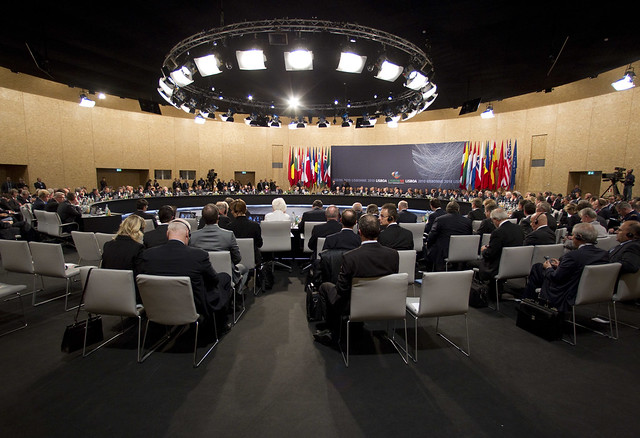
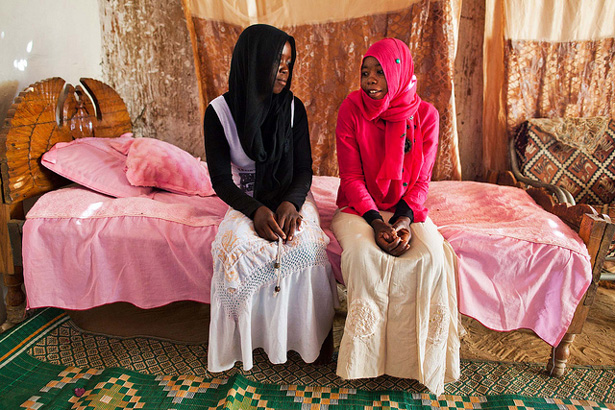
    “Water security is about much more than access to H2O,” said Jane Harman, director, president, and CEO of the Wilson Center at the May 9 meeting, “Global Water Security: The Intelligence Community Assessment.” The event – part of the Wilson Center’s National Conversation Series – brought together a number of experts to discuss a recently released intelligence community assessment of global water security. [Video Below]

    MORE
  • “Afghanistan, Against the Odds: A Demographic Surprise” Launches ECSP Report 14

    ›
    From the Wilson Center  //  May 18, 2012  //  By Wilson Center Staff

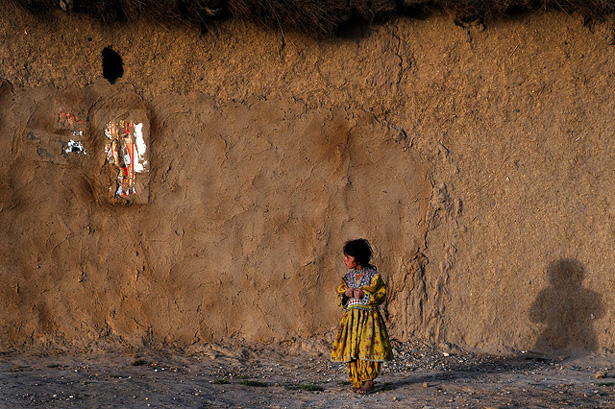
    A few months ago, Elizabeth Leahy Madsen broke down Afghanistan’s first-ever nationally representative survey of demographic and health issues in a two-part series here on the blog. Now, we’ve published her analysis in a rich new policy brief format. It is the first issue of Environmental Change and Security Program Report 14, the latest volume of ECSP’s flagship publication.

    In “Afghanistan, Against the Odds,” Madsen examines the surprising results of this fall’s demographic survey and how the country’s statistics compare to neighboring Pakistan.

    “Just as Afghanistan and Pakistan’s political circumstances have become more entwined,” writes Madsen, “their demographic paths are more closely parallel than we might have expected. For Afghanistan, given its myriad socioeconomic, political, cultural, and geographic challenges, this is good news. But for Pakistan, where efforts to meet family planning needs have fallen short of capacity, it is not.”

    The publication of this brief marks the re-launch of ECSP Report as an online-only volume, with individual issues scheduled to be released throughout the year. Forthcoming ECSP Report 14 briefs will address the demographic roots of the Arab Spring; the links between population dynamics and environmental resources like water, biodiversity, and food; and the potential impact of climate change mitigation efforts on conflict.

    Published since 1996 in hard copy and online, the new ECSP Report will now be available on the Wilson Center website, New Security Beat, and Issuu. You can read the previous 13 volumes of the ECSP Report on the Wilson Center website.

    Download ECSP Report 14: “Afghanistan, Against the Odds” from the Wilson Center.
    MORE
  • Sex and World Peace: How the Treatment of Women Affects Development and Security

    ›
    From the Wilson Center  //  May 17, 2012  //  By Kate Diamond

    “What we have discovered is that the very best predictor of how insecure and unstable a nation is not its level of democracy, it’s not its level of wealth, it’s not what ‘Huntington civilization’ it belongs to, but is in fact best predicted by the level of violence against women in the society,” said Valerie Hudson, co-author of Sex and World Peace, at an April 26 book launch at the Wilson Center. [Video Below]

    MORE
  • Nigeria Beyond the Headlines: Environment and Security [Part Two]

    ›
    From the Wilson Center  //  May 14, 2012  //  By Kate Diamond & Stuart Kent

    In the coming years, Nigeria’s cohort of unemployed youth has equal potential to “be converted into either a religious or a regional clash, as certain youths get opportunities and other youths do not,” said Pauline Baker, President Emeritus of the Fund for Peace, during the day-long “Nigeria Behind the Headlines” event at the Wilson Center on the April 25 (read part one here). [Video Below]

    MORE
  • Nigeria Beyond the Headlines: Demography and Health [Part One]

    ›
    From the Wilson Center  //  May 14, 2012  //  By Stuart Kent & Kate Diamond

    “Nigeria is a country of marginalized people. Every group you talk to, from the Ijaws to the Hausas, will tell you they are marginalized,” said Peter Lewis, director of the African Studies Program at the Johns Hopkins University School of Advanced International Studies. Lewis spoke at an April 25 conference on Nigeria, co-hosted by ECSP and the Wilson Center’s Africa Program, assessing the country’s opportunities for development given its demographic, governance, natural resource, health, and security challenges. [Video Below]

    MORE
  • Learning From Success: Ministers of Health Discuss Accelerating Progress in Maternal Survival

    ›
    Dot-Mom  //  From the Wilson Center  //  May 9, 2012  //  By Calyn Ostrowski
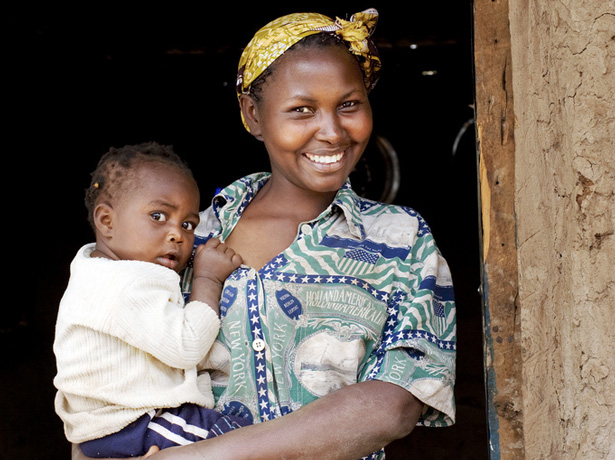
    “The gains we have made [in reducing maternal mortality rates] are remarkable; however, gains are fragile and donor resources are declining. Substantial investments must be maintained to safeguard these hard-wins,” said Afghan Minister of Health Suraya Dail at the Wilson Center on April 23. [Video Below]

    As part of the Wilson Center’s Global Health Initiative, the Advancing Dialogue to Improve Maternal Health series partnered with the U.S. Agency for International Development to co-host Minister Dail, along with Honorable Dr. Mam Bunheng, Minister of Health, Cambodia; Honorable Dr. Bautista Rojas Gómez, Minister of Health, Dominican Republic; and Dr. Fidele Ngabo, Director of Maternal and Child Health, Ministry of Health, Rwanda.

    These ministers spoke about the lessons learned in countries where there has been tremendous progress under challenging circumstances.

    In the Dominican Republic, Bautista Rojas Gomez said the first challenge was to address the “Dominican paradox,” where maternal mortality rates were high despite the fact that 97 percent of women received prenatal care and delivered in hospitals. The government created a zero tolerance policy that included a comprehensive surveillance system, mandatory maternal death audits, and community oversight of services, which assured better quality services.


    Similar political commitment improved indicators in Cambodia, where maternal mortality rates dropped from 472 to 206 per year from 2005 to 2010. “It takes a village…and the prime minister has inspired the country to act,” said Mam Bunheng. Through increased access to contraception the number of children per woman went from seven to three and commitment to family planning, education, technology, infrastructure, and community have been the key drivers of success.

    “In Rwanda, the big challenge we are having is education,” said Fidele Ngabo. “Many of the maternal health indicators depend on education.” When women and girls are educated they are twice as likely to utilize modern contraception. The efforts of Rwanda’s government have been instrumental in facilitating positive change, he said, particularly the efforts of First Lady Jeannette Kagame, who he called a “champion” for women and girl’s health.

    As witnessed throughout the Advancing Dialogue to Improve Maternal Health series – and reiterated by the ministers of health – the interventions to improve maternal mortality rates exist, what’s left is to generate the needed political willpower.

    Event Resources
    • Mam Bunheng Presentation
    • Suraya Dalil Presentation
    • Fidele Ngabo Presentation
    • Bautista Rojas Presentation
    • Video
    Photo Credit: David Hawxhurst/Wilson Center.
    MORE
  • Nicholas Eberstadt, Wilson Quarterly

    Population Changes Set to Remake Japanese Society

    ›
    From the Wilson Center  //  May 3, 2012  //  By Wilson Center Staff
    The original version of this article, by Nicholas Eberstadt, appeared in the Wilson Quarterly.

    In 2006, Japan reached a demographic and social turning point. According to Tokyo’s official statistics, deaths that year very slightly outnumbered births. Nothing like this had been recorded since 1945, the year of Japan’s catastrophic defeat in World War II. But 2006 was not a curious perturbation. Rather, it was the harbinger of a new national norm.

    Japan is now a “net mortality society.” Death rates today are routinely higher than birthrates, and the imbalance is growing. The nation is set to commence a prolonged period of depopulation. Within just a few decades, the number of people living in Japan will likely decline 20 percent. The Germans, who saw their numbers drop by an estimated 700,000 in just the years from 2002 to 2009, have a term for this new phenomenon: schrumpfende Gesellschaft, or “shrinking society.” Implicit in the phrase is the understanding that a progressive peacetime depopulation will entail much more than a lowered head count. It will inescapably mean a transformation of family life, social relationships, hopes and expectations – and much more.

    But Japan is on the cusp of an even more radical demographic makeover than the one now under way in Germany and other countries that are in a similar situation, including Italy, Hungary, and Croatia. (The United States is also aging, but its population is still growing.) Within barely a generation, demographic trends promise to turn Japan into a dramatically – in some ways almost unimaginably – different place from the country we know today. If we go by U.S. Census Bureau projections for Japan, for example, there will be so many people over 100 years of age in 2040, and so few babies, that there could almost be one centenarian on hand to welcome each Japanese newborn. Population decline and extreme population aging will profoundly alter the realm of the possible for Japan – and will have major reverberations for the nation’s social life, economic performance, and foreign relations. Gradually but relentlessly, Japan is evolving into a type of society whose contours and workings have only been contemplated in science fiction. It is not clear that Japan’s path will be a harbinger of what lies ahead in other aging societies. Over the past century, modernization has markedly increased the economic, educational, technological, and social similarities between Japan and other affluent countries. However, Japan has remained distinctive in important respects – and in the years ahead it may become increasingly unlike other rich countries, as population change accentuates some of its all-but-unique attitudes and proclivities.

    Continue reading in the Wilson Quarterly.

    Sources: U.S. Census Bureau.

    Photo Credit: Japanese woman enjoying some free soup for breakfast, courtesy of flickr user USAFA87.
    MORE
  • Megacities, Global Security, and the Map of the Future

    ›
    From the Wilson Center  //  April 19, 2012  //  By Stuart Kent
    “We’re in an urban century, there is no doubt,” said Peter H. Liotta, visiting scholar at the U.S. Military Academy West Point and co-author of The Real Population Bomb: Megacities, Global Security, and the Map of the Future, during a March 20 event at the Wilson Center. Liotta’s book focuses on the geopolitical impacts of poorly managed urbanization on the most vulnerable as well as the security issues such urbanization might create. He was joined by Jaana Remes of the McKinsey Global Institute, who painted a more promising picture of a globally rising, economically prosperous urban middle class, and Stimson Center visiting fellow Peter Engelke, who grappled with the contradictions between these alternative urban realities. [Video Below]

    “Urbanization is key to economic development, but it has been, is now, and will continue to be into the future beset by a very large shadow side, wherein the marginalized face grinding poverty, squalor, and despair,” explained Engelke.


    Although Liotta and Remes laid out very different “maps of the future,” Engelke suggested three commonalities. First, they both highlight the “unprecedented scale and speed of global change.” Second, they acknowledge that “a global demographic shift is well underway, and has been for some time.” And third, they accept that we have yet to fully integrate cities into the physical and mental maps by which we navigate the world, he said. Despite the economic dynamism of cities, “we live in a world that, I submit, has not yet grasped this reality even in conceptual terms, much less political and policy ones.”

    The City as a Source of Vulnerability

    People come to megacities “because there’s a chance,” said Liotta. “It looks like a nightmare to us, but people come because they’re waiting for a future.” This chance, however, is often slim, according to Liotta.

    The sheer scale of modern urbanization (approximately 200,000 people move every day from rural to urban areas) produces myriad sources of vulnerability for the poorest and most marginalized, said Liotta. “World population growth will occur in the poorest, youngest, and often heavily Muslim states, which lack education, capital, and employment. And for the first time in history the world will be primarily urbanized, with most megacities in the poor states where you don’t have policing, sanitation, and health care.”

    Catherine Kyobutungi on monitoring the health needs of urban slums
    This urban shift concentrates young populations presumed to be unstable, exacerbates the risk of disease and climate change, and increases the threat of declining resource availability and food production, Liotta said. In states where “the lights are out” – that is, where urbanization is not met with sufficient economic development – our new urban century may feature significant security challenges, he argued. “Every single security problem we have today, and in the future – whether it’s human security, environmental security, or national security – is [in] the places where the lights are out.”

    In The Real Population Bomb, Liotta links these sorts of security issues to what he terms “entangled vulnerability scenarios,” such as scarcity of water for drinking and irrigation, outbreak and rapid spread of disease, or lack of sufficient warning systems for natural disasters or environmental impacts. These scenarios, he argues, deserve a greater showing next to the traditional focus on hard security “threats.”

    Fertility rates are generally declining, which will eventually dissipate the youth bulges being experienced by many countries, but the challenge is how to “manage that glide path,” said Liotta. It is about “doing it well collectively, because we are not thinking collectively well about how to do this and places in the world are in serious trouble.”

    The City as a Center of Growth

    Jaana Remes presented both a broader scale of analysis and a more positive outlook. Urbanization is “the most powerful positive economic force in today’s environment,” she asserted, drawing on the McKinsey Global Institute report, Urban World: Mapping the Economic Power of Cities.

    Compared to the historical experiences of the Western world, change in the most rapidly urbanizing of today’s developing states is occurring at “100 times the scale, in one tenth of the time,” said Remes. This change is fundamentally shifting the economic profiles of states such as India and China, which are projected to account for approximately one third of global GDP by 2050.

    This growth in economic prominence can be accounted for by the rise of urban populations of middle class consumers not just in megacities, but also in the rapidly growing “middleweight” cities (from 200,000 to 10 million people) explained Remes. The path that these cities take will be “very significant for…how our world is going to look like in the next few decades,” she said. They are where “the lion’s share of global investment is going to be made.”

    Engaging Global Urbanization

    “That we are seeing cities rise in their profile is nothing new in history,” said Remes, “in fact you can argue that cities are actually some of the longest-lasting assets in the world.” Today, 600 urban centers generate more than 60 percent of global GDP; 400 of these are in emerging markets. So, “even though the scale of the change we expect to see is very dramatic, from the cities perspective, it is probably going to be more evolution than revolution.”

    Taking advantage of this growth will require some significant global re-posturing. In terms of commercial diplomacy for instance, most nations continue to distribute their people more according to the “geopolitical power of the 20th century than the economic opportunity of the 21st,” said Remes. She points out, for example, that the city of Wuhan in China is expected to generate 10 times the GDP growth of Auckland, New Zealand, yet the number of foreign service officials stationed in each city is in the opposite proportion.

    Policymakers looking to adapt should also look more closely at opportunities to re-develop existing, or “brownfield,” infrastructure. The challenge of accommodating the tremendous pace of urbanization may be great, she said, but “we have not yet seen one piece of infrastructure where you can’t make substantial improvements.”

    Summing up the need to work on what he argued has been a shortfall in policy engagement, Engelke concluded that, “we are indeed quite a ways from acknowledging the enormous challenges, but also the opportunities, that global urbanization presents to us.”

    Event Resources
    • Book preview
    • Photo gallery
    • Video
    Sources: UN Population Division.

    Photo Credit: David Hawxhurst/Wilson Center.
    MORE
Newer Posts   Older Posts
View full site

Join the Conversation

  • RSS
  • subscribe
  • facebook
  • G+
  • twitter
  • iTunes
  • podomatic
  • youtube
Tweets by NewSecurityBeat

Trending Stories

  • unfccclogo1
  • Pop at COP: Population and Family Planning at the UN Climate Negotiations

Featured Media

Backdraft Podcast

play Backdraft
Podcasts

More »

What You're Saying

  • Volunteers,At,The,Lagos,Food,Bank,Initiative,Outreach,To,Ikotun, Pan-African Response to COVID-19: New Forms of Environmental Peacebuilding Emerge
    Rashida Salifu: Great piece 👍🏾 Africa as a continent has suffered this unfortunate pandemic.But it has also...
  • A desert road near Kuqa An Unholy Trinity: Xinjiang’s Unhealthy Relationship With Coal, Water, and the Quest for Development
    Ismail: It is more historically accurate to refer to Xinjiang as East Turkistan.
  • shutterstock_1779654803 Leverage COVID-19 Data Collection Networks for Environmental Peacebuilding
    Carsten Pran: Thanks for reading! It will be interesting to see how society adapts to droves of new information in...

What We’re Reading

  • Rising rates of food instability in Latin America threaten women and Venezuelan migrants
  • Treetop sensors help Indonesia eavesdrop on forests to cut logging
  • 'Seat at the table': Women's land rights seen as key to climate fight
  • A Surprise in Africa: Air Pollution Falls as Economies Rise
  • Himalayan glacier disaster highlights climate change risks
More »
  • woodrow
  • ecsp
  • RSS Feed
  • YouTube
  • Twitter
  • Facebook
  • Home
  • Who We Are
  • Publications
  • Events
  • Wilson Center
  • Contact Us
  • Print Friendly Page

© Copyright 2007-2021. Environmental Change and Security Program.

Woodrow Wilson International Center for Scholars. All rights reserved.

Developed by Vico Rock Media

Environmental Change and Security Program

Woodrow Wilson International Center for Scholars

Ronald Reagan Building and International Trade Center

  • One Woodrow Wilson Plaza
  • 1300 Pennsylvania Ave., NW
  • Washington, DC 20004-3027

T 202-691-4000