Showing posts from category South Africa.

Show all posts
-
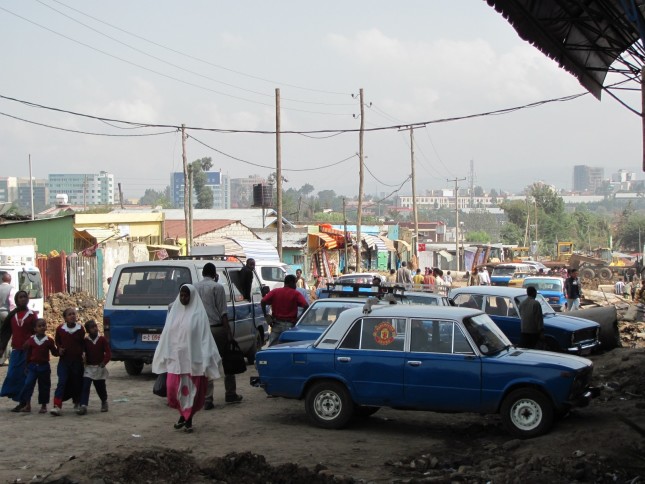
Social Interaction Key to Urban Resilience, Says Harvard’s Diane Davis
›By Payal Chandiramani // Wednesday, November 7, 2012“Resilience is the capacity of individuals and institutions to cope and adapt in the stress of chronic violence in ways that allow them room for maneuver and hope for the future,” said Diane Davis, Harvard professor of urbanism and development, in an interview at the Wilson Center.
MORE -
Linking Water, Sanitation, and Biodiversity Conservation in Sub-Saharan Africa
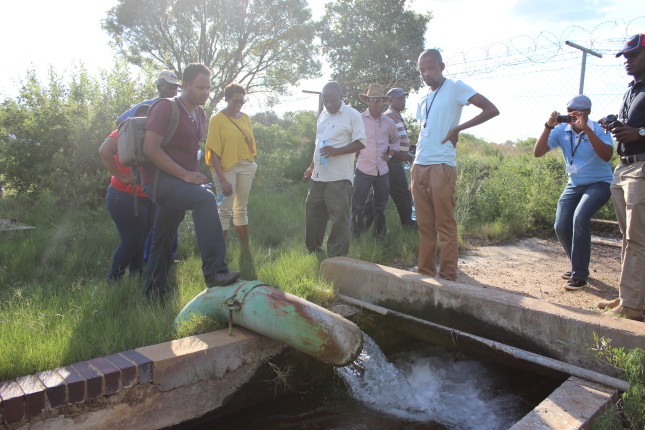
›By Kate Diamond // Wednesday, July 25, 2012Water, poverty, and the environment are “intrinsically connected,” and the development programs targeting them should be as well, writes David Bonnardeaux in Linking Biodiversity Conservation and Water, Sanitation, and Hygiene: Experiences From sub-Saharan Africa, a new Africa Biodiversity Collaborative Group briefing. In a review of 43 programs across sub-Saharan Africa, including four in-depth case studies, Bonnardeaux finds that natural synergies between water, sanitation, and hygiene (WASH) programming and conservation work provide opportunities for greater effectiveness in addressing both.
MORE
Integrating WASH and Conservation: A Natural Match
“WASH interventions are generally reliant on natural resources and processes, whether indirectly or directly,” he writes, and “WASH services produce outputs that are potentially detrimental to the environment if not managed properly.” At the same time, poor ecosystem management can “threaten biodiversity and jeopardize the vital services that these ecosystems in turn provide to humanity, in the form of regulation of stream flow, erosion prevention, water filtration, aquifer recharge, carbon sequestration, wildlife habitat, outdoor recreation, and flood abatement.”
Given the connections between the two, WASH and conservation efforts would benefit from programmatic integration, according to Bonnardeaux. To bring the two closer together, he recommends three tools for policymakers and development programmers: integrated river basin management and basin planning; payments for watershed services (also known as payments for environmental services); and population, health, and environment (PHE) programming.
A Whole-of-Basin Perspective
“The causal link between WASH and ecosystem health and integrity is most accentuated when
dealing with freshwater ecosystems,” writes Bonnardeaux.
In Tanzania’s Pangani River Basin, one of his in-depth case studies, a growing reliance on hydropower, urbanization, and increased agricultural demand is altering a valuable ecosystem marked by endemism and iconic landscapes, including Mount Kilimanjaro.
In response, the government and international organizations are partnering through the Pangani River Basin Management Project to developing a greater understanding of the basin’s hydrology and ecosystem, how local populations interact with that ecosystem, and how potential development scenarios could impact the basin in the future. That knowledge, paired with an intensive training program for local water officials, is enabling stronger integrated resource management, which in turn could lay the groundwork for integrating WASH and conservation interventions, writes Bonnardeaux.
Economic incentives – in this case, payments for watershed services – offer another valuable tool for building support for conservation efforts, especially when upstream communities bear a disproportionate burden of safeguarding watersheds.
In South Africa, another case study country, “increased economic development and urbanization have taken its toll on” the country’s wetlands, while unemployment and poverty have remained a persistent problem in slum areas, writes Bonnardeaux. Through the government-run Working for Wetlands program, both the environmental and socioeconomic problems of development are being targeted for improvement. The program hires “the most marginalized from society” to clear wetlands of invasive plants in order to improve its natural filtration capabilities and, in turn, improves the quality of water feeding the burgeoning urban areas.
Although Working for Wetlands, now 17 years old, has been “hugely successful,” Bonnardeaux warns that such economic incentive programs are, more often than not, extremely difficult to carry out effectively. “While there is great potential for this incentive-based conservation approach,” Bonnardeaux notes, “the reality is there are many barriers to its effective implementation.”
Building Long-Term Support for Conservation With Near-Term PHE Successes
Building support for conservation can be a difficult task. The impacts of conservation programming are “often undervalued,” Bonnardeaux writes, in part because results tend to become apparent only over the longer term. By pairing conservation efforts with nearer-term programming, like PHE efforts targeting immediate health needs, development workers can foster the kind of local support that is essential for pursuing long term goals.
The Jane Goodall Institute’s Lake Tanganyika Catchment Reforestation and Education Project (TACARE), in northwest Tanzania, offers a case in point. Established in 1994, TACARE began as a conservation program meant to protect the areas around Gombe National Park, where Goodall first began her chimpanzee research in the 1960s. Local communities, however, were more interested in better health, “with an emphasis on clear water and reduction in water-borne diseases like cholera,” writes Bonnardeaux.
By adopting local health and poverty priorities, he writes, TACARE was able to establish trust and goodwill with the communities it served, which in turn enabled it to pursue longer-term conservation goals aimed at protecting the region’s natural biodiversity.
Bonnardeaux’s work shows that regardless of how policymakers choose to combine WASH and conservation goals, well-implemented integration can yield immense benefits for practitioners, funders, and local communities.
“Linking various sectors such as WASH, forestry, agriculture, population, and community development,” he writes, “can result in cost and effort sharing which in turn can increase the effectiveness of the project including improved conservation and improved livelihoods and health.”
Sources: Bonnardeaux 2012.
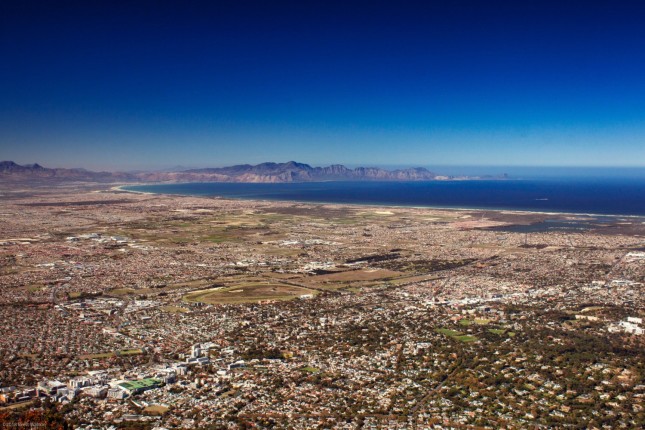
Photo Credit: “Intaka Island towards Table Mountain,” courtesy of flickr user Ian Junor. -
Eye On:
An Update on PRB’s Population, Health, and Environment Project Map
›By Kate Diamond // Wednesday, July 4, 2012As reproductive rights advocates reflect on their disappointment with the outcome of last week’s Rio+20 summit, it is encouraging to see that population, health, and environment (PHE) projects – which fundamentally connect women’s health with sustainable development – continue to sprout up around the world. The Population Reference Bureau (PRB) launched their community-supported PHE Project Map in March 2010, and since then, the map has grown to include 76 projects across three continents, and has been viewed more than 82,000 times.MORE
The goal of the map is to show which organizations are doing what PHE work where and when. While the map highlights expected hotspots like Ethiopia, Madagascar, and the Philippines, it also brings into focus countries that may not necessarily come to mind when thinking about PHE – South Africa, Venezuela, and Vietnam being among them. The map is updated on a rolling basis, and has grown substantially during its first two years.
These numbers should offer encouragement to reproductive rights and sustainable development advocates. Even if world leaders are still struggling to integrate these issues into a global development framework, NGOs, local nonprofits, and development agencies across the world are moving full-speed ahead to improve healthcare, strengthen ecosystems, and empower women and men across Latin America, sub-Saharan Africa, and South Asia.
To add a project to the map, contact PRB’s Rachel Yavinksy at ryavinsky@prb.org. -
On the Beat:
Pulitzer Center Launches Collaborative Reporting Project on Reproductive Health
›Jake Naughton, Pulitzer Center for Crisis Reporting
By ECSP Staff // Thursday, December 15, 2011
The original version of this article, by Jake Naughton, appeared on the Pulitzer Center for Crisis Reporting blog.
The Pulitzer Center launched its collaborative reproductive health-reporting project at this year’s International Conference on Family Planning (ICFP) in Dakar, Senegal. The project brings together four journalists from Africa and four from the United States who will collaborate to enhance local and international reporting about reproductive health across the continent.MORE
The African journalists are Mae Azango of Liberia, Estelle Ellis of South Africa, Sam Olukoya of Nigeria, and Ken Opala of Kenya. Their U.S. counterparts are Christian Science Monitor correspondent Jina Moore; New Yorker editorial staffer Alexis Okeowo; and the Pulitzer Center’s managing director Nathalie Applewhite and visual media coordinator Jake Naughton.
More than two thousand reproductive health professionals and hundreds of journalists from all over the world participated in the conference, which sought to shine a spotlight on the unmet need for family planning services worldwide, and to focus on integrating family planning into general health services.
Continue reading on the Pulitzer Center for Crisis Reporting blog.
Video Credit: “Meet the Journalists: Dakar,” courtesy of the Pulitzer Center. -
From Durban:
Can “Climate-Smart Agriculture” Help Feed Africa’s Growing Population?
›By Brenda Zulu // Tuesday, December 13, 2011Food production needs to increase 70 percent by 2050 to meet the demands of a growing world population, said former UN Secretary-General Kofi Annan in a keynote address on “climate-smart agriculture” at a COP-17 event hosted by the World Bank and African Union. Annan, who is now chairman of the Alliance for a Green Revolution in Africa (AGRA), said this was a particular concern in Africa, where four out of five citizens are dependent on agriculture for their livelihoods.
MORE
One in seven people in the world do not have enough food to eat, Annan said, and climate change is expected to make this challenge more difficult to overcome. Climate-smart agriculture includes a wide variety of techniques that help increase the resilience of communities and protect them from extreme weather events, such as terracing to prevent soil erosion, improving weather forecasting, managing water runoff, and developing irrigation systems.
“Climate change affects us by undermining our resource base through water and soil degradation,” said Prime Minister of Ethiopia Meles Zenawi at the event. “There is need to protect the resources and to rehabilitate green areas of our land.” He said that since 70 percent of Africans are small-scale farmers and that most of the poor in Africa were farmers, there is no better way to fight poverty on the continent than through agriculture.
South African President Jacob Zuma said at the event that given that the UN projects a population of more than nine billion people in the world by 2050, agriculture should be a priority as it is more vulnerable to climate change than any other sector.
“Climate-smart agriculture includes proven practical techniques such as mulching, intercropping, conservation agriculture, integrated crop management and agro forestry, improved grazing, and innovative better weather management,” he said, all of which have the potential to help increase crop yields.
Mary Robinson, chair of the Global Leaders Council for Reproductive Health, said there could be no smart agriculture without integrating women’s issues, because climate change affects women disproportionately. “Women make the connection between climate-smart agriculture, food security, and gender,” she said.
“Our ability to feed the growing population under climate variability and change will require new expertise and harmonized efforts,” said Robinson.
Annan agreed, saying African women should be fully involved in early action that can support technical assistance, such as screening agriculture plans to ensure they are “climate smart” as well as integrating climate resilience and mitigation into ongoing poverty-reduction programs and testing new approaches.
But according to Brylyne Chitsunge, a farmer from Pretoria speaking on the panel, things will need to change considerably from the status quo. “The small-scale farmer remains very much marginalized in institutions,” she said. “They exist on paper but they really don’t exist.”
Brenda Zulu is a member of Women’s Edition for Population Reference Bureau and a freelance writer based in Zambia. Her reporting from the COP-17 meeting in Durban (see the “From Durban” series on New Security Beat) is part of a joint effort by the Aspen Institute, Population Action International, and the Wilson Center.
Sources: World Bank, World Food Programme.
Photo Credit: “Cultivated hillsides,” courtesy of flickr user coda (Damien du Toit).
Subscribe to: Posts (Atom)