-
Environmental Security Weekly Watch: April 6-10, 2026
›
A window into what we’re reading at the Stimson Center’s Environmental Security Program
Argentina’s “Glacier Law” Opens Ecologically Sensitive Areas to Mining (Al-Jazeera)
Politicians in Argentina approved a bill pushed by President Javier Milei to authorize mining in ecologically sensitive areas of the nation containing nearly 17,000 glaciers and/or rock glaciers and permafrost which heavily support the country’s water security. Dubbed the “Glacier Law,” the measure is designed to leverage the vast critical mineral reserves (such as copper and lithium) found in frozen parts of the Andes mountains.
-
Environmental Security Weekly Watch: March 30-April 3, 2026
›
A window into what we’re reading at the Stimson Center’s Environmental Security Program
Experts Sound Alarm Over Peru-Brazil Biooceanic Railway Risks (Mongabay)
A proposed railway linking Peru’s Pacific coast to Brazil’s Atlantic is drawing alarm from conservation experts and Indigenous rights advocates. Brazil and China signed a feasibility study agreement for new route crossing both the Andes and the Amazon rainforest in July 2025, with China playing a central role in financing and development. Two alternatives are under consideration, with one running through Peru’s Ucayali region and the other through Madre de Dios, but neither has been approved. A single line could impact 15 protected natural areas, threatening over 1,800 campesino communities, as well as territories inhabited by Indigenous peoples in voluntary isolation.
-
Environmental Security Weekly Watch: March 23-27, 2026
›A window into what we’re reading at the Stimson Center’s Environmental Security Program
Energy Fallout from Iran War Signals a Global Wake-Up Call for Renewable Energy (Associated Press)
Fighting in Iran has effectively halted oil exports through the Strait of Hormuz — a chokepoint carrying roughly a fifth of the world’s oil and LNG — triggering an energy shock that is exposing the deep vulnerabilities of fossil fuel-dependent economies. Asia has been hit hardest, while Europe and Africa face mounting pressure from rising fuel costs and inflation. The crisis has sharpened debate over the uneven global energy transition. China’s substantial renewable buildout has provided meaningful insulation from the shock, while countries like Japan and India — which prioritized fossil fuel diversification after past crises — find themselves more exposed. Vietnam’s solar capacity is saving hundreds of millions in projected import costs. Meanwhile, Bangladesh has shuttered universities to conserve electricity, and India faces a cooking gas shortage. With more than 90% of new renewable projects now cost-competitive with fossil fuels, experts argue the strategic case for domestic clean energy has never been clearer.
-
Environmental Security Weekly Watch: March 16-20, 2026
›A window into what we’re reading at the Stimson Center’s Environmental Security Program
Pakistan’s Grassroots Solar Mitigates Middle East Energy Crisis Impact (The Guardian)
Russia’s invasion of Ukraine in 2022 also sparked a grassroots solar boom in Pakistan. Surging LNG prices and unreliable grid electricity resulting from the war’s broader effects pushed citizens to invest in rooftop solar as a one-time cost alternative to perpetually high electricity bills. Between December 2021 and December 2025, solar energy’s share of grid-supplied electricity in Pakistan jumped fivefold. Today, solar provides one-fifth of the country’s electricity.
-
Environmental Security Weekly Watch: March 9-13, 2026
›A window into what we’re reading at the Stimson Center’s Environmental Security Program
As Gulf Conflict Widens, So Does Its Environmental Footprint (Dialogue Earth)
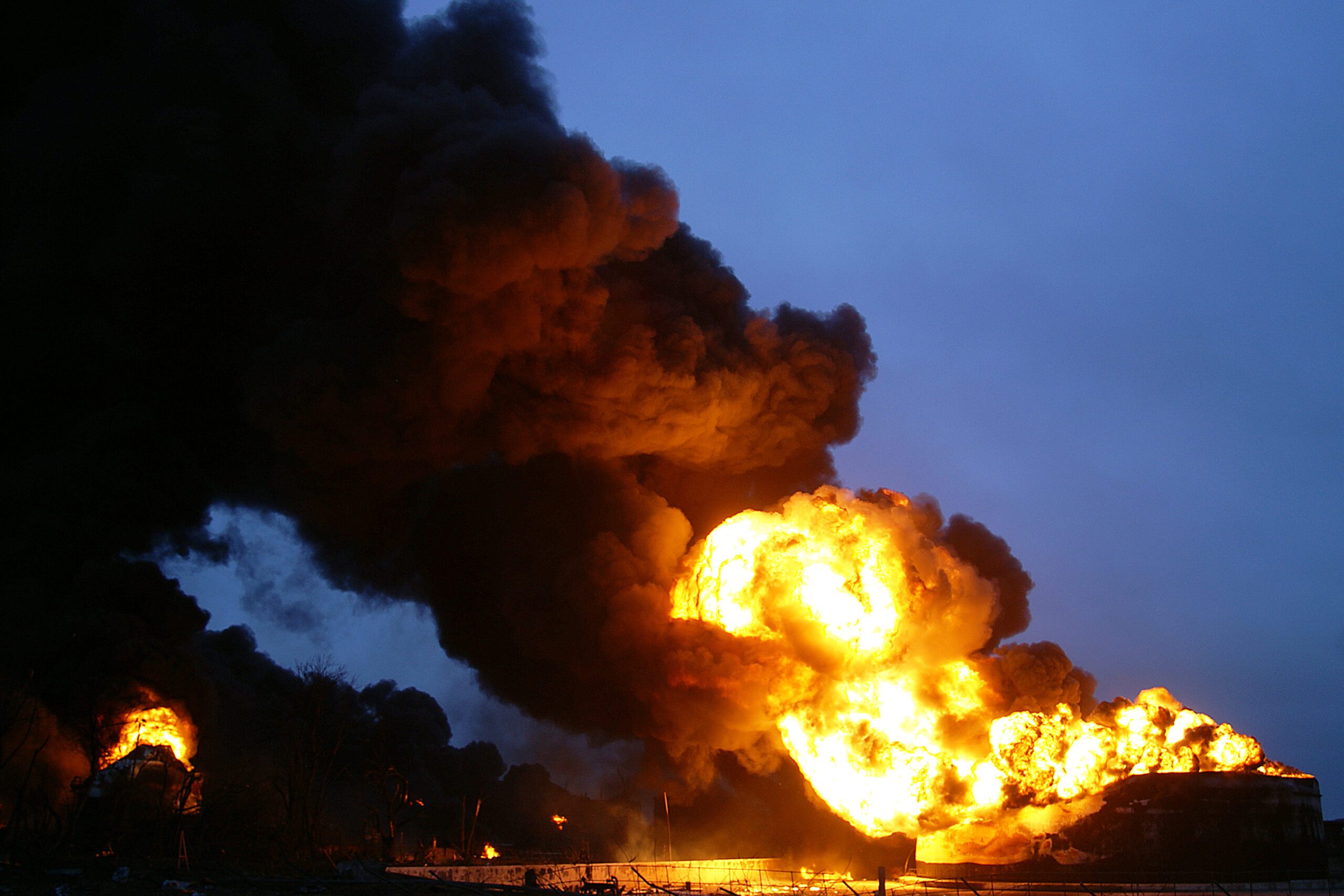
The Conflict and Environment Observatory identified at least 120 incidents of environmental harm across 11 countries since the start of U.S. and Israelis began attacks on Iran, as both sides have made oil infrastructure, military facilities, and strategic sites primary targets. The burgeoning conflict poses nuclear, chemical, and long-term carbon risks, as strikes on refineries, tankers, and storage sites degrade air quality, contaminate water contamination, and harm marine ecosystems. And other serious catastrophes loom as the war develops. The IAEA warns that any radioactive release from strikes that target nuclear sites could require evacuating areas the size of major cities.
-
In Context: Erika Weinthal and Jeannie Sowers on the Middle East Conflict’s Impacts on Civilian Infrastructure
›Recent attacks on critical infrastructure in Iran and the Persian Gulf mark a troubling escalation in the widening regional conflict. Since the U.S. and Israel launched a bombing campaign against Iran on February 28, Iran has responded with waves of missiles and drones targeting Gulf states across the region. Last weekend, both sides crossed a new threshold by striking civilian water and energy infrastructure. U.S. strikes allegedly hit a desalination plan on Iran’s Qeshm Island; Iran retaliated with a drone strike on a desalination plant in Bahrain; and Israeli airstrikes on fuel depots sent toxic smoke across Tehran.
-
Environmental Security Weekly Watch: March 3-6, 2026
›A window into what we’re reading at the Stimson Center’s Environmental Security Program
US Pressure Adds to the Suffering in Cuba’s Worst Economic Crisis (The New Humanitarian)
Cuba is on the brink of a total humanitarian collapse as its people bear the brunt of cascading crises driven by the Trump administration’s decision to block Venezuelan oil shipments to the island. It is a crisis compounded by a decades-long US embargo and years of economic mismanagement. The power blackouts which previously lasted for 12 to 14 hours now exceed 20 hours, thus further crippling hospitals, food storage, and water systems. Without new fuel deliveries, the island might reach complete fuel depletion this month amidst its worst economic crisis since the 1930s.
-
Environmental Security Weekly Watch: February 23-27, 2026
›A window into what we’re reading at the Stimson Center’s Environmental Security Program
UN Report: One in Five Fish Products Tied to Fraud (Inside Climate News)
A new UN Food and Agriculture Organization report finds that up to 20% of fishery and aquaculture products worldwide are mislabeled. The $195 billion industry is especially vulnerable due to supply chains involving over 12,000 traded species. The study is the first of its kind for the organization, and describes a pattern of fraud that takes many forms, from coloring tuna to appear fresher, to selling farmed fish as wild-caught, to substituting cheap species for expensive ones entirely. In the US alone, as much as a third of seafood may be mislabeled, yet less than 1% of imports are ever tested.
Showing posts from category Eye On.