Monthly archive for April 2012. Show all posts
-
Richard Matthew: Responsive Peacebuilding Includes the Environment and Natural Resources
›By Stuart Kent // Monday, April 30, 2012“After 20 years of peacebuilding experimentation, one of the good signs is that the countries receiving this [peacebuilding] attention…more and more are shaping the process,” said Professor Richard Matthew, director of the Center for Unconventional Security Affairs at the University of California, Irvine.MORE
Peacebuilding is shifting, he said, from internationals going in with pre-existing conceptions of “what you need for stability and development, what will make you attractive to investors, what will make your people secure,” to instead sitting down and talking with stakeholders about “what types of capacity do you need, and how can we support you in acquiring those.”
Along with the shift towards more responsive peacebuilding has come an elevated interested in the environment and natural resources. For people living in the peacebuilding countries themselves, “there was never any doubt that water and forest and access to minerals and so on were critical to their future,” said Matthew, but Western and Northern countries often thought of it as a “second tier issue that you might get to once people were safe, and the government was functioning, and the economy was up and running again.”
Matthew co-authored the 2009 UNEP report, From Conflict to Peacebuilding: The Role of Natural Resources and the Environment, which examined environmental factors all along the conflict continuum – from inception to peacebuilding. Successful peacebuilding, the report argues, requires that “environmental drivers are managed, that tensions are defused, and that natural assets are used sustainably to support stability and development in the long term.” -
Guest Contributor:
Women’s Rights and Voices Belong at Rio+20
›By Musimbi Kanyoro // Friday, April 27, 2012This summer, world leaders will gather in Rio de Janeiro for the 20th anniversary of the first UN Earth Summit to hammer out a new set of agreements on what sustainable development means and, more importantly, how both rich and developing nations can get there before it’s too late. However, for the scores of women who will be attending (and just importantly for those who aren’t), there are glaring omissions: reproductive health, gender equality, and girls education are nowhere to be found on the Rio+20 agenda.
MORE
Women offer many of the most promising levers for the transformation to sustainable development. My experience with the Global Fund for Women tells me that women are full of creative and strategic solutions to the problems facing their communities around the world. Their voices must be included in critical decisions affecting our world. And the fact is, sustainable development isn’t sustainable if it doesn’t include empowering women to plan their families, educate themselves, and their children, and have a voice in government at all levels. Rio+20 must have human rights – and women’s rights – at its core. Earth summit planners haven’t yet done that, but women can make it happen.
Women are 51 percent of the world’s population, yet own only one percent of its assets, are two-thirds of the world’s workers but earn a mere 10 percent of wages. Rio+20 must not become another forum in which women’s issues are not heard. Instead, the summit must demonstrate that women’s voices are integral to all development. Environmental sustainability simply can’t happen without women’s inclusion.
For example, in West Africa, women make up 70 percent of workers in agriculture. In Burkina Faso, deforestation, water scarcity, and soil erosion show us that climate change is already impacting women farmers. Women tend to “sacrifice themselves” in order to care for their families – feeding themselves last. And women are most likely to suffer and die in environmental disasters – particularly in the Asian countries most at risk from climate change.
So how do we support women while supporting the environment that sustains us all?
Simply meeting women’s needs for family planning is one inexpensive and powerful development strategy with a host of environmental benefits. Over 200 million women around the world want the ability to choose the spacing and number of children but don’t have access to, or accurate information about, basic contraceptives like condoms, pills, and IUDs. One-hundred and seventy-nine nations already agree that meeting this need is a top priority, and the Millennium Development Goals (MDGs) reflect a goal of universal access to family planning as well.
Satisfying this demand would dramatically reduce maternal and child mortality and enhance human rights. What’s more, two recent studies show that a reduction of 8 to 15 percent of essential carbon emissions can be obtained by meeting women’s needs for family planning. This reduction would be equivalent to stopping all deforestation or increasing the world’s use of wind power fortyfold.
The Earth Summit presents a major opportunity to ensure that women’s needs and rights are given top priority in plans for sustainable development. In a time of multiple, interlinked human and environmental crises and a very tight funding environment, investing in women is a clear winner.
A greater understanding of the impact of environmental degradation, pollution, and climate change on women, coupled with solid public policy that respects and protects women’s reproductive rights, is essential to the “Sustainable Development Goals” that many believe will emerge from Rio+20 to replace the MDGs, which expire in 2015.
As the summit approaches, it’s time to reflect on why women’s full participation and inclusion is so important and call for world leaders to harness the power of women as we launch the era of sustainable development.
Musimbi Kanyoro is president and CEO of the Global Fund for Women, which advances women’s human rights by investing in women-led organizations worldwide.
Sources: Food and Agriculture Organization, Guttmacher Institute, Moreland et al. (2010), O’Neill et al. (2010), Princeton Environmental Institute, UN, UNEP, World Bank, World Health Organization.
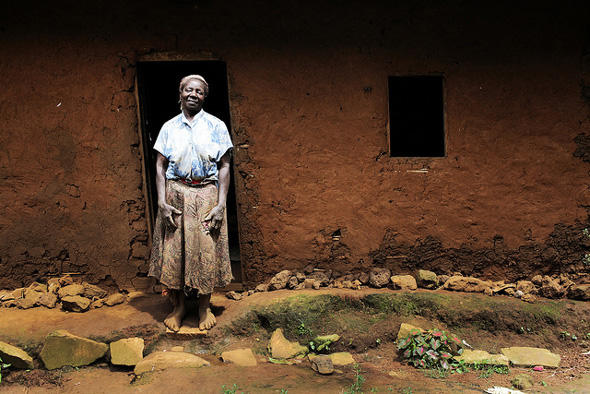
Photo Credit: “Reokadia Nakaweesa Nalongo,” courtesy of Jason Taylor/Friends of Earth International. -
Uganda’s Demographic and Health Challenges Put Into Perspective With Newfound Oil Discoveries [Part Two]
›By Kate Diamond // Thursday, April 26, 2012Read part one, on Uganda’s demographic and health challenges, here.
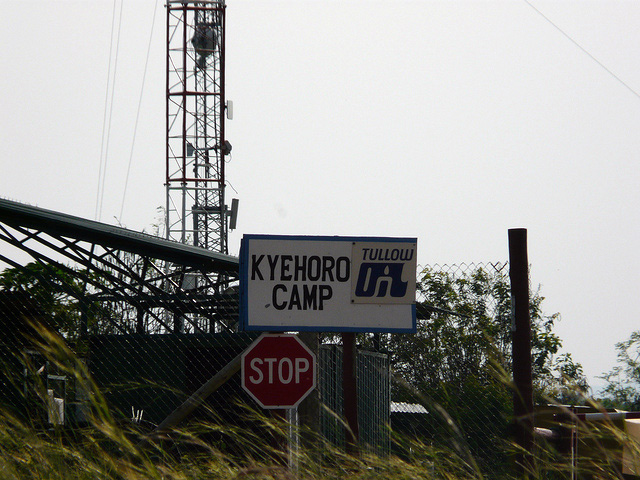
“We never thought we would end up having the same problems here as the people in the Niger Delta. But now I’m worried,” Henry Ford Mirima, a spokesman for Uganda’s Bunyoro kingdom, said last fall in Le Monde Diplomatique. The kingdom – which calls itself East Africa’s oldest – sits along Lake Albert, where over the past seven years British oil company Tullow Oil has discovered oil reserves big enough to produce an estimated 2.5 billion barrels.MORE
The discovery could make Uganda “one of sub-Saharan Africa’s top oil producers,” according to the U.S. State Department, and produce as much as $2 billion in annual oil revenues. Under the best of circumstances, that revenue would go towards addressing the country’s development hurdles, including population, health, and environment challenges. However, Uganda’s ability to peacefully and prosperously develop its natural resources will depend on the government’s ability to mitigate the corruption and inequities of recent years while navigating the security and environmental issues that continue to undercut the country’s stability.
The Displaced Legacy of Conflict
In 1986, as Yoweri Museveni and his National Resistance Army seized power from the government that succeeded President Idi Amin’s rule, Acholi rebels launched an uprising in Uganda’s north. Over the next few years, fighters led by Joseph Kony came to dominate the various splinter groups waging insurrection and, by the early 1990s, the Lord’s Resistance Army (LRA) had emerged to wage one of the world’s most brutal insurgencies. Throughout two decades of fighting, as much as 90 percent of northern Uganda’s population was displaced.
Uprooted Ugandans relocated to internally displaced person (IDP) camps, where conditions were so bad they have been described as akin to concentration camps. In 2005, amid worsening violence following a breakdown in ceasefire negotiations, the World Health Organization estimated that nearly 1,000 IDPs were dying every week in the Acholi sub-region.
International and domestic pressure forced the LRA base of operations out of Uganda by 2006, but its legacy remains. Looking at numbers alone, IDP reintegration would seem to be proceeding successfully: All but two percent of IDPs have left the camps, either returning to where they lived before the war or relocating to new areas. But the areas they move to tend to be underdeveloped and the government has been slow in implementing development plans to assist in reintegration. Combined, these factors mean that IDPs often end up in areas lacking basic services like healthcare, water, and education.
Growing Pressures on Finite Land
Land rights further complicate reintegration. In some cases, IDPs have returned to their homes only to find that entirely new generations of Ugandans have been born, grown up, and established themselves on their land. In other cases, they have relocated only for the government to evict them. Lacking a functional process for resolving land disputes, conflicts over who owns the land “often become violent,” according to a CSIS report.
The influx of refugees from the Democratic Republic of the Congo (DRC) adds another dimension to land disputes. In southwest Uganda, a flood of more than 1,000 Congolese refugees entering the country every week is outpacing the resources available to care for them – including space to house them. In the Kisoro district, which borders the DRC’s volatile North Kivu province, land disputes have become so severe that, in early March, the government sent troops to protect refugees from attacks by Ugandan squatters claiming land designated for camps.
Uganda’s rapidly growing population is putting further pressure on its land. With a total fertility rate of 6.8 children per woman and a growth rate of 3.2 percent, the predominantly rural population is expanding rapidly. As rural Ugandans search for larger and more productive tracts of land, they move farther into the country’s forests which, although protected, have effectively been opened up to migration following a 2006 executive order barring evictions from forest reserves and wetlands.
On average, Uganda’s forests are disappearing at a rate of about two percent per year, according to the government’s latest State of Environment report (2008). At subnational levels, though, deforestation varies wildly; for example, the once densely forested Kibaale district is leading the country at a rate of 49 percent per year, according to the report. On the whole, Uganda’s forests are disappearing so quickly that, by 2050, the country’s environmental management authority predicts that they will have disappeared entirely.
As deforestation continues, it is contributing to drought in some of the country’s most ecologically rich and agriculturally productive regions, which are now, for the first time in generations, experiencing food insecurity. Agricultural shortages have in turn contributed to spikes in food prices, which have been a key driver of the ongoing anti-Museveni protest movement.
Foreign investment, encouraged by Museveni, has in some instances aggravated land disputes. An Oxfam report suggests that the London-based New Forests Company, which purchased 27,000 hectares across three central districts in 2005, has driven more than 20,000 people from their land, sometimes violently. Ironically, the company bought the land to plant forests to be used as part of the Kyoto Protocol’s carbon credit-trading scheme. Friends of the Earth International, too, has made “land grabbing” the focus of a new report and advocacy campaign.
Adding Oil to the Mix
Access to land has become so contentious that disaster preparedness officials consider it a potentially destabilizing issue for Uganda’s future. The discovery of oil near Lake Albert magnifies the potential for instability in general and for land-driven conflict in particular. An estimated 30,000 people will be displaced to make way for an oil refinery, while those who remain have seen their livelihoods curtailed by violence between Ugandan Special Forces (led by Museveni’s son) and Congolese troops stationed on the lake’s shores. Given the lake’s location straddling the Uganda-DRC border, the government has warned that “there is the potential for any conflict to become regional.”
Museveni has promised that oil revenue will go towards economic development, but given the regime’s growing dependence on political patronage as its popularity declines, observers are worried that Museveni will instead use Uganda’s oil wealth to strengthen his own hold on power.
Lawmakers last year accused three ministers close to Museveni of taking bribes from Tullow, prompting a moratorium on further agreements with the company; however, Museveni has already violated the ban, signing a new production-sharing deal with Tullow earlier this year.
The potential for the misuse of oil revenues is all the greater given that the parliament has yet to establish regulations for the nascent industry. “Countries that start off from weak institutional capacity and poor governance prior to the discovery of oil or large mineral resources are likely to fall victim to the [resource] curse,” the Center for Global Development’s Alan Gelb and Stephanie Majerowicz wrote in a working paper on Uganda’s oil reserves last year. “Oil revenues are likely to exacerbate these institutional weaknesses, leading to greater corruption and poor overall governance.”
Looking at Uganda Through a PHE Lens
Properly managed, Uganda’s oil could propel its people “into the strata of middle-income countries,” but before that happens, the country’s population, health, and environment (PHE) challenges must be addressed. Recognizing the interconnectivity of many of Uganda’s most pressing challenges, several groups have already launched integrated development programs in the country.
Pathfinder International, an international reproductive health organization, recently announced plans for a new PHE program in the Lake Victoria basin that pairs health and family planning services with improved resource management. Like the rest of Uganda, the basin’s population is growing rapidly, straining the area’s natural resources. In the waters around Lake Victoria’s Migingo Island, for example, severe overfishing has provoked a border dispute with neighboring Kenya. By improving access to sexual and reproductive health services, Pathfinder says its work will strengthen sustainable resource management and preserve the region’s biodiversity. And that, in turn, could improve stability and security throughout the basin.
Conservation Through Public Health (CTPH), a Ugandan non-profit, aims to do the same in Uganda’s southwest, where some of the region’s most densely populated rural areas straddle Bwindi Impenetrable National Park, home to nearly half of the world’s endangered mountain gorillas and other valuable biodiversity. To sustain the health of both people and ecosystems, CTPH provides family planning and other health services to local communities while also monitoring the health of the gorilla population, which accounts for more than half of national tourism revenue. Minimizing pressures on the region’s fragile but valuable ecosystem helps protect livelihoods, which in turn can reduce the kind of competition over land that, compounded with refugees fleeing the DRC, has contributed to instability in the region.
On the Brink of a New Era?
Uganda, like Mozambique, Kenya, or Ghana, which also recently announced large oil and gas discoveries, may be on the brink of a new era in its economic development. But to enter that era, it must overcome significant demographic, health, environmental, security, and governance challenges.
Those challenges are large – but so too are the human and natural resources available to address them. Meeting unmet need for family planning, for instance, would not just open the door to near-term cost savings, but, when paired with continued investment in basic social services like education, could allow Uganda to realize a powerful demographic dividend. That dividend, coupled with more sustainable resource management, could in turn help overcome the hurdles that have so far limited its development.
Finding a way to ensure that Uganda’s newfound wealth responds to its complex needs will be crucial to ensuring that its already high levels of corruption and inequality are reversed rather than exacerbated, as has too often been the case for sub-Saharan Africa’s resource-rich nations.
Sources: Boston Globe, Brookings Institution, Center for Global Development, Center for Strategic and International Studies, Conservation Through Public Health, Department of Disaster Preparedness, Management and Refugees in the Office of the Prime Minister, Fox Business, Friends of the Earth International, Guardian, Le Monde Diplomatique, Monitoring and Evaluation to Assess and Use Results Demographic and Health Surveys (MEASURE DHS), New York Times, Oxfam International, Uganda National Environment Management Authority, United Nations Data, United States Department of State, World Bank, World Health Organization.
Photo Credit: “Tullow oil camp, Uganda,” courtesy of flickr user Conservation Concepts (Mark Jordahl); “Land grabbing in Uganda,” courtesy of Jason Taylor/Friends of the Earth International; “Ugandan anti-corruption sign,” courtesy of flickr user futureatlas.com; “Uganda GV6_lo,” courtesy of the International Center for Tropical Agriculture (CIAT). -
Uganda’s Demographic and Health Challenges Put Into Perspective With Newfound Oil Discoveries [Part One]
›By Kate Diamond // Thursday, April 26, 2012Uganda’s population is the second youngest in the world, with half of the country younger than 15.7 years old (just older than Niger’s median age of 15.5 years). In the past 10 years, the country – about half the size of France in land area – has added 10 million people, growing from 24 to 34 million. That growth, paired with other factors like poor governance and long-standing insecurity, has made providing basic services a difficult task for a government that is one of Africa’s most aid-dependent.
MORE
Newfound oil wealth might provide the financial resources to help Uganda overcome its development challenges, but poor management could also make it another victim of the “resource curse” – a combination of corruption, weak land tenure, poor governance, and environmental mismanagement that has contributed to insecurity and dysfunction, rather than prosperity and health, in similarly resource-rich Angola, the Niger Delta, and the Democratic Republic of the Congo.
A Rapidly Growing Population
Six years ago, when Uganda’s population growth rate was 3.1 percent, Population Reference Bureau (PRB) Demographer Carl Haub said, “no one would consider such a rate of growth to be sustainable.”
Unfortunately, Uganda’s growth has shown few signs of abating, and has in fact increased to 3.2 percent – ninth fastest in the world, according to the latest UN data. The UN’s most optimistic projections, which assume the greatest drop in current growth rates, put the country on track to still more than double in size by 2050, growing to 83.5 million people. By comparison, similarly-sized Senegal would be home to 25.2 million under low variant projections. Under the UN’s more likely medium variant projections, the country is expected to grow to 2.7 times its current size, to 94.3 million people. Median age is projected to remain under 20 until the 2040s.
President Yoweri Museveni has repeatedly tied population growth to economic growth in public statements, but that rationale has put him at odds with the country’s central banker, Emmanuel Tumusiime-Mutebile, who has argued that so long as the country’s growing population is under-skilled and underemployed, a bigger population will do little to help its economy. In a rare public critique of Museveni, Tumusiime-Mutebile, who is credited with sustaining Uganda’s macroeconomic stability over the past two decades, recently told the Financial Times, “the extremely high population…growth is one of the major things I oppose him about.”
The growing number of Ugandans struggling to earn some kind of living backs up Tumussime-Mutebile’s concerns. Four out of every five Ugandan youths ages 15 to 24 (which account for 21 percent of the total population) are unemployed – a higher rate than anywhere else in Africa. And even though the country’s poverty rate has been halved over the past two decades, in terms of sheer numbers more Ugandans now live in poverty than when Museveni took power in 1986.
Struggling With Public Health
As the country’s population continues to grow, the majority of that growth will take place in rural areas, where access to health services is extremely limited. Public health has long been underfunded throughout the country, to such an extent that one in two Ugandans seeking medical treatment must use private instead of public clinics “because the latter are unable to provide services,” according to a CSIS report.
In part, public health is suffering from the government’s own misplaced spending priorities. Last spring, in a move that earned the government widespread criticism, Museveni spent $740 million to purchase six Russian fighter jets – nearly triple the previous year’s spending on public health.
Meanwhile, in northern Uganda, the so-called “nodding disease” has spread to infect thousands of children, and the government’s slow response has frustrated local communities, especially in light of the jet purchase.
The disease sends children into fits of seizures and, of the estimated 3,000 Ugandans infected, the health ministry estimates that nearly 200 have died since 2010. Without knowing what causes the disease, care is largely palliative. Eating can worsen seizures and children with the syndrome often end up malnourished, even dying from starvation. While the government has set up a response plan to study and fight the disease – including recently opening up clinics in three of the hardest hit areas – insufficient funding has hampered implementation.
Even in areas where Uganda’s health system used to excel, the country is now struggling. In spite of once being a public health success story for its “ABC” prevention work against HIV/AIDS (“abstain, be faithful, use condoms”), Uganda now has the same number of people living with the disease as the United States, 1.2 million. The country has been criticized for allocating too little of its own money towards the disease, even as international funding is shrinking. In 2010, when the government announced its spending priorities for revenue from oil royalties (which included the fighter jets), HIV/AIDS went unmentioned.
Sidelined Family Planning and Reproductive Health
Perhaps predictably given the public health situation, family planning and reproductive health have long been sidelined in Uganda. Even as some government officials acknowledge that large family sizes are “becoming an impediment to the speed of economic growth and social and structural transformation,” the government has fallen short of adequately and consistently funding family planning and reproductive health services.
Unmet need for family planning is highest in rural areas – 43 percent of rural women report wanting, but not using, contraception to space or limit births, compared to 27 percent in urban areas – and yet, government funding for contraception is insufficient to meet even the urban demand alone, according to the Population Reference Bureau.
In October 2010, Jennifer Anguko, a lawmaker from the remote corner of northwest Uganda that borders the Democratic Republic of the Congo and South Sudan, bled to death over 12 hours while waiting for help in a maternity ward. In Mityana, a city an hour outside of the capital Kampala, Sylvia Nalubowa, a mother of seven, bled to death at a maternity hospital when she couldn’t afford money to bribe the attending nurses. Together, the two deaths spurred a lawsuit against the Ugandan government, arguing that its failure to provide basic maternal care was a violation of these women’s right to life.
Anguko and Nalubowa are vivid examples of the state of maternal and child health in Uganda. Throughout the course of their lifetimes, Ugandan women have a 1-in-35 chance of dying due to pregnancy-related causes; every day, 16 women die in childbirth. The country’s infant mortality rate is one of the highest in the world. At 79 infant deaths per 1,000 live births, Uganda has the 23rd worst infant mortality rate in the world, not far behind places like Afghanistan (136 deaths), the DRC (116), and Somalia (107).
Meeting Needs Today to Ameliorate Problems Tomorrow
If all Ugandan women with an unmet need for family planning began using some form of contraception, the country’s total fertility rate could fall by more than half, according to an analysis of Uganda’s 2006 Demographic and Health Survey by USAID, from the current rate of 6.2 children per woman to just 2.9. Even if just 10 percent of unmet need were satisfied, total fertility rates would drop to 4.9, putting Uganda only slightly above Rwanda’s current rate of 4.7 – a rate that is the result of a concentrated effort by the government, as New Security Beat contributor Elizabeth Leahy Madsen writes.
Reducing unmet need would impact more than just women and child’s health. USAID’s RAPID Model has shown that investments in family planning to meet existing demand can save millions in future education and health costs, helping to lighten the burden on overtaxed infrastructure and government capacity.
As Uganda’s growth spurs greater demand for increasingly overstretched public services, from health care to education, meeting the Millennium Development Goals – already a challenge for the country – has become more and more difficult. Meeting family planning needs could not only make it easier to achieve those goals, but also to achieve cost savings of nearly $100 million along the way, according to a USAID report.
The 2006 discovery of oil – estimated to be worth as much as $2 billion annually – has introduced new potential and new complexities into Uganda’s ability to meet its MDG targets. “The next generation of Ugandans could grow up in a very different country to that of their parents and grandparents,” wrote advocacy group Global Witness in a report on the country’s newfound resource, “but the risk of the resource curse phenomenon taking hold in Uganda cannot be ignored.”
Continue reading part two of this series, which looks at Uganda’s humanitarian, natural resource, and governance challenges.
Sources: BBC, Center for Strategic and International Studies, Central Intelligence Agency World Fact Book, Financial Times, Fox Business, Global Witness, Monitoring and Evaluation to Assess and Use Results Demographic and Health Surveys (MEASURE DHS), New York Times, Population Action International, Population Reference Bureau, Restless Development, TrustLaw, Uganda Observer, UNAIDS, United Nations Office for the Coordination of Humanitarian Affairs (UN-OCHA), United Nations Population Division (UNPD), United States Agency for International Development (USAID), Worldwatch Institute.
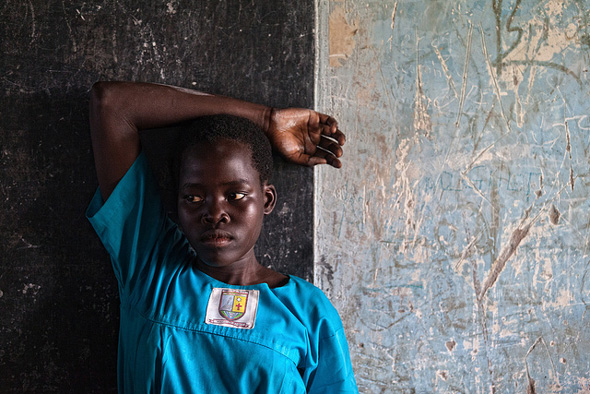
Photo Credit: “Sides,” courtesy of flickr user MightBoyWolf (Brian Wolfe); “Katote’s health unit,” courtesy of flickr user make_change; “Immelda Nabirimu,” courtesy of Jason Taylor/Friends of the Earth International. -
China and the Geopolitics of the Mekong River Basin
›Richard Cronin, World Politics Review
By ECSP Staff // Wednesday, April 25, 2012The original version of this article, by Richard Cronin, appeared in World Politics Review.
Two decades after the Paris Peace Accord that ended the proxy war in Cambodia, the Mekong Basin has re-emerged as a region of global significance. The rapid infrastructure-led integration of a region some call “Asia’s last frontier” has created tensions between and among China and its five southern neighbors – Cambodia, Laos, Myanmar, Thailand, and Vietnam. Both expanded regional cooperation as well as increased competition for access to the rich resources of the once war-torn region have created serious environmental degradation while endangering food security and other dimensions of human security and even regional stability.MORE
China’s seemingly insatiable demand for raw materials and tropical commodities has made it a fast-growing market for several Mekong countries and an increasingly important regional investor. Economic integration has been boosted by a multibillion dollar network of all-weather roads, bridges, dams, and power lines largely financed by the Asian Development Bank (ADB) that is linking the countries of the Lower Mekong to each other and to China. To date, the ADB’s Greater Mekong Subregion (GMS) cooperative development program has primarily benefited large population centers outside the basin proper in China, Thailand, and Vietnam. Unfortunately, the same infrastructure that speeds the flow of people and goods to urban centers also facilitates the environmentally unsustainable exploitation of the forests, minerals, water resources, and fisheries that are still the primary source of food and livelihoods to millions of the Mekong’s poorest inhabitants.
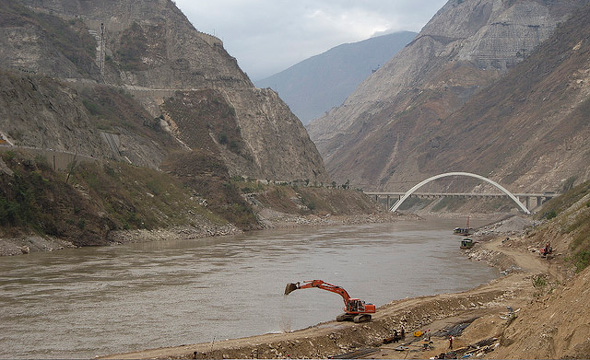
No aspect of China’s fast-growing role and influence in the Mekong region is more evident and more problematic than its drive to harness the huge hydroelectric potential of the Upper Mekong through the construction of a massive cascade of eight large- to mega-sized dams on the mainstream of the river in Yunnan Province. The recently completed Xiaowan dam, the fourth in the series, will mainly be used to send electricity to the factories and cities of Guangdong Province, its coastal export manufacturing base some 1,400 kilometers away. China’s Yunnan cascade will have enough operational storage capacity to augment the dry season flow at the border with Myanmar and Laos by 40-70 percent, both to maintain maximum electricity output and facilitate navigation on the river downstream as far as northern Laos for boats of up to 500 tons.
Continue reading in World Politics Review.
Photo Credit: “Xiaowan Dam Site,” courtesy of International Rivers. -
Planet Under Pressure:
Karen Newman: Rio+20 Should Re-Identify Family Planning As a Core Development Priority
›By Kate Diamond // Wednesday, April 25, 2012Energizing people around family planning can be difficult, “because donors, like everyone else, like something that’s new,” said Karen Newman, coordinator for the UK-based Population and Sustainability Network. “There’s nothing new about family planning. The technology is safe, effective, it’s acceptable, and it works. We just need a lot more of it out there to be accessible to a lot more people.”MORE
Newman spoke to ECSP at the 2012 Planet Under Pressure conference about her hopes for the upcoming Rio+20 sustainable development conference, which marks the 20-year anniversary of the UN Earth Summit.
“What we want is increased investment in voluntary family planning services that respect and protect rights,” Newman said, “and I think that Rio represents a fabulous opportunity for us to re-identify family planning as a core development priority.”
Newman also hopes the Rio conference will lead to “an integrated look at sustainable development, so that… it isn’t just about the green economy and institutional framework, it’s looking at sustainable development in the round.”
Government development programs and policymakers need to adapt their bureaucratic processes to the kinds of integrated programming being carried out on the ground, she said. In Madagascar, for example, conservation group Blue Ventures leads an integrated PHE program that cuts across marine conservation, family planning, and healthcare sectors. “Now I defy you to find an EU budget line that would be broad enough to embrace marine conservation and family planning in the same project line,” said Newman.
“The first thing we need is that level of integrated thinking – not just in Rio, but also in the way that we conceptualize the work that needs to be done and we facilitate the availability of funding streams that can fund that kind of integrated program.”
Lastly, Newman hopes that the summit in and of itself is successful because of its implications for future development work. As the world gears up to create the next big framework for global development to follow the Millennium Development Goals, Rio is uniquely positioned to set a baseline for what matters and for what the development community is capable of accomplishing.
“What I want to see is a really sophisticated look at sustainable development, coming up with sustainable development goals in a world that makes sense of seven billion, where there are still millions of women without access to the family planning services that we take for granted,” said Newman, “and taking that concept to the job of developing the post-MDG framework that will frame development for the next 20 years.” -
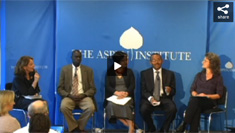
Aspen Institute on Women, Population, and Access to Safe Water
›John Donnelly, Global Post
By ECSP Staff // Tuesday, April 24, 2012
Loading the player…The original version of this article, by John Donnelly, appeared on the Global Post.
The U.S. Census Bureau’s World Clock says that the population of the world today is estimated at 7.008 billion people, while projections show that the world could reach the 9 billion marker by 2050.MORE
In the last of its series called “7 Billion: Conversations That Matter,” Aspen Institute’s Global Health and Development hosted a panel of experts based in Africa and the United States on the interconnectedness of gender issues, family planning, population, and access to safe water.
The point of the series was to ask questions about why it mattered that the world was passing the seven billion mark, and the questions today in Washington were appropriately big: Will water wars replace oil wars? What are the solutions to expand water and sanitation to the 2.5 billion people who don’t have it? And just how many people can the world support in an equitable fashion?
An answer to the last question: You need a bigger pie, better manners, and fewer forks.
Borrowing from a book by Joel Cohen called How Many People can the Earth Support? (written in 1996 when the world supported a 5.7 billion population), Laurie Mazur, director of the Population Justice Project, said that the answer was “it depends on how we use resources.”
Continue reading on the Global Post.
Sources: U.S. Census Bureau. -
Reading Radar:
Loaded Dice and Human Health: Measuring the Impacts of Climate Change
›By Stuart Kent // Tuesday, April 24, 2012In a new article in the Proceedings of the National Academy of Sciences (PNAS), “Insights From Past Millennia Into Climatic Impacts on Human Health and Survival,” Anthony McMichael compares scientific literature that reconstructs past climates with epidemiological research and comes away with more than a dozen examples of the influence of climate on human health and survival. “Risks to health [as a result of climatic change] are neither widely nor fully recognized,” McMichael writes, but “weather extremes and climatic impacts on food yields, fresh water, infectious diseases, conflict, and displacement” have led to human suffering across the centuries. Some of the literature reviewed, for instance, links the Younger Dryas (a several centuries long period of cooling) to hunger in the Nile Valley between 11,000 and 12,000 years ago, climatic shifts that expanded the range of disease carrying rats and fleas to the “Black Death” during the mid-1400s, and unusually strong El Niño events to a series of late Victorian-era droughts during the late-1800s.MORE
“Climate Variability and Climate Change: The New Climate Dice,” a working paper from James Hansen, Makiko Sato, and Reto Ruedy recently submitted to PNAS, uses surface air temperature analysis from the Goddard Institute for Space Studies to examine the impact of global warming on the frequency of extreme weather events. Using measurements from 1951 to 1980 as a baseline, the study finds, first, that the planet has warmed by around half of a degree Celsius since the reference period, and second, that the global area affected by “extreme anomalies” (exceeding three standard deviations from the mean climate) has increased by a factor greater than 10. Affecting approximately 10 percent of global land surface in the last several years, these anomalies, such as the droughts and heat waves observed in Texas in 2011, Moscow in 2010, and France in 2003, “almost certainly would not have occurred in the absence of the global warming,” according to the authors.
The study uses this new evidence about the impact of climate change to update the concept of climate change as a “loading of the climate dice.” Where, the “climate of 1951-1980 [is represented] by colored dice with two sides red for ‘hot,’ two side blue for ‘cold,’ and two sides white for near average temperature,” and the dice themselves represent the chance of observing variations on mean temperature. Under this metaphor, today’s climate is best approximated by a dice with four sides red, one blue, and one white, according to the study.
As for the future, the data suggest that with just one full degree of warming, anomalies three deviations beyond the mean will be the norm, and five deviations beyond the mean will become more likely (the latest IPCC projections suggest between 1.8 and 4.0 degrees Celsius are likely). In essence, the red side of the die are not only multiplying, but becoming much more extreme. To put this into scale, the Moscow 2010 heat wave, an event that exceeded the three deviations mark, coincided with a doubling of the death rate in the Russian capital. -
Planet Under Pressure:
Karen Newman: Population and Sustainable Development Links Are Complex, Controversial, and Critical
›By Kate Diamond // Monday, April 23, 2012“The one child family norm in China has fixed the global imagination around population to be around doing something which constricts people’s and women’s choices, rather than expands women’s possibilities to take control of their lives,” said Karen Newman, the coordinator for the UK-based Population and Sustainability Network. But contemporary population programs are about educating people on and providing access to voluntary reproductive, sexual, and maternal health services.MORE
Newman spoke to ECSP, during the Planet Under Pressure conference this year, about family planning efforts and the connection between population dynamics and the environment.
“You have what I would describe as a sort of kaleidoscope of complexity” between climate change and population dynamics – not just growth, said Newman, but urbanization and migration.
For example, China recently overtook the United States as the world’s largest emitter of carbon, and although China has 1.3 billion people compared to the United States’ 310 million, population can hardly be credited as the most important driver for the country’s emissions. “How fair is it [to credit population growth] without in the same nanosecond saying, ‘but most of the carbon that was emitted in China was to manufacture the goods that will of course be consumed in the West?” said Newman.
“It makes it more difficult to say in a sound bite that ‘OK, population and sustainable development, it’s the same conversation,’ which I believe it to be.”
The Population and Sustainability Network, working through the Population and Climate Change Alliance, collaborates with international organizations from North America, Europe, Ethiopia, and Madagascar to support on-the-ground groups working on integrated population, health, and environment programming. These programs address environmental issues, like marine conservation and deforestation, while also providing reproductive health services, including different methods of contraception, diagnosis and treatment of sexually-transmitted diseases, antenatal and postnatal care, and emergency obstetric care.
“As a result of people wanting to place a distance between those coercive family planning programs in the ‘60s and the way that we do reproductive health now…because it’s such a large package, there is a sense that…this reproductive health thing is too much, we can’t really get ahold of this,” said Newman.
“What I think we need to do is keep people focused on the fact that these are women’s rights,” she said. “But we at the same time have to say ‘this is relevant if you care about sustainable development and the world’s non-renewable resources.’”
Sources: United Nations Population Division. -
Senate Hearing Focuses on Threat of Sea Level Rise
›Andrew Freedman, Climate Central
By ECSP Staff // Saturday, April 21, 2012The original version of this article, by Andrew Freedman, appeared on Climate Central.
Sea level rise poses an increasingly grave threat to coastal energy facilities and communities during the course of the next several decades, with some impacts already evident, according to testimony delivered Thursday before a rare Senate hearing on climate science.MORE
The hearing, held by the Senate Energy and Natural Resources Committee, focused on the challenges posed by sea level rise, which is one of the most visible manifestations of a warming planet.
“Sea level rise takes the current level of vulnerability and multiplies it,” said Committee Chairman Jeff Bingaman (D-N.M.). “When sea levels rise, the storm surge associated with extreme storms gets even worse, and even an average storm can have above-average consequences.”
Although Chairman Bingaman said he hoped the hearing would help restart “a national conversation” on climate change, the hearing instead may have served to highlight the continuing partisan divide on global climate change. While there were five Democrats in attendance, just one Republican – ranking member Lisa Murkowski (R-AK) – participated in the hearing, a fact not lost on Minnesota Democrat Al Franken, who called climate change the proverbial “elephant in the room.”
Continue reading on Climate Central.
Sources: U.S. Senate Energy and Natural Resources Committee.
Image Credit: Climate Central. -
In Building Resilience for a Changing World, Reproductive Health Is Key
›By Laurie Mazur // Friday, April 20, 2012Change is a constant in human (and natural) history. But today, we have entered an era in which the pace, scale, and impact of change may surpass anything our species has previously confronted.
Part of that change is environmental: greenhouse gases produced by human activity are warming the planet, ushering in a new and unpredictable age of droughts, floods, wildfires, and violent storms. But it is not just the climate: In the last 50 years, human beings have altered ecosystems more than in all of our previous history. As a result, according to a 2009 Nature study, we have disrupted the stable environmental state in which civilization flourished, with consequences that could be “detrimental or even catastrophic for large parts of the world.”MORE
Part of that change is social, brought about by the sheer scale and interconnectedness of the human enterprise. World population more than tripled in the last century, and the planet’s inhabitants are now linked like never before by dense global networks of commerce and information. But networks amplify disturbances: the 2008 financial crisis, for example, originated with risky mortgage lending in the United States, but in a thoroughly globalized economy, its impacts reverberated around the world.
In this fast-changing, interconnected world, people and societies must be able to withstand shocks and disturbances and bounce back afterwards while maintaining important functions. They must be, in a word, resilient. Recently, resilience has become a catchword in international discourse: it is, for example, the theme of a 2012 report by the UN’s High-Level Panel on Global Sustainability and of the 2012 World Conservation Congress.
What Does Resilience Mean?
But what does resilience mean, in practical terms, and what can be done to cultivate it? Researchers and practitioners from a number of disciplines have sought answers to these questions – notably ecologists, led by C.S. Holling, Lance Gunderson, and others; and psychologists such as Ann Masten.
More recently, resilience has become a focus within the fields of disaster risk reduction, homeland security, international development, and business administration. A literature review commissioned by the Rockefeller Foundation surveys the evolving understanding of resilience across disciplines.
From this vast body of research, some themes emerge. The ecological resilience thinkers show that diversity and redundancy are key. A resilient system has many ways to perform basic functions so the failure of any one component does not cause the entire system to crash. Resilient systems are modular. For example, communities that retain some self-sufficiency when disconnected from larger networks will fare better in times of crisis. Tight feedbacks confer resilience by enabling quick and innovative responses to changing conditions. As a result, a participatory and responsive local government is likely to be more resilient than a centralized, authoritarian regime.
Other researchers have explored the resilience of linked social-ecological systems, especially in the context of climate change. These analyses show that social resilience rests on a foundation of human well-being: the health, education and economic capacity of a society’s citizens. Resilience is reinforced by social cohesion – the ties that bind families, neighborhoods and communities. Social cohesion, in turn, is strengthened by equity.
A society’s resilience cannot be measured by GDP alone. Perhaps a better proxy is the UN’s Human Development Index, which grew from the groundbreaking work of Amartya Sen, Martha Nussbaum, and others. Sen observed that the essence of poverty is not simply material deprivation. Rather, poverty stems from limited choices in life, from a lack of agency and self-determination.
Sen and Nussbaum elaborated a “capabilities approach” that calls for ensuring that all people have the means and power to live the lives they want. Those essential capabilities include the basics of human well-being: life, bodily health, and integrity as well as freedom of affiliation and control over one’s environment. While conventional poverty eradication focuses on addressing deficits, a capabilities approach seeks to promote and reinforce existing strengths.
Enabling Women Through Health
It is this broader definition of human well-being – and this approach to nurturing it – that is most relevant to resilience. Healthy, empowered people are more able to cope with all manner of crises, from crop failures to hurricanes. A society that engages the creativity of all of its citizens is better able to function and adapt in times of change. We may think of resilience as a kind of collective immune response. As Joshua Cooper Ramo writes in The Age of the Unthinkable, “Empowered people will act like ‘T’ cells in our global immune system.”
This understanding of resilience also offers a powerful rationale for women’s empowerment. Women are a mainstay of subsistence in developing countries, and thus play an important role in adaptation to climate change and other crises. In some parts of the world, women supply 80 percent of the food and 90 percent of the fresh water to households. Yet they comprise 70 percent of the world’s poor and two-thirds of illiterate adults. Women own less than two percent of the world’s titled land and often lack real control over the resources on which they depend. Many are forced into early marriage and childbearing; for example, nearly half of young women in South Asia are married before the age of 18.
In these volatile times, resilience must become an organizing principle for international development. And while it is important to remember that no single intervention is a “magic bullet,” studies show that access to family planning and reproductive health services are integral to enabling women and bolstering resilience.
Poor reproductive health is both a cause and effect of women’s lack of agency. The ability to choose the number and timing of one’s children is fundamental to self-determination and bodily integrity. As Margaret Sanger wrote in 1920, “No woman can call herself free who does not own and control her body.”
Reproductive health is also central to other “capabilities.” Women who are able to plan their families are more likely to finish school, more likely to participate in economic and civic activities, and both they and their children are less likely to be poor. The Guttmacher Institute estimates that addressing the unmet need for reproductive health would reduce disability and premature death among women and their newborns by more than 60 percent.
Around the world, some 215 million women have an “unmet need” for family planning services – they want to avoid a pregnancy, yet are not using an effective method of contraception. Ensuring that all people have the means and the power to make their own decisions about childbearing would have important benefits for women and their families. Given those benefits, and the cost effectiveness of these programs, there is hardly a need for additional reasons to make reproductive health a priority in international development.
And yet, here is another reason: Reproductive health is a crucial component of women’s resilience, which is, in turn, essential to building robust families, communities, and nations. Investing in reproductive health can help individuals and societies survive and thrive in turbulent times.Laurie Mazur is a consultant on population and the environment for the Wilson Center’s Environmental Change and Security Program and a writer and consultant to non-profit organizations. She is the editor, most recently, of A Pivotal Moment: Population, Justice and the Environmental Challenge (Island Press, 2009).
Sources: Adger (2000), Alliance for Global Conservation, Gender and Water Alliance, Guttmacher Institute, Harvard University Press, IPCC, International Gender and Trade Network, International Union for Conservation of Nature, Lloyd (2005), Nature, OECD, Population Action International, Population Reference Bureau, Ramo (2009), Rockefeller Foundation, Sanger (1920), Sen (1999), UN, UN Population Division, Walker and Salt (2006).
Photo Credit: “Hurricane Tomas Floods Streets of Gonaives,” Haiti, courtesy of United Nations Photo. -
On the Beat:
‘Earth Focus’ Talks to PAI About Bringing Out Women’s Voices on Climate Change
›By Stuart Kent // Thursday, April 19, 2012
“We have got to build an increased desire for [and] interest in what happens outside of the United States,” said Suzanne Ehlers, CEO of Population Action International (PAI). She was joined by Vice President of Research, Roger-Mark De Souza, in an episode of Link TV’s Earth Focus, “Women and the Changing Environment,” to discuss the interconnections between women’s reproductive health and climate change.MORE
The episode, built around PAI’s Weathering Change documentary, draws together footage from Ethiopia, Peru, and Nepal to construct messages about the role that reproductive health services can play in responding to the burden that climate change places upon women in the developing world.
“Women are at the forefront of climate change impacts [and] they are disproportionately affected by the negative impacts,” said De Souza. Empowering women by increasing access to voluntary family planning services that allow them to make choices about the timing and the spacing of their births is a way to help ensure that women have the resilience required to react to climate impacts, he continued.
“I want the American people to get out of their borders more often,” said Ehlers. “The U.S. is an unbelievable global leader on reproductive health,” but fluctuations in funding due to domestic politics have sometimes “forced closures of clinics throughout the world.” By listening to those voices that are too often marginalized in international decision making, especially women, we can build a desire for international engagement, she suggests.
“It’s got to be something that the American people see as development…how it links to diplomacy and it absolutely supports defense – that those three D’s are interchangeable,” she said. -
From the Wilson Center:
Megacities, Global Security, and the Map of the Future
›By Stuart Kent // Thursday, April 19, 2012“We’re in an urban century, there is no doubt,” said Peter H. Liotta, visiting scholar at the U.S. Military Academy West Point and co-author of The Real Population Bomb: Megacities, Global Security, and the Map of the Future, during a March 20 event at the Wilson Center. Liotta’s book focuses on the geopolitical impacts of poorly managed urbanization on the most vulnerable as well as the security issues such urbanization might create. He was joined by Jaana Remes of the McKinsey Global Institute, who painted a more promising picture of a globally rising, economically prosperous urban middle class, and Stimson Center visiting fellow Peter Engelke, who grappled with the contradictions between these alternative urban realities.
MORE
“Urbanization is key to economic development, but it has been, is now, and will continue to be into the future beset by a very large shadow side, wherein the marginalized face grinding poverty, squalor, and despair,” explained Engelke.
Although Liotta and Remes laid out very different “maps of the future,” Engelke suggested three commonalities. First, they both highlight the “unprecedented scale and speed of global change.” Second, they acknowledge that “a global demographic shift is well underway, and has been for some time.” And third, they accept that we have yet to fully integrate cities into the physical and mental maps by which we navigate the world, he said. Despite the economic dynamism of cities, “we live in a world that, I submit, has not yet grasped this reality even in conceptual terms, much less political and policy ones.”
The City as a Source of Vulnerability
People come to megacities “because there’s a chance,” said Liotta. “It looks like a nightmare to us, but people come because they’re waiting for a future.” This chance, however, is often slim, according to Liotta.
The sheer scale of modern urbanization (approximately 200,000 people move every day from rural to urban areas) produces myriad sources of vulnerability for the poorest and most marginalized, said Liotta. “World population growth will occur in the poorest, youngest, and often heavily Muslim states, which lack education, capital, and employment. And for the first time in history the world will be primarily urbanized, with most megacities in the poor states where you don’t have policing, sanitation, and health care.”
This urban shift concentrates young populations presumed to be unstable, exacerbates the risk of disease and climate change, and increases the threat of declining resource availability and food production, Liotta said. In states where “the lights are out” – that is, where urbanization is not met with sufficient economic development – our new urban century may feature significant security challenges, he argued. “Every single security problem we have today, and in the future – whether it’s human security, environmental security, or national security – is [in] the places where the lights are out.”
In The Real Population Bomb, Liotta links these sorts of security issues to what he terms “entangled vulnerability scenarios,” such as scarcity of water for drinking and irrigation, outbreak and rapid spread of disease, or lack of sufficient warning systems for natural disasters or environmental impacts. These scenarios, he argues, deserve a greater showing next to the traditional focus on hard security “threats.”
Fertility rates are generally declining, which will eventually dissipate the youth bulges being experienced by many countries, but the challenge is how to “manage that glide path,” said Liotta. It is about “doing it well collectively, because we are not thinking collectively well about how to do this and places in the world are in serious trouble.”
The City as a Center of Growth
Jaana Remes presented both a broader scale of analysis and a more positive outlook. Urbanization is “the most powerful positive economic force in today’s environment,” she asserted, drawing on the McKinsey Global Institute report, Urban World: Mapping the Economic Power of Cities.
Compared to the historical experiences of the Western world, change in the most rapidly urbanizing of today’s developing states is occurring at “100 times the scale, in one tenth of the time,” said Remes. This change is fundamentally shifting the economic profiles of states such as India and China, which are projected to account for approximately one third of global GDP by 2050.
This growth in economic prominence can be accounted for by the rise of urban populations of middle class consumers not just in megacities, but also in the rapidly growing “middleweight” cities (from 200,000 to 10 million people) explained Remes. The path that these cities take will be “very significant for…how our world is going to look like in the next few decades,” she said. They are where “the lion’s share of global investment is going to be made.”
Engaging Global Urbanization
“That we are seeing cities rise in their profile is nothing new in history,” said Remes, “in fact you can argue that cities are actually some of the longest-lasting assets in the world.” Today, 600 urban centers generate more than 60 percent of global GDP; 400 of these are in emerging markets. So, “even though the scale of the change we expect to see is very dramatic, from the cities perspective, it is probably going to be more evolution than revolution.”
Taking advantage of this growth will require some significant global re-posturing. In terms of commercial diplomacy for instance, most nations continue to distribute their people more according to the “geopolitical power of the 20th century than the economic opportunity of the 21st,” said Remes. She points out, for example, that the city of Wuhan in China is expected to generate 10 times the GDP growth of Auckland, New Zealand, yet the number of foreign service officials stationed in each city is in the opposite proportion.
Policymakers looking to adapt should also look more closely at opportunities to re-develop existing, or “brownfield,” infrastructure. The challenge of accommodating the tremendous pace of urbanization may be great, she said, but “we have not yet seen one piece of infrastructure where you can’t make substantial improvements.”
Summing up the need to work on what he argued has been a shortfall in policy engagement, Engelke concluded that, “we are indeed quite a ways from acknowledging the enormous challenges, but also the opportunities, that global urbanization presents to us.”
Event ResourcesSources: UN Population Division.
Photo Credit: David Hawxhurst/Wilson Center. -
‘Green Prophet’ Interviews Geoff Dabelko on Water Security in the Middle East
›By Schuyler Null // Wednesday, April 18, 2012Tafline Laylin, managing editor of the Green Prophet blog, recently interviewed ECSP Director Geoff Dabelko about the just-released U.S. intelligence assessment on global water security and what it says about the Middle East.
The conversation touched on regional water scarcity, Palestinian-Israeli water tensions, and the role of the international community.MORE
“We put a lot of faith in the past helping us understand the future and it rests at the center of much of the way we analyze things,” said Dabelko. “But at the same time, we also, especially in the natural world, have established patterns of thresholds and tipping points and sudden changes.”
We’ve excerpted the first few questions below; read the full interview on Green Prophet:Green Prophet: So, for context, can you say a little bit about the National Intelligence report and why it was compiled?
Continue reading on Green Prophet.
Geoff Dabelko: The water and security assessment from the National Intelligence Council was done at the request of Secretary of State Hillary Clinton. The National Intelligence Council has a strong history of looking at long term trends in the environmental, technological, demographic realms and working to understand how trends in these areas are and could be part of larger economic, political, and social dynamics that may pose national security issues for the United States.
Green Prophet: There were seven river basins of particular concern, of which four are located in the MENA region: the Euphrates, Jordan, Nile, and the Tigris. Why do you think these are of particular importance?
Geoff Dabelko: I do not explicitly know the criteria for their selection of the seven basins. But I think these four, like the other three, have some common characteristics. They are basins where the rivers are shared by two or more countries/territories that are heavily dependent on the waters; that have relations among the states that include uncertain, tense, or even overtly hostile relationships; that are now and/or likely to experience big growth in demand for the water resource based on both population growth and consumption growth, that at the same time there is concern that climate change will at least increase variability, timing, and or quantity of that water (both scarcity and abundance i.e. floods).
And then the report focuses on the institutional river basin arrangements and differentiates among their assessed capacities for addressing these current and future stresses. That diversity aside, it is fair to say that the transboundary water institutions remain a priority yet a challenge for addressing the multiple dimensions of the water relationship. I say “multiple” given all the different uses water performs in most of these settings (transport, irrigation, hydropower, culture, industrial, household, etc).
Photo Credit: “Umm Qais – Sunset,” courtesy of flickr user Magh. -
Planet Under Pressure:
Georgina Mace on Planetary Stewardship in a Globalized Age: Risks, Obstacles, and Opportunities
›By Stuart Kent // Wednesday, April 18, 2012“The goal, ultimately, is just to manage our world better,” to have an “integrated system for the environment that is driven by what local communities want and need,” said Professor Georgina Mace, director of the NERC Centre for Population Biology at Imperial College London. Mace spoke to ECSP on the sidelines of the 2012 Planet Under Pressure conference.MORE
The environmental challenges of humanity are “really twofold,” she said. First, “human societies have grown up at what we now call the local scale…traditionally using the area in which they live.” Communities have always exerted pressures on their local environment but population growth “means those pressures on local landscapes are much greater than they use to be,” said Mace. “We can’t do everything all in the same place,” without the needs of different groups sometimes conflicting.
Second, “there are connections between societies that are sometimes good but quite often they’re damaging.” For example, the increasingly globalized nature of how we utilize natural resources means that “overuse by one community may affect local people in ways that they have no way of responding to.”
Taking apart the first of these challenges, Mace explained that “the population growth issue is really a population growth and demographic change [issue].” In places with mature age structures, such as North America, Europe, Russia, South Korea, and Japan, “the concern is about the number of old people dependent on a reducing number of producers in their society,” while in many poorer regions of the globe the concern is about the “many young people who still have to go through their reproductive years.”
This latter case “looks a horrible problem from the environment point of view,” said Mace, because the areas growing fastest are areas that are “already overused in many ways.” If countries “don’t worry too much about international migration [and] we’re able to accommodate that,” this “demographic divide” could actually be helpful, as countries with growing populations could provide a young, energetic workforce to those that are aging.
Mace made policy recommendations on different scales, from the local to the planetary. At the local level she encouraged making sure that climate interventions “are actually in concert with what’s going on in the environment.” “Let’s take advantage of ecological resilience, biological adaptation – all the things that nature has provided us with that give us mechanisms for coping,” she said.
On a broader scale, she recommended intervening to counteract the “damaging drivers of environmental change,” by using geoengineering and better land use planning, “which is essentially gardening the planet.”
“Both of those offer solutions that are actually incredibly efficient. They also have costs, risks, and obstacles to do with governance, to do with different people being winners and losers, and to do with the fact that we tend to organize our world around nation states and these solutions mostly transcend international boundaries.”
“That’s a major obstacle,” Mace said, but in the end we need “to have a fully integrated planning system that is not top down but has an overall strategy that seeks to optimize all the things that people want and allows a way for local communities to connect.”
“I think that’s the big challenge for us – how to get there.”
Subscribe to: Posts (Atom)