Monthly archive for March 2012. Show all posts
-
Responses to JPR Climate and Conflict Special Issue: Solomon Hsiang (Princeton University) and Todd G. Smith (University of Texas, Austin)
›By Solomon Hsiang & Todd G. Smith // Friday, March 30, 2012The Journal of Peace Research recently devoted a special issue to the work of researchers studying the linkages between climate change and conflict. Special guest editor Nils Petter Gleditsch introduces the issue here.
A January special issue of the Journal of Peace Research brings together a new collection of evidence on a subject that has been a mainstay of the environmental security agenda: the links between climate and conflict.MORE
Though the evidence for simple, especially direct, causal linkages between climate and conflict appears to be waning, there are still many questions to be asked and much to be learned about the potentially more complex interactions between shifts in the climate and existing sources of tension and strain.
Several studies delve deeply into the specific mechanisms that might link a shifting climate to an increased risk of conflict and find “limited support for viewing climate change as an important influence on armed conflict,” according to guest editor Nils Petter Gleditsch (see his post on the issue here).
The studies collected in the special issue offer an excellent glimpse at the state of the field for researchers and policymakers alike. We’ve collected a few comments on the issue here, from researchers Solomon Hsiang of Princeton University and Todd G. Smith of University of Texas, Austin, and will continue to post them as they come:
Solomon Hsiang, Princeton University
From a research standpoint, I think the largest contributions in the January special issue of the Journal of Peace Research on climate and conflict are the various new data sets that are being developed and introduced. It will take some time for the research community to carefully extract information from these new data sets, so the preliminary findings in this issue should be examined cautiously.
However, having carefully read all 16 papers in the issue, I think it is important to note that Nils Petter Gleditsch’s widely quoted statement from the abstract of his summary article – “overall, the research reported here offers only limited support for viewing climate change as an important influence on armed conflict” – does not accurately represent the findings presented in the special issue.
The issue contains 16 research articles, eight of which are large sample studies capable of examining whether climate systematically influences the likelihood of conflict in various contexts (the others are theoretical, case studies or large sample studies examining other questions). Of these eight studies, seven (88 percent) find evidence that climate influences conflict (the one remaining study fails to find evidence that floods and intense storms do not generate conflict by slowing GDP growth, which is unsurprising).
Thus, overall, the data and findings in the special issue are consistent with the main result from the existing literature: Climatological changes have had substantial and measurable impacts on the likelihood of conflict.
Also consistent with existing results, these studies tend to find that the effect of climate on conflict appears to be the strongest in low income or weakly institutionalized populations, although neither these studies nor previous studies have been able to understand why these societies are particularly vulnerable. It is possible that…- These populations lack the resources or institutions necessary to adapt to climatological changes;
- These populations are low income or weakly institutionalized because they experience climate-related conflict; or
- They are low income, weakly institutionalized and prone to climate-related conflict for some additional, unobserved reason.
Todd G. Smith, University of Texas
Nils Petter Gleditsch writes in the introductory article to this collection, “it seems fair to say that so far there is not yet much evidence for climate change as an important driver of conflict.” This grossly overstates the non-findings of a link between climate change, or weather factors, and conflict. In my view, all but a few of the authors find some connection between climate change and conflict – perhaps indirectly, in interaction with other factors, or in unexpected ways, but a connection nonetheless.
It is true that climate change is very unlikely by itself to cause resource scarcities that will directly lead to conflict, much less civil war, but conflict is rarely if ever caused by a single driver. No one claims, at least not anymore, that the relationship is simple.
If the typical story about climate change induced resource scarcities is increasingly dubious, researchers should – and indeed they have begun to, as evidenced by these articles – turn their attention to explaining other potential mechanisms, using both quantitative and qualitative methodologies.
This collection includes articles that investigate the connection between climate change and leading to conflict using different conflict outcome measures, in different contexts, and via different causal pathways. Types of conflict examined include civil war, local level communal conflict, and social unrest (i.e. strikes, riots, and demonstrations). The different contexts examined include pastoral areas of East Africa and the Sahel, international water basins, and post-disaster settings. And many of them begin to better unravel different causal pathways such as a climate disaster leading to conflict through reduced economic growth and through the interactions between poverty, civil war, and climate change. Finally, several articles focus on institutions as potential mediating factors, which is critical for policymakers because they can be the focus of effective interventions.
This is a good beginning but there is much work to be done. Many questions remain unanswered and many mechanisms remain unexplored. What is the mechanism behind the association between wet periods and conflict observed by several of the studies? Will climate change lead to changing migration patterns and, if so, is this a causal pathway to conflict? How might climate change fuel conflicts in urban settings? Is there potential for conflict over climate adaption funds or carbon financing?
These are just a few of the areas that deserve further investigation, and until conflict pathways are properly specified, it is futile to continue to search for a correlation between the beginning of the causal chain (climate or weather) and the end (conflict) without specifying the intermediate links. But it is equally disingenuous to deny some connection between climate change and conflict in light of this collection of mostly compelling articles.
The authors recognize the limitations, empirical or otherwise, of their research and all of them claim that further research is necessary. In so doing, they implicitly recognize that climate change is at least a potential driver of conflict. Otherwise the security literature could ignore it. Understanding the complexities behind these relationships is the first step to preventing the worst and realizing the best of the possible outcomes.
Further responses from the environment and security community on the special issue can be found here. If you’re interested in weighing in please feel free in the comments below.
Solomon Hsiang is a postdoctoral research fellow in science, technology and environmental policy at the Woodrow Wilson School of Public and International Affairs, Princeton University.
Todd G. Smith is a PhD student at the Lyndon B. Johnson School of Public Affairs at the University of Texas, Austin, and a researcher with the Climate Change and African Political Stability (CCAPS) Program at the Robert S. Strauss Center for International Security and Law.
Image Credit: Chart courtesy of Solomon Hsiang on Fight Entropy. -
Planet Under Pressure:
Taking Stock of Past and Current Demographic Trends
›By Kayly Ober // Thursday, March 29, 2012ECSP is at London’s 2012 Planet Under Pressure conference following all of the most pertinent population, health, and security events.
“Demography is a science of assumptions,” said Sarah Harper, a demographer at the University Oxford, during a panel at the Planet Under Pressure conference. Thirty years ago, she said, demographers believed the world would reach 24 billion by 2050, now the latest UN median projections predict 10 billion. That means a lot of progress has been made for families and development as a whole, but there are some obstacles yet.MORE
Harper stressed that the development community should focus on parts of the world with stubbornly high fertility rates, particularly sub-Saharan Africa. If total fertility rates came down there by 2050, below the expected four children per woman, the region could be home to as many as a billion fewer people than current projections. The earlier we acknowledge this growth, the easier it will be to offer interventions like family planning and reproductive health to hedge it, she said.
Additionally, demographers need worry about important changes in modern population and environment dynamics.
As Harper notes in an interview with ECSP (video below):There has been so much hype around population growth that I think we’ve ignored the other characteristics of population…that it’s changing in its density – we’re all becoming more urban; it’s changing in its distribution – we’re becoming more mobile; and it’s also changing in its composition – the world is getting older.
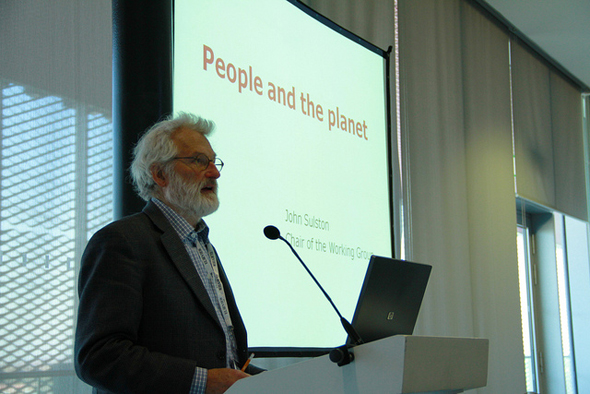
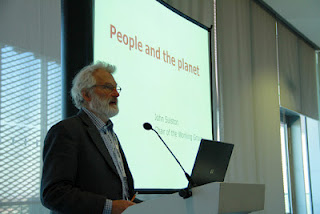
Sir John Sulston of the Royal Society agreed: population is a more-nuanced subject than many can digest. “Population has been much too ignored because it’s difficult,” he said.
I think it’s very clear that these changes are going to interact with the environment and be affected by environmental change but are also going to impact upon future environmental change.
Sulston urged us to look not just at the diversity of the world, but also the inequity. Today, there is “inequity in countries, between countries, and between generations.”
There is no silver bullet – the international community need to look at three components in concert if we want to make a difference, he said: first, bring down infant mortality; second, invest in family planning; and third, emphasize education for women.
“It’s not about surviving, it’s about flourishing,” Sulston said.
When the ECSP delegation isn’t attending plenary and breakout sessions here at the conference, we’re manning our Wilson Center information booth. And over the last few days, we’ve had the pleasure of introducing our work to a number of new faces, including curious faculty, energetic students, and hopeful doctoral candidates. If you’re attending please feel free to stop by.
Expect more updates from East London, including more short video interviews, in the next three days as ECSP highlights the unique perspectives coming out of the Planet Under Pressure conference.
Pictures from the event are available on our Facebook and Flickr pages, and you can join the conversation on Twitter (#Planet2012) or watch the livestream here.
Photo Credit: Sean Peoples/Woodrow Wilson Center, -
One Country, Two Stories: Marc Sommers on Rwandan Youth’s Struggle for Adulthood
›By Stuart Kent // Thursday, March 29, 2012
Almost an entire generation of Rwandans is confronting the prospect that they are going to be failed adults, said Marc Sommers, a fellow with Woodrow Wilson Center’s Africa Program and visiting researcher at Boston University’s African Studies Center.MORE
Sommers explains in this interview how, almost two decades after garnering attention for the international failure to intervene in one of modern history’s greatest human tragedies, the Great Lakes state is the site of two competing narratives: Rwanda as a model of success, in classical development terms, and Rwandan government policies as controlling and constraining its young people.
Sommers launched Stuck: Rwandan Youth and the Struggle for Adulthood, on these and other challenges facing Rwandan youth, in February at the Wilson Center.
“There has been some really innovative development work that has been…spearheaded by the President of Rwanda and by his government,” said Sommers. Government efforts to limit corruption, ensure efficiency in governance, and attract private investment suggest, at one level, a bright future for the state. But the government has also instituted restrictions that limit the social and economic options of a wide swath of the country’s youth.
The regime in Rwanda before the genocide was also seen as a model of development, said Sommers. Clearly, “we know that assessment was not accurate,” and it’s troubling that we have to make a human rights qualification about the progress made today as well, he said.
“The prerequisite for a male youth to become a man is…to build a house,” Sommers explained. But, “there is a housing emergency and it’s fueled, it’s exacerbated, by the policies of the government.” All new houses are required to be built on specific plots of land – “imidugudu” – which specify a minimum size requirement.
The impact of these restrictions is not limited to men either. In Rwanda, “a female youth can’t become a woman unless she has someone to marry, and if a male youth can’t finish his house, who’s she going to marry?” Sommers said. To further complicate matters, those young people who attempt to escape traditional prerequisites for adulthood by migrating to the rapidly growing capital of Kigali face “very severe constraints” on informal market activities such as street vending.
Sommers suggested that government restraints on the construction of housing and on informal economic activities need to be reformed and loosened if Rwanda’s young men and women are to have a chance to become full, socially accepted, and economically productive members of society. -
Guest Contributor:
Much Ado About Conflict? Climate’s Links to Violence Reexamined
›By Nils Petter Gleditsch // Wednesday, March 28, 2012Nils Petter Gleditsch, former long-time editor of the Journal of Peace Research, recently returned to guest edit a special issue on climate change and conflict (Jan. 2012). This article is based on his introduction to that issue.
Violence is on the wane in human affairs, even if slowly and irregularly. Could climate change reverse this trend? Pundits and politicians have raised the specter of havoc caused by rising temperature, erratic patterns of rainfall, and rising sea levels. In this way, so the story goes, climate change will produce famine and mass migration that threatens political stability and provokes violence. However, to date there is little evidence that the meteorological or agricultural conditions associated with climate change are actually a major source of violence.MORE
There is increasing agreement that the world is warming and that there is a significant man-made contribution. But uncertainty continues about many of the physical consequences of climate change and even more so about the social effects. The Intergovernmental Panel on Climate Change (IPCC) is not a research institute; its task is to review and assess existing work. On the question of the security implications of climate change, where little research had been done prior to its most recent report (2007), the IPCC had a poor basis for an assessment. Predictably, this report had little to say about the security implications of climate change.
At the time, in a summary of research on climate change and conflict for Political Geography, I outlined five priorities for future research in this area:- Disentangle the causal chains between climate change and conflict
- More tightly pair climate change models and conflict models
- Reconsider the types of violence expected to result from climate change
- Consider potential positive and negative social effects of climate change
- Increase focus on the developing world, where climate change will matter most
So, what has been achieved so far?
Disentangling Causal Chains and the Value of Modeling
The link between climate change and conflict that has been tested most extensively is the influence of climate variability, specifically changes in rainfall, on conflict. Abrupt changes in rainfall can have adverse effects on rain-fed agriculture or cattle herding in particular. The common assumption is that drought produces conflict in these areas. However, several studies have shown that conflicts occur more frequently in wet seasons, probably because there is a greater incentive for raiding and robbing your neighbor when she/he is better off.
A number of empirical studies now make use of systematic data on levels and change of precipitation. Generally, they use empirical data for the past few decades and assess the empirical regularities that can be assumed to continue at least in the near future. Only a few studies have started to use projections from climate models. Because of the uncertainties inherent in these models and the problems of predicting specific events from social science models, the potential value of this approach is contested.
Distinguishing Types of Violence and Considering Potential Positive Effects
Traditionally, research on armed conflict has concentrated on interstate war and civil war. By far the largest man-made killer in the twentieth century, however, was one-sided violence (including genocide and politicide). Although environmental change has been linked by some to major episodes of such violence in Rwanda and Darfur, so far, there is not much systematic evidence to support these links.
The bulk of studies on climate change and security concerns civil war, but there is some empirical work on climate change and low-level interstate conflict. Water resources, in the form of shared rivers or aquifers, play a key role in most of these studies. Their conclusions generally see institutional factors as central to whether tension over shared water resources is escalated to violence.
Few if any would argue that environmental changes generally and climate changes specifically have a major impact on conflict on their own – the effect plays out in interaction with other conflict-promoting factors. Several studies have tested for interactions with institutions and regime type. Other obvious candidates for such interactions are poverty and patterns of ethnic polarization and marginalization.
There is very little work that focuses on possible positive effects of climate change for security. For instance, despite the many justifiably pessimistic predictions about global food security under global warming, local or regional improvements in the conditions for food production might offset current food insecurity in some areas and help to lower the risk of local scarcity conflict. But this remains to be studied.
At the global level, economic development, which drives climate change, also lowers the risk of conflict within and between states. Therefore, even if climate change drives conflict, the effect may not be visible if it is overshadowed by the peacebuilding effect of economic development.
Weather vs. Climate
There is some question whether the current work on climate change and conflict is really about climate, or mainly about weather. The IPCC’s glossary (2007) defines climate as “average weather,” usually over a 30-year period. Most of the studies to date look at much shorter time periods, although some measure climate variation as deviations from long-term averages.
A few of the recent articles that have taken a very long-term perspective, such as a millennium, have come up with a stronger relationship. However, they usually find that conflict is more closely associated with cooling than with warming. A plausible interpretation is that agricultural production suffers in the cold periods and that this leads to scarcity conflicts. But it also seems that with increasing industrialization the world moves away from such Malthusian constraints.
The conflict data used in these studies have not been well tested and for obvious reasons there is a lack of control variables, so this work should be taken with a grain of salt. In any case, better integration between the long-term climate studies and the studies of shorter-term weather changes reported in most of the extant studies, is a priority item on the research agenda.
Avoiding a Self-Fulfilling Prophecy
Climate change is the world’s premier world-wide man-made environmental problem and is a firm warning that human activities can influence our physical environment on a global scale. The range of possible consequences of climate change is so wide that it is difficult to sort out the main priorities. If a reversal of the current trend towards a more peaceful world is one of these consequences, it should have a prominent place on the policy agenda.
Based on studies like those outlined in the special issue of the Journal of Peace Research, that pessimistic prediction may not be warranted in the short to medium run. Framing climate change as a security issue may in fact contribute to a self-fulfilling prophecy, encouraging militarized responses to local and regional conflicts.
The study of the relationship between climate change and conflict has advanced noticeably in the past four years. Several recent summaries conclude that so far there is not yet much evidence for climate change as an important driver of conflict. Although environmental change may under certain circumstances increase the risk of violent conflict, the existing evidence indicates that this is not generally the case.Nils Petter Gleditsch was the editor of the Journal of Peace Research from 1983 to 2010. This article is based on his introduction to that issue, a version of which first appeared on Social Science Space.
-
Planet Under Pressure:
Demography, Climate in the Spotlight at Planet Under Pressure
›By Kayly Ober // Tuesday, March 27, 2012London’s 2012 Planet Under Pressure conference, on all things global change – including climate, population, global risks, and food security – kicked off with a bang on March 26 and ECSP was there to cover it. We’ll be here throughout the week following all of the most pertinent population, health, and security events – we invite you to visit our booth if you happen to be in London, join the conversation on Twitter (#Planet2012), and/or watch the livestream.MORE
During the opening plenaries, UK Scientific Advisor and all-around environmental all-star Sir John Beddington was the first to introduce population into the discussion.
Speaking on “The Planet in 2050” panel, Beddington immediately noted that really 2050 is too far out and instead we should focus on the next two decades. Within these 20 years the trajectory of greenhouse gas emissions and climate change will be determined by the extent and manner of urbanization and demographic changes, particularly in Africa.
“How are we going to generate an infrastructure to feed 500 million Africans in the next 13 years?” Beddington asked.
Beddington’s talk could be considered a rejoinder to his famous “perfect storm” analogy, outlined in The Guardian in 2009:Our food reserves are at a 50-year low, but by 2030 we need to be producing 50 percent more food. At the same time, we will need 50 percent more energy, and 30 percent more freshwater.
In a later session, “Securing Global Biodiversity,” Simon Stuart, chair of the species survival commission of the International Union for Conservation of Nature (IUCN), expanded on this “perfect storm” analogy.
There are dramatic problems out there, particularly with water and food, but energy also, and they are all intimately connected. You can’t think about dealing with one without considering the others. We must deal with all of these together.
He agreed that the global challenge of our day hinged on how human needs add pressures to the natural environment. Rising demand for energy, food, and freshwater not only influences climate change but also exerts unprecedented pressure on soil quality and biodiversity.
But although we’re impeded by major challenges, including “unsustainable economic models,” a lack of public support, and a massive need for investment in conservation, we have made some strides, Stuart said. The Convention on Biological Diversity’s strategic plan for biodiversity, established in 2010, sets 20 targets for biodiversity conservation by 2020. Stuart believes this is the beginning of acknowledging the urgency of addressing the threat to biodiversity.
Tim Coulson, professor of population biology at Imperial College London, compared the efficiency of either reducing fertility rates or per capita consumption to determine the best way to reduce humanity’s impact on the planet.
Coulson ran two simple simulations using India and the United States as case studies. In one model, he changed fertility rates by one percent per year for 50 years. In the other, he decreased per capita consumption by one percent per year for 50 years. What he found in both cases was that decreasing per capita consumption achieved the most rapid change in human impact on the environment. Nevertheless, he acknowledged that a longer-term course of action of declining fertility rates was needed to keep impact stable.
Readers beware, however – this type of experiment is an incredibly simplified exercise in the intersection of people and the environment. A more varied set of scenarios would produce more useful results. As Beddington mentioned, populations in sub-Saharan Africa have both the highest growth rates and the most direct impact on the environment due to their higher reliance on natural resources for livelihoods.
And, perhaps most importantly, as one commentator noted, these scenarios do not take into account cost factors. For instance, in order to reduce greenhouse gas emissions through more energy efficient buildings and transport, the United States would need to invest $1.1 trillion through 2030. Alternatively, the cost to provide for the 215 million women in developing countries who want to avoid pregnancy but are not using an effective means of contraception is estimated at $3.6 billion. Using the “wedge” climate model, meeting unmet family planning needs would be equivalent to the amount of greenhouse gas emissions saved by converting entirely to electric vehicles – at a fraction (about five percent) of the cost.
Stay tuned for more updates from ECSP at the Planet Under Pressure Conference. We’ll also be posting pictures from the conference to our Facebook and Flickr pages.
Video Credit: “Welcome to the Anthropocene,” commissioned by the Planet Under Pressure Conference. -
First Impressions: Four Takeaways from the Global Water Security Intelligence Assessment
›By Geoff Dabelko // Tuesday, March 27, 2012The just-released unclassified National Intelligence Council report on water and security is a very positive contribution to understanding very complex and interconnected ecological, social, economic, and political issues.
The report was issued by the National Intelligence Council (NIC). But behind the assessment are many months of extensive consultations across government and with outside scholars and practitioners from myriad sectors. At the end of the day, and by definition, the authors adopt a U.S. security perspective. But the assessment’s utility should extend far beyond the security sector given the trends it identifies and the analysis it advances. Indeed, Secretary Hillary Clinton, who requested the assessment, launched it during her World Water Day speech last week.MORE
NSB’s editor Schuyler Null hit on the report highlights earlier this week, but here are a few broader takeaways from the report that will quickly become a common point of reference in the water and security community:
Water cannot be viewed in isolation from other key issues such as energy and food. The report highlights the need to see these key issues as interconnected and intertwined and these connections can help explain how water and security linkages have key manifestations in other sectors. This finding implies that single sector approaches present potential shortcomings with very real security implications. In these ways, human security concerns constitute priorities for traditional security institutions in ways that cannot be dismissed as lower priorities.
Water security impacts national security. While conflict and traditional concerns of the security community are an expected feature of the report, the assessment also makes clear that trends in water and sanitation, or water and food, or water and energy, constitute fundamental challenges that rise to the level of security concerns as well. The presence of organized violence is not a necessary to constitute critical concerns for the stability and human security conditions of a group, community, country or region.
In essence, the intelligence community recognizes that it doesn’t need to “bleed to lead.” There are a number of security concerns that are not connected explicitly to organized violence.
The future may not look like the past regarding water and conflict between states. Scholarship by Aaron Wolf and colleagues has provided an evidence-based antidote to the appealing “water wars” frame that so dominates newspaper headlines and political speeches. The NIC assessment recognizes this research by affirming that states have not fought over water and in fact cooperation has occurred in many contexts even in the face of shared and at times scarce resources. Yet the assessment says the future may not look like the past beyond 10 years hence, when increased demand will test the institutional arrangements we have for sharing water and resolving water disputes.
The policy conclusion that the NIC cannot recommend (by law) but should be drawn by policymakers: invest much more energy and resources in the development of transboundary water institutions and dispute resolution mechanisms now rather than in 10 years.
Governments can occasionally look long-term. The U.S. government and its security institutions are at times able to carve out enough time to look seriously at long-term challenges. Such examples are few and far between. But the NIC’s other well-known product, the Global Trends report, looking a couple decades ahead every four years to coincide with new presidential administrations, is another notable exception.
The true challenge now becomes whether public and private sector actors across the development, diplomacy, and defense arenas will proactively act on these insights. The intelligence community cannot, it should be remembered, make policy recommendations. Their products are diagnostic and analytical, not policy prescriptive. It is up to the “consumers” of this intelligence assessment to act.
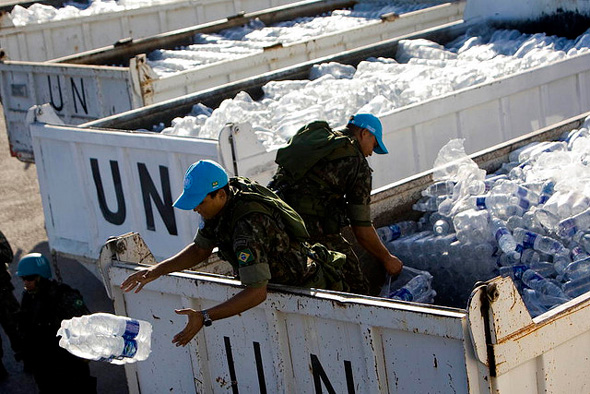
Photo Credit: “UN Peacekeepers Distribute Water and Food in Haiti,” courtesy of United Nations Photo. -
Global Water Security Calls for U.S. Leadership, Says Intelligence Assessment
›By Schuyler Null // Monday, March 26, 2012Alongside and in support of Secretary Clinton’s announcement of a new State Department-led water security initiative last week was the release of a global water security assessment by the National Intelligence Council and Director of National Intelligence. The aim of the report? Answer the question: “How will water problems (shortages, poor water quality, or floods) impact U.S. national security interests over the next 30 years?”
MORE
The assessment, Global Water Security, was requested by the State Department and carried out primarily by the Defense Intelligence Agency, drawing on intelligence community resources as well as peer-reviewed research and consultations with outside experts.
The authors’ five broad conclusions are well summarized in the text; we’ve quoted the central nuggets of each below:1) Over the next 10 years, water problems will contribute to instability in states important to U.S. national security interests. Water shortages, poor water quality, and floods by themselves are unlikely to result in state failure. However, water problems – when combined with poverty, social tensions, environmental degradation, ineffectual leadership, and weak political institutions – contribute to social disruptions that can result in state failure.
Why? The intelligence community lists underdevelopment and dependence on upstream nations with unresolved water-sharing issues as destabilizing factors. (Interestingly, this prediction appears to have the intelligence community’s lowest degree of confidence – “moderate” as opposed to “high to moderate” for the others – and may well end up being the most cited.)2) Water-related state-on-state conflict is unlikely during the next 10 years. Historically, water tensions have led to more water-sharing agreements than violent conflicts. However, we judge that as water shortages become more acute beyond the next 10 years, water in shared basins will increasingly be used as leverage; the use of water as a weapon or to further terrorist objectives also will become more likely beyond 10 years.
This prediction was also made by panelists at this year Environment and Security Conference in Washington, DC, who cited rapid and considerable social and environmental changes in the near future as a threat to make the hitherto mostly-hyperbolic phenomenon of “water wars” more likely.3) During the next 10 years the depletion of groundwater supplies in some agricultural areas – owing to poor management – will pose a risk to both national and global food markets.
Agriculture accounts for 70 percent of water usage worldwide, so it comes as no surprise that food security is closely tied to water security. But it is important that the intelligence community explicitly ties these concerns with global food markets and therefore the prosperity and stability of all nations.4) From now through 2040, water shortages and pollution probably will harm the economic performance of important trading partners.
Hydropower, write the authors, generates 80 percent or more of all the power for more than 15 developing countries. Water shortages and erratic supplies affect power generation and therefore limit economic growth – they’re already having an impact on the development of some countries, according to the report.5) From now through 2040, improved water management (e.g., pricing, allocations, and “virtual water” trade) and investments in water-related sectors (e.g., agriculture, power, and water treatment) will afford the best solutions for water problems.
In the long-term, the “greatest potential for relief” for water scarcity, write the authors, is “simple and inexpensive” improvements in agriculture. They cite a substantial body of “open source reporting” on water-related social tensions and have high confidence in this conclusion.
Drivers of Supply
In addition to these broad predictions, Global Water Security assesses strategically important basins – the Nile, Tigris-Euphrates, Mekong, Jordan, Indus, Brahmaputra, and Amu Darya – and finds the Amu Darya and Brahmaputra to be the most vulnerable to instability.
The key drivers of these vulnerabilities are economic development, climate change, and population growth. Consumption – due to economic development – and population are of course tied to closely to one another, but climate change is the wild card. The IPCC projects that river runoff and water availability will increase by 20 to 40 percent at high latitudes and some wet tropical areas, while decreasing 10 to 30 percent in other areas. The authors judge this variability will lead to waste and mismanagement of existing resources – especially groundwater overdrafts.
Growing populations are a key factor too but mainly because of where they are located: by 2030, “one-third of the world’s population will live near water basins where the water deficit will be larger than 50 percent,” write the authors.
Overall, North Africa, the Middle East, and South Asia – all demographic hotspots – are predicted to face “major challenges coping with water problems” that can “only be met through increased trade.”
America, Prepare to Engage
The assessment cannot make explicit policy recommendations by law, but the section on how these issues will affect the United States points to some logical conclusions.
The United States, long seen as a source of water expertise, will be leaned on even more to work with developing and developed countries alike and support “major development projects,” the authors predict. And this call will be heard not just by the U.S. Government but by the private sector as well.
Beyond financial assistance and big project leadership, the intelligence community suggests the United States will be relied on for legal aid to strengthen water sharing agreements and institutions, satellite data and other remote sensing data to provide valuable measuring and metrics, and as a reliable source of agricultural exports.
These demands on U.S. assistance provide “opportunities for leadership and forestalling other actors from achieving the same influence at U.S. expense,” the Office of the Director of National Intelligence writes in their press release. Not meeting these calls for action carries implicit consequences and, I would argue, points to a tacit recommendation: engagement. American leadership can help countries achieve more with limited resources and meet growing global food demand – all while achieving some enlightened long-term self-interest by strengthening global stability and prosperity and keeping competitors out of this space.
One thing that is not recommended is over-engineering, especially in developing countries. Large infrastructure projects to feed growing urban demands “are expensive and degrade natural processes such as water cleaning and flood and drought mitigation,” write the authors, and “often harm the livelihoods of local populations, leading to increased poverty and food insecurity.” The risk of unintended consequences is high, they warn.
As one might expect given that the assessment was asked for by the State Department, Secretary Clinton’s new U.S. Water Partnership initiative delivers on some of these predictions, particularly in fulfilling the need for U.S. expertise. The public-private endeavor, announced with 22 initial partners, is designed to “connect people and resources” – including foreign governments at national, regional, and local levels; non-government organizations; and international organizations – “making information easily accessible and leveraging the assets of partners to offer a range of ‘best of the U.S.’ solutions tailored to priority water needs.”
Given the strong role of water issues in global stability predicted by the intelligence community, the initiative seems like an excellent step in the right direction. How the initiative shapes up operationally, however, will be critical, especially in the face of increased budget pressure and the specter of more isolationist domestic politics in the near future.
For more on the assessment, read ECSP Director Geoff Dabelko’s four takeaways for the broader environmental security community.
Sources: Office of the Director of National Intelligence, U.S. Department of State.
Photo Credit: “The world through a drop of water,” courtesy of flickr user see what you want to see. -
Reading Radar:
Fourth World Water Development Report Released by UN
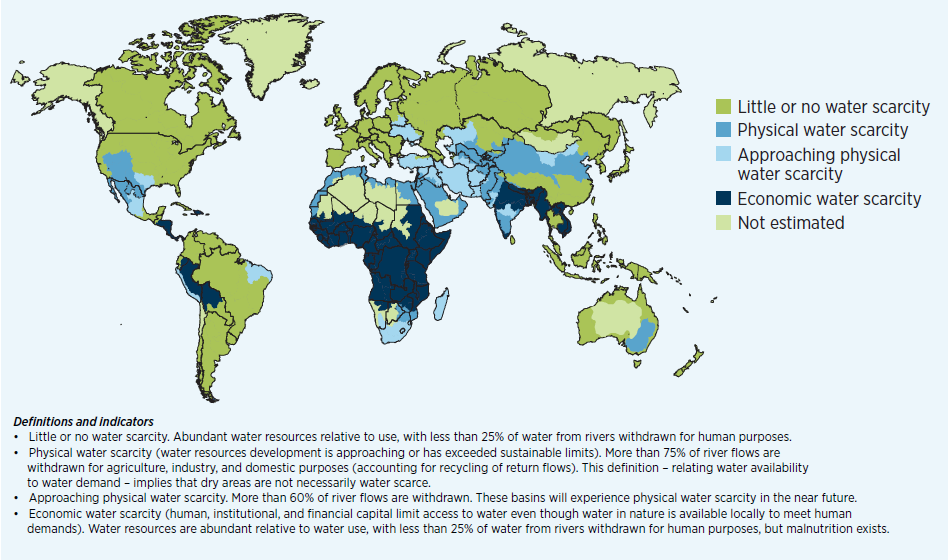
›By Schuyler Null // Thursday, March 22, 2012The beginning of last week’s World Water Forum in Marseille also marked the release of UNESCO’s fourth edition of the World Water Development Report. Chief amongst the challenges outlined in the new report are meeting demand from growing population and consumption. Agriculture accounts for 70 percent of water usage, according to the report, and globally we will require 70 percent more food over the next 40 years, introducing the possibility of overtaxing already-stressed water resources – all while adapting to climate change. There are substantial gains to be had in increasing farm-to-table efficiency, especially in developing countries, the authors sagely point out, but the supply challenge remains a huge one.MORE
This year’s edition also adds several new sections, including on women and water. “The crisis of scarcity, deteriorating water quality, the linkages between water and food security, and the need for improved governance are the most significant in the context of gender differences in access to and control over water resources,” write the authors. “These challenges are expected to become more intense in the future.”
The integrated nature of today’s water issues is a highlight throughout the report. “Accelerated change” will create new threats and “interconnected forces” create uncertainty and risk, but UNESCO emphasizes that if policymakers are made aware of these issues, ultimately “these forces can be managed effectively and can even generate vital opportunities and benefits through innovative approaches to allocation, use, and management of water.”
Image Credit: Water Management Institute, via figure 15.5 from UNESCO World Water Development Report. -
On the Beat:
PBS ‘NewsHour’ and Pulitzer Center Examine Water Shortage and Health Issues in Ghana and Nigeria
›By Schuyler Null // Thursday, March 22, 2012
The PBS NewsHour continued its collaboration with the Pulitzer Center on Crisis Reporting on international reporting last week with an episode on water infrastructure in Ghana and Nigeria. The coverage is especially apropos on World Water Day.
Correspondent Steve Sapienza spoke to reporters in Ghana and Nigeria to highlight long-running access and sanitation issues in both countries caused by poor infrastructure that has not kept up with growth.MORE
Ameto Akpe is a local reporter for Nigeria’s BusinessDay, where her stories “target the contradiction of a country with immense oil wealth and great water resources that are not reaching their citizens.” In the city of Makurdi, capital of the north-central Benue State, she reports on the hundreds of thousands of people who rely on either high-priced water delivery or untreated water drawn straight from the Benue River.
“The previous attempt to build a water treatment plant ended in scandal in 2008,” says Sapienza, “with an unfinished treatment facility and city officials unable to account for $6 million.”
“Unfortunately, the waterworks is only half of the solution to Makurdi’s water problem,” writes Akpe on the Pulitzer Center. “The other half is a system of pipes to deliver the water to the people – and that project is just a twinkle in the eye of a handful of contractors and bureaucrats.”
In Ghana, metro TV reporter Samuel Agyemang explains similar access and sanitation issues in the capitol of Accra and its suburb of Teshie, where some residents have waited decades for piped water, despite substantial foreign investments.
The Pulitzer Center’s Peter Sawyer explains in a companion piece that “the population of Accra has grown enormously in the past several decades. But the water supply system has not grown with it.” As a result, the Ghana Water Company is constantly playing catch-up to provide water to communities, many of whom do not understand how to demand accountability from their officials, says Agyemang.
According to UN estimates, Ghana’s population has increased by more than 10 million people since 1990. Nigeria is one of the fastest growing countries in the world, with 158 million people currently and the UN medium projection estimating a possible 389 million by mid-century.
Reporter Ameto Akpe will be speaking about Nigeria’s water and sanitation problems at an upcoming all-day event on Nigeria at the Wilson Center, scheduled for April 25.
Sources: PBS NewsHour, Pulitzer Center for Crisis Reporting, UN Population Division. -
From the Wilson Center:
Hotspots: Population Growth in Areas of High Biodiversity
›By Kate Diamond // Wednesday, March 21, 2012More than one-fifth of the world’s population lives in biodiversity hotspots – “areas that are particularly rich in biodiversity and endemic species,” said John Williams of the University of California, Davis, at the Wilson Center on February 29. And those populations are growing faster than the global average. Add to that the fact that “biodiversity continues to decline globally, despite increasing investments in conservation,” said David Lopez-Carr of the University of California, Santa Barbara, and the need for new approaches to conservation becomes evident.
MORE
Williams and Lopez-Carr were joined by Dr. Vik Mohan, director of the sexual and reproductive health program for Blue Ventures, a London-based conservation nongovernment organization that works with communities on the remote western coast of Madagascar.
To respond to the demands of the communities and to better protect biodiversity hotspots, the speakers argued that conservation efforts need to incorporate health and livelihood services directed at the growing populations living nearby.
A Complex Relationship
“The relationship between population and biodiversity loss or conservation is a pretty complex relationship,” said Williams.
He offered Latin America and the Caribbean as an example of the multiple factors that can affect how population and biodiversity interact. Population growth in the region has slowed, and agricultural expansion is driving habitat loss as the population ages and urbanizes and as increasing per capita GDP contributes to higher levels of consumption.
In the Indo-Pacific region, stretching from East Asia to Australia, high population growth coupled with economic growth has coincided with an increase in the exploitation of rare species for illegal trade, according to Williams. And in Africa, where the population is growing quickly but without comparable economic growth and amid high levels of instability, subsistence drives ecological exploitation.
Biodiversity and Family Planning in Madagascar
“People who live in the biodiversity hotspots are typically poorer, typically have poorer access to healthcare than their counterparts in the cities or in the world at large, and typically have poorer health than those counterparts,” said Mohan.
Blue Ventures has been working in Madagascar since 2003. The island is one of the most biodiverse areas in the world; 80 percent of its plant and animal life is endemic, meaning it exists there and nowhere else, said Mohan. At the same time, Madagascar is one of sub-Saharan Africa’s fastest growing countries, with a population growth rate of 2.9 percent and an average total fertility rate of 4.6 children per woman.
Blue Ventures initially came to the country to improve conservation in the island’s coastal villages, where residents survive largely on subsistence fishing. But once there, the group quickly found that the population was “growing so rapidly that in spite of our best conservation efforts, the demand for those finite coastal resources [was] outstripping supply,” said Mohan.
“The number of people who are going out to catch fish to feed their to feed their families is going up exponentially, and those fisherman are having to work harder and harder to catch smaller fish that are farther and farther down the food web.”
Realizing that trend, Mohan said that “just by asking a few very basic questions, we unearthed a huge unmet need for healthcare and a huge unmet need for family planning in particular.”
In response, Mohan and his colleagues opened up a family planning clinic in Andavadoaka, one of the villages Blue Ventures serves. On the clinic’s first day, Mohan said, “20 percent of all women of reproductive age came asking for contraception.” Following that opening, they “rapidly found [that] this unmet need was mirrored in every single village along the coast that we worked in,” he said. Since then, modern contraceptive prevalence, initially about seven percent, has increased four-fold, while birth rates have fallen by about one-third. All in all, Mohan said, the population of the Velondriake region, where Blue Ventures operates, is five percent smaller now than it would have been without the group’s family planning services.
Rural Areas Driving Population Growth
Across the developing world, Lopez-Carr said that unmet need for family planning “remains significantly higher” in biodiversity hotspots. Given that high unmet need, especially in Africa, it is easy to infer that “conservation may be less sustainable…if it does not consider health,” he said.
In his ongoing research on population and biodiversity, Lopez-Carr looks at how fertility rates compare in and out of hotspot areas and between regional and local levels. At the country and province level, “high-value conservation areas do not have unusually high total fertility rates (TFRs),” he said. But at more localized levels, “in the most remote rural areas, TFRs remain high, and in many cases, in the most remote rural areas, the demand for family planning is still very low,” indicating that these areas are still in the early stages of their demographic transitions.
The fact that the sub-state picture can look so different from the state-level picture means that there is more work for researchers to do, said Lopez-Carr. “Where the fertility rates are highest is where we have the least data,” he said, and that has significant implications for understanding future population growth.
Looking at UN population projections, the world’s net population gains will be in its poorest cities, he said, but “virtually all this growth is going to be from migration, fueled by remaining high fertility in rural areas.” And “virtually all of that growth will be predicated upon the timing, magnitude, [and] pace of the fertility transition in rural areas.”
Better understanding the demographic picture in rural areas is therefore critical – not just to improving health and preserving biodiversity in the world’s hotspots, but to honing down more accurate global population projections as well.
Event ResourcesPhoto Credit: “Fisherman Carries Day’s Catch,” courtesy of United Nations Photo. -
Food Security in a Climate-Altered Future [Part Two]
›Population Projections Are Not Destiny
By Kathleen Mogelgaard // Tuesday, March 20, 2012Read part one, on the food-population-climate vulnerability dynamics of Malawi and other “hotspots,” here.
Too often, discussions about future food security make only a passing reference to population growth. It is frequently framed as an inevitable force, a foregone conclusion – and a single future number is reported as gospel: nine billion people in 2050. But adhering to a single path of future population growth misses the opportunity to think more holistically about food security challenges and solutions. Several recent food security reports illustrate this oft-overlooked issue.MORE
Accounting for Population a Challenge
Oxfam International’s Growing a Better Future: Food Justice in a Resource-Constrained World is a thorough and fascinating examination of failures in our current food system and future challenges related to production, equity, and resilience. It reports newly-commissioned research, carried out by modelers at the Institute of Development Studies, to assess future agricultural productivity and food prices given the anticipated impacts of climate change.
But both the modeling work and the report text utilize a single projection for population growth: the UN’s 2008 medium variant projection of 9.1 billion by 2050 (which has since been revised by the UN up to 9.3 billion). Early on, the report does recognize some degree of uncertainty about this number: “Greater investment in solutions that increase women’s empowerment and security – by improving access to education and health care in particular – will slow population growth and achieve stabilization at a lower level.” But such investments do not appear in the report’s overall recommendations or Oxfam’s food security agenda. This is perhaps a missed opportunity, since the range of possibilities for future population growth is wide: the UN’s low variant for 2050 is 8.1 billion, and the high variant is 10.6 billion.
Food Security, Farming, and Climate Change to 2050: Scenarios, Results, and Policy Options is another frequently-cited report published by the International Food Policy Research Institute in 2010. In recognizing that economic growth and demographic change have important implications for future food security, IFPRI researchers modeled multiple scenarios for the future: an “optimistic” scenario which embodies high GDP growth and low population growth, a “pessimistic” scenario with low GDP growth and high population growth, and a “baseline” scenario which incorporates moderate GDP growth and the UN’s medium population projection. Each of these scenarios was then combined with five different climate change scenarios to better understand a range of possible futures.
Using different socioeconomic scenarios enabled researchers to better understand the significance of socioeconomic variables for future food security outcomes. The first key message from the report is that “broad-based economic development is central to improvements in human well-being, including sustainable food security and resilience to climate change.” This focus on economic development is based in part on the “optimistic scenario,” which counts on high GDP and low population growth (translating to high rates of per capita GDP growth).
Unfortunately, the socioeconomic scenario construction for this analysis doesn’t allow for an independent assessment of the significance of slower population growth, since high population growth is paired only with low GDP and lower population growth is paired only with high GDP. Therefore, none of the report’s recommendations includes reference to reproductive health, women’s empowerment, or other interventions that would contribute directly to a slower population growth path.
Expanding the Conversation to Better Inform Policy
Without a more nuanced treatment of population projections in technical analysis and popular reporting on food security, decision-makers in the realm of food security may not be exposed to the idea that population growth, a factor so critical in many areas where food security is already a challenge, is a phenomenon that is responsive to policy and programmatic interventions – interventions that are based on human rights and connected to well-established and accepted development goals.
There are some positive signs that this conversation is evolving. A new climate change, food security, and population model developed by the Futures Group enables policymakers and program managers to quickly and easily assess the impact of slower population growth on a country’s future food requirements and rates of childhood malnutrition. In the case of Ethiopia, for example, the model demonstrates that by 2050, a slower population growth path would make up for the caloric shortfall that is likely to arise from the impact of climate change on agriculture and would cut in half the number of underweight children.
And recently, we’ve begun to see some of this more nuanced treatment of population, family planning, and food security linkages in a riveting, year-long reporting series (though perhaps unfortunately named), Food for 9 Billion, a collaboration between American Public Media’s Marketplace, Homelands Productions, the Center for Investigative Reporting, and PBS NewsHour.
In January, reporter Sam Eaton highlighted the success of integrated population-health-environment programs in the Philippines, such as those initiated by PATH Foundation Philippines, that are seeing great success in delivering community-based programs that promote food security through a combination of fisheries management and family planning service delivery. Reporting from the Philippines in an in-depth piece for PBS NewsHour, Eaton concluded:So maybe solving the world’s food problem isn’t just about solving the world’s food problem. It’s also about giving women the tools they want, so they can make the decisions they want – here in the world’s poorest places.
Making clear connections of this nature between population issues and the most pressing challenges of our day may be the missing link that will help to mobilize the political will and financial resources to finally fully meet women’s needs for family planning around the world – an effort that, if started today, can have ongoing benefits that will become only more significant over time. Integrating reproductive health services into food security programs and strategies is an important start.
Back in Malawi, just before we turned off the highway to the Lilongwe airport, I asked the taxi driver to pull over in front of a big billboard. We both smiled as we looked at the huge government-sponsored image of a woman embracing an infant. The billboard proclaimed: “No woman should die while giving life. Everyone has a role to play.” Exactly. The reproductive health services that save women’s lives are the same services that can slow population growth and bring food security within closer reach. -
Food Security in a Climate-Altered Future [Part One]
›“Hotspots” Suggest Food Insecurity More Than a Supply Problem
By Kathleen Mogelgaard // Tuesday, March 20, 2012Small talk about the weather with my Malawian taxi driver became serious very quickly. “We no longer know when the rains are coming,” he said as we bumped along the road toward the Lilongwe airport last November. “It is very difficult, because we don’t know when to plant.”
These days, he is grateful for his job driving a taxi. His extended family and friends are among the 85 percent of Malawians employed in agriculture, much of which is small-holder, rain-fed subsistence farming. Weather-related farming challenges contribute to ongoing food insecurity in Malawi, where one in five children is undernourished.MORE
His observations of the recent changes in climate match forecasts for the region: in East Africa, climate change is expected to reduce the productivity of maize – Malawi’s main subsistence crop – by more than 20 percent by 2030, according to a recent analysis by Oxfam International.
I looked out the window at dusty fields and tried to imagine what Malawi might look like in 2030. For one thing, it will be more crowded. A lot more crowded. According to UN population projections, by 2030, Malawi’s population will have grown from about 15 million today to somewhere between 26.9 and 28.4 million. With climate change dampening agricultural productivity and population growth increasing food demand, how will Malawians – many of whom don’t have enough to eat now – have enough to eat in the future?
It gets quiet in the taxi as the driver and I both ponder this question. Malawi is not alone in being a climate-vulnerable country with a rapidly growing population dependent on rain-fed agriculture. Population Action International’s Mapping Population and Climate Change tool shows us that many “hotspot” countries – scattered across Latin America, Africa, and Asia – face the triple challenge of low climate change resilience, projected decline in agricultural productivity, and rapid population growth.
Agricultural trade, government safety net programs, and foreign assistance will no doubt continue to play an important role in the quest for food security in Malawi and other “hotspot” countries in the future. And climate change adaptation projects will, hopefully, reshape agricultural practices and technologies in ways that can boost yields and enable crops to better withstand temperature and precipitation fluctuations.
These interventions will be critical in addressing the supply side of future food security challenges. But what about growing demand?
Malthus Revisited?
Juxtaposing population growth with food production does, of course, bring us back to Thomas Robert Malthus’ original (and by now somewhat infamous) dire warning: that population growth would eventually outrun food supply. But seeing the scale of the challenges in Malawi firsthand, I must admit that my inner Malthus sat up and took notice.
It is true that technological advances have enabled astounding growth in agricultural yields that have enabled us to feed the world in ways the doom-filled Malthus could never have imagined in the early 19th century. But it is also true that the agricultural productivity gains that helped us keep pace with population growth for so long are beginning to slow: According to the U.S. Department of Agriculture, aggregate agricultural yields averaged 2.0 percent growth annually between 1970 and 1990, but that growth in yields declined to 1.1 percent between 1990 and 2007, and is projected to decline to less than 1.0 percent in the years to come.
This comes at a time when the Food and Agriculture Organization reports that food production will need to increase by 70 percent by 2050 in order to adequately feed a larger, wealthier, and more urbanized population.
To dismiss any talk of population growth as outmoded Malthusian hand-wringing misses an opportunity to embrace interventions that can contribute significantly to prospects for future food security – namely, empowering women with information and services that enable them to determine the timing and spacing of their children.
In Malawi and many of the “hotspot” countries around the world, high proportions of women remain disempowered in this regard. Meaningful access to family planning and reproductive health services results in smaller, healthier families that will be better equipped to cope with the food security challenges that are headed their way.
Not only does a smaller family mean that limited household resources go further, but access to family planning and reproductive health services is connected to other important education and economic outcomes.
A new Population Reference Bureau policy brief, for example, highlights how improving women’s reproductive health will not only lead to declining fertility and slower population growth in sub-Saharan Africa, but can also contribute to balancing a woman’s many roles (agricultural producer, worker, mother, caregiver, etc.) in ways that support greater food security for her family. And research by the International Food Policy Research Institute shows that in developing countries, women’s education and per capita food availability are the most important underlying determinants of child malnutrition – with women’s education having the strongest beneficial impact. Access to family planning paves the way for these outcomes – and by slowing population growth, can help to slow the growth in food demand.
Women’s Needs and Future Food Demand
The scale of potential benefits of meeting women’s family planning needs is significant when thinking about future food demand, both globally and especially in food insecure, climate-vulnerable countries. As we have seen in Malawi, there is a range of possible future population sizes and that range grows even wider when the projections are extended to 2050: According to the UN, Malawi’s 15 million today will grow to somewhere between 45 million and 55 million by 2050.
That span of 10 million people embodies assumptions about declining fertility in Malawi. To reach 55 million, the average number of children per woman would need to drop from 5.7 today to 4.5 by 2050. If fertility drops further, to 3.5 children per woman, Malawi’s population would grow to (only) 45 million. Where Malawi ends up in that 10-million-person population spread will have deep implications for per capita food availability, not to mention other important development outcomes.
Fertility declines of this kind do not require coercion or “population control.” As we have seen time and again, when women are empowered with information and services that enable them to determine the timing and spacing of their children, smaller, healthier families are the inevitable result.
Meeting women’s needs for reproductive health and family planning services is not – and never should be – about reducing population size. Universal access to reproductive health is recognized as a basic human right and central development goal (embodied in Millennium Development Goal 5) because of its vital connections to women’s and children’s health, education and employment opportunities, and poverty alleviation. And yet, too many women remain without the ability to effectively plan their families. In Malawi, one in four married women would like to delay their next birth or end child-bearing all together but aren’t using contraception; globally, 215 million have this unmet need.
As global efforts ramp up to address interlinked challenges of food security and climate change adaptation, assessing the role of population growth is more important than ever. And in designing strategies to address these challenges – strategies like the U.S. Government’s Feed the Future Initiative and UN-supported National Adaptation Plans – we should not pass over opportunities to incorporate interventions to close the remaining gap in universal access to family planning, especially in places like Malawi and other “hotspot” countries (such as Haiti, Nigeria, and Nepal), where women’s unmet family planning needs are high and population growth is rapid.
Continue reading with part two on the often under-examined role of population projections in food security assessments here.
Sources: Food and Agriculture Organization, Guttmacher Institute, International Food Policy Research Institute, International Institute for Environment and Development, MEASURE DHS, Oxfam International, Population Action International, Population Reference Bureau, The Lancet, U.S. Department of Agriculture, UN Population Division.
Photo Credit: Women in a village near Lake Malawi make cornbread while caring for small children, used with permission courtesy of Jessica Brunacini. -
Finding the Link Between Water Stress and Food Prices
›Lakis Polycarpou, State of the Planet
By ECSP Staff // Monday, March 19, 2012The original version of this article, by Lakis Polycarpou, appeared on State of the Planet.
Over the past decade, average global food prices have more than doubled, with 2008 and 2010 seeing excruciating price spikes that each had far-reaching economic, geopolitical, and social consequences.
What explains this long-term trend – and why did prices spike so much higher in the years that they did?MORE
For policymakers at all levels, answering that question is of vital importance if there is to be any hope of feeding the world’s growing population in the coming decades, much less maintaining social order.
According to recent research by the New England Complex Systems Institute, spikes in food prices are so closely correlated with social unrest that they were able to identify a particular food-price threshold above which food riots are very likely.
The most obvious cause for high food prices is oil – in fact, charts showing the correspondence between food and oil prices show an eerie overlap, especially in the last half decade. Water scarcity and climate are major players as well, however. According to the just released United Nations World Water Development Report, demand for water will grow by 55 percent in the next 40 years, and farmers will need 19 percent more water by 2050 just to keep up with growing food demands.
Continue reading on State of the Planet.
Sources: Nature, New England Complex Systems Institute, UNESCO.
Photo Credit: “Farmers work on the arid land in Hertela village few kilometers from Mahoba in Bundelkhand, India on September 26, 2008.” Courtesy of flickr user balazsgardi. -
John Williams: Helping People and Preserving Biodiversity Hotspots
›By Schuyler Null // Friday, March 16, 2012
“Both humans and the number of species in the world are not evenly distributed across the globe,” said John Williams of the University of California, Davis, who recently spoke at the Wilson Center about his contribution to Biodiversity Hotspots: Distribution and Protection of Conservation Priority Areas. “In particular we find that species diversity is concentrated in what’s called the biodiversity ‘hotspots.’”MORE
Largely in the tropics, Mediterranean climates, and along mountain chains, biodiversity hotspots are “where there’s a real concentration in number of species and also unique species – plants and animals that exist nowhere else on Earth,” he said.
“It’s a very complex relationship between biodiversity and human population, because it’s not necessarily [true] that places of high human population are a threat to biodiversity,” said Williams. Many different factors play a role, “like education, like consumption, like economic development, different cultures – how people interface with the natural world – all these things create nuances as far as what that relationship is between biodiversity and where people live.”
“There are some basic things we can do that are going to be good for human welfare, as well as biodiversity,” he continued. A few are addressing lack of education, especially among girls, in areas of high biodiversity; providing basic health services, including family planning, where rural growth rates are highest; and improving physical access to rural areas to promote economic development.
“We see there’s a direct correlation between each additional year of schooling a girl has and their fertility during their lifetime,” Williams said. “As people climb out of poverty, they also choose to have smaller, healthier families.” -
From the Wilson Center:
Reflections on Women in the Arab Spring
›The Middle East Program
By ECSP Staff // Friday, March 16, 2012The Arab Spring has fascinating and powerful demographic and gender undercurrents. Last year, demographer Richard Cincotta counseled observers to pay close attention to the demonstrations: if they featured young women – as opposed to being dominated by young men and boys – it’s a sign that democracy may be on its way. To mark the occasion of International Women’s Day last week, the Wilson Center’s Middle East Program gathered observations from a cross-section of regional voices on how women have fared thus far.MORE
Excerpted below is the entry from Moushira Khattab, former Egyptian ambassador to South Africa and the Czech and Slovak Republics, and former minister of family and population:As the global community celebrates International Women’s Day, we must hail the heroic and pivotal role Egyptian women played to make the January 25th Revolution an inspiration for the world. They joined men and took to Tahrir Square calling for freedom, dignity, and social justice. They rallied around the cause of pushing the train of political change. One year later, Egyptian women find that the train of change has not only left them behind, but has in fact turned against them. It is ironic that the revolution that empowered a country, and made every Egyptian realize the power of their voice, stopped short of women’s rights. Sadly, the only march that was kicked out of Tahrir Square was that of women celebrating 2011 International Women’s Day. Women were beaten, subjected to virginity tests, and stripped of their clothes in the very same Tahrir Square.
Download the full set of reflections from the Wilson Center’s Middle East Program.
Dormant conservative value systems are being manipulated by a religious discourse that denies women their rights. Calls for purging the sins of the old regime necessitate a reminder of the positive outcomes of laws that, although enacted under that old regime, have liberated and enhanced women’s status, including prohibiting female genital mutilation and child marriage. We also need a reminder that such gains are only a step towards these rights, and are the outcome of collective hard work along generations. Against the background of parliamentary elections, defenders of women’s rights have backed down, while young revolutionaries don’t have women’s rights on their agendas. The most telling indicator is the shameful and meager representation of women in Egypt’s post-revolution parliament. Among a handful of elected female MPs, one declared that her top priority is to repeal the law granting women the right to seek divorce.
With religious parties controlling it, the question becomes: Will this parliament be willing and able to produce a constitution that guarantees equal rights to all Egyptians regardless of gender or religion? Dare we dream that Egyptians in 2012 could have a constitution equal to that put in place by South Africans in 1996?
Subscribe to: Posts (Atom)