Monthly archive for November 2011. Show all posts
-
Book Preview: In ‘War and Conflict in Africa’, GWU Scholar Skeptical That Natural Resources Play a Leading Role
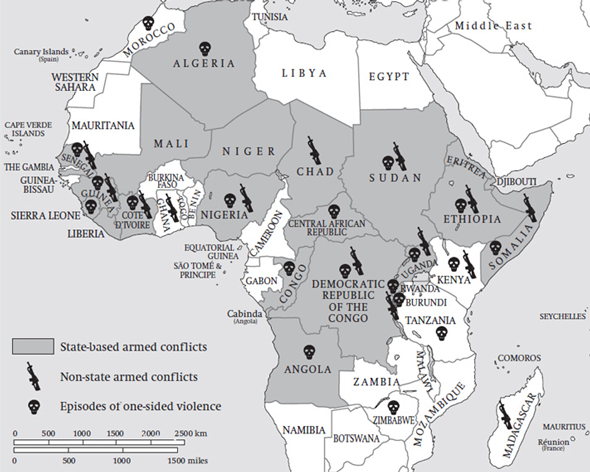
›By Elizabeth Leahy Madsen // Wednesday, November 30, 2011While there is widespread agreement that the incidence of conflict in Africa is high, scholars and development agencies alike debate its driving forces and how to move toward solutions. Paul Williams, associate professor in the Elliott School of International Affairs at George Washington University and collaborator with the Wilson Center’s Africa Program, recently published a book that aims to both quantify African conflicts and devise a framework of their causes. In War and Conflict in Africa, Williams evaluates which factors explain the frequency of conflict in Africa during the post-Cold War era and how the international community has tried to build peace and prevent future conflict.MORE
Although there have been promising trends toward establishing peace and democracy in some African countries, the continent still accounts for about one-third of all armed conflicts annually – more than Europe, the Middle East, and the Americas combined. International responses to these events range from focused humanitarian and conflict resolution efforts, to new regional organizations and global strategic and defense partnerships.
Seven of the 16 current UN peacekeeping missions operate in Africa, more than any other continent. The UK government has elected to spend nearly one-third of its development assistance in conflict-affected areas, and more than half of its “focus” countries are in Africa. In 2008, the Department of Defense created the U.S. Africa Command (AFRICOM), whose commander, General Carter Ham, in a speech to Congress earlier this year, described “an insidious cycle of instability, conflict, environmental degradation, and disease that erodes confidence in national institutions and governing capacity,” as motivation for American military attention. “This in turn often creates the conditions for the emergence of a wide range of transnational security threats,” he said.
Evaluating the Ingredients of Conflict
Williams rejects earlier theses that attribute conflict across the continent to a single factor, such as the boundary legacies of colonialism, greed, or ethnicity. Instead, he characterizes African conflicts as “recipes” composed of case-specific mixes of factors, many of which are underlying and only some of which are sufficient triggers for conflict. “Collier is wrong,” Williams explained in an email interview. “Governance structures are always an important part of the buildup to war.”
Five “ingredients” of conflict are examined in-depth: neo-patrimonial governance structures; natural and human resources; sovereignty and self-determination; ethnicity; and religion. Among these, the book presents a fairly skeptical view of resources, ethnicity, and religion as immediate drivers of conflict. This assessment that environmental and identity issues are not sufficient to generate conflict on their own aligns with the book’s overarching argument: The decisions of political actors can instigate conflict or motivate peace from virtually any context, manipulating factors such as ethnicity and religion for their own advantage.
Effects of Natural Resources Are “Open-Ended”
A widely publicized thread of peace and conflict studies posits that resources, either when scarce or abundant, have an important role in triggering wars. A 2009 UN Environment Programme report found that 40 percent of all internal conflicts since 1950 “have a link to natural resources.” Recent peer-reviewed research has suggested that certain environmental changes increase the likelihood of civil conflicts or are directly responsible for it. Yet the question remains a source of much debate. For his part, Williams asserts that natural resources alone are insufficient to cause conflict.
War and Conflict in Africa presents several reasons that researchers and policymakers should avoid linking resources directly to conflict without considering the influence of intervening factors. Chief among them is that the value of any resource is socially constructed – no stone or river carries worth until humans decide so. Therefore, Williams argues that “it is political systems, not resources per se, that are the crucial factor in elevating the risk of armed conflict.”
The book suggests that two extant theories successfully demonstrate the connection between resources and conflict. The first body of research finds that conflict is more likely in regions that face a combination of resource abundance and a high degree of social deprivation. The second theory suggests that the link between resources and conflict lies in bad governance, whether exploitative or unstable. Both theories have explanatory power for Williams’s central line of thinking: Resources can be either a blessing or a curse, depending on leadership.
“Inserted into a context where corrupt autocrats have the advantage, resources will strengthen their hand and generate grievances,” he writes (p. 93). “Inserted into a stable democratic system, they will enhance the opportunities for leaders to promote national prosperity.”
Population and the Environment
Williams does accede that particular resource factors – land and demography, for example – may play a more significant role than others in conflict, but calls for more research. In a brief discussion of population age structure, the book suggests that there is no single relationship between demography and conflict but multiple ways that the two can relate. Williams mentions the theory that “large pools of disaffected youth” with few opportunities can raise the risk of volatility. However, he then notes other research showing that the most marginalized members of certain African societies are less likely to participate in political protests and more likely to tolerate authoritarian rule than those who are better off.
“The most marginalized from society are the truly destitute without patrons and suffering from severe poverty. They may well be inclined to join an insurgency movement once it begins to snowball but they will not usually play a key role in establishing the rebel group in the first place,” Williams said. However, “any time there are large pools of poor and unemployed youth there is the potential for leaders to manipulate them.”
On environmental resources, the book argues that land should be a central feature of quantitative research on the relationship between resources and conflict. Most African economies continue to rely on agriculture, and Williams observes that land has been “at the heart” of many conflicts in the region through a variety of governance-related mechanisms relating to its management and control. He places less emphasis on water scarcity as a potential factor in conflict, noting that the 145 water-related treaties signed around the world in the past decade auger well for cooperation rather than competition.
Williams is also dubious of emerging arguments that climate change could directly increase the incidence of conflict, either through changing weather patterns or climate-induced migration.
“Because armed conflicts are, by definition, the result of groups choosing to fight one another, any process, including climate change, can never be a sufficient condition for armed conflict to occur,” he argued. “Armed conflicts result from the conscious decisions of actors which might be informed by the weather but are never simply caused by it.”
No Simple Formula
Williams is not the only observer to find the narrative that resource shortage (or abundance) precipitates conflict too simplistic. His message to policymakers is a common refrain from academics and analysts seeking to counteract policymakers’ quest for simple formulas: We need more data.
“When deciding how to spend our money, we need to spend more of it on developing systems which deliver accurate knowledge about what is happening on the ground, often in very localized settings,” Williams said. War and Conflict in Africa contributes to a more complex understanding of the political actors and systems that catalyze or prevent conflict and offers a cautionary tale to those who seek only proven, easy predictions.
Elizabeth Leahy Madsen is a consultant on political demography for the Wilson Center’s Environmental Change and Security Program and senior technical advisor at Futures Group. She was previously a senior research associate at Population Action International. Full disclosure: She was a graduate student of Paul Williams’ in 2007.
Sources: DFID, Englebert and Ron (2004), Ham (2011), Hsiang et al (2011), Kahl (1998), Leysens (2006),Østby et al (2009), Radelet (2010), Themnér and Wallensteen (2011), UNEP (2009), UN Peacekeeping, Williams (2011)
Image Credit: Conflicts in Africa 2000-09, reprinted with permission courtesy of P.D. Williams, War and Conflict in Africa (Williams, 2011), p.3. -
Guest Contributor:
The Yasuní-ITT Initiative Is a Practical Climate Solution That Must Be Embraced at Durban
›By Ivonne Baki // Monday, November 28, 2011As the world turns to Durban, South Africa, for this year’s UN climate summit, new findings are turning up the heat on the urgency to address climate change. The reality though is that we no longer have the luxury of resting our hopes solely on an internationally binding climate agreement; we must begin to look more closely at supporting immediate and tangible solutions. By complementing a global top-down effort of continued international negotiations with bottom-up approaches, we increase our chances at mitigating the most damaging effects of climate change. One of the most innovative models of such a bottom-up approach is the Yasuní-ITT Initiative being undertaken by the Government of Ecuador and supported by the UN Development Programme’s Multi-Partner Trust Fund Office (MPTF Office).
MORE
The Yasuní-ITT Initiative prevents a significant output of carbon dioxide while preserving biodiversity and indigenous rights by keeping the petroleum industry permanently out of the Ishpingo-Tambococha-Tiputini oil fields, located predominantly within Ecuador’s Yasuní National Park. In exchange, Ecuador is compensated, through a voluntary international fund, for a fraction of the oil’s value, which goes towards funding renewable energy projects and sustainable development – a true intersection of environmental security issues.
The initiative may serve as a model for developing counties seeking to shift away from carbon-laden industrialization towards renewable energy matrices and needs to be seriously debated at Durban. But this first-of-its-kind program needs more support from the international community in order to make the loss of oil revenues politically viable.
The Yasuní-ITT Initiative
The ITT oil fields, deep within the Ecuadorian Amazon, hold 846 million proven barrels of heavy crude oil, accounting for 20 percent of Ecuador’s proven reserves. But these fields are located beneath one of the most biodiverse spots in the Western hemisphere.
In April 2007, Ecuadorian President Rafael Correa stated that his administration’s preferred option for the ITT was to leave the oil permanently beneath Yasuní National Park in exchange for partial compensation from the international community of forgone revenue. Ecuador officially launched the Yasuní-ITT Initiative in June 2007. The primary goals of the initiative, codified in President Correa’s address at the UN General Assembly in 2007, are to respect the territory of indigenous peoples, particularly of those who choose to live in voluntary isolation; protect the park and its biodiversity; and mitigate climate change by keeping 407 million metric tons of CO2 out of the atmosphere.To support the innovative initiative, the Government of Ecuador, with the support of the UNDP, established the Yasuní-ITT Trust Fund in August 2010. Administered by the MPTF Office, the fund’s objectives are to raise half of the expected oil revenues (in 2010 prices) and channel contributions into two windows. The first window’s objectives are to help finance renewable energy projects (hydro, geothermal, solar, wind, biomass, and tidal plants) to offset the presumed loss of power production. The second’s objectives are to fund sustainable development programs (conservation, reforestation, energy efficiency, social programs, and research). In exchange for these contributions, the fund provides certificates of guarantee ensuring that “the crude [would] stay, in an indefinite manner, below ground.”Dr. Eric Chivian, founder and director of Harvard’s Center for Health and the Global Environment on Yasuní’s biodiversity.
Crowd Funding for Yasuní: Time Is of the Essence
When the fund was established, the UNDP and the Government of Ecuador set a goal of raising $100 million in contributions by December 2011 to test the viability and international support of the initiative. At a high-level meeting on the Yasuní-ITT Initiative during the UN General Assembly this September, Secretary General Ban Ki-moon and President Rafael Correa announced $52.9 million in contributions from Italy, Australia, Turkey, Colombia, and Peru, amongst others, but the outstanding balance of sought-after contributions remains unmatched. Next month, there will be a complete review, at which point if the sought-after contributions are not received, it will become increasingly more difficult to maintain a policy of non-extraction in Quito.
Given the position of petroleum in its economy, Ecuador is willing to make a tremendous financial sacrifice by supporting this initiative. Petroleum accounts for nearly half of all of Ecuador’s exports and one-third of tax revenues. According to a study by Carlos Larrea of the Simon Bolivar Andean University, Ecuador would receive around $7.25 billion in revenues if the oil were extracted (that estimate, however, was based on the benchmark price of $76.38/barrel of WTI crude, which hovered around $96/barrel this week). The Ecuadorian government seeks half of the expected 2010 oil revenues and will foot the rest. GDP per capita was $4,290 in 2010. Over a third of the country’s population – 36 percent – live below the poverty line. Despite all of this, there is strong domestic support for the initiative. Of the 63.4 percent of Ecuadorians polled last month who knew of the Yasuní-ITT Initiative, 83.4 percent supported the initiative. Just this past weekend, Ecuadorian citizens donated over $2 million to the initiative during a civic campaign.
Carbon Mitigation, Biodiversity Protection, and the Rights of Indigenous Peoples
Global carbon dioxide output in 2010 grew by 564 million tons more than in 2009 – an increase of almost six percent. At these levels of output, the IPCC has forecasted temperature rise between 4°F and 11°F by the end of century, the median figure of 7.5°F being the best estimate. By not extracting the oil underneath the ITT block, the world would avoid the release of an additional 407 million metric tons of CO2. If last year’s increased output pushed global temperature rise into worst case scenarios for this century, imagine adding the CO2 output from Yasuní’s petroleum?
There is more to the Yasuní-ITT Initiative than merely mitigating climate change though; it is also about protecting valuable species diversity. The Yasuní National Park benefited from being a refuge during the Pleistocene Era – it was one of three places in the Amazon that did not freeze over during the Ice Age. According to a 2010 study in the science journal PLoS One, a typical hectare (2.54 acres) of forest in Yasuní contains upwards of 655 tree species – more than is native to the continental United States and Canada combined – as well as 100,000 species of insects. One section of the park holds at least 200 species of mammals, 247 amphibian and reptile species, and 550 species of birds, making Yasuní National Park one of the most biodiverse places on Earth.
This incredible biodiversity also holds the potential for scientific and medical breakthroughs. “Yasuní’s enormous biodiversity will lead to new medicines and medical-research models to treat human diseases and relieve human suffering,” says Founder and Director of Harvard’s Center for Health and the Global Environment and Nobel Peace Prize co-winner Dr. Eric Chivian. “If the Yasuní is destroyed we may lose those species of amphibians that contain painkillers that are better than any we have and that contain antibiotics that will prevent the crisis of antibiotic resistance that is coming down the pike,” he warns (see video above).
On top of these issues is Ecuador’s commitment to its indigenous population. Ecuador has realized that indigenous rights cannot be secured without simultaneously ensuring environmental protection. Two relatives of the Waorani Indigenous group (the predominant indigenous group of the Yasuní National Park), the Tagaeri and the Taromenane, live in voluntary isolation deep within the park’s boundaries, precariously close to the ITT zone. They depend on Yasuní for their survival, and their way of life would be forever altered by oil extraction in the ITT block.
The Way Forward
Many developing countries have their eyes on the Yasuní-ITT Initiative. If the initiative fails to garner international support, it will discourage developing countries from adopting bold climate measures that require significant financial sacrifices. This is not to say that initiatives like the Yasuní-ITT should replace a far-reaching, international climate agreement, but we must be pragmatic and support ready-to-implement solutions now. The cost of inaction is too high. We cannot wait until 2015 or 2020 for a binding international agreement, and most importantly for the people of Ecuador, Yasuní cannot wait.
There is no undoing the damage that may be caused by oil extraction in such a pristine part of the Amazon. With a review forthcoming from President Correa in December on whether to continue with the bold plan, the Yasuní-ITT Initiative needs support. We must all show our commitment to mitigating climate change and protecting the earth’s rich biodiversity by taking a step forward at Durban, not backward. The excuses are many. The realities, however, necessitate action.
Ivonne Baki is the plenipotentiary representative of Ecuador to the Yasuní-ITT Initiative. She is also the founder of the Galapagos Conservancy Foundation and UNESCO Goodwill Minister for Peace. She previously served as Ambassador of Ecuador to the United States and as Ecuador’s Minister of Foreign Trade, Industry, Regional Integration, Fisheries, and Competitiveness.
Sources: AP, Bass et al. (2010), Bloomberg, Foreign Affairs, Trade, and Integration Ministry (Ecuador), International Energy Agency, IOP Publishing, PLoS ONE, Project Syndicate, SOS Yasuní, The Huffington Post, U.S. Energy Information Administration, UN Development Programme, UN Framework Convention on Climate Change, World Bank, Yasuní-ITT Initiative, Yasunizate (via YouTube).
Image Credit: “Yasuní-ITT,” courtesy of Plataforma Climatica Lationamericana; video courtesy of Yasunizate; chart from “Global Conservation Significance of Ecuador’s Yasuní National Park” (Bass et al. 2010) courtesy of PLoS One. -
UNiTE To End Violence Against Women
›By Schuyler Null // Friday, November 25, 2011Today is the International Day to End Violence Against Women, an awareness and advocacy campaign organized by a host of UN agencies and offices “to galvanize action across the UN system to prevent and punish violence against women.”
Gender equity and inequity play a role in a myriad of international development, health, security, and even environmental issues, from rape as a weapon of war; demography’s effects on political stability; maternal health and its impact on child development; women’s rights as a social stability issue; and the disproportionate effect of climate change on rural women.MORE
The numbers around gender-based violence are staggering. According to the UN:
Here are some of New Security Beat’s posts on gender-based violence and inequity and their intersection with development, the environment, and security:- 70 percent of women experience physical or sexual violence from men in their lifetime.
- Approximately 250,000 to 500,000 women and girls were raped in the 1994 Rwandan genocide, and in the eastern Democratic Republic of Congo (DRC), at least 200,000 cases of sexual violence, mostly involving women and girls, have been documented since 1996, though the actual numbers are considered to be much higher.
- In the United States, one-third of women murdered each year are killed by intimate partners; in South Africa, a woman is killed every six hours by an intimate partner; in India, 22 women were killed each day in dowry-related murders in 2007; and in Guatemala, two women are murdered, on average, each day.
- Over 60 million girls worldwide are child brides, married before the age of 18, primarily in South Asia (31.1 million) and sub-Saharan Africa (14.1 million).
Gender-Based Violence in the DRC: Research Findings and Programmatic Implications:
Dr. Lynn Lawry, senior health stability and humanitarian assistance specialist at the U.S. Department of Defense, presented findings from the first cross-sectional, randomized cluster study on gender-based violence in the DRC at the Wilson Center this year. The first of its kind in the region, the population-based, quantitative study covered three districts in the DRC and a total of 5.2 million adults, comprehensively assessing gender-based violence, including its prevalence, circumstances, perpetrators, and physical and mental health impacts.
Pop Audio: Judith Bruce on Empowering Adolescent Girls in Post-Earthquake Haiti: “The most striking thing about post-conflict and post-disaster environments is that what lurks there is also this extraordinary opportunity,” said Judith Bruce, a senior associate and policy analyst with the Population Council. Bruce spent time last year working with the Haiti Adolescent Girls Network, a coalition of humanitarian groups conducting workshops focused on the educational, health, and security needs of the country’s vulnerable female youth population.
The Walk to Water in Conflict-Affected Areas: Constituting a majority of the world’s poor and at the same time bearing responsibility for half the world’s food production and most family health and nutrition needs, women and girls regularly bear the burden of procuring water for multiple household and agricultural uses. When water is not readily accessible, they become a highly vulnerable group. Where access to water is limited, the walk to water is too often accompanied by the threat of attack and violence.
Weathering Change: New Film Links Climate Adaptation and Family Planning: “Our planet is changing. Our population is growing. Each one of us is impacting the environment…but not equally. Each one of us will be affected…but not equally,” asserts the new documentary, Weathering Change, launched at the Wilson Center in September. The film, produced by Population Action International, explores the devastating impacts of climate change on the lives of women in developing countries through personal stories from Ethiopia, Nepal, and Peru.
Sajeda Amin on Population Growth, Urbanization, and Gender Rights in Bangladesh:
The Population Council’s Sajeda Amin describes the Growing Up Safe and Healthy (SAFE) project, launched in Dhaka and other Bangladeshi cities last. The initiative aims, to increase access to reproductive healthcare services for adolescent girls and young women, bolstering social services to protect those populations from (and offer treatment for) gender-based violence, and strengthen laws designed to reduce the prevalence of child marriage – a long-standing Bangladeshi institution that keeps population growth rates high while denying many young women the opportunity to pursue economic and educational advancement.
No Peace Without Women: On October 31, 2000, the UN Security Council adopted Resolution 1325, which called for women’s equal participation in all efforts to maintain and promote peace and security; however, little progress has been made over these last 10 years and women remain on the periphery when it comes to post-conflict reconstruction and development. A report from the humanitarian organization CARE concedes that “much of the action remains declarative rather than operational.”
Addressing Gender-Based Violence to Curb HIV: At last year’s International AIDS Conference in Vienna an astonishing development in the campaign to stem the spread of HIV/AIDS was unveiled – a microbicide with the ability to reduce the risk of transmission of HIV. This welcome development coincides with an intensified focus on women’s health and security needs among donors, especially the United States.
The Future of Women in the MENA Region: A Tunisian and Egyptian Perspective: Lilia Labidi, minister of women’s affairs for the Republic of Tunisia and former Wilson Center fellow, joined Moushira Khattab, former minister of family and population for Egypt, this summer at the Wilson Center to discuss the role and expectations of women in the Egyptian and Tunisian revolutions, as well as issues to consider as these two countries move forward.
Sources: UN Secretary-General’s Office. -
Reading Radar:
Supply and Demand, Land and Power in the Global South
›By Lauren Herzer // Thursday, November 24, 2011In “Competition over Resources: Drivers of Insecurity and the Global South,” author Hannah Brock examines how an increased demand for non-renewable resources could lead to insecurity and contribute to local and international discord. The first of four papers examining what the Oxford Research Group has identified as the “most important underlying drivers of insecurity,” the paper focuses on competition over resources – specifically energy, water, and food – and argues that “a new way of approaching security is needed, one that addresses the drivers of conflict: ‘curing the disease’ rather than ‘fighting the symptoms.’” Through numerous examples, Brock illustrates the various strategies that nations are currently undertaking to satisfy demand and cautions that “where northern states and corporations buy access to southern resources, regulatory principles may be required to ensure this competition does not impair the human rights and security of local populations.”MORE
A new briefing paper from Oxfam, “Land and Power: The growing scandal surrounding the new wave of investments in land,” heavily criticizes the rising trend of foreign land acquisitions, or “land grabs,” that have occurred since the 2007-08 food prices crisis, calling them an infringement on the rights of more vulnerable populations and decrying their environmental impact. The authors use case studies in Uganda, Indonesia, Guatemala, Honduras, and South Sudan to argue that land grabbing is a type of “development in reverse.” “National governments have a duty to protect the rights and interests of local communities and land rights-holders,” Oxfam writes, “but in the cases presented here, they have failed to do so.” The authors conclude with recommendations to improve transparency and shift power more towards local rights. -
From the Wilson Center:
7 Billion: Reporting on Population and the Environment
›By Theresa Polk // Wednesday, November 23, 2011
“It’s an issue – population – that is immensely diverse in its effects and repercussions, and it’s a great opportunity for reporting,” said Jon Sawyer, executive director of the Pulitzer Center on Crisis Reporting at a November 1 roundtable discussion at the Wilson Center. The session, reporting on population and the environment connections, also featured Dennis Dimick, executive environment editor at National Geographic; Kate Sheppard, environment reporter for Mother Jones; and Heather D’Agnes, foreign service environment officer at USAID.MORE
“It’s an issue – population – that is immensely diverse in its effects and repercussions, and it’s a great opportunity for reporting,” said Jon Sawyer, executive director of the Pulitzer Center on Crisis Reporting at a November 1 roundtable discussion at the Wilson Center. The session, reporting on population and the environment connections, also featured Dennis Dimick, executive environment editor at National Geographic; Kate Sheppard, environment reporter for Mother Jones; and Heather D’Agnes, foreign service environment officer at USAID.The PBS NewsHour segment on “seven billion” featuring collaboration with the Pulitzer Center and National Geographic.
A Cumulative Discussion
“I ended up covering reproductive rights and health issues because I saw a need and a gap in coverage,” said Kate Sheppard. “I had been an environmental reporter for years…and so it sort of became this add-on beat for me.” But, she emphasized, they are actually very related issues.
“It’s a cumulative discussion,” said Dennis Dimick, speaking about National Geographic’s “7 Billion” series this year. “[Population] really hasn’t been addressed that much in media coverage over the past 30 years, in this country at least, and I think that the idea was that it wasn’t really just a discussion about the number seven billion, which is a convenient endline and easy way to get into something, but really to talk about the meaning of it, and the challenges and the opportunities that means for us as a civilization living on this planet.”
The series has had stories on ocean acidification, genetic diversity of food crops, the transition to a more urban world, as well as case studies from Brazil, Africa’s Rift Valley, and Bangladesh. “What we are trying to do in this series is really paint a broad picture to try to unpack all these issues and try to come at this question in sort of broad strokes,” Dimick said. “It’s sort of like we are orchestrating a symphony. Even though it’s a printed magazine, it’s a multimedia project – more than just words and more than just pictures.”
Collaborative Reporting
The Pulitzer Center, a non-profit journalism organization that seeks to fill gaps in coverage of important systemic issues, was able to commission pieces for PBS NewsHour that complemented the National Geographic series. This population collaboration launched the Center’s own initiative on population. “Our hope was that by having that platform, and the visibility of National Geographic and NewsHour, that it would bring attention to the rest of our work,” Sawyer said. The Pulitzer Center has gateways on water, food insecurity, climate change, fragile states, maternal health, women and children, HIV/AIDS in the Caribbean, and Haiti, in addition to population.
Playing off a story that was already making world headlines, the Pulitzer Center supported reporting by freelance journalist Ellen Knickmeyer on the demographic dimensions of the Arab Spring, and particularly the role of young people. The stories explored youth’s frustration at high unemployment and lack of prospects, their roles in the revolutions, and their expectations for the future.
“Of course, we had the advantage that the world was interested in North Africa because of the amazing events that were taking place, but it was an opportunity to get them to look at the other dimension to it,” Sawyer said.
Based on a model developed to cover water and sanitation in West Africa, the Pulitzer Center also created a partnership with four African journalists to produce reporting on reproductive health that will be distributed in both international and African media outlets. “They have important things to say to American audiences, to international audiences,” Sawyer said. “And so we see this project as an opportunity to bring them into the international media discussion.” The journalists will be reporting from the upcoming International Conference on Family Planning in Dakar, Senegal, later this month.
Advocating Discussions
“It’s really a nuanced discussion, and that is why covering these topics, and looking at all the different aspects of it, is really important,” said USAID’s Heather D’Agnes. Furthermore, speaking as a development practitioner, she emphasized the importance of offering solutions, such as family planning, as part of an integrated development approach.
“In our journalism we don’t pretend not to have arguments, or ideas, or thoughts about the issues we are covering,” said Sheppard, speaking of Mother Jones. “I think that the value is that you tell the story well and you do solid reporting – that gives people a more informed perspective.” Especially with complicated issues, like population and the environment, “people find it more accessible if you have a perspective…they can associate better with a story if you walk them through the process you have gone through as a reporter.”
“What we are really trying to do is to advocate a discussion of issues that aren’t getting well-aired in other media,” said Dimick. Sometimes you need to find an interesting or counterintuitive framework, such as the National Geographic story about rural electrification and TV novelas in Brazil. It started as a story about the booming popularity of soap operas, but also created the opportunity to talk about gender equity, family planning, and other complex issues. While the magazine does not advocate a position, like the editorial page of a newspaper might, Dimick said, they do use case studies to guide readers through the range of risks, choices, and opportunities and to help them understand their implications.
Event ResourcesVideo Credit: “World’s Population Teeters on the Edge of 7 Billion — Now What?,” courtesy of PBS NewsHour; “7 Billion, National Geographic Magazine,” courtesy of National Geographic. -
Lifting the Veil: What Can We Learn From EITI Reports?
›Jill Shankleman for the U.S. Institute of Peace
By ECSP Staff // Tuesday, November 22, 2011The original version of this article, by Jill Shankleman, appeared on the United States Institute of Peace’s International Network for Economics and Conflict blog.
The Extractive Industries Transparency Initiative (EITI), launched in 2002, now has 35 participating countries that have committed to publish annual, independently verified reports on all mining, oil, and gas payments made by companies to governments and all revenues received by governments from these extractive industry companies. The EITI is based on the premise that making public reliable information about extractive industry payments will make corruption and theft of “resource rents” more difficult and will enable informed debate amongst citizens and politicians about how to use resource wealth. While initially some governments could object to joining on the grounds that EITI was “a bad boys’ club,” Norway is now a fully engaged member; the United States has just announced that it will participate; and Australia stated it will pilot-test the system.MORE
The participants in EITI also include Liberia, East Timor, Sierra Leone, and Côte d’Ivoire, which, as post-conflict states, depend more than most on effective management of their resource wealth to establish the foundations for sustained economic growth. Citizens, journalists, and government officials in all the EITI countries now have access to some information on what extractive industry companies are paying to the government and what the government is receiving.
However, examination of country EITI reports reveals several shortcomings in reporting. What do the reports tell us beyond the headline numbers (i.e., total revenues and the size of any discrepancy between what companies report paying and what governments report receiving)? What do they tell us about revenue trends or about the significance of these revenues in total government receipts? How many countries have a pattern similar to Tanzania whereby the largest contribution documented in their first report was through companies collecting payroll taxes on behalf of the government? What is the value of “social investments,” training levies, or research and development contributions made by extractive industry companies? Where, and to what extent, do oil, gas and mining companies make payments to local governments?
Continue reading on the International Network for Economics and Conflict blog.
Jill Shankleman is a senior scholar at the Woodrow Wilson Center and former senior social and environmental specialist at the World Bank.
Video Credit: “Transparency Counts,” courtesy of vimeo user EITI International. -
Beat on the Ground:
George Washington University’s PISA Helps Share Rural Vietnamese Climate Adaptation Strategies
›By Schuyler Null // Monday, November 21, 2011“Climate change is not a topic of debate in Vietnam, it’s a real challenge to future prosperity and security,” says George Washington University’s Partnerships for International Strategies in Asia (PISA) program in this video about their climate adaptation and mitigation work in Nam Dinh province. “[Vietnam’s] population density (265 people/square kilometer), its long coastline (3,444 km), its two major rivers (the Red and Mekong) – all help make it one of the 10 countries considered most vulnerable to climate change,” the narrator says.MORE
In Nam Dinh, PISA has partnered with the Hanoi-based Center for Gender, Family, the Environment, and Development to see how rural women in particular are adapting to changes. One strategy being put to use, using limestone powder in rice fields, was passed down from previous generations. The powder helps kill pests and assists in desalination, which has become more important as salt water incursion frequently accompanies storms. Women in the province have also turned to alternative livelihoods, taking up second jobs in the city to mitigate the effects of a single poor rice harvest.
PISA says that overall out-migration from rural areas to the cities, driven in part by climate change, has altered social structures. “Very few women my age stay and farm; most of them go very far away to get a job and to earn money,” Nguyen Thi Hong of Giao Luc commune told PISA. “The main reason is that they cannot depend on the agriculture – the agriculture depends too much on weather.” In addition, the most vulnerable in rural communities – children and the elderly – are sometimes left behind by parents when they move.
The community does benefit from Vietnam’s National Target Program, which sets five-year goals to help protect the country from climate change – including modeling scenarios to determine the most vulnerable areas, raising awareness within the general population, and improving communication between government agencies – while attempting to ensure continued economic growth.
However, the social changes and the adaptation strategies being utilized in rural areas are not always taken into account in national adaptation strategies, says PISA. Their goal, therefore, is to work with researchers, civil society leaders, and those in government to help bridge the communications gap so these local experiences are incorporated at the highest levels.
Sources: Ministry of Natural Resources and Environment (Vietnam), Partnerships for International Strategies in Asia, UN Population Division.
Video Credit: “Adapting Our Lives, Changing Our Legacies,” courtesy of PISA GWU on Planet Forward. -
From the Wilson Center:
Glacial Lake Outburst Floods: “The Threat From Above”
›Lessons From Peru to Nepal
By Kate Diamond // Friday, November 18, 2011“We have never experienced so many potentially dangerous lakes in such a short period of time,” said Alton Byers of The Mountain Institute (TMI) during a roundtable discussion on glacial melt, glacial lakes, and downstream consequences at the Wilson Center on October 26. “There have always been glacial lake outburst floods,” said Byers. What has changed is how quickly these lakes now grow. “Suddenly, you wake up in the morning, and now there are hundreds and hundreds of these lakes above you – the threat from above,” he said.
MORE
Nepal’s Fastest Growing Glacial Lake
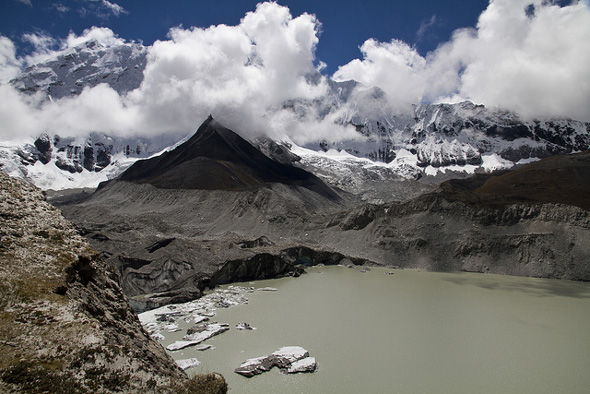
The Imja Glacier in Nepal has been receding since the 1960s, making Imja Lake the fastest growing lake in the country, if not the entire Hindu Kush Himalayas, said Byers in a short film produced by TMI about the group’s recent expedition to the region (watch below). The lake is now “more than a square kilometer in size, has more than 35 million cubic meters of water, and continues to grow at an alarming 35 meters per year,” he said.
The lake’s terminal moraine – the buildup of glacial debris that acts as a retaining wall holding the lake waters back – is all that keeps Imja from flooding the valley below, home to a number of Sherpa communities and the starting point for many climbers scaling Mount Everest.
When these moraines break, the result is a glacial lake outburst flood (or GLOF). And “these aren’t floods in the normal sense,” said Gabriel Campbell. “These are floods that carry boulders the size of houses,” because of all the debris that gets lodged in glaciers.
Critical Need for Research
It is tempting to say that what is happening at Imja Lake is representative of the thousands of glacial lakes believed to exist throughout the Himalayas, but the fact is that “at this point in time, we don’t really know that much about these lakes,” or how to control them, said Byers.
Glacial melting “is an extraordinarily complicated story,” said ClimateWire’s Lisa Friedman, who joined the Imja expedition for part of the trip. There is no “clear understanding yet of how fast glaciers are melting, of where they’re melting, of whether greenhouse gases or black carbon soot is primarily responsible.”
There is considerable disagreement over how many glacial lakes are even in the Himalayas, TMI Executive Director Andrew Taber added, simply because of how prohibitively remote their locations often are. Byers explained that it can take as many as 10 days, plus semi-technical climbing, to reach these places, and even then some glaciers still aren’t accessible. The Siachen Glacier, for instance, has the distinction of being the world’s highest battleground (India and Pakistan have had troops stationed on the glacier since 1984).
And yet understanding what is happening not just at Imja, but throughout the Himalayas, has continental implications. Himalayan glaciers feed nine of Asia’s largest rivers: the Yellow, Yangtze, Mekong, Salween, Indus, Ganges, Brahmaputra, Syr Darya, and Amu Darya. Those rivers, in turn, feed some of Asia’s largest population centers. The sheer number of people who depend on these rivers mean that even minor changes in glaciers’ sizes can have exponentially huge impacts downstream.
Adapting Lessons Learned from Peru
The Mountain Institute’s expedition was aimed at bringing lessons learned about managing glacial change from Peru to Nepal. Peru is home to 70 percent of the world’s tropical glaciers, but those glaciers are melting so quickly that some have predicted within 15 years, they could disappear entirely.
Peru has been working to mitigate the threat of glacial melt since 1941, when a GLOF killed thousands and devastated the capital of Ancash, said César Portocarrero of the Peruvian National Water Authority (also a member of the expedition to Imja). At first, risk management meant simply diverting water from glacial lakes to lower the risk of GLOFs. Over time, though, and with community input, that strategy has expanded to include more comprehensive resource management, so that water being diverted from lakes can be captured and put to use downstream.
Just as Peru’s mitigation work is a reflection of local needs, finding a long-term solution for Imja Lake will depend on local involvement. “When you think about science, and when you think about change, there’s something to be said for more demand driven approaches,” Taber said. “Working with local people…is more likely to lead to solutions and answers that will actually be picked up.”
And yet, Byers said, local people have often been marginalized in research on glacial melt in the Himalayas. “There’s been 30 years of research on this and other lakes and yet no researcher has ever involved them in their research, and they had no idea what the results were,” he said. The TMI expedition made a point of incorporating local residents throughout the process.
Acting in Spite of Uncertainty
Portocarrero said that convincing people of the need for risk management can be difficult. “Around the world, it seems that people don’t want to work in risk management because we don’t have tangible results,” said Portocarrero. And when risk is mired in uncertainty – as it is in the Himalayas – getting people to invest in risk management becomes even harder.
Portocarrero warned it might take a decade or more for people downstream to realize Imja and other glacial lakes pose a serious danger and take action. “But the big question is,” he added, “are we going to wait 10 years to see the real danger?”
Sherri Goodman, who led the CNA Military Advisory Board during its 2007 report on national security and climate change, said action can’t wait for perfect information.
“Climate change is a threat multiplier for instability in fragile regions of the world,” said Goodman. Considering those stakes, uncertainty “can’t stop you from making smart decisions based on today’s information for adaptation.”
Event Resources
Sources:The Diplomat, Global Security, The Guardian, The Mountain Institute, NASA, U.S. Geological Survey, The Washington Post.
Photo Credit: “Imja Lake,” courtesy of flickr user misanthropicmonk (Daniel Byers); video credit: “Expedition to Imja Lake!,” courtesy of YouTube user misanthropicmonk (Daniel Byers). -
Guest Contributor:
Book Review: ‘Plundered Nations? Successes and Failures in Natural Resource Extraction’
›By Jill Shankleman // Thursday, November 17, 2011The principal argument of Plundered Nations? Successes and Failures in Natural Resource Extraction is highlighted by the question mark in the title. In many resource rich countries, natural assets have not led to development. The book advances the hypothesis that “for the depletion of natural assets to be converted into sustained development, a series of decisions has got to be got sufficiently right” (p. 1). That series of decisions is examined in detail through case studies on Cameroon, Chile, Iran, Kazakhstan, Malaysia, Nigeria, Russia, and Zambia, produced by a diverse group of academic and practicing economists under the auspices of the Centre for the Study of African Economies and the Oxford Centre for the Economics of Resource Rich Countries (OxCarre).
MORE
The editors of Plundered Nations are two of the leading economists working on the management of resource wealth. Paul Collier, through innovative and sometimes controversial work on conflict, democracy, and development, helped trigger the attention now being given to the “resource curse” thesis – the idea that mineral or oil wealth cannot be relied on to lead to economic development, stability, or democracy in developing countries. His co-editor, Anthony Venables, heads OxCarre, established in 2007 to become a global center of excellence in the economics of resource rich countries with a mandate to inform policy.
The introductory analysis by Collier and Venables describes the “key decisions” necessary to harness resource wealth for sustained economic development, and the country case studies explore in detail how each of these decisions has played out in each country and with what results.
Leveling the Information Playing Field
Deepwater drilling for oil and gas runs at over $500,000 a day; developing new mines and oil or gas fields can cost billions of dollars. In order to commit to this spending, investors’ licenses need to be secure; but to ensure that investors do not play competitive games to the detriment of government, license terms must also require that prospectors do actually invest in exploration within a relatively brief time period.
The first “key decision,” therefore, concerns setting up a proper investment regime. The importance of creating incentives for exploration and production is often neglected in policy analysis about how to avoid the resource curse. Here, the book provides very clear guidance to governments, and by implication, donors too: Governments should try to level the information playing field between them and extractive industry corporations by investing in as much public geologic information as is practicable. (This is where donors can, and do, help.) Then, the investment regime must be one that provides incentives for companies to (literally) sink capital into exploring for resources and turning finds into production.
Finally, the authors argue that governments should auction off exploration areas gradually to raise the prices paid and allow governments to claw back the risk premium embodied in early exploration.
Revenue Generation and Management
The second of the “key decisions” relates to taxation and the generation of revenues for governments. Here the authors cannot provide such a clear set of prescriptions. Instead, the book highlights general factors that should be taken into account when developing a tax regime, including geology (some resources are much more difficult – and costly – to extract than others) and built-in flexibility to changing commodity prices and other circumstances.
“A well designed tax regime,” they write, is “more dependent upon it being designed to anticipate changes in circumstances than it is to the niceties of the legal process” (p. 5).
Several of the case studies also look closely at the role of state companies as generators of revenues. In both Chile and Malaysia, state companies have been very effective, while, in contrast, the state company in Zambia came to not only “absorb all profits internally in the form of rising unit costs, but, by the time [the company] was dissolved, it was running at a loss equivalent to 10 percent of gross domestic product” (p. 5).
The case studies debunk two frequently voiced and contrasting stereotypes: one that national resource companies are essential to securing national benefit from resources, the other that they are inherently inefficient at capturing resource wealth. History shows that neither generalization is accurate – there have been successes and failures on both sides.
The discussion of government revenues also explores the problematic question of who gets resource revenues in divided countries and how resource revenues can be used to build peace rather than ferment conflict. From the profiles on Russia, Malaysia, and Nigeria in particular, the advice is clear and strong: assuming transparent and equitable motives, national governments should be given priority over local claims for disproportionate benefits.
The Challenge of Saving Prudently
The third “key decision” is on how government revenues are used, specifically how much to save.
Saving is needed both to smooth out the avoidable swings in revenues (because prices and production vary year to year) and to allow non-renewable resources (oil and minerals) to be steadily replaced with sustainable assets, but the various savings strategies analyzed in the case studies illustrate how difficult it is to get it right in practice.
The challenges are diverse. Cameroon’s savings strategy, initially widely praised, ended up failing completely. Secrecy, intended to forestall populist pressures for inappropriate domestic spending, and overseas investment, intended to help avoid “Dutch disease,” imploded into a mess of funds lost to corruption and politically driven local spending.
Kazakhstan appeared to being do everything right in terms of oil revenue savings, only to have things upturned as private sector loans, secured against the prudent management of the oil sector, generated an unsustainable property and construction bubble that required the carefully accumulated oil funds to be used to bail out banks.
One important conclusion drawn by the authors is to question the widely recommended practice of investing revenue funds in liquid assets overseas. The case studies illustrate that overseas assets can be too easily brought back to plug unanticipated gaps in home government budgets or to try and resolve political crises. The second lesson is the importance of building a common understanding across society of why some resource revenues are being saved – Chile and Botswana are cited as successful examples of this.
The Right Investments
After deciding how much of resource revenues should be saved, the final “key decision” governments face is what the remainder should be spent on and in what order. “Properly chosen, domestic investment can transform the economy away from resource dependence to a structure in which it is easier for ordinary citizens to generate productive livelihoods,” the authors write (p. 18).
Malaysia’s sequential investment in agriculture, for example, followed by manufacturing, and most recently in social sectors was a success. However, the Nigeria, Iran, and Kazakhstan case studies are reminders that managing domestic spending is difficult and the risk of white elephant projects that swallow excessive resources for little payoff is high.
In this context, Plundered Nations makes the important point that building capacity for public investment, improving the climate for private investment, and lowering the unit costs of construction are key areas to focus on (though exactly how to accomplish these goals will depend on the country in question). Priority actions might include improving port infrastructure; strengthening laws and enforcement capacity on public procurement; and/or expanding vocational training so that local workers are employed in the skilled construction trades.
Follow the Yellow Brick Road
The “key decisions” outlined throughout the case studies show that when resource-rich countries make sound choices (e.g. Malaysia and Chile), the results are seen in rapid economic growth accompanied by social peace. But where these inflection points are mishandled or ignored (e.g. Cameroon), the main legacy of extractive industry revenues is a deterioration of all social indicators.
Though the decisions track dominates the structure of the book, the authors highlight the role that individuals can play as well. The skill and integrity of the leaders of Malaysia’s state oil company; the courage and tenacity of Nigeria’s finance minister and a handful of other senior civil servants in turning around some of the country’s macro-economic management problems after 2003, including by securing debt relief – all were critical individual efforts.
Not for the Generalist
This is an extraordinarily interesting book, but it is also a difficult read. Unlike Paul Collier’s other policy-oriented books such as The Bottom Billion or Wars, Guns, and Votes, which are accessible to a reader new to the subject matter as well as informative for specialists, the target audience for Plundered Nations is students, researchers, and policymakers working across development economics and natural resource economics, but some prior knowledge is assumed. For a reader new to these topics, I would suggest starting with the Nigeria case study. Nigeria’s experience up to 2003 illustrates the whole range of problems associated with natural resource extraction.
Also, though its breadth is valuable, I suspect I am not the only person who would have gotten more out of the book had a conclusion been added. The arguments made in Plundered Nations are consistent with the Natural Resource Charter, which the editors are deeply involved in. A conclusion that drew out this connection and pointed readers – especially policymakers – towards the charter would have been a logical finish and would, in any case, be a great addition for future editions.
Second, though the book touches on the varied results of different national companies, with new countries emerging as resource producers every year – consider Ghana, Mongolia, Tanzania, Uganda, and South Sudan (new country, old producer) – and national companies from Brazil, China, and Norway increasingly active internationally, it would be valuable to have a follow-up set of case studies that looks at the specific prerequisites for national resource companies to be successful in harnessing resource wealth for sustained economic development.
Despite these quibbles, Plundered Nations is essential reading for policymakers, students, and advisors who understand the risks of dependence on resource extraction and want to understand how they can be mitigated to ensure development rather than suffering.
Jill Shankleman is a senior scholar at the Woodrow Wilson Center and former senior social and environmental specialist at the World Bank. She now works as a consultant to multinational companies and banks, where her work focuses on oil, gas, and mineral extraction in developing nations.
Sources: Oil-Price.Net, Oxford Centre for the Economics of Resource Rich Countries.
Image Credit: Plundered Nations?: Successes and Failures in Natural Resource Extraction cover via Amazon.com. -
From SXSW Eco:
Watch: Geoff Dabelko on Climate Adaptation and Peacebuilding at SXSW
›By ECSP Staff // Wednesday, November 16, 2011
The problems of climate adaptation, poverty alleviation, and peacebuilding are common to many parts of the world. Yet the efforts to address them are often pursued separately or with little coordination. Capturing the co-benefits of building institutional capacity critical to all three areas is an idea that will likely receive little attention at next year’s Rio+20 Earth Summit in Brazil, says ECSP Director Geoff Dabelko.MORE
Speaking at South by Southwest Eco (SXSW) last month, Dabelko made the case for bringing these communities together to make common effort in this resource-constrained environment.
While trying to encourage cross-sectoral collaborations, “at minimum we need to avoid, as we address climate change, creating problems and doing harm,” he said. The role increased biofuels production had on food prices in 2008, for example, shows the potential for unintended negative consequences.
Dabelko spoke as part of a SXSW Eco panel on “great ideas that won’t be on the Rio agenda.” He was joined by Roger-Mark De Souza, vice president of research and director of the climate program at Population Action International, who spoke about population, health, and environment (PHE) programs; and Aimee Christensen, CEO of Christensen Global Strategies, who made the case for more fundamental integration of the private sector and NGOs in the sustainability efforts at Rio+20, a process normally dominated by governments.
Be sure to see our full coverage from the conference, including Roger-Mark De Souza’s presentation on PHE, an interview with Grist’s Lisa Hymas on family planning in Ethiopia, and a report on Jon Foley’s presentation about the dire state of global food security (or just click the SXSW topic tag to see them all). -
From the Wilson Center:
Geoengineering for Decision Makers
›Robert Olson for the Science and Technology Innovation Program
By ECSP Staff // Wednesday, November 16, 2011Download Geoengineering for Decision Makers, by Robert Olson, from the Wilson Center. Excerpted below is the executive summary.
Geoengineering involves intentional, large-scale interventions in the Earth’s atmosphere, oceans, soils or living systems to influence the planet’s climate. Geoengineering is not a new idea. Speculation about it dates at least to 1908, when Swedish scientist Svente Arrhenius suggested that the carbon dioxide released from burning fossil fuels might help prevent the next ice age. Until recently, proposals for using geoengineering to counteract global warming have been viewed with extreme skepticism, but as projections concerning the impact of climate change have become more dire, a growing number of scientists have begun to argue that geoengineering deserves a second look.MORE
Below are 10 of the major concerns about geoengineering that policymakers need to be aware of and give due consideration. These concerns apply mainly to solar radiation management (SRM), the form of geoengineering that attempts to cool the climate by reflecting a small amount of solar radiation back into space. SRM involves significantly higher risks than the other form of geoengineering, carbon dioxide removal (CDR) which involves removing carbon dioxide from the atmosphere and storing it in the ocean, plants, soil, or geological formations.- Unintended Negative Consequences: We may know too little about the Earth’s geophysical and ecological systems to be confident we can engineer the climate on a planetary scale without making an already bad situation even worse;
- Potential Ineffectiveness: Some proposed CDR methods are so weak that they would produce useful results only if sustained on a millennial timescale;
- Risk of Undermining Emissions-Mitigation Efforts: If politicians come to believe that geoengineering can provide a low-cost “tech fix” for climate change, it could provide a perfect excuse for backing off from efforts to shift away from fossil fuels;
- Risk of Sudden Catastrophic Warming: If geoengineering is used as a substitute for emissions reduction, allowing high concentrations of CO2 to build up in the atmosphere, it would create a situation where if the geoengineering ever faltered because of wars, economic depressions, terrorism or any other reasons during the millennium ahead, a catastrophic warming would occur too quickly for human society and vast numbers of plant and animal species to adapt;
- Equity Issues: Geoengineering efforts might succeed in countering the warming trend on a global scale, but at the same time cause droughts and famines in some regions;
- Difficulty of Reaching Agreement: It could be harder to reach global agreements on doing geoengineering than it is to reach agreements on reducing carbon emissions;
- Potential for Weaponization: Geoengineering research could lead to major advances in knowledge relevant for developing weather control as a military tool;
- Reduced Efficiency of Solar Energy: For every one percent reduction in solar radiation caused by the use of SRM geoengineering, the average output of concentrator solar systems that rely on direct sunlight will drop by four to five percent;
- Danger of Corporate Interests Overriding the Public Interest: Dangers include a lack of transparency in SRM technology development and the possibility that the drive for corporate profits could lead to inappropriate geoengineering deployments;
- Danger of Research Driving Inappropriate Deployment: Research programs have often created a community of researchers that functions as an interest group promoting the development of the technology that they are investigating.
Several of the best climate studies suggest that stabilizing the amount of carbon dioxide and other greenhouse gases below the level that risks dangerous climate change will require a social mobilization and technological transformation at a speed and scale that has few if any peacetime precedents. If correct, and the needed mobilization does not occur in the years immediately ahead, then decision makers later in the century could find themselves in a situation where geoengineering is the only recourse to truly dangerous climate change. The most fundamental argument for R&D; on geoengineering is that those decision makers should not be put in a position of either letting dangerous climate change occur or deploying poorly evaluated, untested technologies at scale. At the very least, we need to learn what approaches to avoid even if desperate.
Continue reading by downloading the full report from the Wilson Center.
Robert Olson is a Senior Fellow at the Institute for Alternative Futures. -
From the Wilson Center:
Reducing Urban Poverty: A New Generation of Ideas
›By Lauren Herzer // Tuesday, November 15, 2011Download Reducing Urban Poverty: A New Generation of Ideas from the Wilson Center.
In 2008 the global population reached a remarkable turning point; for the first time in history, more than half of the world’s people were living in cities. Moving forward into the 21st century, the world faces an unprecedented urban expansion with projections for the global urban population to reach nearly five billion by the year 2030. Virtually all of this growth will occur in the developing world where cities gain an average of five million residents every month, overwhelming ecosystems and placing tremendous pressure on the capacity of local governments to provide necessary infrastructure and services. Failure to incorporate urban priorities into the global development agenda carries serious implications for human security, global security, and environmental sustainability.MORE
Recognizing a need to develop and strengthen urban-focused practitioner and policymaking ties with academia, and disseminate evidence-based development programming, the Wilson Center’s Comparative Urban Studies Project, USAID’s Urban Programs Team, the International Housing Coalition, the World Bank, and Cities Alliance teamed up to co-sponsor an academic paper competition for graduate students studying urban issues. The first competition took place in the months leading up to the 5th World Urban Forum, held in Rio de Janeiro in March 2010.
This publication, Reducing Urban Poverty: A New Generation of Ideas, marks the second annual academic paper competition. “Reducing urban poverty” was chosen as the theme with each author focusing on one of three topics: land markets and security of tenure; health; and, livelihoods. A panel of urban experts representing the sponsoring institutions reviewed 70 submitted abstracts, from which 16 were invited to write full length papers. Of these, six were selected for this publication. We congratulate the graduate students who participated in this competition for their contribution to our understanding of the complex relationship between urbanization and poverty.
These papers highlight the new research and innovative thinking of the next generation of urban planners, practitioners, and policymakers. It is our hope that by infusing the dialogue on these issues between the academic and policy worlds with fresh perspectives, we will foster new and innovative strategies to reduce global urban poverty.
Sources: UNFPA, UN-HABITAT. -
In Colombia, Rural Communities Face Uphill Battle for Land Rights
›By Kayly Ober // Monday, November 14, 2011“The only risk is wanting to stay,” beams a Colombian tourism ad, eager to forget decades of brutal internal conflict; however, the risk of violence remains for many rural communities, particularly as the traditional fight over drugs turns to other high-value goods: natural resource rights.
La Toma: Small Town, Big Threats
In the vacuum left by Colombia’s war on drugs, re-armed paramilitary groups remain a threat to many rural civilians. Organized groups hold footholds, particularly in the northeast and west, where they’ve traditionally hidden and exploited weak governance. Over the past five years, their presence has increased while their aims have changed.MORE
A recent PBS documentary, The War We Are Living (watch below), profiles the struggles of two Afro-Colombian women, Francia Marquez and Clemencia Carabali, in the tiny town of La Toma confronting the paramilitary group Las Aguilas Negras, La Nueva Generacion. The Afro-Colombian communities the women represent – long persecuted for their mixed heritage – are traditional artisanal miners, but the Aguilas Negras claim that these communities impede economic growth by refusing to deal with multinationals interested in mining gold on a more industrial scale in their town.
For over seven years, the Aguilas Negras have sent frequent death threats and have indiscriminately killed residents, throwing their bodies over the main bridge in town. At the height of tensions in 2010, they murdered eight gold miners to incite fear. Community leaders know that violence and intimidation by the paramilitary group is part of their plan to scare and displace residents, but they refuse to give in: “The community of La Toma will have to be dragged out dead. Otherwise we’re not going to leave,” admits community leader Francia Marquez to PBS.
La Toma’s predicament is further complicated by corruption and general disinterest from Bogota. Laws that explicitly require the consent of Afro-Colombian communities to mine their land have not always been followed. In 2010, the Department of the Interior and the Institute of Geology and Minerals awarded a contract, without consultation, to Hector Sarria to extract gold around La Toma and ordered 1,300 families to leave their ancestral lands. Tension exploded between the local government and residents.
The community – spurred in part by Marquez and Carabali – geared into action; residents called community meetings, marched on the town, and set up road blocks. As a result, the eviction order was suspended multiple times, and in December 2010, La Toma officially won their case with Colombia’s Constitutional Court. Hector Sarria’s mining license as well as up to 30 other illegal mining permits were suspended permanently. But, as disillusioned residents are quick to point out, the decision could change at any time.
“Wayuu Gold”
Much like the people of La Toma, the indigenous Wayuu people who make their home in northeast Colombia have also found themselves the target of paramilitary wrath. Wayuu ancestral land is rich in coal and salt, and their main port, Bahia Portete, is ideally situated for drug trafficking, making them an enticing target. In 2004, armed men ravaged the village for nearly 12 hours, killing 12, accounting for 30 disappearances, and displacing thousands. Even now, seven years later, those brave enough to lobby for peace face threats.
Now, other natural resource pressures have emerged. In 2011, growing towns nearby started siphoning water from Wayuu lands, and climate change is expected to exacerbate the situation. A 2007 IPCC report wrote that “under severe dry conditions, inappropriate agricultural practices (deforestation, soil erosion, and excessive use of agrochemicals) will deteriorate surface and groundwater quantity and quality,” particularly in the Magdalena river basin where the Wayuu live. Glacial melt will also stress water supplies in other parts of Colombia. The threat is very real for indigenous peoples like the Wayuu, who call water “Wayuu gold.”
“Without water, we have no future,” says Griselda Polanco, a Wayuu woman, in a video produced by UN Women.
The basic right to water has always been a contentious issue for indigenous peoples in Latin America – perhaps most famously in Cochabomba, Bolivia – and Colombia is no different: most recently 10,000 protestors took to the streets in Bogota to lobby for the right to water.
Post-Conflict Land Tenure Tensions
Perhaps the Wayuu and people of La Toma’s best hope is in a new Victims’ Law, ratified in June 2011, but in the short term, tensions look set to increase as Colombia works to implement it. The law will offer financial compensation to victims or surviving close relatives. It also aims to restore the rights of millions of people forced off their land, including many Afro-Colombian and indigenous peoples.
But “some armed groups – which still occupy much of the stolen land – have already tried to undermine the process,” reports the BBC. “There are fears that they will respond violently to attempts by the rightful owners or the state to repossess the land.”
Rhodri Williams of TerraNullius, a blog that focuses on housing, land, and property rights in conflict, disaster, and displacement contexts, wrote in an email to New Security Beat that there are many hurdles in the way of the law being successful, including ecological changes that have already occurred:Perhaps the biggest obstacle is the fact that many usurped indigenous and Afro-Colombian territories have been fundamentally transformed through mono-culture cultivation. Previously mixed ecosystems are now palm oil deserts and no one seems to have a sense of how restitution could meaningfully proceed under these circumstances. Compensation or alternative land are the most readily feasible options, but this flies in the face of the particular bond that indigenous peoples typically have with their own homeland. Such bonds are not only economic, in the sense that indigenous livelihoods may be adapted to the particular ecosystem they inhabit, but also spiritual, with land forming a significant element of collective identity. Colombia has recognized these links in their constitution, which sets out special protections for indigenous and Afro-Colombian groups, but has failed to apply these rules in practice. For many groups, it may now be too late.
As National Geographic explorer Wade Davis said at the Wilson Center in April, climate change can represent as much a psychological and spiritual problem for indigenous people as a technical problem. Unfortunately, as land-use issues such as those faced by Afro-Columbian communities, the Wayuu, and many other indigenous groups around the world demonstrate, there is a legal dimension to be overcome as well.
Sources: BBC News, Colombia Reports, International Displacement Monitoring Centre, PBS, Pulitzer Center on Crisis Reporting, UN Women. The War We Are Living, part of the PBS series Women, War, and Peace, was instrumental to the framing of this piece.
Image and Video Credit: “Countryside Near Manizales, Colombia,” courtesy of flickr user philipbouchard; The War We Are Living video, courtesy of PBS. -
Friday Podcasts:
Jotham Musinguzi on Investing in Family Planning for Development in Uganda
›By Theresa Polk // Friday, November 11, 2011
“What we are seeing is not adequate, but we think we are seeing very good positive movement, and we want to build on that,” said Jotham Musinguzi, director of the African regional office for Partners in Population and Development (PPD) in Kampala, Uganda. Musinguzi is a public health physician by training who previously advised the government of Uganda on population and reproductive health issues. “We think that [the government] is now on a firm foundation to continue investing properly in family planning,” he said.MORE
Family Planning for Development
Uganda’s high population growth rate (the country has a total fertility rate of 6.4 children per woman, according to the UN) presents a number of challenges, said Musinguzi, exerting pressure on education and health systems, as well as on basic infrastructure, particularly for housing and transportation. Additionally, high levels of poverty and unemployment can become a source of instability.
Policymakers in Uganda are beginning to recognize the urgency of the issue, however, particularly in regards to young people, said Musinguzi. “They don’t have access to jobs, they don’t have the skills, and therefore the challenges of poverty eradication become even more important.”
Nonetheless, the country’s contraceptive prevalence rate is low, at 24 percent, with 41 percent of married women expressing an unmet need for family planning services, according to the 2006 Demographic and Health Survey (DHS) for Uganda. Low levels of investment and lack of government involvement remain the primary obstacles, according to Musinguzi, in addition to socio-cultural and religious barriers.
Uganda historically depended primarily on donor finance, rather than government funding, to support family planning and reproductive health services, Musinguzi said. However, over the past two years, the Ugandan government has increased investment due to concerted efforts by PPD, as well as USAID, the UN Population Fund, and civil society groups. “Our point was that if the government does not fund family planning, then they are going to find that achievement of the Millennium Development Goals…is going to be very challenging,” he said.
“I think the low investment in family planning in Uganda is a thing of the past, and we are now looking forward to really better investment in this field,” Musinguzi said. “I am sure we are going to witness quite a big change [in the 2011 DHS] in terms of access as a result of the proper social investment that the government is trying to do now.”
South-South Collaboration
“I have a keen and strong interest in South-South collaboration in the field of reproductive health, family planning, population, and development,” Musinguzi said. Countries in the South have experience linking programming on population and development, and may face similar challenges, he said. For instance, Bangladesh and Vietnam had successful family planning programs that helped blunt rapid population growth rates.
“Countries, like Uganda, and others which haven’t gotten there yet, could learn from these other countries,” said Musinguzi, by sharing best practices and lesson learned, and replicating applicable solutions.
PPD also has a regional project reaching out to policymakers to increase commitment and accountability for family planning and reproductive health services. For instance, parliamentarians may not realize that they can play a significant role, but they have a unique function in providing government and budget oversight, Musinguzi said. Furthermore, they can create legal and administrative frameworks that prioritize family planning programs.
“We continue to make the case for more investment in family planning and reproductive health, but also making sure we hold leaders accountable, to show more commitment, and make sure they improve on the welfare of the people that they represent,” Musinguzi concluded.
The “Pop Audio” series is also available as podcasts on iTunes.
Sources: MEASURE DHS, UN Population Division. -
Reading Radar:
Food Security, the Climate-Security Link, and Community-Based Adaptation
›By Kate Diamond // Thursday, November 10, 2011In “The Causality Analysis of Climate Change and Large-Scale Human Crisis,” published in last month’s Proceedings of the National Academy of Sciences, authors David Zhang et al. write that changes in food supply are key indicators for the likelihood of climate change-induced conflict. Adding to the debate on the links between climate and conflict, the authors write that their purpose was to discover the specific causal mechanisms behind the relationship by analyzing various climate- and crisis-related variables across several periods of peace and conflict in pre-industrial Europe. They found that “climate-induced agricultural decline,” as opposed to resource scarcity caused by rapid population growth, was the clearest indicator of impending crises. “Malthusian theory emphasizes increasing demand for food as the cause,” write the authors, “whereas we found the cause to be shrinking food supply” – a distinction with “important implications for industrial and postindustrial societies.”MORE
In “Using Small-Scale Adaptation Actions to Address the Food Crisis in the Horn of Africa: Going beyond Food Aid and Cash Transfers,” published in Sustainability, authors Richard Munang and Johnson Nkem advocate for community-based adaptation programs to increase resilience to food crises in the Horn of Africa. “Given that hunger and poverty are concentrated in rural areas,” the authors write, “targeting local food systems represents the single biggest opportunity to increase food production, boost food security, and reduce vulnerability.” The authors present a joint UNEP-UNDP adaptation initiative undertaken in Uganda as a framework for potential adaptation interventions in the Horn. They conclude that the initiative’s approach – pairing locally-focused sustainable farming techniques with a national-level emphasis on adaptation programs, and upscaling lessons learned from one level to the other – “will increase local buffering capacity against droughts, make communities more independent from direct aid, etc., build resilience and improve livelihoods overall.”
Subscribe to: Posts (Atom)