Next Step, Clean Up the Niger Delta: The UNEP Ogoni Environmental Report
Deirdre LaPin, Niger Delta Working Group

Friday, August 12, 2011

The original version of this article, by Deirdre LaPin, appeared on the Niger Delta Working Group and AllAfrica.

The long-awaited report from the United National Environmental Program (UNEP) on oil damage in the Ogoni area was presented to President Goodluck Jonathan on August 4 in Abuja. This important study, the first of its kind in the Niger Delta, was conceived well before 2006 by the Federal Government as part of the Ogoni reconciliation and peace process led by Father Matthew Kukah (recently named Bishop of Sokoto). Intended as a major assessment of the impacts of oil production in the Ogoni region, UNEP in an early statement described the aim as to “clarify and de-mystify concerns expressed by local communities.” [Audio Below]

Shell Petroleum Development Company (SPDC) suspended active production in Ogoniland in late 1993 as a response to growing resistance to industry presence led by the martyred freedom fighter and writer Ken Saro-Wiwa. However, the company remained responsible during its withdrawal for monitoring and maintaining its installations, and especially the critical Trans-Niger pipeline serving Bonny Terminal. It also left behind a number of spill sites.

Deirdre LaPin on the History of Inequality in the Niger Delta [Excerpted Version] by ECSP WWC

Over the years the company had mixed success in negotiating with local communities access to spills sites or achieving their complete remediation. The impoverished local population also pursued informal oil production that centered on bunkering (oil pipeline tapping) and bush refining – increasing opportunities for further spills and pollution. In keeping with the “polluter pays” principle, the operator SPDC joint venture funded the U.S. $9.5 million UNEP study.

Last week the press had a field day with the freshly unveiled report.

Journalists whisked together highlights and added spice from the region’s contested history. Some articles cooked in the press kitchen missed key ingredients or simply got them mixed up. The best among them focused on the findings from the study’s careful scientific analysis, which led UNEP to the conclusion that “pollution has perhaps gone further and penetrated deeper than many may have previously supposed.”

This forceful opinion stated in the foreword by UNEP’s executive director Achim Steiner represents a long step beyond the study’s original technical terms of reference or the limited policy aims supporting reconciliation and “de-mystification.”

Now in 2011, UNEP’s thoughtful recommendations, while not assigning blame, point clearly to the need for a genuine shift in the priorities and practices of the oil industry and governmental regulatory agencies operating throughout the Niger Delta. The muscular sub-text rippling throughout the report makes clear that nothing less than ending pollution and full remediation of Ogoniland (and indeed the whole Niger Delta region) should be accepted as an end point.

Continue reading on the Niger Delta Working Group.

For more on the Niger Delta, be sure to also read “Nigeria’s Future Clouded by Oil, Climate Change, and Scarcity,” which includes the full audio interview with Deidre LaPin (excerpted above) on the history of the Niger Delta.

Sources: UNEP.

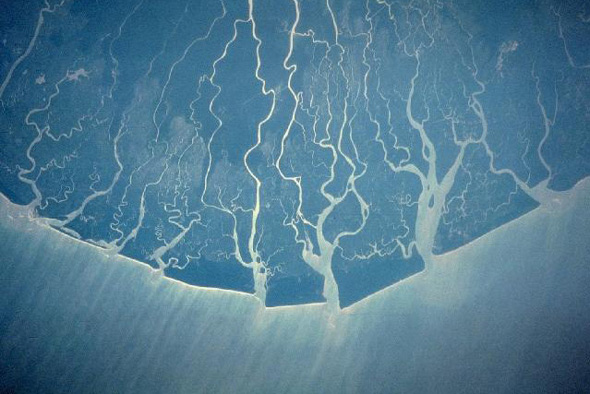
Photo Credit: NASA Space Shuttle Overflight photo of the Niger Delta, courtesy of NASA.

2 comments:

GEOFF DABELKO said...

Very interesting history here with all the challenges posed by working with governments, IOs, private sector, local communities, local NGOs, and not to be forgotten, the media. Sounds like the assessment is a significant advance in understanding.  The politics of course are every present. But glad UNEP stuck with it despite the challenges. Hope it spurs action and improvements in the natural and human environments in the delta.

plumbing said...

I find it very interesting but I can't play the video. Anyway, the muscular sub-text rippling throughout the report makes it more clear.

Post a Comment

Search

Loading
Across My Desk adaptation Afghan DHS Afghanistan Africa aging agriculture Algeria Arctic Asia Australia Backdraft Bangladesh Beat on the Ground biodiversity biofuels Bolivia Brazil Building Commitment Burundi Cambodia Campus Beat Canada Chad China climate change Colombia community-based conflict Congress conservation consumption cooperation COP-15 COP-16 COP-17 Crossroads Cuba democracy demography development disaster relief Dot-Mom DRC eco-tourism economics Ecuador education Egypt energy environment environmental health environmental peacemaking environmental security Ethiopia Europe Eye On family planning Feed the Future flooding FOCUS food security foreign policy forests From Durban From Ethiopia From Wilson funding GBV gender geoengineering Ghana global health GMHC-10 Haiti HIV/AIDS humanitarian ICFP India Indonesia international environmental governance Iran Iraq Israel Japan Jordan JPR Kazakhstan Kenya Korea Kyrgyzstan land Latin America Lebanon Liberia Libya livelihoods Madagascar Malawi Mali maternal health MDGs media Mexico Middle East migration military minerals mitigation Morocco Mozambique NATO natural resources NCSE 2012 Nepal Nicholas Kristof Niger Nigeria Nigeria Beyond nutrition oceans On the Beat Pakistan Papua New Guinea peace parks Peru PHE PHE Champion Philippines Planet 2012 podcast Pop Audio Pop Tweets population poverty protected areas QDDR QDR Reading Radar Reading the QDDR REDD Rio+20 Russia Rwanda Sahel sanitation Saudi Arabia security Senegal Sierra Leone Somalia South Africa South Asia Sri Lanka State Sudan SXSW Syria Tajikistan Tanzania Thailand Top 10 Tunisia Turkey U.S. Uganda UK UN urbanization USAID Uzbekistan video Vietnam water World Bank Yemen Yemen Beyond the Headlines You Are Invited youth Zimbabwe