Monthly archive for July 2011. Show all posts
-
Cynthia Brady, USAID
The Specter of “Climate Wars”
›July 29, 2011 // By Wilson Center StaffThe original version of this article, by Cynthia Brady, appeared in the June/July 2011 edition of USAID’s Frontlines.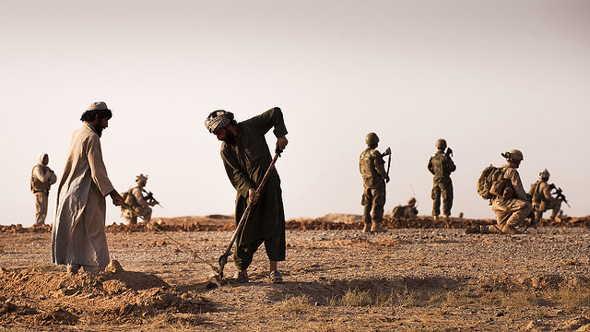
In 2007, many in the advocacy community rushed to categorize the conflict in the Darfur region of Sudan as a “climate war” in the wake of a compelling United Nations report that emphasized the ways climate change and environmental degradation can drive conflict.
In 2009, international media focused significant attention on an academic study that analyzed historical linkages between civil war and temperatures in sub-Saharan Africa and suggested there would be a 54-percent increase in armed conflicts by 2030. [Video Below]
In both cases, subsequent research and analyses conducted by prominent scholars countered those original claims of such direct climate and conflict connections, at least based on existing evidence. Those studies are two examples of the recent spate of analyses on the subject and serve as cautionary tales against alarmism and overly simplistic assumptions about specific connections between climate change and stability.
The reality is far more complicated.
The science and practice of analyzing the interaction of climate change risk and conflict risk is new and still evolving. As a result, there is little certainty over exactly how climatic change will manifest in specific locations and what the consequences will be for economic development, political stability, and peace and security.
Around the world, climate change likely will create both risks and opportunities, making it critical that development and relief organizations like USAID consider climate change not as a monolithic threat but rather as an important influence within a complex web of environmental and social factors.
Responding to climate change effectively means taking action to reduce the threats. It also means harnessing opportunities by helping people and institutions to effectively cope with and adapt to change – environmental or otherwise. Climate-focused interventions, if conducted strategically and with sensitivity to local context, can produce outcomes for conflict prevention and sustainable development as well.
For example, recent USAID-funded research in the conflict-prone Karamoja region of northeastern Uganda found that engaging local communities in the design and implementation of climate change adaptation activities – for example, promoting shared grazing areas and creating small-scale irrigation systems – holds considerable potential to reduce conflict by building social cohesion and addressing feelings of marginalization and disempowerment among local community members.
Since 2008, USAID has invested in research to better understand how specific climate factors contribute to the risk of conflict and affect the resilience of social structures and institutions. The goal is to build a deeper understanding that will enable the agency and its partners to respond most effectively to climate-related stress, reduce the risk of violent outcomes, and maximize the potential for U.S. foreign assistance to prevent conflict and promote stability.
This knowledge also will help USAID make wise investments as part of meeting U.S. Government commitments under the Global Climate Change Initiative as described in President Barack Obama’s September 2010 Presidential Policy Directive on Global Development.
Climate Change and Conflict Prevention
The research thus far points to climate change as an exacerbating factor in situations where political, economic, and social stresses already exist. The risk of conflict is greatest where there is poor governance and low institutional capacity.
The agency, through its Office of Conflict Management and Mitigation (CMM), has identified two basic scenarios under which climate change could combine with other variables and potentially lead to conflict.
First, climate change could intensify existing environmental or resource problems. For example, a series of droughts could reduce the available local water supply, aggravating competition between farmers and pastoralists in already arid regions. Second, climate change could create new environmental or resource problems that contribute to instability. Changing rainfall patterns, for instance, could damage agricultural production in formerly fertile areas, decimating local livelihoods and causing food insecurity.
There is a third area of potential risk for USAID and other donors as well: namely, that climate-related financing, policies, and programs which have not adequately considered local conflict dynamics and context could produce serious unintended negative consequences.
Climate change-related interventions such as incentive payments to stop deforestation – particularly in fragile states and conflict-affected areas – must recognize that both the money and the power to allocate benefits may inadvertently reinforce the social status quo, shift local power balances, or expose governance failures.
In her field work in Nepal, Janani Vivekananda, a researcher with USAID partner International Alert, recently illustrated how certain types of assistance might inadvertently do harm. She explained how a now-defunct village water tap installed in an effort to mitigate the effects of climate variability, did not appropriately consider the local social, political, and conflict context or even basic environmental parameters. In the end, it contributed to local grievance.
The community had requested the tap to be installed during a period of water stress and three consecutive years of drought. The Government of Nepal sponsored the project just before the elections.
Vivekananda explained: “These people are hand-to-mouth farmers. They didn’t know and they wouldn’t know that ground water levels were falling. They wouldn’t know the negative impacts of uncontrolled surface water extraction and so they chased about this tap, and within three months it ran dry. That was the only cash that was injected into the community for development purposes, and it had no impact whatsoever apart from being a stark reminder that the government itself isn’t doing what it ought to.”
This story highlights the reality that local context will define the outcome of peace or conflict and, thus, as CMM’s discussion paper “Climate Change, Adaptation, and Conflict: A Preliminary Review of the Issues” noted, there remains a pressing need for a more robust, fine-grained understanding of the interaction between climate change and the political, social, and economic realities of conflict-prone areas.
To help fill this information gap, USAID is supporting field-based climate change and conflict research in Peru, Uganda, Ethiopia, and the Niger River Basin in West Africa. At the global level, the agency is improving its ability to integrate climate change considerations into conflict early warning models. It is also establishing academic and practitioner partnerships that explore a wide range of environment and security issues.
Today, close to 60 percent of the State Department’s and USAID’s foreign assistance goes to 50 countries that are in the midst of, recovering from, or trying to prevent conflict or state failure. A significant amount of that assistance is slated for Global Climate Change mitigation and adaptation programming. Yet, as CMM’s conflict early warning specialist, Kirby Reiling, observed, “much of that money could be a lost investment if those countries fall into armed conflict.”
With conflict-sensitive development assistance and with smart climate change policies and programs, vulnerable countries will have enhanced opportunities to build stronger societies and more resilient institutions for sustainable development, peace, and security.
Cynthia Brady is a senior conflict advisor in USAID’s Office of Conflict Management and Mitigation.
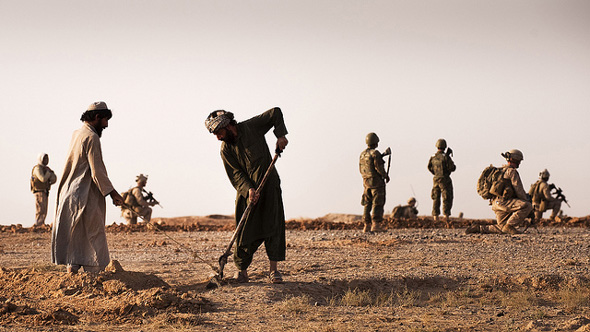
Photo Credit: Afghan farmers plow a field guarded by U.S. Marines, courtesy of flickr user isafmedia. -
Watch: Alecia Fields on Population, Health, and Environment Advocacy with the Sierra Club
›July 29, 2011 // By Roza Essaw “The issues of population, health, and environment are pretty foreign to a lot of people,” said Alecia Fields, a recent University of Kentucky graduate who participated in a Sierra Club Global Population and Environment Study Tour of Ethiopia last summer as a student fellow.
“I learned about the program, how to be an effective advocate, and I took those tools back to my university on campus and shared it with young people,” said Fields in this interview with ECSP.
Fields came from a women’s health background but found the connections between population, health, and environment (PHE) compelling enough that she wanted to become an advocate on campus. “At first, people don’t think they have a connection to the issue, but once you start talking with people, they really start to see how they are central to a larger issue,” said Fields.
“It is challenging in the United States to see some of the population and environmental issues…but when you go to a developing country, you see the effects right in front of you,” explained Fields. The Sierra Club’s Global Population and Environment Study Tours bring a select group of student advocates abroad to see PHE projects in the field with the aim of creating pro-active messengers of the importance of integrated development in the United States.
Fields visited various sites and organizations in Ethiopia including the Gauraghe People’s Self-help Development Organization (GPSDO), located in the southwest region. “People in Ethiopia have had tremendous success in connecting population, health, and environment within communities and starting integrated programs that work towards development,” said Fields.
Going to Ethiopia provided Fields with concrete examples of the importance of PHE and allowed her to share her experience with young people through meaningful illustrations and moving stories.
“A lot of it deals with figuring out where people are in their attachment to the subject…and try to figure out how that program can connect to them,” she said. -
Emily Puckart, MHTF Blog
Maternal Health in Kenya From a Human Rights Perspective
›The original version of this article, by Emily Puckart, appeared on the Maternal Health Task Force blog. This is the second post about MHTF and the Woodrow Wilson Center’s trip to Nairobi, Kenya to host a cross-Atlantic web-cast meeting on “Maternal Health Challenges in Kenya: What New Research Shows.” The first is available here along with video of the conference.
“Do you want to be a pregnant woman or a prisoner in Kenya?” asked Dr. Margret Meme, one of speakers in Nairobi at the recent policy dialogue “Maternal Health Challenges in Kenya: What New Research Shows.” She explained that the last prisoner killed in Kenya through capital punishment was over 20 years ago, yet pregnant women continue to die of treatable causes not just in Kenya, but globally.
As Dr. Meme addressed maternal health through the lens of a human rights perspective she highlighted a number of recommendations in order to more adequately address maternal health challenges in Kenya. She was concerned that pregnancy was treated more like a medical disease with purely medical solutions. Dr. Meme urged maternal health advocates to also focus on the cultural, social, gender, and economic factors that influence maternal health and asked that these factors be addressed along with medical solutions in order to truly address maternal health challenges.
Naturally, addressing maternal health challenges can come with a monetary price. However, instead of viewing that cost as a cost that must come after more immediate government priorities such as infrastructure and defense, Dr. Meme argued that cost should be borne as the government would bear any other cost for public goods. As pregnancy builds a nation, Dr. Meme argued that maternal health is a public good, in the same vein as defense. Therefore maternal health should have a budget allocation that is just as important as the budget line for defense.
Of course, pushing for more public funding of maternal health can lead to other complications. If advocates successfully encourage politicians to increase funding for maternal health programs, the work of maternal health advocates cannot simply end there. Advocates should hold governments accountable; not just in putting aside funding for maternal health, but also for actually making sure that the money reaches the intended beneficiaries. Therefore budget accountability tracking mechanisms should go hand and hand with pushing for increased public funding to maternal health programs.
Finally, Dr. Meme addressed the need for men to be more involved in maternal health. As she clearly stated; the role of men in maternal health shouldn’t stop at conception. Men focused programs which clarify reproductive and sexual health rights, as well as educate men on issues of maternal mortality and morbidity should encourage men to respect the rights of women to space their pregnancies and deliver their babies safely.
Emily Puckart is a senior program assistant for the Maternal Health Task Force (MHTF).
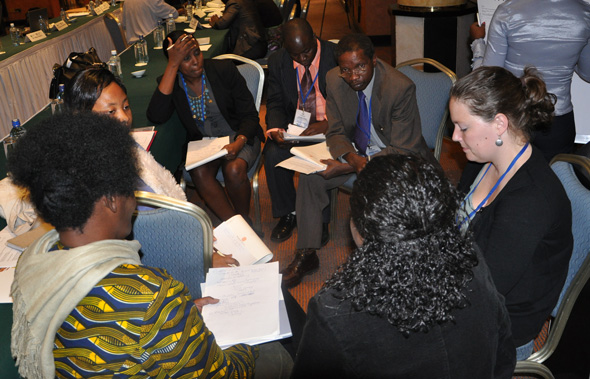
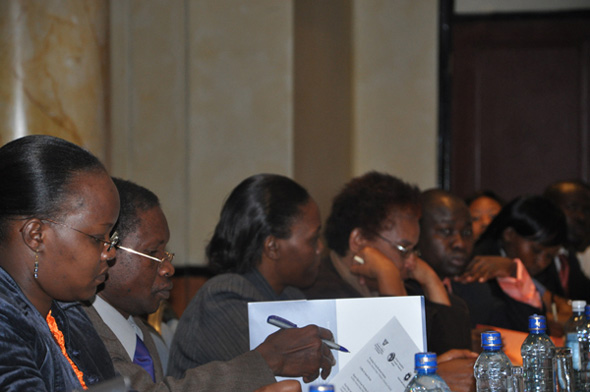
Photo Credit: Jonathan Odhong, African Population and Health Research Center. -
Second Generation Biofuels and Revitalizing African Agriculture
›In “A New Hope for Africa,” published in last month’s issue of Nature, authors Lee R. Lynd and Jeremy Woods assert that the international development community should “cut with the beneficial edge of bioenergy’s double-edged sword” to enhance food security in Africa. According to Lynd and Woods, Africa’s severe food insecurity is a “legacy of three decades of neglect for agricultural development.” Left out of the Green Revolution in the 1960s, the region was flooded with cheap food imports from developed nations while local agricultural sectors remained underdeveloped. With thoughtful management, bioenergy production on marginal lands unfit for edible crops may yield several food security benefits, such as increased employment, improved agricultural infrastructure, energy democratization, land regeneration, and reduced conflict, write the authors.The technological advancements of second-generation biofuels may ease the zero-sum tension between food production and bioenergy in the future, writes Duncan Graham-Rowe in his article “Beyond Food Versus Fuel,” also appearing last month in Nature. Graham-Rowe notes that current first-generation biofuel technologies, such as corn and sugar cane, contribute to rising food prices, require intensive water and nitrogen inputs, and divert land from food production by way of profitability and physical space. There is some division between second-generation biofuel proponents: some advocate utilizing inedible parts of plants already produced, while others consider fast-growing, dedicated energy crops (possibly grown on polluted soil otherwise unfit for human use) a more viable solution – either has the potential to reduce demand for arable land, says Graham-Rowe. “Advanced generations of biofuels are on their way,” he writes, it is just a matter of time before their kinks are worked out “through technology, careful land management, and considered use of resources.” -
Emily Puckart, MHTF Blog
Maternal Health Challenges in Kenya: An Overview of the Meetings
›The original version of this article, by Emily Puckart, appeared on the Maternal Health Task Force blog.
I attended the two day Nairobi meeting on “Maternal Health Challenges in Kenya: What New Research Evidence Shows” organized by the Woodrow Wilson International Center and the African Population and Health Research Center (APHRC). [Video Below]
First, here in Nairobi, participants heard three presentations highlighting challenges in maternal health in Kenya. The first presentation by Lawrence Ikamari focused on the unique challenges faced by women in rural Kenya. Presently Kenya is still primarily a rural country where childbearing starts early and women have high fertility rates. A majority of rural births take place outside of health institutions, and overall rural women have less access to skilled birth attendants, medications, and medical facilities that can help save their lives and the lives of their babies in case of emergency.
Catherine Kyobutungi highlighted the challenges of urban Kenyan women, many of whom deliver at home. When APHRC conducted research in this area, nearly 68 percent of surveyed women said it was not necessary to go to health facility. Poor road infrastructure and insecurity often prevented women from delivering in a facility. Women who went into labor at night often felt it is unsafe to leave their homes for a facility and risked their lives giving birth at home away from the support of skilled medical personnel and health facilities. As the urban population increases in the coming years, governments will need to expend more attention on the unique challenges women face in urban settings.
Finally, Margaret Meme explored a human rights based approach to maternal health and called on policymakers, advocates, and donors to respect women’s right to live through pregnancies. Further, she urged increased attention on the role of men in maternal health by increasing the education and awareness of men in the area of sexual and reproductive health as well as maternal health.
After these initial presentations, participants broke out into lively breakout groups to discuss these maternal health challenges in Kenya in detail. They reconvened in the afternoon in Nairobi to conduct a live video conference with a morning Washington, DC audience at the Woodrow Wilson Center. It was exciting to be involved in this format, watching as participants in Washington were able to ask questions live of the men and women involved in maternal health advocacy, research and programming directly on the ground in Kenya. It was clear the excitement existed on both sides of the Atlantic as participants in Nairobi were able to directly project their concerns and hopes for the future of maternal health in Kenya across the ocean through the use of video conferencing technology.
There was a lot of excitement and energy in the room in Nairobi, and I think I sensed the same excitement through the television screen in DC. I hope that this type of simultaneous dialogue, across many time zones, directly linking maternal health advocates around the globe, is an example of what will become commonplace in the future of the maternal health field.
Emily Puckart is a senior program assistant at the Maternal Health Task Force (MHTF).
Photo Credit: MHTF. -
Edward Carr, Open the Echo Chamber
Drought Does Not Equal Famine
›July 27, 2011 // By Wilson Center StaffThe original version of this article, by Edward Carr, appeared on Open the Echo Chamber.
After reading a lot of news and blog posts on the situation in the Horn of Africa, I feel the need to make something clear: The drought in the Horn of Africa is not the cause of the famine we are seeing take shape in southern Somalia. We are being pounded by a narrative of this famine that more or less points to the failure of seasonal rains as its cause…which I see as a horrible abdication of responsibility for the human causes of this tragedy.
First, I recommend that anyone interested in this situation – or indeed in food security and famine more generally, to read Mike Davis’ book Late Victorian Holocausts. It is a very readable account of massive famines in the Victorian era that lays out the necessary intersection of weather, markets, and politics to create tragedy – and also makes clear the point that rainfall alone is poorly correlated to famine. For those who want a deeper dive, have a look at the lit review (pages 15-18) of my article “Postmodern Conceptualizations, Modernist Applications: Rethinking the Role of Society in Food Security” to get a sense of where we are in contemporary thinking on food security. The long and short of it is that food insecurity is rarely about absolute supplies of food – mostly it is about access and entitlements to existing food supplies. The Horn of Africa situation does actually invoke outright scarcity, but that scarcity can be traced not just to weather – it is also about access to local and regional markets (weak at best) and politics/the state (Somalia lacks a sovereign state, and the patchy, ad hoc governance provided by Al Shabaab does little to ensure either access or entitlement to food and livelihoods for the population).
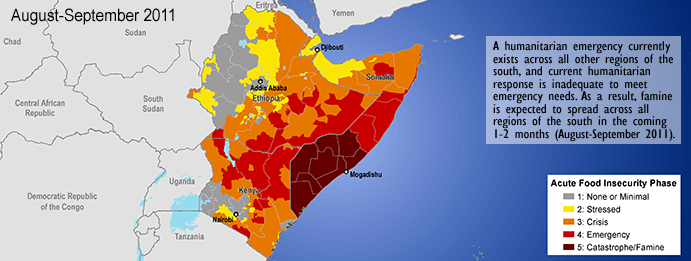
For those who doubt this, look at the Famine Early Warning System Network (FEWS NET) maps I put in previous posts here and here (Editor: also above). Famine stops at the Somali border. I assure you this is not a political manipulation of the data – it is the data we have. Basically, the people without a functional state and collapsing markets are being hit much harder than their counterparts in Ethiopia and Kenya, even though everyone is affected by the same bad rains, and the livelihoods of those in Somalia are not all that different than those across the borders in Ethiopia and Kenya. Rainfall is not the controlling variable for this differential outcome, because rainfall is not really variable across these borders where Ethiopia, Kenya, and Somalia meet.
Continue reading on Open the Echo Chamber.
Image Credit: FEWS NET and Edward Carr. -
Farahnaz Zahidi Moazzam on the Population Reference Bureau’s “Women’s Edition” Trip to Ethiopia
›The original version of this article, by Farahnaz Zahidi Moazzam, appeared on the Population Reference Bureau’s Behind the Numbers blog.My name is Farahnaz Zahidi Moazzam, and I’m a freelance journalist, writer, and editor from Pakistan. My passion is writing about human rights with a special focus on gender issues and reproductive health. Blogging is a personal joy to me, as I put my heart into my writing and blogging allows for a more personalized style. Digital journalism is a sign of evolution – one I happily accept. My pet peeve is marginalization on any grounds. I am a mother of a teenage daughter and live in Karachi.
As part of the Population Reference Bureau’s (PRB) group of journalists in Women’s Edition 2010-2012, I recently had the chance to travel to Ethiopia on a visit that was unforgettable. The visit inspired a series of seven brief travel-blogs, based on my seven days there. Women’s Edition is a wonderful opportunity to connect with other like-minded female journalists from developing countries around the world, and learn solutions to the problems from this interaction. The program has reaffirmed my belief that our commonalities are more than the differences.
Read Farahnaz Zahidi Moazzam’s posts from her trip to Ethiopia on her blog, Impassioned Ramblings, and view photos from the trip on PRB’s Facebook page.
Photo Credit: PRB. -
In Rush for Land, Is it All About Water?
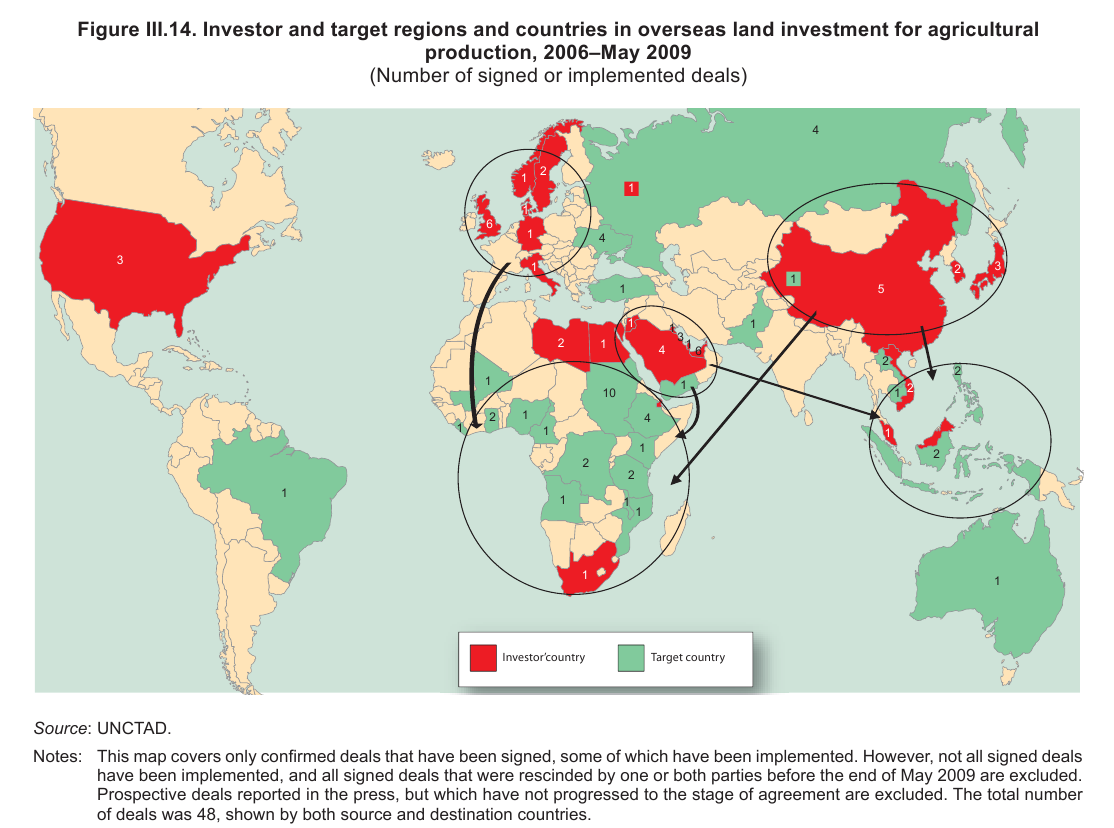
›July 26, 2011 // By Christina DaggettOver the past few years, wealthy countries with shrinking stores of natural resources and relatively large populations (such as China, India, South Korea, and the Gulf states) have quietly purchased huge parcels of fertile farmland in Africa, South America, and South Asia to grow food for export to the parent country. With staple food prices shooting up and food security projected to worsen in the decades ahead, it is little wonder that countries are looking abroad to secure future resources. But the question arises: Are these “land grabs” really about the food — or, more accurately, are they “water grabs”?
The Great Water Grab
With growing urban populations, an expanding middle class, and increasingly scarce arable land resources, some governments and investors are snapping up the world’s farmland. Some observers, however, have pointed out that these dealmakers might be more interested in the water than the land.
In an article from The Economist in 2009, Peter Brabeck-Letmathe, the chairman of Nestlé, claimed that “the purchases weren’t about land, but water. For with the land comes the right to withdraw the water linked to it, in most countries essentially a freebie that increasingly could be the most valuable part of the deal.”
Consider some of the largest investors in foreign land: China has a history of severe droughts (and recently, increasingly poor water quality); the Gulf nations of Saudi Arabia, Kuwait, Qatar, and Bahrain are among the world’s most water-stressed countries; and India’s groundwater stocks are rapidly depleting.
A recent report from the World Bank on global land deals highlighted the effect water scarcity is having on food production in China, South Asia, the Middle East, and North Africa, stating that “in contrast, Sub-Saharan Africa and Latin America have large untapped water resources for agriculture.”
Keeping Engaged and Informed
“The water impacts of any investment in any land deal should be made explicit,” said Phil Woodhouse of the University of Manchester during the recent International Conference on Global Land Grabbing, as reported by the New Agriculturist. “Some kind of mechanism is needed to bring existing water users into an engagement on any deals done on water use.”
At the same conference, Shalmali Guttal of Focus on the Global South cautioned, “Those who are taking the land will also take the water resources, the forests, wetlands, all the wild indigenous plants and biodiversity. Many communities want investments but none of them sign up for losing their ecosystems.”
With demand for water expected to outstrip supply by 40 percent within the next 20 years, water as the primary motivation behind the rush for foreign farmland is a factor worth further exploration.
Global Farming
According to a report from the Oakland Institute, nearly 60 million hectares (ha) of African farmland – roughly the size of France – were purchased or leased in 2009. With these massive land deals come promises of jobs, technology, infrastructure, and increased tax revenue.
In 2008 South Korean industrial giant Daewoo Logistics negotiated one of the biggest African farmland deals with a 99-year lease on 1.3 million ha of farmland in Madagascar for palm oil and corn production. The deal amounted to nearly half of Madagascar’s arable land – an especially staggering figure given that nearly a third of Madagascar’s GDP comes from agriculture and more than 70 percent of its population lives below the poverty line. When details of the deal came to light, massive protests ensued and it was eventually scrapped after president Marc Ravalomanana was ousted from power in a 2009 coup.
While perhaps an extreme example, the Daewoo/Madagascar deal nonetheless demonstrates the conflict potential of these massive land deals, which are taking place in some of the poorest and hungriest countries in the world. In 2009, while Saudi Arabia was receiving its first shipment of rice grown on farmland it owned in Ethiopia, the World Food Program provided food aid to five million Ethiopians.
Other notable deals include China’s recent acquisition of 320,000 ha in Argentina for soybean and corn cultivation – a project which is expected to bring in $20 million in irrigation infrastructure, the Guardian reports – and a Saudi Arabian company which has plans to invest $2.5 billion and employ 10,000 people in Ethiopia by 2020, according to Gambella Star News.
But governments in search of cheap food aren’t the only ones interested in obtaining a piece of the world’s breadbasket: Individual investors are also heavily involved, and the Guardian reports that U.S. universities and European pension funds are buying and leasing land in Africa as well.
The Future of Land and Water
Whatever the benefits or pitfalls, large-scale land deals around the world look set to continue. The world is projected to have 7 billion mouths to feed by the end of this year and possibly 10 billion plus by the end of the century.
Currently, agriculture uses 11 percent of the world’s land surface and 70 percent of the world’s freshwater resources, according to UNESCO. If and when the going gets tough, how will the global agricultural system respond? Whose needs come first – the host countries’ or the investing nations’?
Christina Daggett is a program associate with the Population Institute and a former ECSP intern.
Photo Credit: Number of signed or implemented overseas land investment deals for agricultural production 2006-May 2009, courtesy of GRAIN and the UN Conference on Trade and Development (UNCTAD).
Sources: BBC News, Canadian Water Network, Christian Science Monitor, Circle of Blue, The Economist, Gambella Star News, Guardian, Maplecroft, New Agriculturalist, Oakland Institute, State Department, Time, UNFPA, UNESCO, World Bank, World Food Program.