• woodrow wilson center
  • ecsp

New Security Beat

Subscribe:
  • rss
  • mail-to
  • Who We Are
  • Topics
    • Population
    • Environment
    • Security
    • Health
    • Development
  • Multimedia
  • Film
  • Publications
  • Events
  • Contact Us

New Security Beat

New Security Beat is the blog of the Woodrow Wilson International Center for Scholars' Environmental Change and Security Program (ECSP).
Monthly archive for July 2011. Show all posts
  • The Specter of “Climate Wars”

    ›

    Cynthia Brady, USAID

    Share |
    By ECSP Staff  // Friday, July 29, 2011
    The original version of this article, by Cynthia Brady, appeared in the June/July 2011 edition of USAID’s Frontlines.
    In 2007, many in the advocacy community rushed to categorize the conflict in the Darfur region of Sudan as a “climate war” in the wake of a compelling United Nations report that emphasized the ways climate change and environmental degradation can drive conflict.

    In 2009, international media focused significant attention on an academic study that analyzed historical linkages between civil war and temperatures in sub-Saharan Africa and suggested there would be a 54-percent increase in armed conflicts by 2030. [Video Below]

    In both cases, subsequent research and analyses conducted by prominent scholars countered those original claims of such direct climate and conflict connections, at least based on existing evidence. Those studies are two examples of the recent spate of analyses on the subject and serve as cautionary tales against alarmism and overly simplistic assumptions about specific connections between climate change and stability.

    The reality is far more complicated.

    The science and practice of analyzing the interaction of climate change risk and conflict risk is new and still evolving. As a result, there is little certainty over exactly how climatic change will manifest in specific locations and what the consequences will be for economic development, political stability, and peace and security.

    Around the world, climate change likely will create both risks and opportunities, making it critical that development and relief organizations like USAID consider climate change not as a monolithic threat but rather as an important influence within a complex web of environmental and social factors.

    Responding to climate change effectively means taking action to reduce the threats. It also means harnessing opportunities by helping people and institutions to effectively cope with and adapt to change – environmental or otherwise. Climate-focused interventions, if conducted strategically and with sensitivity to local context, can produce outcomes for conflict prevention and sustainable development as well.

    For example, recent USAID-funded research in the conflict-prone Karamoja region of northeastern Uganda found that engaging local communities in the design and implementation of climate change adaptation activities – for example, promoting shared grazing areas and creating small-scale irrigation systems – holds considerable potential to reduce conflict by building social cohesion and addressing feelings of marginalization and disempowerment among local community members.

    Since 2008, USAID has invested in research to better understand how specific climate factors contribute to the risk of conflict and affect the resilience of social structures and institutions. The goal is to build a deeper understanding that will enable the agency and its partners to respond most effectively to climate-related stress, reduce the risk of violent outcomes, and maximize the potential for U.S. foreign assistance to prevent conflict and promote stability.

    This knowledge also will help USAID make wise investments as part of meeting U.S. Government commitments under the Global Climate Change Initiative as described in President Barack Obama’s September 2010 Presidential Policy Directive on Global Development.

    Climate Change and Conflict Prevention

    The research thus far points to climate change as an exacerbating factor in situations where political, economic, and social stresses already exist. The risk of conflict is greatest where there is poor governance and low institutional capacity.

    The agency, through its Office of Conflict Management and Mitigation (CMM), has identified two basic scenarios under which climate change could combine with other variables and potentially lead to conflict.

    First, climate change could intensify existing environmental or resource problems. For example, a series of droughts could reduce the available local water supply, aggravating competition between farmers and pastoralists in already arid regions. Second, climate change could create new environmental or resource problems that contribute to instability. Changing rainfall patterns, for instance, could damage agricultural production in formerly fertile areas, decimating local livelihoods and causing food insecurity.

    There is a third area of potential risk for USAID and other donors as well: namely, that climate-related financing, policies, and programs which have not adequately considered local conflict dynamics and context could produce serious unintended negative consequences.

    Climate change-related interventions such as incentive payments to stop deforestation – particularly in fragile states and conflict-affected areas – must recognize that both the money and the power to allocate benefits may inadvertently reinforce the social status quo, shift local power balances, or expose governance failures.

    In her field work in Nepal, Janani Vivekananda, a researcher with USAID partner International Alert, recently illustrated how certain types of assistance might inadvertently do harm. She explained how a now-defunct village water tap installed in an effort to mitigate the effects of climate variability, did not appropriately consider the local social, political, and conflict context or even basic environmental parameters. In the end, it contributed to local grievance.

    The community had requested the tap to be installed during a period of water stress and three consecutive years of drought. The Government of Nepal sponsored the project just before the elections.

    Vivekananda explained: “These people are hand-to-mouth farmers. They didn’t know and they wouldn’t know that ground water levels were falling. They wouldn’t know the negative impacts of uncontrolled surface water extraction and so they chased about this tap, and within three months it ran dry. That was the only cash that was injected into the community for development purposes, and it had no impact whatsoever apart from being a stark reminder that the government itself isn’t doing what it ought to.”

    This story highlights the reality that local context will define the outcome of peace or conflict and, thus, as CMM’s discussion paper “Climate Change, Adaptation, and Conflict: A Preliminary Review of the Issues” noted, there remains a pressing need for a more robust, fine-grained understanding of the interaction between climate change and the political, social, and economic realities of conflict-prone areas.

    To help fill this information gap, USAID is supporting field-based climate change and conflict research in Peru, Uganda, Ethiopia, and the Niger River Basin in West Africa. At the global level, the agency is improving its ability to integrate climate change considerations into conflict early warning models. It is also establishing academic and practitioner partnerships that explore a wide range of environment and security issues.

    Today, close to 60 percent of the State Department’s and USAID’s foreign assistance goes to 50 countries that are in the midst of, recovering from, or trying to prevent conflict or state failure. A significant amount of that assistance is slated for Global Climate Change mitigation and adaptation programming. Yet, as CMM’s conflict early warning specialist, Kirby Reiling, observed, “much of that money could be a lost investment if those countries fall into armed conflict.”

    With conflict-sensitive development assistance and with smart climate change policies and programs, vulnerable countries will have enhanced opportunities to build stronger societies and more resilient institutions for sustainable development, peace, and security.

    Cynthia Brady is a senior conflict advisor in USAID’s Office of Conflict Management and Mitigation.

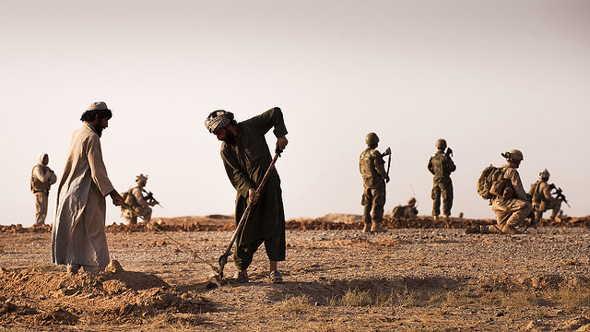
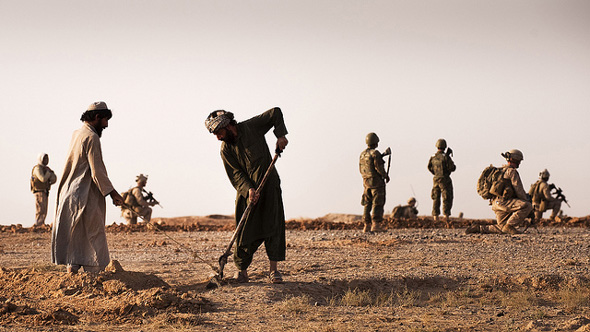
    Photo Credit: Afghan farmers plow a field guarded by U.S. Marines, courtesy of flickr user isafmedia.
    MORE
    • 2 Comments
    • MAKE A COMMENT
    Topics: climate change, development, environment, environmental security, natural resources, security, video …
  • Watch: Alecia Fields on Population, Health, and Environment Advocacy with the Sierra Club

    ›
    Share |
    By Roza Essaw  // Friday, July 29, 2011
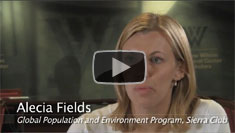
    “The issues of population, health, and environment are pretty foreign to a lot of people,” said Alecia Fields, a recent University of Kentucky graduate who participated in a Sierra Club Global Population and Environment Study Tour of Ethiopia last summer as a student fellow.

    “I learned about the program, how to be an effective advocate, and I took those tools back to my university on campus and shared it with young people,” said Fields in this interview with ECSP.

    Fields came from a women’s health background but found the connections between population, health, and environment (PHE) compelling enough that she wanted to become an advocate on campus. “At first, people don’t think they have a connection to the issue, but once you start talking with people, they really start to see how they are central to a larger issue,” said Fields.

    “It is challenging in the United States to see some of the population and environmental issues…but when you go to a developing country, you see the effects right in front of you,” explained Fields. The Sierra Club’s Global Population and Environment Study Tours bring a select group of student advocates abroad to see PHE projects in the field with the aim of creating pro-active messengers of the importance of integrated development in the United States.

    Fields visited various sites and organizations in Ethiopia including the Gauraghe People’s Self-help Development Organization (GPSDO), located in the southwest region. “People in Ethiopia have had tremendous success in connecting population, health, and environment within communities and starting integrated programs that work towards development,” said Fields.

    Going to Ethiopia provided Fields with concrete examples of the importance of PHE and allowed her to share her experience with young people through meaningful illustrations and moving stories.

    “A lot of it deals with figuring out where people are in their attachment to the subject…and try to figure out how that program can connect to them,” she said.
    MORE
    • 1 Comment
    • MAKE A COMMENT
    Topics: Ethiopia, PHE, development, environment, global health, population, video
  • Dot-Mom:

    Maternal Health in Kenya From a Human Rights Perspective

    ›

    Emily Puckart, MHTF Blog

    Share |
    By ECSP Staff  // Thursday, July 28, 2011
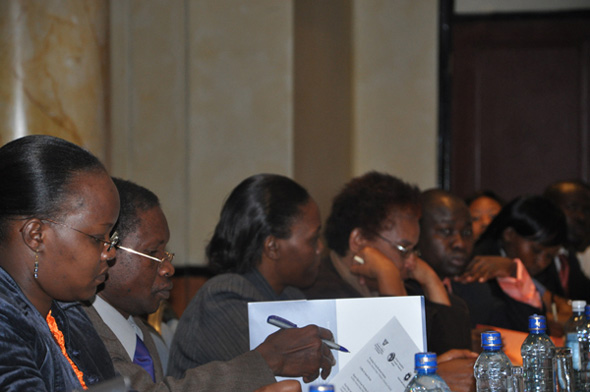
    The original version of this article, by Emily Puckart, appeared on the Maternal Health Task Force blog. This is the second post about MHTF and the Woodrow Wilson Center’s trip to Nairobi, Kenya to host a cross-Atlantic web-cast meeting on “Maternal Health Challenges in Kenya: What New Research Shows.” The first is available here along with video of the conference.

    “Do you want to be a pregnant woman or a prisoner in Kenya?” asked Dr. Margret Meme, one of speakers in Nairobi at the recent policy dialogue “Maternal Health Challenges in Kenya: What New Research Shows.” She explained that the last prisoner killed in Kenya through capital punishment was over 20 years ago, yet pregnant women continue to die of treatable causes not just in Kenya, but globally.

    As Dr. Meme addressed maternal health through the lens of a human rights perspective she highlighted a number of recommendations in order to more adequately address maternal health challenges in Kenya. She was concerned that pregnancy was treated more like a medical disease with purely medical solutions. Dr. Meme urged maternal health advocates to also focus on the cultural, social, gender, and economic factors that influence maternal health and asked that these factors be addressed along with medical solutions in order to truly address maternal health challenges.

    Naturally, addressing maternal health challenges can come with a monetary price. However, instead of viewing that cost as a cost that must come after more immediate government priorities such as infrastructure and defense, Dr. Meme argued that cost should be borne as the government would bear any other cost for public goods. As pregnancy builds a nation, Dr. Meme argued that maternal health is a public good, in the same vein as defense. Therefore maternal health should have a budget allocation that is just as important as the budget line for defense.

    Of course, pushing for more public funding of maternal health can lead to other complications. If advocates successfully encourage politicians to increase funding for maternal health programs, the work of maternal health advocates cannot simply end there. Advocates should hold governments accountable; not just in putting aside funding for maternal health, but also for actually making sure that the money reaches the intended beneficiaries. Therefore budget accountability tracking mechanisms should go hand and hand with pushing for increased public funding to maternal health programs.

    Finally, Dr. Meme addressed the need for men to be more involved in maternal health. As she clearly stated; the role of men in maternal health shouldn’t stop at conception. Men focused programs which clarify reproductive and sexual health rights, as well as educate men on issues of maternal mortality and morbidity should encourage men to respect the rights of women to space their pregnancies and deliver their babies safely.

    Emily Puckart is a senior program assistant for the Maternal Health Task Force (MHTF).

    Photo Credit: Jonathan Odhong, African Population and Health Research Center.
    MORE
    • 0 Comments
    • MAKE A COMMENT
    Topics: Dot-Mom, Kenya, gender, global health, livelihoods, maternal health
  • Reading Radar:

    Second Generation Biofuels and Revitalizing African Agriculture

    ›
    Share |
    By Kellie Furr  // Thursday, July 28, 2011
    In “A New Hope for Africa,” published in last month’s issue of Nature, authors Lee R. Lynd and Jeremy Woods assert that the international development community should “cut with the beneficial edge of bioenergy’s double-edged sword” to enhance food security in Africa. According to Lynd and Woods, Africa’s severe food insecurity is a “legacy of three decades of neglect for agricultural development.” Left out of the Green Revolution in the 1960s, the region was flooded with cheap food imports from developed nations while local agricultural sectors remained underdeveloped. With thoughtful management, bioenergy production on marginal lands unfit for edible crops may yield several food security benefits, such as increased employment, improved agricultural infrastructure, energy democratization, land regeneration, and reduced conflict, write the authors.

    The technological advancements of second-generation biofuels may ease the zero-sum tension between food production and bioenergy in the future, writes Duncan Graham-Rowe in his article “Beyond Food Versus Fuel,” also appearing last month in Nature. Graham-Rowe notes that current first-generation biofuel technologies, such as corn and sugar cane, contribute to rising food prices, require intensive water and nitrogen inputs, and divert land from food production by way of profitability and physical space. There is some division between second-generation biofuel proponents: some advocate utilizing inedible parts of plants already produced, while others consider fast-growing, dedicated energy crops (possibly grown on polluted soil otherwise unfit for human use) a more viable solution – either has the potential to reduce demand for arable land, says Graham-Rowe. “Advanced generations of biofuels are on their way,” he writes, it is just a matter of time before their kinks are worked out “through technology, careful land management, and considered use of resources.”
    MORE
    • 0 Comments
    • MAKE A COMMENT
    Topics: Africa, conflict, development, energy, food security, livelihoods, natural resources …
  • Dot-Mom:

    Maternal Health Challenges in Kenya: An Overview of the Meetings

    ›

    Emily Puckart, MHTF Blog

    Share |
    By ECSP Staff  // Wednesday, July 27, 2011
    The original version of this article, by Emily Puckart, appeared on the Maternal Health Task Force blog.

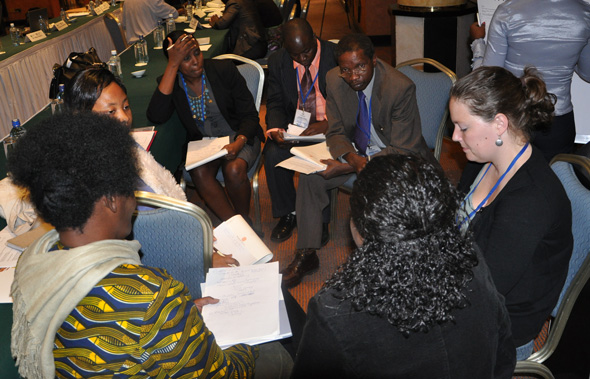
    I attended the two day Nairobi meeting on “Maternal Health Challenges in Kenya: What New Research Evidence Shows” organized by the Woodrow Wilson International Center and the African Population and Health Research Center (APHRC). [Video Below]

    First, here in Nairobi, participants heard three presentations highlighting challenges in maternal health in Kenya. The first presentation by Lawrence Ikamari focused on the unique challenges faced by women in rural Kenya. Presently Kenya is still primarily a rural country where childbearing starts early and women have high fertility rates. A majority of rural births take place outside of health institutions, and overall rural women have less access to skilled birth attendants, medications, and medical facilities that can help save their lives and the lives of their babies in case of emergency.

    Catherine Kyobutungi highlighted the challenges of urban Kenyan women, many of whom deliver at home. When APHRC conducted research in this area, nearly 68 percent of surveyed women said it was not necessary to go to health facility. Poor road infrastructure and insecurity often prevented women from delivering in a facility. Women who went into labor at night often felt it is unsafe to leave their homes for a facility and risked their lives giving birth at home away from the support of skilled medical personnel and health facilities. As the urban population increases in the coming years, governments will need to expend more attention on the unique challenges women face in urban settings.

    Finally, Margaret Meme explored a human rights based approach to maternal health and called on policymakers, advocates, and donors to respect women’s right to live through pregnancies. Further, she urged increased attention on the role of men in maternal health by increasing the education and awareness of men in the area of sexual and reproductive health as well as maternal health.

    After these initial presentations, participants broke out into lively breakout groups to discuss these maternal health challenges in Kenya in detail. They reconvened in the afternoon in Nairobi to conduct a live video conference with a morning Washington, DC audience at the Woodrow Wilson Center. It was exciting to be involved in this format, watching as participants in Washington were able to ask questions live of the men and women involved in maternal health advocacy, research and programming directly on the ground in Kenya. It was clear the excitement existed on both sides of the Atlantic as participants in Nairobi were able to directly project their concerns and hopes for the future of maternal health in Kenya across the ocean through the use of video conferencing technology.

    There was a lot of excitement and energy in the room in Nairobi, and I think I sensed the same excitement through the television screen in DC. I hope that this type of simultaneous dialogue, across many time zones, directly linking maternal health advocates around the globe, is an example of what will become commonplace in the future of the maternal health field.

    Emily Puckart is a senior program assistant at the Maternal Health Task Force (MHTF).

    Photo Credit: MHTF.
    MORE
    • 0 Comments
    • MAKE A COMMENT
    Topics: Africa, Dot-Mom, global health, livelihoods, maternal health, urbanization, video …
  • Drought Does Not Equal Famine

    ›

    Edward Carr, Open the Echo Chamber

    Share |
    By ECSP Staff  // Wednesday, July 27, 2011
    The original version of this article, by Edward Carr, appeared on Open the Echo Chamber.

    After reading a lot of news and blog posts on the situation in the Horn of Africa, I feel the need to make something clear: The drought in the Horn of Africa is not the cause of the famine we are seeing take shape in southern Somalia. We are being pounded by a narrative of this famine that more or less points to the failure of seasonal rains as its cause…which I see as a horrible abdication of responsibility for the human causes of this tragedy.

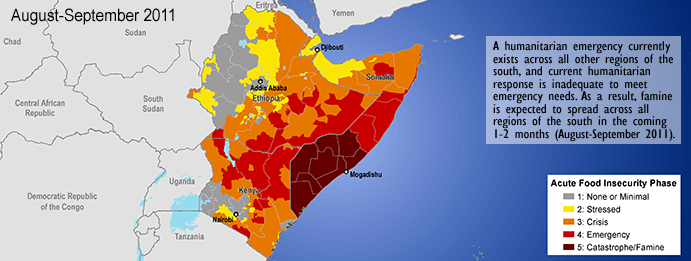
    First, I recommend that anyone interested in this situation – or indeed in food security and famine more generally, to read Mike Davis’ book Late Victorian Holocausts. It is a very readable account of massive famines in the Victorian era that lays out the necessary intersection of weather, markets, and politics to create tragedy – and also makes clear the point that rainfall alone is poorly correlated to famine. For those who want a deeper dive, have a look at the lit review (pages 15-18) of my article “Postmodern Conceptualizations, Modernist Applications: Rethinking the Role of Society in Food Security” to get a sense of where we are in contemporary thinking on food security. The long and short of it is that food insecurity is rarely about absolute supplies of food – mostly it is about access and entitlements to existing food supplies. The Horn of Africa situation does actually invoke outright scarcity, but that scarcity can be traced not just to weather – it is also about access to local and regional markets (weak at best) and politics/the state (Somalia lacks a sovereign state, and the patchy, ad hoc governance provided by Al Shabaab does little to ensure either access or entitlement to food and livelihoods for the population).

    For those who doubt this, look at the Famine Early Warning System Network (FEWS NET) maps I put in previous posts here and here (Editor: also above). Famine stops at the Somali border. I assure you this is not a political manipulation of the data – it is the data we have. Basically, the people without a functional state and collapsing markets are being hit much harder than their counterparts in Ethiopia and Kenya, even though everyone is affected by the same bad rains, and the livelihoods of those in Somalia are not all that different than those across the borders in Ethiopia and Kenya. Rainfall is not the controlling variable for this differential outcome, because rainfall is not really variable across these borders where Ethiopia, Kenya, and Somalia meet.

    Continue reading on Open the Echo Chamber.

    Image Credit: FEWS NET and Edward Carr.
    MORE
    • 0 Comments
    • MAKE A COMMENT
    Topics: climate change, environment, environmental security, food security, livelihoods, natural resources, water …
  • On the Beat:

    Farahnaz Zahidi Moazzam on the Population Reference Bureau’s “Women’s Edition” Trip to Ethiopia

    ›
    Share |
    By ECSP Staff  // Tuesday, July 26, 2011
    The original version of this article, by Farahnaz Zahidi Moazzam, appeared on the Population Reference Bureau’s Behind the Numbers blog.

    My name is Farahnaz Zahidi Moazzam, and I’m a freelance journalist, writer, and editor from Pakistan. My passion is writing about human rights with a special focus on gender issues and reproductive health. Blogging is a personal joy to me, as I put my heart into my writing and blogging allows for a more personalized style. Digital journalism is a sign of evolution – one I happily accept. My pet peeve is marginalization on any grounds. I am a mother of a teenage daughter and live in Karachi.

    As part of the Population Reference Bureau’s (PRB) group of journalists in Women’s Edition 2010-2012, I recently had the chance to travel to Ethiopia on a visit that was unforgettable. The visit inspired a series of seven brief travel-blogs, based on my seven days there. Women’s Edition is a wonderful opportunity to connect with other like-minded female journalists from developing countries around the world, and learn solutions to the problems from this interaction. The program has reaffirmed my belief that our commonalities are more than the differences.

    Read Farahnaz Zahidi Moazzam’s posts from her trip to Ethiopia on her blog, Impassioned Ramblings, and view photos from the trip on PRB’s Facebook page.

    Photo Credit: PRB.
    MORE
    • 0 Comments
    • MAKE A COMMENT
    Topics: On the Beat, PHE, Pakistan, cooperation, development, gender, population …
  • In Rush for Land, Is it All About Water?

    ›
    Share |
    By Christina Daggett  // Tuesday, July 26, 2011
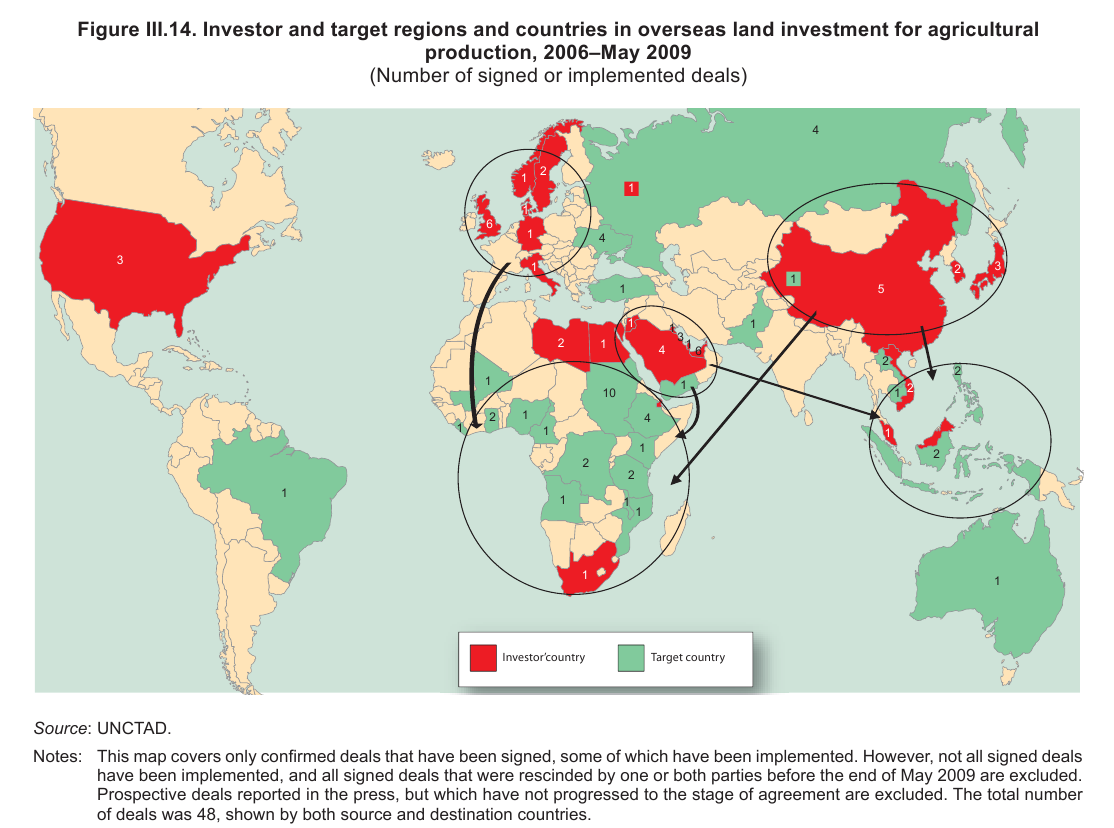
    Over the past few years, wealthy countries with shrinking stores of natural resources and relatively large populations (such as China, India, South Korea, and the Gulf states) have quietly purchased huge parcels of fertile farmland in Africa, South America, and South Asia to grow food for export to the parent country. With staple food prices shooting up and food security projected to worsen in the decades ahead, it is little wonder that countries are looking abroad to secure future resources. But the question arises: Are these “land grabs” really about the food — or, more accurately, are they “water grabs”?

    The Great Water Grab

    With growing urban populations, an expanding middle class, and increasingly scarce arable land resources, some governments and investors are snapping up the world’s farmland. Some observers, however, have pointed out that these dealmakers might be more interested in the water than the land.

    In an article from The Economist in 2009, Peter Brabeck-Letmathe, the chairman of Nestlé, claimed that “the purchases weren’t about land, but water. For with the land comes the right to withdraw the water linked to it, in most countries essentially a freebie that increasingly could be the most valuable part of the deal.”

    Consider some of the largest investors in foreign land: China has a history of severe droughts (and recently, increasingly poor water quality); the Gulf nations of Saudi Arabia, Kuwait, Qatar, and Bahrain are among the world’s most water-stressed countries; and India’s groundwater stocks are rapidly depleting.

    A recent report from the World Bank on global land deals highlighted the effect water scarcity is having on food production in China, South Asia, the Middle East, and North Africa, stating that “in contrast, Sub-Saharan Africa and Latin America have large untapped water resources for agriculture.”

    Keeping Engaged and Informed

    “The water impacts of any investment in any land deal should be made explicit,” said Phil Woodhouse of the University of Manchester during the recent International Conference on Global Land Grabbing, as reported by the New Agriculturist. “Some kind of mechanism is needed to bring existing water users into an engagement on any deals done on water use.”

    At the same conference, Shalmali Guttal of Focus on the Global South cautioned, “Those who are taking the land will also take the water resources, the forests, wetlands, all the wild indigenous plants and biodiversity. Many communities want investments but none of them sign up for losing their ecosystems.”

    With demand for water expected to outstrip supply by 40 percent within the next 20 years, water as the primary motivation behind the rush for foreign farmland is a factor worth further exploration.

    Global Farming

    According to a report from the Oakland Institute, nearly 60 million hectares (ha) of African farmland – roughly the size of France – were purchased or leased in 2009. With these massive land deals come promises of jobs, technology, infrastructure, and increased tax revenue.

    In 2008 South Korean industrial giant Daewoo Logistics negotiated one of the biggest African farmland deals with a 99-year lease on 1.3 million ha of farmland in Madagascar for palm oil and corn production. The deal amounted to nearly half of Madagascar’s arable land – an especially staggering figure given that nearly a third of Madagascar’s GDP comes from agriculture and more than 70 percent of its population lives below the poverty line. When details of the deal came to light, massive protests ensued and it was eventually scrapped after president Marc Ravalomanana was ousted from power in a 2009 coup.

    While perhaps an extreme example, the Daewoo/Madagascar deal nonetheless demonstrates the conflict potential of these massive land deals, which are taking place in some of the poorest and hungriest countries in the world. In 2009, while Saudi Arabia was receiving its first shipment of rice grown on farmland it owned in Ethiopia, the World Food Program provided food aid to five million Ethiopians.

    Other notable deals include China’s recent acquisition of 320,000 ha in Argentina for soybean and corn cultivation – a project which is expected to bring in $20 million in irrigation infrastructure, the Guardian reports – and a Saudi Arabian company which has plans to invest $2.5 billion and employ 10,000 people in Ethiopia by 2020, according to Gambella Star News.

    But governments in search of cheap food aren’t the only ones interested in obtaining a piece of the world’s breadbasket: Individual investors are also heavily involved, and the Guardian reports that U.S. universities and European pension funds are buying and leasing land in Africa as well.

    The Future of Land and Water

    Whatever the benefits or pitfalls, large-scale land deals around the world look set to continue. The world is projected to have 7 billion mouths to feed by the end of this year and possibly 10 billion plus by the end of the century.

    Currently, agriculture uses 11 percent of the world’s land surface and 70 percent of the world’s freshwater resources, according to UNESCO. If and when the going gets tough, how will the global agricultural system respond? Whose needs come first – the host countries’ or the investing nations’?

    Christina Daggett is a program associate with the Population Institute and a former ECSP intern.

    Photo Credit: Number of signed or implemented overseas land investment deals for agricultural production 2006-May 2009, courtesy of GRAIN and the UN Conference on Trade and Development (UNCTAD).

    Sources: BBC News, Canadian Water Network, Christian Science Monitor, Circle of Blue, The Economist, Gambella Star News, Guardian, Maplecroft, New Agriculturalist, Oakland Institute, State Department, Time, UNFPA, UNESCO, World Bank, World Food Program.
    MORE
    • 1 Comment
    • MAKE A COMMENT
    Topics: Africa, agriculture, economics, environment, food security, natural resources, water …
  • Indonesia’s Military and Climate Change

    ›

    Eddie Walsh, The Diplomat

    Share |
    By ECSP Staff  // Friday, July 22, 2011
    The original version of this article, by Eddie Walsh, appeared on The Diplomat’s ASEAN Beat blog.

    With more than 17,000 islands and 80,000 kilometers of coastline, Indonesia is extremely vulnerable to climate change. Analysts believe that rising temperatures will almost certainly have a negative impact on human security in Indonesia, which in turn will increase the probability of domestic instability and introduce new regional security concerns. With this in mind, it’s important that Indonesia’s armed forces take a range of measures to prioritize environmental security, including procuring new equipment, strengthening bilateral and multilateral relations, and undertaking training for new roles and missions.

    Indonesians are expected to experience warmer temperatures, increased precipitation (in the northern islands), decreased precipitation (in the southern islands), and changes in the seasonality of precipitation and the timing of monsoons. These phenomena could increase the risk of either droughts or flooding, depending on the location, and could also reduce biodiversity, lead to more frequent forest fires and other natural disasters, and increase diseases such as malaria and dengue, as well incidences of diarrhea.

    The political, economic, and social impact of this will be significant for an archipelago-based country with decentralized governance, poor infrastructure, and a history of separatist and radical conflict. According to a World Bank report, the greatest concern for Indonesia will be decreased food security, with some estimates projecting variance in crop yields of between -22 percent and +28 percent by the end of the century. Rising sea levels also threaten key Indonesian cities, including Jakarta and Surabaya, which could stimulate ‘disruptive internal migration’ and result in serious economic losses. Unsurprisingly, the poor likely will be disproportionately impacted by all of this.

    Continue reading on The Diplomat.

    Sources: World Bank.

    Photo Credit: “Post tsunami wreckage Banda Aceh, Sumatra, Indonesia,” courtesy of flickr user simminch.
    MORE
    • 0 Comments
    • MAKE A COMMENT
    Topics: climate change, conflict, environment, food security, migration, military, security …
  • Reading Radar:

    Water, Energy, and the U.S. Department of Defense

    ›
    Share |
    By Jimmy Brousseau  // Thursday, July 21, 2011
    Energy for the War Fighter is the U.S. Department of Defense’s first operational energy strategy, mandated by congress last year. Energy security for the department means having assured access to reliable supplies of energy and the ability to protect and deliver energy to meet operational (non-facilities-related) needs. The report is divided into three main parts, which address reducing current demand for energy in military operations; expanding and securing the supply of energy for military operations; and building consideration of energy security into future force decisions. The strategy is designed to both support current military operations and to focus future energy investments accordingly. Previous federal energy mandates exempted the military’s field operations, which account for three-quarters of the department’s energy consumption. The department as a whole makes up 80 percent of the federal government’s annual energy use.

    The Water Energy Nexus: Adding Water to the Energy Agenda, by Diana Glassman, Michele Wucker, Tanushree Isaacman, and Corinne Champilouis of the World Policy Institute, attempts to show the correlation between energy and water to motivate policy makers to consider the implications of their dual consumption. “Nations around the world are evaluating their energy options and developing policies that apply appropriate financial carrots and sticks to various technologies to encourage sustainable energy production, including cost, carbon, and security considerations,” write the authors. “Water needs to be a part of this debate, particularly how communities will manage the trade-offs between water and energy at the local, national, and cross-border levels.” The study provides the context needed to evaluate key tradeoffs between water and energy by providing “the most credible available data about water consumption per unit of energy produced across a wide spectrum of traditional energy technologies,” they write.

    Sources: U.S. Department of Defense.
    MORE
    • 0 Comments
    • MAKE A COMMENT
    Topics: Reading Radar, U.S., economics, energy, military, security, water …
  • Eye On:

    UN Security Council Debates Climate Change

    ›
    Share |
    By Meaghan Parker  // Wednesday, July 20, 2011
    Today the UN Security Council is debating climate change and its links to peace and international security. In this short video, ECSP Director Geoff Dabelko outlines his hopes for today’s session and its follow-on activities. He suggests it is time to move from problem identification to problem solving by developing practical steps to respond to climate-security links.

    This Security Council debate was held at the instigation of the German government, chair of the Security Council this month. But it is not the first time this body has debated climate and security. In 2007, the United Kingdom used its prerogative as chair to introduce the topic in the security forum. Opinions from member states diverged on whether the Security Council was the appropriate venue for climate change.

    Largely at the instigation of the Alliance of Small Island States, the UN General Assembly tackled climate and security links in 2009. The resulting resolution also spurred the UN Secretary-General to produce a summary report on the range of climate and security links.

    Sources: Reuters, UN.
    MORE
    • 2 Comments
    • MAKE A COMMENT
    Topics: Eye On, UN, climate change, conflict, security, video
  • Eye On:

    Failed States Index 2011

    ›
    Share |
    By Kellie Furr  // Wednesday, July 20, 2011
    “The reasons for state weakness and failure are complex, but not unpredictable,” said J.J. Messner, one of the founders of the Fund for Peace’s Failed States Index, at the launch of the 2011 version of report in Washington last month. The Index is an analytical tool that could aid policymakers and governments seeking to prevent and mitigate state collapse by identifying patterns of underlying drivers of state instability.

    The Index ranks 177 countries according to 12 primary social, economic, and political indicators based on analysis of “thousands of news and information sources and millions of documents” and distilled into a form that is meant to be “relevant as well as easily digestible and informative,” according to the creators. “By highlighting pertinent issues in weak and failing states,” they write, the Index “makes political risk assessment and early warning of conflict accessible to policymakers and the public at large.”

    Common Threats: Demographic and Natural Resource Pressures

    The Index reveals that half of the 10-most fragile states are acutely demographically challenged. The composite “Demographic Pressures” category takes into account population density, growth, and distribution; land and resource competition; water scarcity; food security; the impact of natural disasters; and public health prevention and control. Additional population indices are found in “Massive Movement of Refugees or Internally Displaced Persons (IDPs),” and health indicators, including infant mortality, water, and sanitation, are spread across several categories.

    Not surprisingly, some of the most conflict-ridden countries show up at the top of the list. The Index highlights some of the lesser known issues that contribute to their misery: demographic and natural resource stresses in Afghanistan, Iraq, Nigeria, Pakistan, and Yemen (a list that would include Palestine, if inclusion in the Index were not contingent on UN membership); the DRC’s conflict minerals; and Somalia and Sudan’s myriad of environmental and migration problems, which play major roles in their continued instability.

    Haiti, with its poor health and lack of infrastructure and disaster resilience, was deemed the Index’s “most-worsened” state of 2011. The January 2010 earthquake and its ensuing “chaos and humanitarian catastrophe” demonstrated that a single event can trigger the collapse of virtually every other sector of society, causing what Messner termed the “Humpty Dumpty effect” – while a state can deteriorate quickly, it is much harder to put it back together again.

    The inclusion of natural resource governance within the social and economic indicators would render the Index a more complete analytical tool. In a 2009 report, the UN Environment Program (UNEP) found that “since 1990, at least eighteen violent conflicts have been fueled by the exploitation of natural resources,” and that effective natural resource management is a necessary component of conflict prevention and peacebuilding operations.

    The Elephant in the Room: Predicting the Arab Spring

    Why did the Index fail to predict the Arab Spring sweeping the Middle East and North Africa? Many critics assert that the inconsistent ranking of the states, ranging from Yemen (ranked 13th) to Bahrain (ranked 129th), demonstrates that the Index is a poor indicator of state instability. Particularly, critics argue that many of the countries experiencing revolutions were ranked artificially low.

    “Of course, the Failed States Index did not predict the Arab Spring, and nor is it intended to predict such upheavals,” said Messner at the launch event. “But by digging down deeper into the specific indicator analysis, it was possible to observe the growing tensions in those countries.” The Index has consistently highlighted specific troubling indicators for the region, such as severe demographic pressures, migration, group grievance, human rights, state legitimacy, and political elitism.

    Blake Hounshell, a correspondent with Foreign Policy (long-time collaborators with the Fund for Peace on the Index), wrote that the Index was never meant to be a “crystal ball” – even the best statistical data cannot truly encapsulate the complex realities that lead to inherently unpredictable events, such as revolutions. “It’s thousands of individual decisions, not rows of statistics, that add up to political upheaval,” Hounshell continued.

    Demographer Richard Cincotta’s work on Tunisia’s revolution illuminates how the Index’s linear indicators can mask a complex reality. Whereas the Failed States Index simply measures “demographic pressure” as a linear function of how youthful a population is, Cincotta pointed out at a Wilson Center event that it was actually Tunisia’s relative demographic maturity that paved the way for its revolution and gives it a good chance of achieving a liberal democracy. Other countries in the region are much younger than Tunisia (Yemen being the youngest). The Arab Spring demonstrates that static indicators alone often do not have the capacity to predict complex social and political revolutions.

    Sources: Foreign Policy, The Fund for Peace, UNEP.

    Image Credit: Failed States Index 2011, Foreign Policy.
    MORE
    • 0 Comments
    • MAKE A COMMENT
    Topics: PHE, conflict, demography, environment, natural resources, population, security …
  • Friday Podcasts:

    Leona D’Agnes on Evaluating PHE Service Delivery in the Philippines

    ›
    Share |
    By Russell Sticklor  // Tuesday, July 19, 2011
    “By reducing population growth, we are going to have a better chance of sustaining the gains of an environmental conservation project,” said Leona D’Agnes in this interview with ECSP. D’Agnes, a technical advisor to PATH Foundation Philippines, served as lead author on a research article published late last year in Environmental Conservation titled, “Integrated Management of Coastal Resources and Human Health Yields Added Value: A Comparative Study in Palawan (Philippines).” The study provided concrete statistical evidence that integrated development programming incorporating population, health, and the environment (PHE) can be more effective in lowering population growth rates and preserving critical coastal ecosystems than single-sector development interventions.

    “What set this research apart from earlier work on integrated programming was the rigorous evaluation design that was applied,” said D’Agnes. “What this design aimed to do is to evaluate the integrated approach itself. Most of the previous evaluations that have been done on integrated programming were impact evaluations — they set out to evaluate the impact of the project.” This most recent research project, on the other hand, sought to evaluate the effectiveness of cross-sectoral interventions based on “whether or not synergies were produced,” said D’Agnes.

    Although it took her team six years to generate statistically significant findings in Palawan, D’Agnes reports that the synergies of PATH Foundation Philippines’ PHE intervention took the form of reduced income poverty, a decreased average number of children born to women of reproductive age, and the preservation of coastal resources, which helped bolster the region’s food security.

    Going forward, D’Agnes said, an integrated approach to environmental conservation should also prove appealing because of its cost effectiveness. “This has huge implications for local governments in the Philippines, where they are struggling to meet the basic needs of their constituents in the face of very small internal revenue allotments that they get from the central government,” she said. “They can really pick up on this example to see that at the local level, if somehow they can do this integrated service delivery that was done in the Integrated Population and Coastal Resource Management (IPOPCORM) model, that they’ll be able to achieve the objectives of both their conservation and their health programs in a much more cost-effective way, and, in the process, generate some other [positive] outcomes that perhaps they didn’t anticipate.”

    D’Agnes expects the study’s results will prompt a fresh look at cross-sectoral PHE programming. “I hope that this evidence from this study will help to change the thinking in the conservation community about integrated approaches to conservation and development,” she said.

    The “Pop Audio” series is also available as podcasts on iTunes.
    MORE
    • 4 Comments
    • MAKE A COMMENT
    Topics: PHE, demography, family planning, food security, livelihoods, natural resources, population …
  • Life on the Edge: Climate Change and Reproductive Health in the Philippines

    ›
    Share |
    By Hannah Marqusee  // Monday, July 18, 2011
    High population growth and population density have placed serious stress on natural resources in the Philippines. No one lives far from the coast in the 7,150-island archipelago, making the population extremely dependent on marine resources and vulnerable to sea-level rise, flooding, and other effects of climate change. The coastal megacity of Manila – one of the most densely populated in the world – is beset by poor urban planning, lack of infrastructure, and a large population living in lowland slums, making it particularly vulnerable to increased flooding and natural disasters. [Video Below]

    The Philippines is now home to 93 million people and by 2050 is expected to reach 155 million, according to the UN’s medium fertility variant projections. Development programs in the country have made great strides towards increasing access to family planning and reproductive health services as well as improving management of marine resources, but the underlying trends remain troubling.

    The Battle Over Reproductive Health

    Since 1970, the government’s Commission on Population has been addressing population growth, reproductive health, and family planning. “The impact of the high rate of population growth is intricately linked to the welfare and sustainable development for a country like the Philippines, where poverty drives millions of people to overexploit their resource base,” wrote the commission. As a result of these efforts and others, total fertility rate has dropped from 6.0 children per woman in 1970, to the present 3.2.

    The Philippines has also made great gains towards achieving Millennium Development Goal targets, “particularly in the alleviation of extreme poverty; child mortality; incidences of HIV/AIDS, tuberculosis, and malaria; gender equality in education; household dietary intake; and access to safe drinking water,” according to the United Nations Development Program (UNDP). Yet, “glaring disparities across regions persist,” UNDP states.

    One of the poorest regions in the country, the Autonomous Region of Muslim Mindanao, is also home to a violent separatist movement. With limited access to health services, fertility and population growth rates are the highest in the country. Women in Mindanao average 4.2 children per woman; one in four married women has an unmet need for contraception; and 45 percent of households live in poverty (compared to 24 percent nationally).

    Nationally, “serious challenges and threats remain with regard to targets on maternal health, access to reproductive health services, nutrition, primary education, and environmental sustainability,” according to UNDP–in particular, indicators on maternal health are “disturbing” and of all the MDGs, are labeled “least likely to be achieved.”

    Out of three million pregnancies that occur every year, half were unplanned and one-third of these end in abortions, according to a 2006 report of the Allan Guttmacher Institute conducted in the Philippines. Induced abortion was the fourth leading cause of maternal deaths, and young women accounted for 17 percent of induced abortions. Over half of births occurred at home and one-third of them were assisted by traditional birth attendants. Around 75 percent of the poorest quintile did not have access to skilled birth attendants compared to only 20 percent of the richest quintile.

    The politically influential Catholic Church recently blocked passage of a reproductive health bill, despite support by President Benigno Aquino and a majority of Filipinos. The bill seeks to provide universal access to contraception and would make sex education required from fifth grade onwards, a provision that has angered Church officials.

    Manila Under Water

    The Philippines’ combination of high population growth and limited land area (nearly all of which is near the coast) makes the country extremely vulnerable to the effects of climate change. Sixty-five percent of Filipinos live in coastal areas and 49 percent live in urban areas. Paul Hutchcroft, in Climate Change and Natural Security, writes that “even in the best of times, the frequency of typhoons, floods, earthquakes, and volcanic eruptions makes the Philippines one of the most disaster-prone countries in the world” (p. 45).

    Population growth, climate change, and deforestation will only increase the severity of these disasters, he concludes. Hutchcroft points out that by 2080, projected temperature increases of between 1.2 to 3.9 degrees Celsius could raise sea levels by an estimated 0.19 to 1.04 meters – a scary thought for the 15 million living within a one-meter elevation zone (p. 46).

    In 2009, metropolitan Manila, currently home to 11 million people (18,650 per square kilometer) and projected to grow to 19 million by 2050, was hit by tropical storms that caused devastating flooding – at their peak, waters reached nearly seven meters, according to a World Bank report. “More than 80 percent of the city was underwater,” write the authors, “causing immense damage to housing and infrastructure and displacing around 280,000-300,000 people.”

    “Even if current flood infrastructure plans are implemented, the area flooded in 2050 will increase by 42 percent in the event of a 1-in-100-year flood,” says the World Bank report. Climate change could also increase the cost of flooding as much as $650 million, or 6 percent of GDP. Only by considering climate-related risks in urban planning can the Philippines hope to mitigate the effects of climate change, the report concludes.

    Integrated Development: One Piece of the Puzzle?

    Population, health, and environment (PHE) programs that integrate family planning and natural resource management are one way to help the majority of Filipinos that live in densely populated and resource-stressed coastal areas.

    In ECSP’s FOCUS Issue 15, “Fishing for Families: Reproductive Health and Integrated Coastal Management in the Philippines,” Joan Castro and Leona D’Agnes explain how Path Foundation Philippines, Inc.’s IPOPCORM project – which ran from 2000 to 2006 – helped “improve reproductive health and coastal resource management more than programs that focused exclusively on reproductive health or the environment – and at a lower total cost.” A recent peer-reviewed study, co-authored by Castro and D’Agnes and published in Environmental Conservation, proved the same point with rigorous analysis.

    “When we started IPOPCORM, there was really nothing about integrating population, health, and environment,” said Castro in an interview with ECSP. IPOPCORM provided some of the first evidenced-based results showing there is value added to implementing coastal resource management and family planning in tandem rather than separately. In part due to the success of the IPOPCORM, the Philippines have become one of the major PHE development implementers in the world.

    Creating sustainably managed marine sanctuaries while improving access to family planning provides a way forward for many coastal communities. However, the Philippines’ urban woes – 44 percent of urban dwellers live in slums, according to the Population Reference Bureau – internal divisions, and natural vulnerability will likely make it difficult to dodge considerable climate-related effects in the near future. Already the archipelago’s vast biodiversity is in crisis, according to studies over two thirds of native plant and animal species are endemic to the islands and nearly half of them are threatened; only seven percent of its original old-growth less than 10 percent of the islands’ original vegetation remains; and 70 percent of nearly 27,000 square kilometers of coral reefs are in poor condition.

    Sources: CIA, Conservation International, Field Museum, The Guardian, The Huffington Post, Philippines National Statistics Office, Population Reference Bureau, United Nations, U.S. Census Bureau, World Bank, World Wildlife Fund.

    Photo Credit: “Climate Risk and Resilience: Securing the Region’s Future” courtesy of Flickr user Asian Development Bank.
    MORE
    • 0 Comments
    • MAKE A COMMENT
    Topics: climate change, development, family planning, global health, natural resources, population, water …
  • Pakistan’s Demographic Dilemma

    ›

    Michael Kugelman, Foreign Policy

    Share |
    By ECSP Staff  // Friday, July 15, 2011
    The original version of this article, by Michael Kugelman, appeared on Foreign Policy’s AfPak Channel.

    Pakistan’s 2011 census kicked off in April, but less than three months later, it is embroiled in controversy. Several members of the Sindh Census Monitoring Committee have rejected as “seriously flawed” the recently completed household count. They allege that census workers, directed by an unspecified “ethnic group,” have counted Karachi’s “inns, washrooms, and even electric poles” as households in an effort to dilute the city’s native “Sindhi” presence.

    These Census Monitoring Committee members are not the only Pakistani politicians to be concerned about the census. Pakistan is experiencing rapid urbanization; while a third of the country’s people have long been rurally based, at least 50 percent of the population is expected to live in cities by the 2020s. Pakistan’s political leadership draws much of its power from rural landholdings, power that could be greatly reduced if a census confirms this migration toward cities.

    This politicization underscores the perils of census-taking in Pakistan. In many other nations, it is a routine process completed regularly. Yet in Pakistan, myriad factors – from catastrophic flooding and insufficient funding to the turbulent security situation and intense political opposition – have conspired to delay it for three consecutive years, making the country census-less since 1998.

    Accurate census data enables governments to make decisions about how to best allocate resources and services. In Pakistan, such decisions are critical. Consider that its current population, estimated at about 175 million, is the world’s sixth-largest. It has the highest population growth, birth, and fertility rates in South Asia – one of the last regions, along with sub-Saharan Africa, still experiencing young and rapidly rising populations. Additionally, with a median age of 21, Pakistan’s population is profoundly youthful. Two-thirds are less than 30 years old, and as a percentage of total population, only Yemen has more people under 24.

    Continue reading on Foreign Policy.

    Michael Kugelman is a program associate for the Asia Program at the Woodrow Wilson Center and co-editor of Reaping the Divided: Overcoming Pakistan’s Demographic Challenges.

    Sources: UN Population Division.

    Photo Credit: “Pakistan Diaster Relief,” courtesy of flickr user DVIDSHUB.
    MORE
    • 1 Comment
    • MAKE A COMMENT
    Topics: Pakistan, South Asia, Yemen, demography, development, migration, population
Older Posts Home
Subscribe to: Posts (Atom)
View full site
Loading
  • Videos
  • Audio
  • Archives
  • Topics

Peter Gleick - Peak Water and Peak Ecological Limits

» « MORE VIDEOS
  • Peter Gleick - Peak Water and Peak Ecological Limits
  • Karen Newman - Rio+20 Should Re-Identify Family Planning As ...
  • Marc Sommers - One Country, Two Stories: Rwandan Youth's Str...
  • Healthy People, Healthy Environment: Integrated Development ...
  • Maintaining Momentum: The London Summit on Family Planning
  • Kathleen Mogelgaard - Considering Population, Food Security,...
  • Ann Blanc - Finding Unique Partnerships to Address Maternal ...
All Videos »
More Audio »
  • 2013 (122) ▼  ►
    • May (18) ▼  ►
      • Environmental Security: Approaches and Issues (Book Preview)
      • Facing the Future: Empowering Youth to Protect Their Health and Environment in Ghana and the Philippines
      • Surprises Ahead? Population-Environment Dynamics and Tipping Points
      • Spring Thaw: What Role Did Climate Change and Natural Resource Scarcity Play in the Arab Spring?
      • Interview With Elizabeth Deheza on Climate-Induced Migration and Security in Mexico
      • Leslie Mwinnyaa: Young People Drive Integrated Development in Ghana’s Ellembelle District
      • Backdraft: The Conflict Potential of Climate Change Adaptation and Mitigation (ECSP Report 14)
      • Combining Health and Food Security in Mozambique: Interview With Pathfinder International’s SCIP Project
      • Protecting Parks, Empowering People: Innovative Conservation and Development Projects in Mozambique and Zambia
      • Looking Back to Get Ahead: FEMA’s Strategic Foresight Initiative on Natural Disaster Preparedness
      • A Global Thirst for Water Security
      • From Alcohol to HIV/AIDS, Anita Raj on How Gender Inequities Affect Maternal Health in India
      • Putting Mali Back Together Again: An Age-Structural Perspective
      • What Rights? New York Times’ Discussion of Egypt’s Population Policy Incomplete
      • Top 10 Posts for April 2013
      • What Does It Take to Cooperate? Transboundary Water Management Around the World
      • Jay Silverman on the Impact of Domestic Violence on Maternal and Child Health
      • Lessons From Kenya and Malawi on Combining Climate Change, Development, and Population Policy
    • April (23) ▼  ►
      • A Tale of Four Pyramids
      • Band of Conflict: What Role Do Demographics, Climate Change, and Natural Resources Play in the Sahel?
      • Clive Mutunga: Addressing Population Growth Can Build Resilience to Climate Change in Kenya and Malawi
      • Petro-Aggression: When Oil Causes War
      • Addressing Urban Environmental Health and Maternal Mortality in Developing Countries
      • Assad Regime, Rebels, and Kurds Vie for Control of Syria’s Oil
      • For Earth Day, A Commitment and An Invitation
      • Eliya Zulu on the Integration Imperative in African Development
      • Maternal Health in India: Making Progress in a Key Battleground
      • Wilson Center Premieres ‘Healthy People, Healthy Environment’ and ‘Transcending Boundaries’ at Environmental Film Festival
      • Infographic: Women, Reproductive Health at the Center of a Sustainable Future
      • New Report on Effects of Environmental Indicators and Indices on Policymaking
      • Steven Gale on Futures Analysis at USAID
      • Once-in-a-Species Opportunity: For a World Free of Poverty, Seize the Demographic Dividend in Africa
      • Linking Governance and Positive Maternal Health Outcomes in Africa
      • Can Coffee Make Yunnan a Model for Chinese Agricultural Reform?
      • Bouncing Back: How Do Population Dynamics and Social Cohesion Affect the Resilience of Societies?
      • New Partnerships for Climate Change Adaptation and Peacebuilding in Africa
      • Laurie Mazur: Build on Natural Tendencies to Strengthen Social Resilience
      • Four Steps to Thailand's Demographic Dividend
      • On Building a Better (and More Resilient) World: Complexity, Community, and the Precautionary Principle
      • Top 10 Posts for March 2013
      • Demography and Political-Socioeconomic Change
    • March (30) ▼  ►
      • Environmental Security Goes Mainstream: Natural Resources and National Interests
      • Family Planning an Important Component of Resilience to Climate Change, Says Roger-Mark De Souza
      • After Cyclone Haruna, Blue Ventures Leverages Its PHE Program for Disaster Response in Madagascar
      • Making ‘Healthy People, Healthy Environment’: A Look Inside Integrated Development
      • River Erosion a Push Factor for India’s Bride Trafficking
      • ‘National Geographic’ Reports on “Water Grabbers” From Mali to India
      • Demographic and Environmental Dynamics Shape 'Global Trends 2030' Scenarios
      • World Water Day Focuses on Cooperation in the Face of Growing Stress
      • Imelda Abano on the Challenges of Reporting on Population and the Environment in the Philippines
      • 222 Million vs. 233 Million: Measuring Global Unmet Need for Contraception
      • Paradigm Shift in Chinese Environmental Sector Needed, Says Activist Wang Canfa
      • UNEP Highlights Environmental Impacts on Health in Africa
      • Power Shift Under Way As Middle Class Expands In Developing World
      • East Asia’s Many Maritime Disputes and the Imperative of Energy Access
      • Urban Health and Demography Trends: More Cities, More Problems?
      • Demographic Dividend and the Rise of the Global South
      • ‘Global Trends 2030’ Author Mathew Burrows Describes Demographic and Environmental Megatrends
      • The Demographic Dividend in Lower-Income Countries and Global Reproductive Rights Laws
      • Africa Can Help Feed Africa: Removing Regional Barriers to Trade in Food Staples
      • In Uganda, Integrating Population, Health, and Environment to Meet Development Goals
      • Aqueduct Water Risk Atlas Shows Detailed View of Global Water Vulnerability
      • ‘Dialogue’ Interviews Caryle Murphy & John Sullivan: Saudi Arabia’s Demography & 2013’s Big Environment Stories
      • After the Arab Spring, Challenges Intensify for Women in the Middle East and North Africa
      • Jack Goldstone Discusses Future Demographic Trends: The Old, the Young, and the Urban
      • International Women’s Day: Violence Pervasive, With Wide-ranging Effects
      • Breaking Out of the Green House: Indian Leadership in Times of Environmental Change (Book Preview)
      • New Water and Women’s Health Series by MHTF and WASH Advocates
      • Top 10 Posts for February 2013
      • Goldilocks Had It Right: How to Build Resilient Societies in the 21st Century
      • Sam Eaton Describes Population-Food-Environment Links in Rural Philippines
    • February (24) ▼  ►
      • What Could Sequestration Mean for U.S. Development and Diplomacy?
      • Sequestration May Degrade Weather, Climate Forecasting
      • Cleo Paskal and Uttam Sinha on the Geopolitical Implications of Climate Change for India and China
      • The Other Migration Story in Mexico: Climate Change
      • Renewable Resource Shocks and Conflict in India’s Maoist Belt
      • Janani Vivekananda on Strengthening Resilience to Climate Variability in South Asia
      • Strengthening Responses to Climate Variability in South Asia
      • Child Mortality in the Developing World: Hans Rosling Crosses the “River of Myths” Once More
      • Mapping China’s Massive West-East Electricity Transfer Project
      • Aging in the 21st Century: A Celebration and a Challenge
      • Fourth Annual Call for Papers on Reducing Urban Poverty
      • Peter Thomson on the Big International Environment and Energy Stories of 2013
      • Avoiding the Resource Curse in East Africa’s Oil and Natural Gas Boom
      • Sam Eaton on Food Security, Family Size, and Family Planning in the Philippines
      • A Year for Cooperation, Not Conflict, Over Water
      • Environmental Journalists Discuss the Year Ahead in Energy and Environment News
      • Fishing for Families: Reporting on Population and Food Security in the Philippines
      • Reproductive Health and Population Issues in the MDGs: An Interview With Stan Bernstein
      • John Sullivan on the Year Ahead in Energy and Environment News
      • When Does Oil Cause War? Petro-Aggression and Revolutionary Governments
      • Malaria and Maternal Health: Treating Pregnant Women Reveals Need for Integration
      • Learning From Failure
      • Top 10 Posts for January 2013
      • “Greening” the Military An Issue at Chuck Hagel Hearings?
    • January (27) ▼  ►
      • U.S. Federal Climate Assessment: Energy, Water, Land Intertwined and Threatened
      • Setting Development Goals for Population Dynamics and Reproductive Rights
      • In Kenya, Water Stress Also Breeds Cooperation Between Competing Groups
      • Planning for Complex Risks: Environmental Change, Energy Security, and the Minerva Initiative
      • A Kingdom’s Future: Saudi Arabia Through the Eyes of Its Twentysomethings
      • Across Much of China, Huge Harvests Irrigated With Industrial and Agricultural Runoff
      • Indonesia: Stop Chopping, Start Learning
      • Energy-Saving Stoves and Family Planning Benefit Women and Families in Rural Uganda
      • Migration Flows, New Growth Demand New Ways to Do Urban Development
      • Environmental Migration, Security, and Climate Change
      • Building a Global Network of Maternal Health Policymakers
      • Delivering Solutions to Improve Maternal Health and Increase Access to Family Planning (Policy Brief)
      • Should Maternal Health Goals Be Combined With WASH?
      • Seven Ways Seven Billion People Affect the Environment and Security (Policy Brief)
      • Managing Mountains for Ecological Services and Environmental Security
      • Super Typhoon Bopha Shows Why Developing Countries Are Most Vulnerable to Climate Change
      • Afghanistan’s Mineral Potential, Sustainability of Development Efforts Crucial Questions, Says Wilson Center’s Michael Kugelman
      • Rio+20: Impacts and Ways Forward
      • Measuring Sustainable Development in Ethiopia’s Guraghe Zone
      • Five Questions for Population, Health, and Environment Projects in Ethiopia
      • Stronger Evidence Base Needed to Demonstrate Added Value of PHE
      • As Biofuel Demand Grows, So Do Guatemala’s Hunger Pangs
      • How Does Climate Change Figure Into the Feed the Future Initiative?
      • Tapping the Potential of Displaced Young People in Urban Settings
      • Building Sustainable Cities in a Warmer, More Crowded World
      • Global Warming Experts Should Think More About the Cold War
      • Africa’s Urban Youth Cohort, and Women’s Health in Forest Communities
  • 2012 (312) ▼  ►
    • December (16) ▼  ►
      • 2012’s Top Posts on the Environment, Demography, Development, and Security
      • New Support for International Family Planning: The Significance of the London Summit
      • ‘Dialogue’ Discusses Hurricane Sandy and Climate Change Perceptions in the U.S.
      • National Research Council Produces Climate and Security Analysis at Request of U.S. Intelligence Community
      • The Challenges of the 21st-Century City (Policy Brief)
      • Beyond Carbon Credits: TIST Combines Reforestation, Health, and Livelihood Efforts
      • Managing the Planet: The World at Seven Billion
      • Colombia’s Unexplored Cloud Forests Besieged by Climate Change, Development
      • Climate Change’s Impact on Human Development
      • National Intelligence Council Releases ‘Global Trends 2030’: Prominent Roles Predicted for Demographic and Environmental Trends
      • World Bank Issues Dire Warning About “Four Degree World”
      • ‘The Christian Science Monitor’ Explores the Global Water Crisis: Should We Charge More for Water?
      • Top 10 Posts for November 2012
      • Water Scarcity, Agriculture, and Energy Are Focus of ‘Choke Point: China Part II’
      • The Land Matrix Visualizes Ebbs and Flows of Global “Land Grabs”
      • CCAPS Looks to Map Climate-Related Aid in Africa
    • November (26) ▼  ►
      • Climate Change’s Health Impacts, and the Rights-Based Argument for Family Planning
      • Linking the Environment and Women’s Health at the World Conservation Congress
      • Considering “Soft Geoengineering”
      • ‘The Global Farms Race’: Comprehensive Study of Large-Scale Land Acquisitions Launches at Wilson Center
      • ‘The New York Times’ Highlights Converging Development Trends in Brazil’s Amazon
      • Does Climate Change Kill Five Million People A Year? DARA’s 2012 Climate Vulnerability Monitor
      • Feminized Development in Latin America: Understanding the Confluence of Gender Equity and Cultural Tensions
      • India’s Environmental Security Challenge: Water, Coal, Natural Gas, and Climate Change Fuel Friction
      • Ravao’s Story: A Health and Environment Champion From Madagascar’s Mikea Forest
      • Edna Wangui on East Africa’s Changing Pastoralists
      • Can Family Planning Save Millions From Malnutrition in a Warming World?
      • Linking Academia With Policy: Youth and Land Markets in Urban Development
      • Climate and Conflict in East Africa, and UNEP’s Plan to Avoid Future Famines
      • Three Critical Maternal Health Medicines That Could Save Women’s Lives
      • As Coal Boosts Mozambique, the Rural Poor Are Left Behind
      • Top U.S. Leaders: Global Health Is a Bridge to Security
      • What Next? Finding Ways to Integrate Population and Reproductive Health Into Climate Change Adaptation
      • Joel Cohen on Why Students Should Consider Demography
      • Overfishing Pushes 80 Percent of Chinese Fishermen Towards Bankruptcy
      • Making ‘Beyond Seven Billion’: Reporting on Population, Environment, and Security
      • Social Interaction Key to Urban Resilience, Says Harvard's Diane Davis
      • Connecting the Dots Between Security and Land Rights in India
      • Clean Cookstoves and PHE Champions on Tanzania’s Northern Coast
      • Surprise Geoengineering Test Goes Forward Off Coast of Canada
      • Linking Biodiversity and WASH Efforts in Africa
      • Top 10 Posts for October 2012
    • October (21) ▼  ►
      • Education as a Conservation Strategy – Really?
      • From Dirty Wells to Endocrine Disrupters: Covering Women, Water, and Health at SEJ 2012
      • Youth Bulge, Public Policy, and Peace in Pakistan
      • Choke Point China Part II: Food Supply, Fracking, and Water Scarcity Challenge a Juggernaut Economy
      • Kathleen Mogelgaard on How Malawi Shows the Importance of Considering Population, Food, and Climate Together
      • Population and Environment in Saadani National Park, and Repositioning Family Planning in Sub-Saharan Africa
      • Repairs Could Stifle South Asia’s Water War
      • Can Riots Be Predicted? Experts Watch Food Prices
      • Programmatic and Policy Recommendations for Addressing Obstetric Fistula and Uterine Prolapse
      • Who Are the Most Vulnerable to Ocean Acidification and Warming?
      • Family Planning as an Investment? The Aspen Institute at the 2012 Social Capital Markets Conference
      • 2012 Aid Transparency Index
      • International Day of the Girl Child: Recognizing the Unique and Complex Vulnerability of Young Girls
      • The Race to Harness Himalayan Hydropower
      • Bridges and Bicycles in India
      • Beer: The Perfect Illustration of the Water-Energy-Food Nexus?
      • A Lake of Hope and Conflict
      • Containing a Development Flood: Green Urbanization in Asia
      • Immediate Action Needed for Gaza to be Livable in 2020, Says UN Report
      • Maintaining the Momentum: Highlights From the 2012 London Summit on Family Planning
      • Top 10 Posts for September 2012
    • September (20) ▼  ►
      • Water and Land Conflict in Kenya in the Wake of Climate Change
      • The Role of Renewable Natural Resources and Gender in Conflict
      • Michael Klare on the Race for What’s Left
      • World Contraception Day
      • Green Solutions for Africa’s Urban Food Security
      • Tracking This Year’s Extreme Weather
      • After the London Summit on Family Planning: What Happens Now?
      • Age Against the Machine
      • Modeling Demographic Dividends, Fertility, and Income in Developing Countries
      • Al Jazeera Maps Water Flashpoints Around the World
      • Geoengineering Faces Dilemma: Experiment or Not?
      • The Challenges and Benefits of Addressing Young Adolescent Reproductive Health
      • Counting the World: UNFPA Highlights the Challenges of Census-Taking
      • Ecological Footprint Accounting: Measuring Environmental Supply and Demand
      • Why Mali Matters
      • Regulating the Resource Curse: U.S. Adopts International Transparency Rules for Oil Industry
      • Sahel Drought: Putting Malnutrition in the News
      • Top 10 Posts for August 2012
      • Nile Basin at a Turning Point as Political Changes Roil Balance of Power and Competing Demands Proliferate
      • Changing Cities: Climate, Youth, and Land Markets in Urban Areas
    • August (32) ▼  ►
      • As Urbanization Accelerates, Policymakers Face Integration Hurdles
      • Should AFRICOM Leave Development to the Professionals?
      • Iran Is Reversing Its Population Policy
      • Coming of Age: Reason for Optimism in Burma’s Turn Towards Democracy
      • Geoff Dabelko on the Evolution of Integrated Development and PHE
      • Resource Revolution: Supplying a Growing World in the Face of Scarcity and Volatility
      • Another Year, Another Debate: Is the Failed States Index Simply Misnamed?
      • In Poor Countries, Is Lower Fertility Bad for Equality?
      • Linking Extreme Weather Events to Climate Change
      • Gauging the Impact of Warming On Asia’s Life-Giving Monsoons
      • Stress Levels of Major Global Aquifers Revealed by Groundwater Footprint Study
      • Inside U.S. Climate Security Policy: Geoff Dabelko Interviewed by ISN
      • New Wilson Center Initiative on Global Sustainability and Resilience
      • Silence Surrounds Pakistan’s Most Serious Threats
      • Best of Both Worlds: Moving On, But Staying With ECSP
      • Hans Rosling on Religion, Babies, and Poverty
      • Taking On Domestic Violence in Post-Conflict Liberia
      • U.S. Drought, Climate Change Could Lead to Global Food Riots, Political Instability
      • Family Planning Saves Lives, Can Help Mitigate Effects of Climate Change
      • Artisanal Gold Mining Threatens Riverine Communities in Guyana
      • Population and Sustainability in an Unequal World
      • PRB’s 2012 World Population Data Sheet
      • Iran’s Surprising and Shortsighted Shift on Family Planning
      • PSA: We're Hiring Two Program Assistants!
      • Three UN Millennium Development Targets Reached and a Review of the Human Drivers of Climate Change
      • Is This What Climate Change Feels Like? Geoff Dabelko on ‘CONTEXT’
      • A Roundup of the ‘Global Trends 2030’ Series on Population Aging
      • A World Without AIDS, Still Worlds Away
      • Emmanuel Karagiannis: Mediterranean Oil and Gas Discoveries Could Change Regional Alignments, Global Energy Equation
      • From Youth Bulge to Food and Family Planning, Los Angeles Times’ ‘Beyond 7 Billion’ Series Synthesizes Population Challenges
      • Population Aging: A Demographic and Geographic Overview
      • Top 10 Posts for July 2012
    • July (30) ▼  ►
      • The Global Land Rush: Catalyst for Resource-Driven Conflict?
      • PBS ‘NewsHour’ Reports on Reasons for Optimism Amid Niger’s Cyclical Food Crises
      • Chaotic Climate Change and Adaptation in Fragile States
      • New USGS Report and Maps Highlight Afghanistan’s Mineral Potential, But Obstacles Remain
      • Urbanization and the Global Climate Dilemma
      • Linking Water, Sanitation, and Biodiversity Conservation in Sub-Saharan Africa
      • Tobias Feakin on the Debate in Europe About Climate Change and the Military
      • Open Data Initiatives at USAID Reflect Move Towards Collaboration, Enabling Efforts
      • In Mongolia, Climate Change and Mining Boom Threaten National Identity
      • Visualizing Complex Vulnerability in Africa: The CCAPS Climate-Conflict Mapping Tool
      • Urban Resilience: What Is It and How Can We Promote It?
      • Center for American Progress Takes on Climate Change, Migration, and Why They Matter to U.S. National Security
      • ‘Motherland Afghanistan’ Shows Maternal Mortality Not Just A Health Issue
      • Re|Source 2012 Conference: Global Fight for Natural Resources “Has Only Just Begun”
      • Nine Strategies to Stop Short of Nine Billion
      • Pop at Rio+20: Despite Failure Narrative, Progress Made at Rio on Gender, Health, Environment Links
      • Local Experts Needed to Protect Congo Basin Rainforests Amid Conflict, Development Challenges
      • Gates Foundation Spearheads London Summit on Family Planning
      • World Population Day 2012: Looking Beyond Reproductive Health
      • Chronic Crisis in the Sahel Calls for a New Approach
      • Geoff Dabelko at the Aspen Environment Forum: “We Have to Find Ways to Do Things Differently”
      • USAID Turns to Crowdsourcing to Map Loan Data
      • Guttmacher Updates Unmet Need Estimates, and West Africa’s Demographic Dividend Examined
      • UNHCR Report on East African Environmental Migrants: Long on Anecdotes, Short on Data
      • Hania Zlotnik Discusses Changes to Latest UN Population Projections
      • An Update on PRB’s Population, Health, and Environment Project Map
      • Global Threats Exist, But Also Many Global Demographic Opportunities for the United States
      • Top 10 Posts for June 2012
      • Book Review: ‘World Population Policies’ Offers Sweeping Overview of a Complex Field
      • Aspen Ideas Festival Takes on “The Population Challenge”
    • June (29) ▼  ►
      • What Are the Most Important Factors in the Failed States Index?
      • IPPF and Partners Connect Reproductive Rights With the Environment and Development
      • Afghanistan’s Demography: A Bit Less Exceptional
      • IFPRI Launches First ‘Global Food Policy Report’
      • Poor Planning, Population Boom Stress Abuja’s Water System, Says Pulitzer Center
      • Alexandra Cousteau on the Global Water Crisis and Choosing Between the Environment and the Economy
      • Population Projections: Breaking Down the Assumptions
      • Pop at Rio+20: Reproductive Rights Missing From Outcome Document – Assessing the Disappointment
      • Climate-Conflict Thresholds and Water as a Casualty of Conflict
      • Pop at Rio+20: Text Finalized, Population-Sustainable Development Links Left Out?
      • Pop at Rio+20: Brazil a Model for Slowing Population Growth, Say Experts
      • Pop at Rio+20: Favelas and Protests
      • African Nations Pioneer Natural Resource Accounting With ‘Gaborone Declaration’
      • Pop at Rio+20: Getting Women’s Rights on the Agenda
      • Royal Society Launches ‘People and the Planet’ Study
      • Pop at Rio+20: Cairo, Rio, and Beyond
      • Burma at a Crossroads for Peacebuilding and Natural Resource Governance
      • Sex and Sustainability on the Road to Rio+20
      • Africa on the Move: The Role of Political Will and Commitment in Improving Access to Family Planning
      • Gidon Bromberg at TEDx on Peacebuilding Through Water in the Middle East
      • PHE and Community-Based Adaptation to Climate Change: Stronger Together
      • For Yemen’s Future, Global Humanitarian Response Is Vital
      • Re-Thinking Price Shocks and Conflict?
      • The Year Ahead in Political Demography: Top Issues to Watch
      • Family Planning and Results-Based Financing Initiatives
      • Republic of Congo Demographic and Health Survey Shows High Maternal Health, But No Fertility Decline
      • Bringing Environment and Climate to the 2012 Population Association of America Annual Meeting
      • Top 10 Posts for May 2012
      • USAID’s New Global Health Framework and Delivering Equity in Health Interventions
    • May (30) ▼  ►
      • Comparing Urban Governance and Citizen Rights in China and India
      • Environment, Natural Resource Guidelines for Peacekeepers Moves UN Closer to ‘Greening the Blue Helmets’
      • Full Extent of Africa’s Groundwater Resources Visualized for the First Time
      • Digging for Crumbs: Michael Klare on the Global Scramble for the World’s Last Resources
      • Imelda Abano on Environmental Reporting in the Philippines
      • Poor Land Tenure: A Key Component to Why Nations Fail
      • Philippines’ Bohol Island Demonstrates Benefits of Integrated Conservation and Health Development
      • Valerie Hudson and Chad Emmett: Women’s Well-Being Is the Best Predictor of State Stability
      • Improving Food Security Through Land Rights and Access to Family Planning
      • The Global Water Security Assessment and U.S. National Security Implications
      • "Afghanistan, Against the Odds: A Demographic Surprise" Launches ECSP Report 14
      • Sex and World Peace: How the Treatment of Women Affects Development and Security
      • Adenike Esiet: Building Support for Improving Adolescent Sexual and Reproductive Health in Nigeria
      • ‘People and the Planet’ Study Re-Introduces Demography to Sustainability Debate
      • Nigeria Beyond the Headlines: Environment and Security [Part Two]
      • Nigeria Beyond the Headlines: Demography and Health [Part One]
      • Population-Climate Dynamics: From Planet Under Pressure to Rio
      • Pakistan’s Climate Change Challenge
      • A Northern View: Canada’s Climate Claims and Obligations
      • Learning From Success: Ministers of Health Discuss Accelerating Progress in Maternal Survival
      • New Surveys Generate Mixed Demographic Signals for East and Southern Africa
      • Bangladesh 2011 Demographic and Health Survey Shows Continued Fertility Decline, Improved Health Indicators
      • The Future of South Asian Security: Prospects for a Nontraditional Regional Architecture?
      • Taming Hunger in Ethiopia: The Role of Population Dynamics
      • Population Changes Set to Remake Japanese Society
      • Avoiding Adding Insult to Injury in Climate Adaptation Efforts
      • Jack Goldstone on Post-Cold War Trends in Armed Conflict and Challenges for the World’s Youth
      • Updates to African Conflict Database Give Researchers Access to Comprehensive, Near Real-Time Information
      • Top 10 Posts for April 2012
      • Nabeela Ali on How PAIMAN Is Improving Maternal Health in Pakistan
    • April (31) ▼  ►
      • Richard Matthew: Responsive Peacebuilding Includes the Environment and Natural Resources
      • Women’s Rights and Voices Belong at Rio+20
      • Uganda’s Demographic and Health Challenges Put Into Perspective With Newfound Oil Discoveries [Part Two]
      • Uganda’s Demographic and Health Challenges Put Into Perspective With Newfound Oil Discoveries [Part One]
      • China and the Geopolitics of the Mekong River Basin
      • Karen Newman: Rio+20 Should Re-Identify Family Planning As a Core Development Priority
      • Aspen Institute on Women, Population, and Access to Safe Water
      • Loaded Dice and Human Health: Measuring the Impacts of Climate Change
      • Karen Newman: Population and Sustainable Development Links Are Complex, Controversial, and Critical
      • Senate Hearing Focuses on Threat of Sea Level Rise
      • In Building Resilience for a Changing World, Reproductive Health Is Key
      • ‘Earth Focus’ Talks to PAI About Bringing Out Women’s Voices on Climate Change
      • Megacities, Global Security, and the Map of the Future
      • ‘Green Prophet’ Interviews Geoff Dabelko on Water Security in the Middle East
      • Georgina Mace on Planetary Stewardship in a Globalized Age: Risks, Obstacles, and Opportunities
      • Yemen: Revisiting Demography After the Arab Spring
      • Neil Adger: Embrace Community Identities To Improve Climate Adaptation
      • Geoff Dabelko On ‘The Diane Rehm Show’ Discussing Global Water Security
      • Invest in Women’s Health to Improve Sub-Saharan African Food Security, Says PRB
      • Responses to JPR Climate and Conflict Special Issue: John O’Loughlin, Andrew M. Linke, Frank Witmer (University of Colorado, Boulder)
      • After the Disaster: Rebuilding Communities
      • Impressions of London’s Global Change Conference
      • Reproductive Health an Essential Part of Climate Compatible Development
      • Peacemakers or Exclusion Zones? Saleem Ali on Transboundary Peace Parks
      • A New Land Security Agenda to Enable Sustainable, Equitable Development
      • Serving the Reproductive Health Needs of Urban Communities in Nairobi
      • Youth, Aging, and Governance: A Political Demography Workshop at the Monterey Institute of International Studies
      • Natural Resource Management, Climate Change, and Conflict
      • Responses to JPR Climate and Conflict Special Issue: Steve Lonergan (University of Victoria)
      • Responses to JPR Climate and Conflict Special Issue: François Gemenne (Sciences Po)
      • Top 10 Posts for March 2012
    • March (29) ▼  ►
      • Responses to JPR Climate and Conflict Special Issue: Solomon Hsiang (Princeton University) and Todd G. Smith (University of Texas, Austin)
      • Taking Stock of Past and Current Demographic Trends
      • One Country, Two Stories: Marc Sommers on Rwandan Youth’s Struggle for Adulthood
      • Much Ado About Conflict? Climate’s Links to Violence Reexamined
      • Demography, Climate in the Spotlight at Planet Under Pressure
      • First Impressions: Four Takeaways from the Global Water Security Intelligence Assessment
      • Global Water Security Calls for U.S. Leadership, Says Intelligence Assessment
      • Fourth World Water Development Report Released by UN
      • PBS ‘NewsHour’ and Pulitzer Center Examine Water Shortage and Health Issues in Ghana and Nigeria
      • Hotspots: Population Growth in Areas of High Biodiversity
      • Food Security in a Climate-Altered Future [Part Two]
      • Food Security in a Climate-Altered Future [Part One]
      • Finding the Link Between Water Stress and Food Prices
      • John Williams: Helping People and Preserving Biodiversity Hotspots
      • Reflections on Women in the Arab Spring
      • Kavita Ramdas: Why Educating Girls Is Not Enough
      • ECSP Seeking Interns for Summer 2012
      • Africa’s Demographic Challenges, Genderizing Food Security and Climate Responses
      • Central Asia’s Dam Debacle
      • Women’s Health: Key to Climate Adaptation Strategies
      • Geoff Dabelko on Finding Common Ground Among Conservation, Development, and Security at the 2011 WWF Fuller Symposium
      • Ethiopia Provides Model for Improving Climate, Other Data Services in Africa
      • The Missing Links in the Demographic Dividend
      • More People, Less Biodiversity? The Complex Connections Between Population Dynamics and Species Loss
      • Reaching Out to Environmentalists About Population Growth and Family Planning
      • How a Gold Mining Boom Is Killing Children in Nigeria
      • Melanne Verveer and Others at Heinrich Böll Gender Equity and Sustainable Development Conference
      • Top 10 Posts for February 2012
      • Military-to-Military Environmental Cooperation: Still a Good Idea for China and the United States
    • February (29) ▼  ►
      • USAID’s New Climate Strategy Outlines Adaptation, Mitigation Priorities, Places Heavy Emphasis on Integration
      • USAID’s Donald Steinberg on Futures Analysis for International Development
      • Programming to Address the Health and Livelihood Needs of Adolescent Girls
      • The Sahel’s Complex Vulnerability to Food Crises
      • Integration, Communication Across Sectors a Must, Say Speakers at 2012 NCSE Environment and Security Conference (Updated)
      • The U.S. Military, Climate Change, and Maritime Boundaries
      • Kaitlin Shilling: Climate Conflict and Export Crops in Sub-Saharan Africa
      • Stuck: Rwandan Youth and the Struggle for Adulthood (Book Preview)
      • Championing Women’s Rights and Population Issues in Kenya With the ‘Reject’
      • The Ramsar Convention: A New Window for Environmental Diplomacy?
      • Taking a Livelihoods Approach to Understanding Environmental Security
      • Dialogue TV With Sharon Burke, Neil Morisetti, and Geoff Dabelko
      • Assigning Value to Biodiversity, and the 2011 Human Development Report
      • Afghanistan and Pakistan: Demographic Siblings? [Part Two]
      • Afghanistan’s First Demographic and Health Survey Reveals Surprises [Part One]
      • Challenge of Making Climate Change News Sound Newsy
      • ‘Marketplace’ and ‘NewsHour’ Highlight Population, Health, and Environment Program in the Philippines
      • Democratic Republic of Congo and Madagascar Connect Family Planning With Environmental Health
      • Political Demography: How Population Changes Are Reshaping International Security and National Politics (Book Launch)
      • Pop at COP: Population and Family Planning at the UN Climate Negotiations
      • The Real Population Bomb: Megacities, Global Security, and the Map of the Future (Book Preview)
      • Ryan Britton: Addressing Population in Science Media for ‘EarthSky’
      • Saudi Arabia’s Youth and the Kingdom’s Future
      • Papua New Guinea Youth Conflict Study Reveals Effects of Civil War on Young Men
      • Water and Population: Limits to Growth?
      • Securing Development and Peace in the Niger Delta: A Social and Conflict Analysis for Change
      • Top 10 Posts for January 2012
      • What Would It Take To Help People ‘and’ the Planet?
      • Is Foreign Aid Worth the Cost?
    • January (19) ▼  ►
      • Indonesia: Pioneering Community Outreach Creates Success Story
      • Richard Black: Future Climate-Migration Interactions Will Stress Cities, “Trap” Vulnerable Populations
      • Call for Papers: Reducing Urban Poverty
      • ‘New Security Beat’ Is Five Years Old
      • Move Beyond “Water Wars” to Fulfill Water’s Peacebuilding Potential, Says NCSE Panel
      • UNEP Maps Conflict, Migration, Environmental Vulnerability in the Sahel
      • Securing a Sustainable Future: The Military Takes On a New Mission
      • Delivering Solutions: Advancing Dialogue to Improve Maternal Health
      • New Research on Climate and Conflict Links Shows Challenges for the Field
      • A Call for Young People to “Get Angry” About Global Warming
      • ECSP at the 12th Annual NCSE Environment and Security Conference
      • Jon Barnett: Should Climate Change Be Addressed by the UN Security Council?
      • Iran: A Seemingly Unlikely Setting for World’s Fastest Demographic Transition
      • Assessing Africa’s Youth Bulge
      • Jon Barnett: Climate Adaptation Not Just Building Infrastructure, But Expanding Options
      • Do High Food Prices Cause Social Unrest?
      • Migration and Environmental Change, Minority Land Rights and Livelihoods
      • Top 10 Posts for 2011
      • Three New Reports Highlight Ongoing Significance of Youth Demographics in Global Trends
  • 2011 (364) ▼  ►
    • December (29) ▼  ►
      • The Unconquered: In Search of the Amazon’s Last Uncontacted Tribes
      • Engaging Faith-Based Organizations on Maternal Health
      • Managing the Planet: The Road to Rio+20
      • IRP Editors Cover Rwanda’s Population, Health, and Environment Challenges
      • Ambassador-at-Large for Global Women’s Issues on Durban and the Role of Women in Combating Climate Change
      • In Somalia, Beyond the Immediate Crises, Demography Reveals a Long-Term Challenge
      • Climate Diplomacy in Perspective
      • From Dakar: Explaining Population Growth and Family Planning to Environmentalists
      • How Much Did the Climate Talks in Durban Accomplish?
      • Pulitzer Center Launches Collaborative Reporting Project on Reproductive Health
      • Watch: Dr. Vik Mohan on Integrating Family Planning and Conservation in Madagascar
      • Famine and Food Insecurity in the Horn of Africa: A Man-Made Disaster?
      • Can “Climate-Smart Agriculture” Help Feed Africa’s Growing Population?
      • Climate Change, Uncertainty, and Conflict in the Niger River Basin
      • Why South Asia Needs a Kabul Water Treaty
      • The Legacy of Little America: Aid and Reconstruction in Afghanistan
      • Youth Need More Information on Climate, Population Links
      • Sanitation and Water MDGs in the Middle East and North Africa: Missing the Target?
      • PHE Champions Bring Their Experiences From the Field to the International Family Planning Conference in Senegal
      • New UNEP Climate Report Says Women Face “Disproportionately High Risks”
      • Watch ‘Mother Jones’’ Kate Sheppard on Covering the Evolving Environment and Reproductive Rights Beat
      • African Women, Most Vulnerable to Climate Change, Are Agents of Change
      • Gender, Family Planning Should Be Part of Climate Discussions, Says Mary Robinson
      • Compromise Is Hard: The Problems and Promise of REDD+
      • Addressing Gender-Based Violence Across Humanitarian Development in Haiti
      • New Population, Health, and Environment Program for Lake Victoria
      • At Family Planning Plenary, Youth’s Messages Captivate Audience
      • Reaching Rural Rwandans With Integrated Health and Livelihood Messages
      • Top 10 Posts for November 2011
    • November (28) ▼  ►
      • Book Preview: In ‘War and Conflict in Africa’, GWU Scholar Skeptical That Natural Resources Play a Leading Role
      • The Yasuní-ITT Initiative Is a Practical Climate Solution That Must Be Embraced at Durban
      • UNiTE To End Violence Against Women
      • Supply and Demand, Land and Power in the Global South
      • 7 Billion: Reporting on Population and the Environment
      • Lifting the Veil: What Can We Learn From EITI Reports?
      • George Washington University’s PISA Helps Share Rural Vietnamese Climate Adaptation Strategies
      • Glacial Lake Outburst Floods: "The Threat From Above"
      • Book Review: ‘Plundered Nations? Successes and Failures in Natural Resource Extraction’
      • Watch: Geoff Dabelko on Climate Adaptation and Peacebuilding at SXSW
      • Geoengineering for Decision Makers
      • Reducing Urban Poverty: A New Generation of Ideas
      • In Colombia, Rural Communities Face Uphill Battle for Land Rights
      • Jotham Musinguzi on Investing in Family Planning for Development in Uganda
      • Food Security, the Climate-Security Link, and Community-Based Adaptation
      • Healthy People, Healthy Ecosystems: Results From a Public-Private Partnership
      • Maternal Health in Kenya: New Research Unnecessary, Time to Address Existing Gaps
      • Twin Challenges: Population and Climate Change in 2050
      • Rwanda: Dramatic Uptake in Contraceptive Use Spurs Unprecedented Fertility Decline
      • Watch: Ann Blanc on Finding Unique Partnerships to Address Maternal Health Needs
      • Improving Maternal Health: A Conversation With Kenyan Field Workers and Policymakers
      • Good Company: ‘New Security Beat’ Honored for Best Population Commentary
      • Safeguarding South Asia’s Water Security
      • Coffee Farmer and Extension Manager Promotes Improved Health and Livelihoods in Rwandan Coffee Communities
      • STATcompiler: Visualizing Population and Health Trends
      • New Report Launched: ‘The World’s Water’, Volume Seven
      • Top 10 Posts for October 2011
      • Bring the Water-Energy Nexus to Rio+20
    • October (28) ▼  ►
      • Seven Ways Seven Billion People Affect the Planet
      • Day of 7 Billion Puts Future Generations in Spotlight
      • The Planet at 7 Billion: Lessons from Somalia
      • Watch: Gidon Bromberg Gives an Update on Jordan River Rehabilitation Efforts
      • How Did We Arrive at 7 Billion – and Where Do We Go From Here? [Part Two]
      • How Did We Arrive at 7 Billion – and Where Do We Go From Here? [Part One]
      • Watch: Understanding Peak Water Can Help Us "Avoid the Worst Disasters," Says Peter Gleick
      • People and Wildlife Compete in East Africa’s Albertine Rift
      • Peter Gleick: Population Dynamics Key to Sustainable Water Solutions
      • Water and Poverty in a World of 9 Billion, Vulnerable Agriculture in the Niger Basin
      • Sex and Sustainability: Reflections For My Son Nick
      • Watch: Scott Wallace on the Amazon’s Last Uncontacted Tribes and the Intersection Between Human Rights and Conservation
      • Health and Harmony: Population, Health, and Environment in Indonesia
      • Rwanda’s 2010 Demographic and Health Survey Shows Remarkable Drop in Fertility and Child Mortality
      • PHE Is One Great Idea That Won’t Be On the Rio Agenda, Says Roger-Mark De Souza
      • Minority Youth Bulges and the Future of Intrastate Conflict
      • Panetta: Diplomacy and Development Part of Wider Strategy to Achieve Security; Will They Survive Budget Environment?
      • Jon Foley: How to Feed Nine Billion and Keep the Planet Too
      • Lisa Hymas on Envisioning a Different Future With Family Planning in Ethiopia
      • Silent Suffering: Maternal Morbidities in Developing Countries
      • The Complexity of Scaling Up
      • Strengthening the Voices of Women Champions for Family Planning and Reproductive Health
      • Women and Water: Streams of Development
      • Watch: First Impressions From the Inaugural SXSW Eco Conference
      • Watch: Dennis Taenzler on Four Key Steps for REDD+ to Avoid Becoming a Source of Conflict
      • El Niño, Conflict, and Environmental Determinism: Assessing Climate’s Links to Instability
      • Top 10 Posts for September 2011
      • Weathering Change: New Film Links Climate Adaptation and Family Planning
    • September (26) ▼  ►
      • SXSW Eco Panel: Three Great Ideas That Won’t Be On the Rio+20 Agenda
      • Aaron Wolf on Water Management, Agriculture, and Population Growth in the Middle East
      • Women Leaders Urge Stronger Advocacy on Health and Public Policy
      • Ethiopia’s 2011 Demographic and Health Survey: Remarkable Fertility Decline, Continued Rural Health Challenges
      • Digging Deeper: Water, Women, and Conflict
      • Remembrance: Wangari Maathai, Nobel Peace Prize Winner, Linked Environment and Conflict
      • Reproductive Health’s Connection to Global Problems
      • Gates and Winnefeld: Development a Fundamental Part of National Security
      • What If Experts Are Wrong On World Population Growth?
      • Broadening Development’s Impact: From Sustainability to Governance and Security
      • Perfect Storm? Population Pressures, Natural Resource Constraints, and Climate Change in Bangladesh
      • Loren Landau: We Need to Move Beyond Traditional Views of Migration
      • Babatunde Osotimehin Answers Seven Questions on Population
      • Food Security and Conflict Done Badly…
      • Development or Security: Which Comes First?
      • What Somalia Teaches Us: Sanitation, Health, and Conflict
      • Water: Asia’s New Battleground
      • Debts, Deficits, and Development
      • Rich Thorsten on Water Sanitation, Population, and Urbanization in the Developing World
      • Family Planning and Seven Billion at the Aspen Institute
      • Is it Time for Sustainable Development Goals?
      • Watch: Don Lauro on How Integrated Development Deepens Community Involvement
      • Family Planning Can Help in Afghanistan
      • Top 10 Posts for August 2011
      • Karen Seto on the Environmental Impact of Expanding Cities [Part Two]
      • Karen Seto on the Environmental Impact of Expanding Cities [Part One]
    • August (32) ▼  ►
      • Population and Development, Scarcity and Fairness
      • Pakistan’s Biggest Threats May Not Be What You Think They Are
      • ‘Dialogue’ TV: Revisiting Mr. Y and “A National Strategic Narrative”
      • Certification: The Path to Conflict-Free Minerals from Congo
      • Redrawing the Map of the World’s International River Basins
      • What’s in a Name? Watch Don Lauro on PHE, HELP, and HELPS
      • Youth Bulge and Societal Conflicts: Have Peacekeepers Made a Difference?
      • IRP and TIME Collaborate on Indonesia’s Palm Oil Dilemma
      • Kenya’s New Data Website Puts the Ball in Media’s Court
      • The Role of Faith-Based Organizations in Maternal and Newborn Health Care
      • Improving Human Health and Conservation in Madagascar’s Forest Communities
      • Public-Health Campaigns as Outsized Threats to Authoritarian Rule
      • The Hungry Planet: Global Food Scarcity in the 21st Century
      • Why Women’s Rights Are Key to Thriving in the Age of the “Black Swan”
      • International River Basins: Mapping Institutional Resilience to Climate Change
      • Next Step, Clean Up the Niger Delta: The UNEP Ogoni Environmental Report
      • Benefits of Integrating Population, Health, and Environment
      • The World at 7 Billion: Can We Stop Growing Now?
      • Conflict Minerals in the DRC: Still Fighting Over the Dodd-Frank Act, One Year Later
      • Environmental Cooperation for Peacebuilding in Sierra Leone
      • Fistula, Stigmatization, and Development
      • PRB’s Population Data Sheet 2011: The Demographic Divide
      • Watch: Aaron Wolf on the Himalayan and Other Transboundary Water Basins, Climate Change, and Institutional Resilience
      • Beyond Supply Risks: The Conflict Potential of Natural Resources
      • Backdraft: Minimizing Conflict in Climate Change Responses
      • Sajeda Amin on Population Growth, Urbanization, and Gender Rights in Bangladesh
      • What’s the Impact of Family Planning in the Developing World?
      • Population, Health, and Environment Approaches in Tanzania
      • Reducing Health Inequities to Better Weather Climate Change
      • Maternal Health Challenges in Kenya: What New Research Evidence Shows
      • The Year of Drought and Flood
      • Top 10 Posts for July 2011
    • July (25) ▼  ►
      • The Specter of “Climate Wars”
      • Watch: Alecia Fields on Population, Health, and Environment Advocacy with the Sierra Club
      • Maternal Health in Kenya From a Human Rights Perspective
      • Second Generation Biofuels and Revitalizing African Agriculture
      • Maternal Health Challenges in Kenya: An Overview of the Meetings
      • Drought Does Not Equal Famine
      • Farahnaz Zahidi Moazzam on the Population Reference Bureau’s “Women’s Edition” Trip to Ethiopia
      • In Rush for Land, Is it All About Water?
      • Indonesia’s Military and Climate Change
      • Water, Energy, and the U.S. Department of Defense
      • UN Security Council Debates Climate Change
      • Failed States Index 2011
      • Leona D'Agnes on Evaluating PHE Service Delivery in the Philippines
      • Life on the Edge: Climate Change and Reproductive Health in the Philippines
      • Pakistan’s Demographic Dilemma
      • Watch: Michael Renner on Creating Peacebuilding Opportunities From Disasters
      • Preparing for the Impact of a Changing Climate on U.S. Humanitarian and Disaster Response
      • In FOCUS: To Live With the Sea: Reproductive Health Care and Marine Conservation in Madagascar
      • World Population Day 2011: The Year of Seven Billion
      • Watch ‘Dialogue’ TV on Severe Weather and Climate Change: Is There a Connection?
      • Rare Earths No More?
      • Double Choke Point: Demand for Energy Tests Water Supply and Economic Stability in China and the U.S.
      • Consumption and Global Growth: How Much Does Population Contribute to Carbon Emissions?
      • Women, Food Security, and Peacebuilding
      • Top 10 Posts for June 2011
    • June (34) ▼  ►
      • Quality and Quanitity: The State of the World’s Midwifery in 2011
      • Nepal to East Africa: Population, Health, and Environment Programs Compared
      • In FOCUS Coffee and Community: Combining Agribusiness and Health in Rwanda
      • Ecological Tourism and Development in Chi Phat, Cambodia
      • Watch: Demographic Security 101 With Elizabeth Leahy Madsen
      • Why Fund Both Farm Subsidies and Foreign Aid?
      • Watch ‘Dialogue’ TV on the Future of Women and the Arab Spring
      • A Death Foretold
      • Women in Agriculture: Closing the Gender Gap for Development and World Hunger
      • Food Security in Kenya’s Yala Swamp
      • Watch: Richard Matthew at TEDxChange on Natural Resources, Conflict, and Environmental Peacemaking
      • Enhancing Public Engagement in Climate Change: The 2011 Climate Change Communicators of the Year
      • New Oxfam Report Tackles Broken Food System
      • The Implications of Urbanization on Food Security and Child Mortality of the Urban Poor
      • Will Expanding “Human Security” Really Improve People’s Lives?
      • Shall the Religious Inherit the Earth?
      • China’s Other Looming Choke Point: Food Production
      • Finding the Right Paddle: Navigating Climate Change Adaptation and Mitigation Strategies
      • Pakistan’s Population Bomb Defused?
      • Watch: Catherine Kyobutungi on Monitoring the Health Needs of Urban Slums
      • Helping Hands: An Integrated Approach to Development
      • Global Climate Change Vulnerability and the Risk of Conflict
      • Book Launch: ‘Human Population: Its Influence on Biological Diversity’
      • Save the Date: “Maternal Health Challenges in Kenya: What Research Evidence Shows”
      • One in Three People Will Live in Sub-Saharan Africa in 2100, Says UN
      • Aquaculture’s Promise for Food-Insecure Pakistan
      • Watch: Younger Generation Will Prioritize Health, Education, Human Rights, Says Frederick Burkle
      • The Future of Women in the MENA Region: A Tunisian and Egyptian Perspective
      • Measuring Ecosystem Vitality and Public Health With the Environmental Performance Index
      • Yemen Beyond the Headlines: Losing the Battle to Balance Water Supply and Population Growth
      • Watch: Janani Vivekananda on Climate Change and Stability in Fragile States
      • Yemen Beyond the Headlines: Governance, State Capacity, and the U.S.
      • Top 10 Posts for May 2011
      • Health Development: Providing Free Care and Overcoming Gender-Based Violence
    • May (31) ▼  ►
      • Mozambique Coal Mine Brings Jobs, Concerns
      • Yemen Beyond the Headlines: Women’s Health and Well-Being, Foundations of a Fragile State
      • Admiral Mullen: “Security Means More Than Defense”
      • USAID Egypt’s Health and Population Legacy Review
      • The Truth About the Three Gorges Dam
      • Environmental Action Plans in Darfur: Improving Resilience, Reducing Vulnerability
      • Watch: Eric Kaufmann on How Demography Is Enhancing Religious Fundamentalism
      • Biofuels: The Grassroots Solution
      • Mapping Population and Climate Change
      • Winning Hearts and Minds: An Interview with Chief Naval Officer Admiral Gary Roughead
      • Bolivia: A Return to Pachamama?
      • USAID, Muslim Separatists, and Politics in the Southern Philippines
      • The Walk to Water in Conflict-Affected Areas
      • Connections Between Climate and Stability: Lessons From Asia and Africa
      • The Mineral Security of the United States
      • India’s Quest for a Lower Carbon Footprint
      • Watch: Edward Carr on Delivering Development and Rethinking Assumptions
      • Ten Billion: UN Updates Population Projections
      • Family Planning as a Strategic Focus of U.S. Foreign Policy
      • Population and Environment Connections: The Role of Family Planning in U.S. Foreign Policy
      • Report: Family Planning and U.S. Foreign Policy
      • Reporting on Global Health: A Conversation With the International Reporting Project Fellows
      • A New Security Narrative: What’s America’s Story for the 21st Century?
      • How Does Organic Farming in the U.S. Affect Global Food Security?
      • Population Growth and Climate Change Threaten Urban Freshwater Provision
      • Designing Health and Population Programs to Improve Equity: Moving Beyond the Rhetoric
      • Where Does It Hurt? Climate Vulnerability Index
      • Managing Our Forests: Carbon, Climate Change, and Fire
      • Accessing Maternal Health Care Services in Urban Slums: What Do We Know?
      • Top 10 Posts for April 2011
      • Coping with Change: Climate Adaptation Today
    • April (30) ▼  ►
      • Watch ‘Dialogue’ TV on Integrating Development, Population, Health, and the Environment
      • Watch: Jennifer Dabbs Sciubba on Population and National Security
      • The U.S. Government’s Response to Disasters: Myth, Mistakes, and Recovery
      • Watch: Addressing the National Security Implications of U.S. Oil Dependency
      • Aspen Institute: The Revolution We Need in Food Security and Population
      • Population Growth and its Relation to Poverty, the Environment, and Human Rights
      • Making Life Easier in Rural Tanzania
      • Overcoming Pakistan’s Demographic Challenges
      • Is Universal Access to Family Planning a Realistic Goal for Sub-Saharan Africa?
      • Dividend or Deficit? The Economic Effects of Population Age Structure
      • Watch: Frederick Burkle on Lessons from Haiti and Professionalizing Humanitarian Assistance
      • Our Shared Future: Environmental Pathways to Peace
      • Integrating Development: A Livelihood Approach to Population, Health, and Environment Programs
      • UN Releases Early Results of Global Population Projections
      • Climate Adaptation, Development, and Peacebuilding in Fragile States
      • PRB Discussion on Population and National Security
      • Madagascar, Past and Future: Lessons From Population, Health, and Environment Programs
      • In Search of a New Security Narrative
      • Watch: Elizabeth Leahy Madsen Explains the Demography-Civil Conflict Interface in Less Than Two Minutes
      • UK Helping to Relieve Climate-Related Stress on China’s Agriculture
      • What “Lost” Cultures Can Contribute to Management of Our Planet
      • Book Review: Envisioning a Broader Context to Security With ‘The Ultimate Weapon is No Weapon’
      • Innovations From Development to Delivery
      • Watch: Dan Smith on How International Alert Builds Peace
      • Tunisia Predicted: Demography and the Probability of Liberal Democracy in the Greater Middle East
      • ‘The Fence’ on U.S.-Mexico Border: Ineffective, Destructive, Absurd, Say Filmmakers
      • Biofuels: Food, Fuel, and Future?
      • What’s the Link Between Population and Nuclear Energy?
      • Top 10 Posts for March 2011
      • Forest Conservation Method a Fit for Canada’s Oil Sands?
    • March (33) ▼  ►
      • The Impact of Environmental Change and Geography on Conflict
      • Book Launch: ‘The Future Faces of War: Population and National Security,’ by Jennifer Dabbs Sciubba
      • Watch Michael Renner on Improving Environmental Peacebuilding by Moving From the Technical to the Social
      • The Gathering Global Food Storm
      • Building a Gender Strategy for the Afghanistan Ministry of Public Health
      • Integrated Approach Helps “Model Farmers” Increase Productivity
      • Surging on a Knife’s Edge
      • Watch: David Lopez Carr and Liza Grandia on Rural Population Growth and Development in Guatemala
      • The Continuing Challenges of Integrated Development
      • “Better Bang for the Buck” With the Population, Health, and Environment Consortium
      • USAID: Maternal Deaths in Bangladesh Decline by 40 Percent in Less Than 10 Years
      • Congressional Hearing: Clean Water Access Is a Global Crisis, Human Right, and National Security Issue
      • China’s Green Five-Year Plan: Making “Ecological Security” a National Strategy
      • Congressional Report: Avoiding “Water Wars” in Central and South Asia
      • Somali Piracy Shows How an Environmental Issue Can Evolve Into a Security Crisis
      • Managing the Planet’s Freshwater
      • Make Sure Women Can Lead in the Middle East
      • Watch: Roger-Mark De Souza on the Scaling Advantages of Population, Health, and Environment Integration
      • Mapping the Hot Spots of the 2010/11 Food Crisis
      • Rural Poverty: The Bottom One Billion
      • Watch: Richard Cincotta on Political Demography and Unrest in the Middle East
      • Engineering Solutions to the Infrastructure and Scarcity Challenges of Population Seven Billion (and Beyond)
      • Celebrating Ordinary Women Doing Extraordinary Things to Improve Gender Equality and Maternal Health Worldwide
      • World Bank Pipeline Project in Chad Reveals Development Challenges
      • Of Revolutions, Regime Change, and State Collapse in the Arab World
      • Watch: Stephan Bognar on Integrated Development for Donors and Practitioners
      • What’s Behind Iraq’s Day of Rage? It’s Pretty Basic
      • Joan Castro on Integrated Population and Coastal Resource Management in the Southern Philippines
      • Carrying Capacity: Should We Be Aiming to Survive or Flourish?
      • Youth Revolt in Egypt: A Country at the Turning Point
      • Encouraging Childhood Education and Birth Spacing as an Approach to Conservation
      • Watch: Sir John Sulston on the Royal Society’s People and the Planet Study
      • Top 10 Posts for February 2011
    • February (32) ▼  ►
      • ‘Dialogue’ Interviews International Reporting Project Fellows on Liberia
      • Choke Point China: Escalating Confrontation Between Water Scarcity and Energy Demand Has Global Implications
      • Mapping Demographics in WWF Priority Conservation Areas
      • The Middle East’s Demographic Destiny
      • Watch: Laurie Mazur on a Pivotal Moment for the Global Environment and World Population
      • Deforestation, Population, and Development in a Warming World: A Roundtable on Latin America
      • Coverage Wrap-up: Institutional Shifts, Development-as-Security, Women’s Empowerment, and Complex New Threats
      • USAID’s Role in National Security
      • Health, Demographics, and the Environment in Southeast Asia
      • Watch: Geoff Dabelko and John Sewell on Integrating Environment, Development, and Security and the QDDR
      • Promoting Family Planning and Livelihoods for a Healthy Environment in Uganda
      • Civilian Power in a Complex, Uncertain World
      • Can Women Help Make Peace Agreements Sustainable?
      • Watch: Teaching Environment and Security at West Point
      • Yemen’s Revolt Won’t Be Like Egypt or Tunisia
      • Demographic Trends and Policy Implications in Northeast Asia
      • Climate-Induced Migration: Catastrophe or Adaptation Strategy?
      • Eliya Zulu on Population Growth, Family Planning, and Urbanization in Africa
      • A Dialogue on Managing the Planet
      • Food Price Shocks and Instability Highlight Weaknesses in Governance and Markets
      • A Conversation on Art and Social Change
      • Why the Poorest Aren’t Necessarily the Most Vulnerable to Food Price Shocks
      • Reality Check: Challenges and Innovations in Addressing Postpartum Hemorrhage
      • The International Framework for Climate-Induced Displacement
      • First Steps on Human Security and Emerging Risks
      • More on Tunisia’s Age Structure, its Measurement, and the Knowledge Derived
      • ‘Blood in the Mobile’ Documents the Conflict Minerals of Eastern Congo
      • Book Preview: ‘The Future Faces of War: Population and National Security’
      • Mapping Muslim Population Growth
      • Improving Health and Preserving Ecosystems in the Democratic Republic of Congo
      • Book Preview: ‘Environmental Politics: Scale and Power’
      • Top 10 Posts for January 2011
    • January (36) ▼  ►
      • U.S.-Mexico Cooperation in Renewable Energies
      • A Lens Into Liberia: Experiences from IRP Gatekeepers
      • The Age of Revolution? Demography Experts Comment on Tunisia’s Shot at Democracy
      • Is the Glass Half Full or Half Empty?
      • Taiwan’s Birth Rate Lowest Recorded in History
      • Watch: Joan Castro on Resource Management and Family Planning in the Philippines
      • ASRI’s Integrated Health and Conservation Programming in Borneo
      • Tunisia’s Shot at Democracy: What Demographics and Recent History Tell Us
      • Water Security, Nonproliferation, and Aid Shocks in the Middle East
      • Mapping the “Republic of NGOs” in Haiti
      • China’s Biggest Environmental Stories of 2010/11
      • Elizabeth Malone on Climate Change and Glacial Melt in High Asia
      • Watch: Amy Webb Girard on Integrated Development Strategies for Improved Women’s Nutrition
      • National Geographic's Population Seven Billion
      • In FOCUS: To Get HELP, Add Livelihoods to Population, Health, and Environment
      • Doing Research on Reproductive Health, Environment, and Security?
      • Turning Up the Water Pressure [Part Two]
      • Turning Up the Water Pressure [Part One]
      • Haiti 2011: Looking One Year Back and Twenty Years Forward
      • Watch: Cynthia Brady on Natural Resources, Climate Change, and Conflict at USAID
      • Greater Than the Sum of Its Parts: Quantifying the Integration of Population, Health, and Environment in Development
      • Women and Climate Change
      • Civil-Military Interface Still Lacks Operational Clarity
      • Integrated Development in PHE: Updates From Ethiopia and the Philippines
      • UNEP/PCDMB Progress Report From Brussels
      • Women and Youth in 21st Century Statecraft
      • Watch: Annie Wallace on Connecting PHE Approaches With Climate and Poverty
      • Abdalah Overcomes the Odds
      • Peter Gleick on Peak Water
      • Gender-Based Violence in the DRC
      • ‘Clear Gold’ Report From CSIS
      • A Crucial Connection: India’s Natural Security
      • Paradise Beneath Her Feet: How Women Are Transforming the Middle East
      • New Insights Into the Population Growth Factor in Development
      • End of the Year Edition: Top 10 Posts for 2010
      • Top 10 Posts for December 2010
  • 2010 (328) ▼  ►
    • December (28) ▼  ►
      • A Review of Brazil’s Environmental Policies and Challenges Ahead
      • The Cholera Quandary
      • Those Who Would Carry the Water
      • ‘New Security Beat’ Goes Mobile and a Guide to ECSP Media Sources
      • Maternal Undernutrition
      • The Role of Population Dynamics in Climate Adaptation
      • U of M’s ‘Momentum’ on Water Scarcity, Population, and Climate Change
      • Watch: Too Few or Too Many?
      • Demographic Security Comes to the Hill
      • Judith Bruce on Empowering Adolescent Girls in Post-Earthquake Haiti
      • The GRRT Toolkit for Humanitarian Aid
      • The World’s Toilet Crisis
      • Watch: Joel E. Cohen on Solving the Resource-Population Equation in the Developing World
      • Whither the Demographic Arc of Instability?
      • COP-16 Cancun Coverage Wrap-up
      • Bringing Cambodia Back from the Brink: An Audio Interview with Suwanna Gauntlett
      • Expanding Access to Maternal Health Commodities
      • The Number Left Out: Bringing Population Into the Climate Conversation
      • From Cancun: Getting a Climate Green Fund
      • Hans Rosling Double Feature: ‘The Joy of Stats’ on BBC and Population Growth at TED
      • Afghanistan’s Non-Confrontational Conservation
      • International Responses to Pakistan’s Water Crisis
      • From Cancun: Roger-Mark De Souza on Women and Integrated Climate Adaptation Strategies
      • Nervous Neighbors: China-India Water Relations
      • Empowering Women in the Muslim World
      • Top 10 Posts for November 2010
      • Managing the Mekong: Conflict or Compromise?
      • World AIDS Day 2010: Not Yet in a Position to Say “Mission Accomplished”
    • November (30) ▼  ►
      • Changing Glaciers and Hydrology in Asia
      • IGWG’s K4Health Gender and Health Toolkit Is a One-Stop Shop for Integration
      • Climate-Proofing Development: An Interview With Karen Hardee
      • PRB’s Jay Gribble at Kenya’s National Leaders Conference on Population and Development
      • Food and Environmental Insecurity a Factor in North Korean Shelling?
      • Watch: Blue Ventures PHE Program in Madagascar
      • ECSP Seeking Interns for Spring 2011
      • Robert Walker on Family Planning Promotion and Global Population Growth
      • What’s Good for Women Is Good for the Planet
      • Nigeria’s Future Clouded by Oil, Climate Change, and Scarcity [Part Two, The Sahel]
      • Nigeria’s Future Clouded by Oil, Climate Change, and Scarcity [Part One, The Delta]
      • Human and Climate Security in Africa
      • Colin Kahl on Demography, Scarcity, and the "Intervening Variables" of Conflict
      • Former Botswana President Champions Health, Governance Issues
      • Poverty, Politics, and Pollution
      • Governing the Far North: Assessing Cooperation Between Arctic and Non-Arctic Nations
      • No Peace Without Women
      • Yale Environment 360: ‘When The Water Ends: Africa’s Climate Conflicts’
      • John Bongaarts on the Impacts of Demographic Change in the Developing World
      • Where Have All the Malthusians Gone?
      • Blue Ventures’ Integrated PHE Initiative in Madagascar
      • The Ultimate Weapon Is No Weapon: Human Security and the New Rules of War and Peace
      • Demography and Women's Empowerment: Urgency for Action?
      • Fixing the Sky: The Checkered History of Weather and Climate Control
      • Mapping World Bank-Funded Projects
      • Tamara Kreinin on Women's Empowerment, Population Growth, and Sustainability
      • Meeting the Health Challenges of the Urban Poor
      • Rare Earths Intrigue: In Response to Chinese Ban, Japan and Vietnam Make a Deal
      • Mobile Phones for Maternal Health in the Developing World
      • Top 10 Posts for October 2010
    • October (31) ▼  ►
      • PATH Foundation’s ‘Population, Health, and Environment Leadership as a Way of Life’
      • Watch: David Aylward on How Wireless Technology is Changing Global Health and Empowering Women
      • Energy and Climate Change in the Context of National Security
      • Watch: Alex Evans on Natural Resource Supply and Demand, Scarcity, and Resilience
      • Christian Leuprecht on Demography, Conflict, and Sub-National Security
      • Rape, Resource Management, and the UN in Congo: What Can Be Done?
      • Watch: Population, Health, and Environment in Ethiopia
      • UNFPA State of World Population 2010
      • Assessing Our Impact on the World's Rivers
      • Barbara Crossette on UNFPA State of the World Population 2010 Report
      • Laurie Mazur at SEJ 2010 on ‘A Pivotal Moment: Population, Justice, and the Environmental Challenge’
      • Brian O’Neill: Population is Neither a Silver Bullet nor a Red Herring in Climate Problem
      • New Study Finds Lower Population Growth Could Cut Carbon Emissions
      • MDGs for Women Largely Unmet
      • Meeting the Needs of Latin America's Rural and Urban Populations
      • Youth on Fire at UN Climate Talks in Tianjin
      • Admiral Mullen and the "Strategic Imperative" of Energy Security
      • Welcome Back, Roger-Mark: A Powerful Voice Returns to PHE
      • The “Condom King” speaks at TEDxChange on Poverty Reduction and a “9th MDG”
      • Tracking the End Game: Sudan's Comprehensive Peace Agreement
      • Youth Delegation Makes a Splash at UNFCCC
      • What You're Saying: Uncommon Discourse on Climate-Security Linkages
      • Rare Earths Wake-Up, Aid Shocks, and the "Securitization" Distraction
      • Wilson Center Scholar Huma Yusuf on Pakistan's Population Policy: Will it Work?
      • Tackling Youth Unemployment, Instability in Kenya
      • Nicholas Kristof on Maternal Health Challenges and Opportunities
      • Choke Point U.S.: Understanding the Tightening Conflict Between Energy and Water in the Era of Climate Change
      • Ethiopian Case Study Illustrates Shortcomings of “Land Grab” Debate
      • Google Data Maps Development Indicators
      • The Tenth Parallel: Dispatches From the Fault Line Between Christianity and Islam
      • Top 10 Posts for September 2010
    • September (30) ▼  ►
      • India’s Threat from Within
      • Jon Barnett on Climate Change, Small Island States, and Migration
      • Integrated Analysis for Development and Security Policymakers
      • Pakistan After the Floods: A Continuing Disaster
      • Syria: Beyond the Euphrates
      • Apply Today: Deadline Approaching for Wilson Center Fellowship Applications
      • Weather as a Weapon: The Troubling History of Geoengineering So Far
      • Latin America’s Future: Emerging Trends in Economic Growth and Environmental Protection
      • The Effects of Climate Change on Water in South Africa and Tibet
      • Women, Water and Conflict as Development Priorities Plus Some Geoengineering Context
      • Circle of Blue Launches ‘Choke Point: U.S.’ Series Examining Intersection of Water and Energy Resources
      • Alex Evans on Resource Scarcity and Global Consumption
      • U.S. v. China: The Global Battle for Hearts, Minds, and Resources
      • UN Millennium Development Goals Summit: PHE On the Side
      • Iraq: Steve Lonergan on the Southern Marshes
      • Environmental Security Along the U.S.-Mexico Border
      • Israel and Lebanon: New Natural Gas Riches in the Levant
      • A Blueprint for Action on the U.S.-Mexico Border
      • Joseph Speidel on Population, the Environment, and Growth
      • Improving Monitoring, Transparency, and Accountability for Maternal, Newborn, and Child Health
      • Climate Science, Military and Gender Roles, and the Tibetan Plateau
      • Yemen: Population, Environment, and Security Collide
      • Climate-Security Linkages Lost in Translation
      • New World Bank Report on Land Grabs Is a Dud
      • Saleem Ali at TEDxUVM on Environmental Peacemaking
      • The Dead Sea: A Pathway to Peace for Israel and Jordan?
      • GMHC 2010: Lessons Learned & Recommendations
      • Top 10 Posts for August 2010
      • ‘Watch Live: September 2, 2010’ Integrated Analysis for Development and Security: Scarcity and Climate, Population, and Natural Resources
      • GMHC 2010: Maternal Health Realities: Accountability and Behavior Change
    • August (25) ▼  ►
      • Iraq: Water, Power, Trash, and Security
      • GMHC 2010: Empowering the Next Generation
      • ‘NSB’ Blogs from the 2010 Global Maternal Health Conference in New Delhi
      • The Complexities of Decarbonizing China's Power Sector
      • The Future of Sub-Saharan Africa’s Tentative Fertility Decline
      • When National Security Overlaps With Human Security
      • The Feed for Fresh News on Population
      • “All Consuming:” U of M’s ‘Momentum’ on Population, Health, Environment, and More
      • Climate Change Adaptation and Mitigation in the Agricultural Sector
      • Historic Floods Plague Pakistan
      • Fire in the Hole: A Look Inside India’s Hidden Resource War
      • Floods, Fire, Landslides, and Drought: The Guardian’s “Weather Crisis 2010”
      • ‘Interview with Maria Ivanova, Wilson Center Scholar:’ Engaging Civil Society in Global Environmental Governance
      • ‘UK Royal Society: Call for Submissions’ "People and the Planet" Study To Examine Population, Environment, Development Links
      • Misguided Projections for Africa's Fertility
      • How Maternal Mortality and Morbidity Impact Economic Development
      • Flooded With Food Insecurity in Pakistan
      • Land, Education, and Fertility in Rural Kenya
      • “There Is No Choice:” Climate, Health, Water, Food Security Must Be Integrated, Say Experts
      • Seven Billion and Counting
      • Reform Aid to Pakistan's Health Sector, Says Former Wilson Center Scholar
      • The Conflict Potential of Climate Adaptation and Mitigation
      • Boosting the U.S. Role in the Global Health Arena
      • Top 10 Posts for July 2010
      • ‘Restrepo’: Inside Afghanistan's Korengal Valley
    • July (31) ▼  ►
      • PRB Maps the PHE World
      • Ban Ki-moon: Natural Resources Should Be Part of Peacebuilding
      • Interview With Wilson Center Scholar Margaret Wamuyu Muthee: Envisioning a New Future for Kenya’s Next Generation
      • Drug Barons, Poachers, Ranchers, Oh My! Guatemala’s Forests Under Siege
      • ‘Dialogue Television’ on Rebuilding Haiti
      • Addressing Gender-Based Violence to Curb HIV
      • Wilson Center's Michael Kugelman Finds the Real Culprit in Pakistan's Water Shortage
      • Cleo Paskal: India Is Key to Climate Geopolitics
      • A Return to Rural Unrest in Nepal?
      • Stephanie Hanson Reports on PHE in Agricultural Development and Rwanda’s ‘One Acre Fund’
      • WomanStats Maps Gender-Linked Security Issues
      • Landmark Law Takes Aim at the “Resource Curse”
      • Harnessing the Peace Potential of Youth in Post-Conflict Societies
      • Chad Briggs: Dealing with Risk and Uncertainty in Climate-Security Issues
      • Demographics, Depleted Resources, and Al Qaeda Inflame Tensions in Yemen
      • In Pakistan, Clinton Calls for Human Security; USAID’s Shah Commends Birth Spacing
      • In Kampala, African Leaders Discuss Maternal Health While Attacks Renew Concern over Somalia
      • Local Case Studies of Population-Environment Connections
      • ‘Dialogue Television’ Interviews Paul Collier
      • Rear Admiral Morisetti Launches the UK’s “4 Degree Map” on Google Earth
      • DRC’s Conflict Minerals: Can U.S. Law Impact the Violence?
      • An "Aye" for an "Aye": Everyone Has a Right to Be Counted
      • Stacy VanDeveer: Will Using Less Oil Affect Petrostate Stability?
      • New Film Looks at Sub-Saharan Africa’s Unmet Need for Family Planning
      • Time to Give a Dam: Alternative Energy as Source of Cooperation or Conflict?
      • The United States and China: Clean Energy Friends or Foes?
      • India’s Maoists: South Asia’s “Other” Insurgency
      • Rough Waters Ahead: Our Changing Ocean
      • USAID Head Calls for Integrating Health Services in New Global Health Initiative
      • Top 10 Posts for June 2010
      • Is the Third Pole the Next Site for Water Crisis?
    • June (28) ▼  ►
      • U.S. Navy Task Force on Implications of Climate Change
      • U.S.-Mexico Cooperation on Renewable Energy: Building a Green Agenda
      • ‘Interview:’ Educate Girls, Boys, To Meet the Population Challenge, Say Pakistan’s Leading Demographers
      • Interview With Wilson Center Scholar Jill Shankleman: Could Transparency Initiatives Mitigate the Resource Curse in Afghanistan?
      • Backdraft: The Conflict Potential of Climate Mitigation and Adaptation
      • Cutting the Head Off Conservation
      • ‘Dialogue Television’ Explores Pakistan's Population Challenge
      • Brookings’ “Taking Stock of the Youth Challenge in the Middle East”
      • Women Deliver in the Climate Change Debate
      • Trillions of Dollars of Minerals? Misusing Geology and Economics to the Detriment of Policy
      • Sustainable Development
      • Protect Nature to Protect Us: Biodiversity and Adaptation to Climate Change
      • Defusing the Bomb: Overcoming Pakistan's Population Challenge
      • Women Deliver: Real Solutions for Reproductive Health and Maternal Mortality
      • Afghanistan’s Mineral Wealth: Gold Mine, Curse, or Illusion?
      • Natural Resource Frontiers at Sea
      • The Feed for Fresh News on Population
      • Women Deliver 2010: First Impressions
      • ‘The Plundered Planet’: A Discussion With Paul Collier
      • Book Review: ‘Climate Conflict: How Global Warming Threatens Security and What to Do About It’ by Jeffrey Mazo
      • Rare Earth: A New Roadblock for Sustainable Energy?
      • New Security Challenges in Obama’s Grand Strategy
      • VIDEO: Paul Collier On Romantics and Ostriches
      • Shrinking Desired Family Size and Declining Child Mortality
      • Improving Transportation and Referral for Maternal Health
      • VIDEO: Family Planning in Conflict Areas
      • Top 10 Posts for May 2010
      • Voices of World Water Day: Water and Health
    • May (36) ▼  ►
      • ‘Frontlines’ Interviews John Sewell: "Promoting Development Is a Risky Business"
      • Can Food Security Stop Terrorism?
      • USDA v. Taliban
      • The Eye in the Sky: Using Remote Sensing for Population-Environment Research
      • The Contradictions That Define China
      • Visualizing Human and Natural Resources
      • Urbanization, Climate Change, and Indigenous Populations: Finding USAID’s Comparative Advantage
      • Look Beyond Islamabad To Solve Pakistan’s “Other” Threats
      • Securing Food in Insecure Areas
      • ‘NATO 2020’ Recommendations Avoid “New Security” Challenges
      • 21st Century Water
      • Political Rhetoric or Policy Reality? Tracking Trends in Environment, Peace, and Security
      • The Feed for Fresh News on Population
      • USAID’s Shah Focuses on Women, Innovation, Integration
      • Interplays Between Demographic and Climatic Changes
      • USAID Launches GeoExplorer: Connecting Natural Resource Management Activities, Practitioners, and Communities
      • Coffee and Contraception: Combining Agribusiness and Community Health Projects in Rwanda
      • Challenges Found in ‘The Places We Live’
      • New Maternal Mortality Statistics: A Catalyst for Increased Investment
      • As Somalia Sinks, Neighbors Face a Fight to Stay Afloat
      • ‘Campus Beat:’ Finding a Home for Political Demography
      • Population and Environmental Challenges in Rwanda
      • Don’t Cry for Me, Argentina: Why a Melting Arctic Needs Stronger Governance
      • New Research on Population and Climate: The Impact of Demographic Change on Carbon Emissions
      • Want to Model Climate Change? There's an App for That
      • The Food Security Debate: From Malthus to Seinfeld
      • Deepwater Horizon Prompts DOD Relief Efforts, Questions About Energy Security
      • Pop-Up Video: Cable News Covers PHE Connections
      • Climate Security: Join in the Dialogue!
      • DOD Measures Up On Climate Change, Energy
      • The Feed for Fresh News on Population
      • Population and Sustainability
      • Philippines’ Bohol Province: Elin Torell Reports on Integrating Population, Health, and Environment
      • Family Planning in Fragile States
      • Thinking Outside the (Lunch) Box: Meat and Family Planning
      • Top 10 Posts for April 2010
    • April (32) ▼  ►
      • Food Security Comes to Capitol Hill, Part Two: Women's Edition
      • Food Security Comes to Capitol Hill, Part One
      • Parched and Hoarse, Indus Negotiations Continue to Simmer
      • Paul Collier Discusses the Plundering of the Planet at the World Bank
      • Climate Change and Gender
      • VIDEO - A World of Water: Teaching Water Conflict and Cooperation in the Classroom
      • Event Update: Sustainable Urbanization
      • Water Scarcity in Dhaka: The Mess in Bangladesh
      • The Feed for Fresh News on Population
      • Sustainable Urbanization: Strategies For Resilience
      • High Altitude Turbulence: Challenges to the Cordillera del Cóndor of Peru
      • Climate Change and U.S. Military Strategy
      • World Bank President: Climate Policy Is Not "One-Size-Fits All"
      • Maternal Health Solutions in Peru
      • Integrating Population, Health, and Environment in Ethiopia’s Bale Mountains
      • Shape of Things to Come: Uganda’s Demographic Barriers to Democracy
      • Shape of Things to Come: A Demographic Perspective of Haiti’s Reconstruction
      • ‘The Shape of Things to Come:’ Yemen
        Why Women Matter for Demographic Security
      • Demobilized Soldiers Developing Water Projects – and Peace
      • Book Review: ‘Global Warring: How Environmental, Economic, and Political Crises Will Redraw the World Map’ by Cleo Paskal
      • City Living: World Health Day 2010 Focuses on Urban Health
      • Watch: Jennifer Dabbs Sciubba on Bringing Demography Into the Classroom
      • SOUTHCOM Takes Disaster Response to Google
      • Population, Health, and Environment
      • VIDEO – Joshua Busby on Climate Change and African Political Stability
      • To Invest in a Sustainable Future, Fund Voluntary Family Planning
      • A Tough Nut to Crack: Agricultural Remediation Efforts in Afghanistan
      • The Feed for Fresh News on Population
      • Canada Flip-Flops on Family Planning, Will the G-8 Follow?
      • Top 10 Posts for March 2010
      • Conflict and Peacebuilding in Africa
      • Send in the Scientists, Says Finnish MP
    • March (26) ▼  ►
      • On the Air With Arab Demographics
      • Guerrillas vs. Gorillas in the Congo Basin
      • The Plight of Urban Refugees in Nairobi
      • Climate Change and Energy in Defense Doctrine: The QDR and UK Defence Green Paper
      • Megatrends: Embracing Complexity in Today’s Population and Migration Challenges
      • Maintaining the Momentum: Highlights From the Uganda International Conference on Family Planning
      • Demographic Trends
      • ‘Wilson Center on the Hill:’ Haiti’s Long Road Ahead
      • The Feed for Fresh News on Population
      • Energy Is a “Constraint on Our Deployed Forces”: DOD DOEPP Nominee Sharon Burke
      • Is the Melting Arctic a Security Challenge or Crisis? The View From Russia and Washington
      • Tapping In: ‘Secretary Clinton on World Water Day’
      • Maternal and Newborn Health as a Priority for Strengthening Health Systems
      • ‘A Question of Quality: ’ World Water Day 2010
      • Imagine There Are No Countries: Conservation Beyond Borders in the Balkans
      • Family Planning and Reproductive Health
      • Climate Change: A Threat to Global Security
      • Copper in Afghanistan: Chinese Investment at Aynak
      • A Forecast of Push and Pull: Climate Change and Global Migration
      • World Bank Data Visualization
      • Urbanization and Deforestation
      • Green Objections to the Green Line: A Struggle for a Shared Environment in the Middle East
      • Visualizing Natural Resources, Population, and Conflict
      • The Diane Rehm Show Tackles Water Challenges With ECSP Director Geoff Dabelko
      • Healing the Rift: Mitigating Conflict Over Natural Resources in the Albertine Rift
      • The Top 10 Posts of 2010 (So Far)
    • February (10) ▼  ►
      • Monitoring Resources and Conflict
      • VIDEO – Juan Dumas on Natural Resources, Conflict, and Peace
      • VIDEO – Ken Conca: Future Faces of Water Conflict
      • Climate Change and Conflict
      • Patriotism: Red, White, and Blue...and Green?
      • Video—Ken Conca: ‘Green Planet Blues: Four Decades of Global Environmental Politics’
      • VIDEO—Daryl Collins: Portfolios of the Poor—How the World’s Poor Live on $2 a Day
      • VIDEO—Pape Gaye: Improving Maternal Health Training and Services
      • Point of View: Investing in Maternal Health
      • Video—Integrating Population, Health, and Environment (PHE) to Conserve Ethiopian Wetlands
    • January (21) ▼  ►
      • Gates: More Money for Global Health Is Good for the Environment
      • Oli Brown on Climate Security and Environmental Peacebuilding
      • Land Grab: Sacrificing the Environment for Food Security
      • Peace Through Parks on Israel's Borders - Dream or Reality?
      • Watch: Harriet Birungi: Challenges Facing HIV-Positive Adolescents in Kenya
      • Collier and Birdsall: Plunder or Peace
      • VIDEO—How the World’s Poor Live on $2 a Day
      • Lessons from the Field: Focusing on Environment, Health, and Development to Address Conflict
      • Challenges to Covering Population
      • Water: The Next Climate Negotiation Tool?
      • Water, Conflict, and Cooperation: Practical Concerns for Water Development Projects
      • Human Resources for Maternal Health
      • Walker's World: From Warming to Warring: A Review of Cleo Paskal's New Book
      • Alec Crawford on Climate Change and Conflict in Africa and the Middle East
      • An Island of Peace in a Sea of Conflict: The Jordan River Peace Park
      • The Top 10 Posts of 2009
      • Reforming Development: New Year’s Resolutions for Policymakers
      • Welcome Back, Family Planning
      • 2010: Worldwide Year of the Census
      • How Copenhagen Has Changed Geopolitics: The Real Take-Home Message Is Not What You Think
      • Making the Connections: An Integration Wish List for Research, Policy, and Practice
  • 2009 (231) ▼  ►
    • December (24) ▼  ►
      • ‘DotPop: ’ New Toolkit for Population, Health, and Environment
      • Price of Coal Surges!
      • ‘DotPop:’ Copenhagen’s Collapse: An Opportunity for Population?
      • Eco-Tourism: Kenya's Development Engine Under Threat
      • Science and Geopolitics in Copenhagen
      • VIDEO—Alexander Carius, Adelphi Research: Finding Empirical Evidence for Environmental Peacebuilding
      • Amid Blizzards, Protests, and Lock-downs, Population Gets Stunning Moments in the Sun in Copenhagen
      • Integrating HIV/AIDS and Maternal Health Services
      • Climate Combat? Security Impacts of Climate Change Discussed in Copenhagen
      • Google’s Fight Against Climate Change
      • The Ambivalent Security Agenda in Copenhagen
      • Development Seeking its Place Among the Three “Ds”
      • NATO Says Don't Fight the Planet
      • Tackling the Biggest Maternal Killer: How the Prevention of Postpartum Hemorrhage Initiative Strengthened Efforts Around the World
      • Climate Reporting Awards Live From COP; Revkin To Quit NYT
      • Climate and Security Hopes
      • Nobel Pursuits: Linking Climate Efforts With Development, Natural Resources, and Stability
      • Water Conflicts Enter the Fourth Dimension
      • Climate and Security Comes to Copenhagen
      • U.S. Policy on Post-Conflict Health Reconstruction
      • VIDEO – Integrating Population, Health, and Environment (PHE) in Ethiopia
      • Interactive U.S. Map Shows Population, Energy, and Climate Data by State
      • UK Leads With a Military Voice on Climate Security
      • November's Top 10 Blog Posts on the Beat
    • November (19) ▼  ►
      • New Tool Maps Deforestation
      • Too Much or Too Little? A Changing Climate in the Mekong and Ganges River Basins
      • The Kids Aren't Alright: Surveying Pakistan's Youth
      • Hot and Cold Wars: Climate, Conflict, and Cooperation
      • The Campus Beat: Using Blogs, Facebook, to Teach Environmental Security at West Point
      • UNEP’s David Jensen on Linking Environment, Conflict, and Peace in the United Nations
      • Start With A Girl: A New Agenda For Global Health
      • Traffic Jam: Gender, Labor, Migration, and Trafficking in Dubai
      • Pakistan’s Demographic Challenge Is Not Just Economic
      • Ethiopia: A Holistic Approach to Community Development Blossoms Two Years After Taking Root
      • The Youth Bulge Question
      • Covering Climate: What's Population Got to Do With It?
      • Today: International Day for Preventing the Exploitation of the Environment in War and Armed Conflict
      • VIDEO: David Jensen on UNEP and Natural Resource Management After Conflict
      • Climate-Security Gets "To the Point" Today
      • Reporting From Kenya: U.S. Editors Cover Health, Environment, and Security
      • The Future of Family Planning Funding
      • VIDEO: Scott Radloff on Family Planning Under the Obama Administration
      • VIDEO: Carol Dumaine on Energy and Environmental Security in the 21st Century
    • October (15) ▼  ►
      • VIDEO: José G. Rimon on Key Trends in Funding Family Planning
      • VIDEO: Cleo Paskal on How Climate Change Will Destabilize Energy Supplies
      • Bringing the Climate Fight to New Battlefields
      • Send in the Scientists: Finnish MP Calls for Assessing Toxic Waste Threats in Somalia
      • Video: Laurie Mazur on Population, Justice, and the Environmental Challenge
      • If It Bleeds It Leads: Pop-Climate Hits the Blogosphere
      • VIDEO: Alexander Carius on Climate Change and Security in Europe
      • Population’s Links to Climate Change
      • Steady Drum Beat for Climate and Security Linkages
      • VIDEO: Geoff Dabelko on Environment and Security at Society of Environmental Journalists Conference
      • Teaching Demographic Security: Jennifer Sciubba on Explaining Population’s Conflict Links to Undergrads
      • Missives From Marrakech: Growing and Slowing, and a Letter From the King
      • Watch: Nicholas Kristof on Maternal Mortality
      • VIDEO: Nicholas Kristof On Comprehensive Approaches to Family Planning
      • Missives From Marrakech: Enter the Environment
    • September (15) ▼  ►
      • Trees: The Natural Answer to Climate Change, Food Insecurity, and Global Poverty
      • Missives From Marrakech: 50 Years of Counting. And Counting.
      • Columbia University's Marc Levy on Mapping Population and Geographic Data
      • Dutch Minister for Development Cooperation Bert Koenders on the Future of Family Planning
      • Weekly Reading
      • When Talking Copenhagen, Think Pinch, Not Scoop
      • Running on Empty: Pakistan’s Water Crisis
      • Wind Farms’ Dirty Laundry Aired in Mexico and the United States
      • Combating Climate Change with Condoms
      • Going Gaga Over Grain: Pakistan and the International Farms Race
      • Weekly Reading
      • The Creek Runs Black in West Virginia – and Dry in Mexico City
      • Is the White Ribbon the New Black? Making Maternal Health Fashionable
      • Weekly Reading
      • Connecting the Dots on Natural Interdependence
    • August (15) ▼  ►
      • Climate Change Is Linked to Security, But Don’t Overplay It
      • Half the Sky, All the Promise: The Personal is Political in NYT Special Issue
      • Weekly Reading
      • Climate Engineering is Untested and Dangerous
      • A Response to Will Rogers’ “Budgeting for Climate”
      • Video: Roger-Mark De Souza on The Integration Imperative
      • How Family Planning Meets Development Goals
      • Weekly Reading
      • Budgeting for Climate
      • Demography and Democracy in Iran
      • Copenhagen’s Chance to Reduce Poverty and Improve Human Security
      • Weekly Reading
      • Focus on Food Security as Clinton Lands in Africa
      • Glaciers, Cheetahs, and Nukes, Oh My! EP in the FT
      • Going Back to Cali--or Chennai: Cities Should Plan For "Climate Migration"
    • July (17) ▼  ►
      • Senate, Pentagon Focus on Climate-Security Challenges
      • Weekly Reading
      • Who Does Development? Civil-Military Relations (Part I)
      • Who Does Development? Civil-Military Relations (Part II)
      • Weekly Reading
      • Clinton, Congress Link Family Planning, Climate Change
      • Summer in the City: Water Supplies Fall and Tempers Flare in South Asia
      • 9.2 Billion Carbon Copies: The Impact of Demography on Climate Change
      • VIDEO: Karen O’Brien on Human Security and the Climate Change Agenda
      • Lithium: Are "Blood Batteries" Next?
      • Weekly Reading
      • Strength in Numbers: Can “Girl Power” Save Us From the Financial Crisis?
      • Climate Disequilibrium Puts Human, Ecological Health at Risk
      • Post-Conflict Recovery in Biodiversity Hotspots
      • VIDEO: Neil Adger on Adapting to Climate Change
      • Climate Change Threatens Water Supplies in Australia, California
      • VIDEO: Dan Smith on Climate Change, Development, and Peacebuilding
    • June (23) ▼  ►
      • VIDEO: Jon Barnett on Remembering REDD Realities
      • Climate and Migration: Threat or Opportunity?
      • Weekly Reading
      • VIDEO: Geoff Dabelko on the Global Environmental Change and Human Security Conference (Day Two)
      • Strategic Thinking on Climate, Conflict, and Adaptation
      • Managing Environmental Conflict in Latin America: Resolution Rests on Inclusion, Communication, Development
      • VIDEO: Simon Dalby on ‘Security and Environmental Change’
      • VIDEO: Geoff Dabelko on the Global Environmental Change and Human Security Conference
      • VIDEO: Jon Barnett on Climate Change, Small Island States, and Migration
      • Science Diplomacy: An Expectations Game
      • Weekly Reading
      • Retired Generals, Admirals Warn of Energy's Security Risks
      • Weekly Reading
      • At Heavy-Hitting Conference, CNAS Launches Natural Security Program, Blog
      • Conflict, Cooperation, and Kabbalah: Lessons for Environmental Negotiations
      • The Scoop on Development Reform
      • The Indian Ocean: Nexus of Environment, Energy, Trade, and Security
      • Weekly Reading
      • Climate-Security Links Recognized by UN General Assembly
      • Wildlife Trafficking a Silent Menace to Biodiversity
      • ‘Earth 2100’ To Explore Climate, Natural Resources, Population Growth
      • VIDEO: Environment Key to Resolving Conflicts, Building Peace, Says UN Environment Programme Director Achim Steiner
      • Hans Rosling Animates DHS Data, Moves Debate
    • May (20) ▼  ►
      • Weekly Reading
      • AFRICOM Steps Into the Spotlight
      • Weekly Reading
      • Climate Change Not the Only Environmental Problem, Says U.K. Environment Secretary
      • Women’s Rights: A Silver Bullet for Development?
      • World-Renowned Inventor Dean Kamen Talks Water, Energy
      • The High Politics of a Humble Resource: Water
      • Reforming Foreign Assistance: The Quest for the Holy Grail?
      • Energy, Climate Change, National Security Are Closely Linked, Assert Retired Generals, Admirals
      • Are Fences the Bridge to a Sustainable Future in Kenya?
      • Weekly Reading
      • Next QDR Could Include Climate Adaptation Measures
      • Land Grab: The Race for the World's Farmland
      • Weekly Reading
      • Projecting Population: A Risky Business
      • With Demography, the Devil Is in the Details—and the Assumptions
      • Cowboy Logging to Carbon Cowboys: Natural Resources in Indonesia and India
      • Under Secretary Flournoy: Climate Change, Demography, Natural Resources Pose Security Challenges
      • The Challenge for Africa: A Conversation With Wangari Maathai
      • Weekly Reading
    • April (21) ▼  ►
      • Pakistan’s Daunting—and Deteriorating—Demographic Challenge
      • Swine Flu Not Out of the Blue for U.S. Intelligence Community
      • Weekly Reading
      • Environmental Cooperation Could Boost U.S.-Chinese Military Engagement, Says ECSP Director Dabelko
      • Food, Water, Energy, Timber, Population: Do Madagascar’s Forests Stand a Chance?
      • Weekly Reading
      • Climate Change and “Developed-Country Complacency Syndrome”
      • China Eyes Expansion of Electric Cars, With Global Implications for Energy, Climate, Health
      • VIDEO: Leona D'Agnes on Population, Health, and Environment
      • Hardship in Haiti: Family Planning and Poverty
      • In Dealing with Climate Change, A Role for Global Governance
      • Water’s Role in International Development
      • Reading Radar-- A Weekly Roundup
      • From Assessment to Intervention: Redefining UNEP's Role in Conflict Resolution
      • VIDEO: Steven Sinding on ‘Making the Case for U.S. International Family Planning Assistance’
      • Former USAID Population Directors Argue for Major Boost in Family Planning Funding
      • PODCAST - Forests for the Future: Family Planning in Nepal's Terai Arc Landscape
      • At the Fifth World Water Forum, Africa Steps Up
      • ‘60 Minutes’ Gives Community-Conservation Programs Short Shrift
      • VIDEO: Duff Gillespie on ‘Making the Case for U.S. International Family Planning Assistance’
      • Grassroots Efforts Help Achieve Population, Health, and Environment Goals in Nepal
    • March (23) ▼  ►
      • VIDEO: Joseph Speidel on Population, Health, and Environment
      • Green Advisers Assisting UN Peacekeeping Troops: Is the Third Time the Charm?
      • In Yemen, Water’s Role in the War on Terror
      • Weekly Reading
      • In Uganda, First Trip for Journalists Bolsters International Reporting
      • Teaching Geographic Perspectives on Environmental Security
      • Water a National Security Issue, Says Senator Richard Durbin
      • Weekly Reading
      • VIDEO: Avner Vengosh on Radioactivity in Jordan's Fossil Groundwater
      • World Water Forum Receives Icy Welcome From Protesters
      • VIDEO: Gidon Bromberg on the Jordan River Peace Park and the Good Water Neighbors Project
      • Weekly Reading
      • VIDEO: Gidon Bromberg on the Good Water Neighbors Project
      • New UNEP Report Explores Environment's Links to Conflict, Peacebuilding
      • Specialty Coffee Project Brings Jolt of Attention to Agriculture, Health in Rural Rwanda
      • VIDEO: Nick Mabey on Climate Change and Security on the Road to Copenhagen
      • Weekly Reading
      • Fallout From Jordan's Radioactive Water
      • Video: Malcolm Potts on ‘Sex and War’
      • Mind the Gap: Forging a Consensus on Security and Climate Change in EU and US Foreign Policy
      • VIDEO: From Report 13 - Christian Leuprecht on Migration as the Demographic Wild Card in Civil Conflict
      • In Land Grab, Food Is Not the Only Consideration
      • Testosterone: The Ultimate Weapon of Mass Destruction?
    • February (22) ▼  ►
      • Reading Radar -- A Weekly Roundup
      • Rwanda: More Than Mountain Gorillas
      • From Report 13: Watch Jennifer Dabbs Sciubba on Population in Defense Policy Planning
      • East Africa PHE Network: Translating Strong Results Into Informed Policies
      • PODCAST - A Discussion on Climate Change and Security: Arctic Links and U.S. Intelligence Community Responses
      • Hot Water: High Levels of Radioactivity Found in Jordan's Groundwater
      • East Africa Population-Health-Environment Conference Kicks Off in Kigali
      • Weekly Reading
      • In Kashmir, No Refuge for Wildlife
      • New Director of National Intelligence Assesses Climate, Energy, Food, Water, Health
      • Weekly Reading
      • Pacific Institute's Peter Gleick Piques Interest With "Peak Water"
      • In $800 Billion Economic Stimulus Package, Not a Penny for Family Planning
      • Global Public Health: An Agenda for the 111th Congress
      • For Many, Sea-Level Rise Already an Issue
      • Weekly Reading
      • This Just In: Panel Ponders Perils to Planetary Reporting
      • Watch: Peter Gleick on Peak Water
      • VIDEO: Kent Butts on Climate Change, Security, and the U.S. Military
      • Developed World's Dominance Declines with Age, Say Demographers
      • VIDEO: Jim Jarvie on How Humanitarian Groups Are Responding to Climate Change
      • In the Wake of Conflict, Gaza Faces Severe Public Health Challenges
    • January (17) ▼  ►
      • Weekly Reading
      • VIDEO: Christian Leuprecht on Demography, Conflict, and National Security
      • Human Health Dependent on Biodiversity, Argue Scientists
      • Head of AFRICOM Discusses Civilian-Military Cooperation
      • Reading Radar-- A Weekly Roundup
      • Obama Mentions International Development in Inaugural Address; NGOs Rush to Respond
      • In Rio de Janeiro, an Opportunity to Break Barriers
      • Population, Family Planning Experts Urge Obama to Make Billion-Plus Investment
      • Man vs. Wildlife: Now Playing in Southeast Asia
      • United States Elevates Arctic to National Security Prerogative
      • Egyptian, Sudanese Governments Stall Nile Treaty
      • Weekly Reading
      • Natural Gas Standoff Between Russia, Ukraine Brings New Meaning to “Cold War”
      • The Air Force’s Softer Side: Airpower, Counterterrorism, and Human Security
      • Weekly Reading
      • Demography and "Aging Alarmists"
      • ‘miniAtlas’ Misses Opportunity to Map Environmental Causes of Conflict
  • 2008 (248) ▼  ►
    • December (15) ▼  ►
      • The 10 Most Popular Posts of 2008
      • Could Threat of Regional Cholera Pandemic Finally Topple Zimbabwe’s Mugabe?
      • The Biological Roots of Conflict
      • VIDEO: Crisis Management and Natural Resources Featuring Charles Kelly
      • Weekly Reading
      • In Somalia, a Pirate’s Life for Many
      • Weekly Reading
      • Greening the U.S. Army: Report Calls Environment Critical to Post-Conflict Operations
      • Food Production Goes Global, Sparking Land Grabs in Developing World
      • South African Water Expert Suspended: Turton Tells Hard Truths – And Pays a Price
      • Weekly Reading
      • Sustaining the Environment After Crisis and Conflict
      • Natural-Resource, Demographic Pressures Collide With Political Repression as Guinea Reaches Potential Breaking Point
      • UC Berkeley to Open New Center for Population, Health, and Sustainability
      • Coltan, Cell Phones, and Conflict: The War Economy of the DRC
    • November (19) ▼  ►
      • Development From the Bottom Up and the Top Down
      • How to Win (Green) Friends and Influence People (Who Are Interested the Environment)—Without Leaving Your Computer
      • “I’d Like to Thank the Academy…”: ‘New Security Beat’ Wins Global Media Award
      • Population-Health-Environment Effort Launched in American Samoa
      • Weekly Reading
      • Cultural Conundrums: ‘State of World Population 2008’
      • Climate Change in Mainstream TV and Film: Don’t Be Preachy, Preach Entertainment-Industry Insiders
      • PODCAST – Jean-Yves Pirot on PHE Integration and Environmental Management
      • Deeper Pockets or Smarter Spending? Reforming U.S. Foreign Assistance
      • Weekly Reading
      • Can Haiti Change Course Before the Next Storm?
      • PODCAST – Lester Brown on Climate Change and Energy Security
      • Caroline Thomas: Environmental, Human Security Pioneer
      • Weekly Reading
      • Fertile Fringes: Population Growth Near Protected Areas
      • Field Trips: Success Stories from PHE Programs in Kenya, DRC, and Madagascar
      • United Nations Observes International Day for Preventing the Exploitation of the Environment in War and Armed Conflict
      • Support Grows for Integrating Environment, Energy, Economy, Security in U.S. Government
      • Probing Population Growth Near Protected Areas
    • October (28) ▼  ►
      • Weekly Reading
      • Cutting Liberian Conflict Timber’s Destructive Impact on Stability, Sustainability
      • PODCAST - Wouter Veening on Environment-Security Linkages
      • Rebels Overrun Government Troops in Eastern DRC; Thousands Displaced, Including Virunga's Gorilla Rangers
      • Prostitution, Agriculture, Development Fuel Human Trafficking in Brazil
      • Weekly Reading
      • Close Quarters: Population-Climate Panel Draws Crowd at Society of Environmental Journalists’ Annual Conference
      • Dictionary of Global Environmental Governance Hits the Mark
      • Weekly Reading
      • The New U.S. Army Field Manual on Stability Operations: Visionary Shift or Missed Opportunity?
      • Watching the World Grow: The Global Implications of Population Growth
      • Protecting the Soldier From the Environment and the Environment From the Soldier
      • Conservation Learning Exchange Highlights Climate, Energy, Population, Poverty
      • The Security Implications of Societies’ Demographic Growing Pains
      • Environment, Population in the 2008 National Defense Strategy
      • Weekly Reading
      • PODCAST - Sharing the Forest: Protecting Gorillas and Helping Families in Uganda
      • A Roadmap for Future U.S. International Water Policy
      • Dispatches From the World Conservation Congress: Jason Bremner on Healthy Environments, Healthy People
      • Dispatches From the World Conservation Congress: Geoff Dabelko on Wartime Environmental Protection, Post-Conflict Peacebuilding
      • Netting the Most From Improved Fisheries Governance
      • Dispatches From the World Conservation Congress: Geoff Dabelko on Environment, Security
      • Dispatches From the World Conservation Congress: John Pielemeier
      • ‘Time’ Honors Friends of the Earth Middle East With “Heroes of the Environment 2008” Award
      • Weekly Reading
      • In Kashmir, Diplomacy Soothes Friction Over Water Resource Management
      • Energizing Investors and Innovators to Think Outside the Grid
      • How America Gets Its Groove Back: Thomas Friedman Foments a Green Revolution
    • September (17) ▼  ►
      • Lethal Rockslide in Cairo Slum Reveals Government’s Lack of Preparedness
      • Exploring Brazil’s Urucu Natural Gas Fields Sustainably: An Impossible Task?
      • The More Things Change…Russia Embraces Free Trade (in Nuclear Waste)
      • Weekly Reading
      • Senators McCain, Obama Announce Priorities for Alleviating Poverty, Tackling Climate Change at Clinton Global Initiative
      • Paul Ehrlich: Human Technological Achievement Has Outpaced Ethical Evolution
      • Drought, War, Refugees, Rising Prices Threaten Food Security in Afghanistan
      • Weekly Reading
      • Niger Delta Militants Escalate Attacks, Days After Government Establishes Ministry to Aid Delta’s Development
      • New Video “Water Wars or Water Woes?” Unveils Surprising Truths About Water, Conflict
      • Weekly Reading
      • “Code Green”: Friedman Calls for an American-Led Revolution in Energy, Environment
      • PODCAST - Virunga National Park and Conflict in the DRC
      • Middle East at Forefront of Environmental Peacebuilding Initiatives
      • Somalia Battered by Drought, Food Shortages, Worsening Violence
      • Weekly Reading
      • Climate Change and Security
    • August (31) ▼  ►
      • Amazon Fund to Target Sustainable Development; Strong First Step, Say Experts
      • “Adapt we must”: Joshua Busby on the Climate-Security Connection
      • Weekly Reading
      • Population Growth, Environmental Degradation Threaten Development in Uganda
      • UN Environment Programme to Conduct Post-Conflict Assessment in Rwanda
      • Virtual Water Is Promising, But Rational Approach to Agriculture Also Needed, Says Water Expert
      • “New Demography” Drives World Bank Population Policy in Africa
      • Biofuels: Catalyzing Development or Excluding the Poor?
      • World Water Week Draws Attention to Taboo Topics Like Sanitation
      • Weekly Reading
      • Green Revolution Fallout Plagues India’s Punjab Region
      • Kenyan Pastoralists Clash With Ugandan Army
      • Population Reference Bureau Releases 2008 World Population Data Sheet
      • Conflict Over Georgian Pipelines Reveals Europe's Energy Insecurity
      • Weekly Reading
      • Access to Contraception Could Reduce Maternal Mortality by One Third, World Bank Reports
      • No Good Deed Goes Unpunished: Climate Scientists in the Policy Realm
      • Update: Conflict in Ossetia
      • Senegal’s Burgeoning Cashew Industry Linked to Rebel Movement
      • Population, Natural Resource Pressures Could Ignite Human-Wildlife Conflict in Laos
      • Conflict Escalates in Resource-Rich South Ossetia
      • Weekly Reading
      • 2008 Olympics Fuels Burma’s Oppressive Jade Trade
      • Egypt Faces Dual Problems of Scarce Water, Food
      • Averting a Global Freshwater Crisis
      • Testing the Waters: How Common is State-to-State Conflict Over Water?
      • Center for American Progress Report Criticizes U.S. Foreign Assistance Approach as Short-Term, Reactive
      • “There’s only one health”: AVMA Initiative Emphasizes Links Between Human, Animal, Environmental Health
      • Weekly Reading
      • Senate Bill Links Population Growth to Conflict, Environmental Degradation
      • WWF Uses Integrated Programs to Protect Environment
    • July (24) ▼  ►
      • Fish Out of Water
      • Climate Change, Natural Disasters Disproportionately Affect Women, Report Finds
      • Al Jazeera Films the Evaporating Way of Life of Niger’s Tuareg Rebels
      • Online Discussions Examine Environment-Migration Connections
      • Environment, Population Key Security Concerns in Africa’s Central Albertine Rift
      • World Bank: Making Cows Fly?
      • Weekly Reading
      • Capsized Ship Hamstrings Local Livelihoods in the Philippines
      • Three Years Later, “Wall of Trees” Project Launches
      • Food, Fish, and Fighting: Agricultural and Marine Resources and Conflict
      • Not Enough Water? Not Enough Governance, Says Report
      • Defense, Development, Diplomacy Experts Debate DoD’s Role in Development
      • Population-Health-Environment Video Featuring Lori Hunter Now on YouTube
      • Former HHS Secretary Tommy Thompson Links Global Health, U.S. Security
      • Weekly Reading
      • PEPFAR Boon to U.S. National Security, Says Senator Richard Lugar
      • Population, Health, Environment in Ethiopia: “Now I know my family is too big”
      • Weekly Reading
      • African Development, Security at Forefront of G8 Summit
      • The Changing Countenance of American Security
      • Weekly Reading
      • Increasing Human Security Through Water and Sanitation Services in Rural Madagascar
      • Aggressive Prevention Measures May Help International Community Avert Major Avian Flu Flap
      • For Curitiba’s Legendary City Planners, a Rhapsody in Green
    • June (21) ▼  ►
      • House Energy Subcommittee Debates Economic, Human, Security Costs of Climate Change
      • Weekly Reading
      • Growing Food Insecurity Threatens Ethiopians With HIV/AIDS
      • Sparks Fly at Joint Hearing on National Intelligence Assessment of Climate Change’s National Security Implications
      • Water for the Poor Act Report to Congress Moves Toward Strategic Planning
      • 2008 Failed States Index Highlights Remarkable Gains—and Losses
      • Council on Foreign Relations Report Calls Climate Change an “Essential” Foreign Policy Issue
      • In Ethiopia, Food Security, Population, Climate Change Align
      • Weekly Reading
      • Danger: Demographic Change Approaching
      • MEND Makes Headlines With Most Ambitious Oil Attack Yet
      • New International Peace Institute Paper Examines Resource Scarcity, Insecurity
      • Africa Atlas’s Exquisite Images Reveal Effects of 40 Years of Environmental Degradation
      • This Mangrove Forest Could Save Your Life: Protected Areas and Disaster Mitigation
      • Public Health in the Wake of Disasters: An Overlooked Security Issue
      • Weekly Reading
      • In Egypt, Record Food Prices Lead to Family Planning
      • Climate Change, Resource Scarcity Motivating Local-Level Conflict in West Africa
      • Climate Change, Migration, Conflict: Are the Links Overblown?
      • A Weekly Roundup
      • Not All Water Cooperation Is Pretty
    • May (21) ▼  ►
      • Weekly Reading
      • Scarcity and Abundance Collide in the Niger Delta
      • Brazilian Environment Minister Marina Silva’s Resignation
      • Weekly Reading
      • PODCAST - Water Stories with Circle of Blue's Carl Ganter
      • New Exhibit Reveals How Inequality, Insecurity Shape Global Health
      • “Development in Reverse”: ‘International Studies Quarterly’ Article Links Natural Disasters, Violence
      • U.S. Army War College Report Says We Ignore Climate Change Security Risks “At Our Peril”
      • Palm Oil Fuels Tensions in Colombia
      • Weekly Reading
      • Demographic Change Could Foster Instability, Says CIA Director Michael Hayden
      • Questioning Widespread Assumptions on HIV/AIDS, Conflict, Poverty
      • ‘Fatal Misconception’: Fatally Flawed?
      • Weekly Reading
      • Will Burmese Junta’s Response to Cyclone Nargis Provoke Protests?
      • Environmental Security Heats Up ISA 2008
      • Ghana’s Oil: Curse or Blessing?
      • New ‘Foreign Affairs’ Heavy on Natural Resources, Security
      • Weekly Reading
      • PODCAST: Natural Resources and Conflict: Advice for Funders
      • New Paper Says Longer-Term, Innovative Approach to Security Analysis Needed to Address Climate Change Threats
    • April (21) ▼  ►
      • Population and Climate: It’s Not Me, It’s You (China), Say Candidates’ Environmental Advisers
      • PODCAST – Fishing for Families: Reproductive Health and Integrated Coastal Management in the Philippines
      • Peacebuilding Through Joint Water Management
      • Paper Tigers? Maoist Victory in Nepal Has Roots in Population Growth, Natural Resource Conflict
      • Weekly Reading
      • IPCC Head Says Climate Change Could Be “Problem for the Maintenance of Peace”
      • Jeffrey Sachs’ Memo to the Next U.S. President
      • In the Philippines, High Birth Rates, Pervasive Poverty Are Linked
      • Weekly Reading
      • Three Out of Three Candidates Agree: Climate Is a Security Issue
      • Can Fragile Nations Survive the Food Crisis?
      • Poverty, Conflict Core Drivers of State Weakness, Finds Brookings Report
      • Climate Change and Instability in West Africa
      • Weekly Reading
      • Indigenous Ingenuity Frequently Overlooked in Climate Change Discussions
      • Sexual and Gender-Based Violence in DRC Destroying Women, Families, Communities
      • Climate Change and the DoD
      • Changes Wrought By Melting Arctic Demand U.S. Leadership, Argues Expert
      • Weekly Reading
      • PODCAST – Evaluating Integrated Population-Health-Environment Programs
      • U.S. Military Must Respond to Climate Change’s Security Threats, Argues Air University Professor
    • March (18) ▼  ►
      • Weekly Reading
      • Environmental, Demographic Challenges Threaten Latin America's Stability, Prosperity, Say Experts
      • Diversifying the Security Toolbox
      • Population Takes Center Stage in Online Climate Change Debate
      • Minorities Disproportionately Affected by Climate Change
      • World Water Day To Highlight Importance of Sanitation
      • Reading Radar-- A Weekly Update
      • Senior Park Ranger Primary Suspect in Gorilla Killings of 2007
      • International Cooperation Essential to Solving Global Challenges, Says Sachs
      • PODCAST - Mitigating Conflict Through Natural Resource Management
      • Reading Radar-- A Weekly Roundup
      • Rising Food Prices Destabilizing Dozens of Countries
      • Climate Change Will Threaten Global, European Security, Says EU Report
      • Kenyan Army Cracks Down on Mount Elgon Militia
      • Reading Radar-- A Weekly Roundup
      • Land Continues to Trigger Violence in Kenya
      • How Will Population Affect Climate Change?
      • PODCAST - Modeling the Future: Population and Climate Change
    • February (16) ▼  ►
      • Reading Radar-- A Weekly Roundup
      • Uganda, Rwanda, DRC Join Together to Protect Threatened Mountain Gorillas
      • Coca Cultivation Devastating Colombian National Parks
      • Reading Radar-- A Weekly Roundup
      • Niger Delta Violence Requires Comprehensive Solution, Says Nigerian Senator
      • Brazilian Security Forces to Help Curb Amazon Deforestation
      • Reading Radar-- A Weekly Roundup
      • Sharing of Chad’s Oil Wealth Is One of Rebels’ Grievances
      • Land Distribution Fuels Complex Conflict in Kenya
      • Consumption, Population Growth Are Top Environmental Threats, Argues Diamond
      • Conflict, Large Youth Cohorts Link Kenya, Gaza
      • Reading Radar-- A Weekly Roundup
      • PODCAST - Linking Population, Health, and Environment in the Philippines
      • China’s Environmental Health Problems Spurring Popular Protests
      • Reading Radar-- A Weekly Roundup
      • Is a Green Revolution in the Works for Sub-Saharan Africa?
    • January (17) ▼  ►
      • Refugees’ Bushmeat Consumption Threatening Tanzanian Wildlife
      • New Report Outlines Impact of Climate Change on Law Enforcement
      • Desertification Threatening China’s Human, Economic Health
      • Palm Tree Highlights Challenges of Preserving Madagascar's Biodiversity
      • Reading Radar-- A Weekly Roundup
      • In Davos, UN Secretary-General Ban Ki-moon Highlights Water Conflict
      • Weekly Reading
      • Maternal and Child Nutrition Key to International Security, Prosperity, Say Global Leaders
      • New Year Sees Heightened Violence in Niger
      • AFRICOM Attentive to Security Implications of Environmental Change, Says Pentagon Official
      • PODCAST - Climate Change and National Security: A Discussion with Joshua Busby, Part 1
      • Reading Radar-- A Weekly Roundup
      • Kenya’s Ethnic Land Strife
      • "Bahala na”? Population Growth Brings Water Crisis to the Philippines
      • Weekly Reading
      • Trip Report: Garmisch, Germany
      • PODCAST - Global Media Award Winners Highlight Population Issues
  • 2007 (124) ▼  ►
    • December (17) ▼  ►
      • Weekly Reading
      • Melting Arctic Poses Multiple Security Threats, Say Canadian Experts
      • Weekly Reading
      • PODCAST – New Research on Demography and Conflict: A Discussion with Henrik Urdal
      • Climate Change Threatens Middle East, Warns Report
      • From the Director's Chair
      • China’s Environment: A Few Things We Should Know
      • PODCAST – Environmental Security and Regional Cooperation in Central America: A Discussion with Alexander Lopez
      • U.S Defense Planners Must Consider Age Structure, Migration, Urbanization, Says Defense Consultant
      • Bangladesh’s Stability Threatened by Natural Disasters, Migration, Terrorism
      • Agriculture as Key Post-Conflict Step
      • NYT Magazine Features “Climate Conflicts” as One of 2007’s Ideas
      • Role-Playing—for a Serious Purpose
      • Water Causing Tension in Central Asia
      • PODCAST - Simulated Negotiations for Integrated Development in East Africa
      • Illegal Logging Threatens Ecosystems, Communities
      • Environmentalists and Indigenous Peoples: Natural Allies?
    • November (13) ▼  ►
      • New UN Report Highlights Climate Change, Poverty
      • Environmental Peacemaking in the Golan Heights?
      • Green Helmets for Gorillas? Weighing the Case for Ecological Intervention
      • Sustainable Agriculture Vital to Africa’s Future
      • New Carbon Monitoring Website Launched
      • Discovery of Oil Destabilizing Great Lakes Region
      • New Reading: Environment, Population, and Security in Africa
      • The Shifting Discourse on Oil Independence
      • Russia in the Arctic: A Race for Oil or Patriotism?
      • Public Health Bonanza
      • New Climate Change-Security Report Looks Into Three Troubling Futures
      • Lieberman-Warner Bill Includes Climate and Conflict Provisions
      • UNEP Releases 4th Global Environmental Assessment
    • October (11) ▼  ►
      • PODCAST – Demography, Environment, and Civil Strife
      • DoD Official Fields Bloggers' Questions on AFRICOM
      • An (Un)natural Disaster in Nicaragua
      • Arctic Update
      • Climate Security Assessment Text in Senate Intelligence Bill
      • 2007 Nobel Peace Prize Selection Calls Attention to Environment, Security Links
      • ‘Lancet’ Series Takes on Energy, Health
      • PODCAST - Discussion with Military Expert on Environmental Security
      • Thirsty for Change
      • Capitol Hill Considers National Security Implications of Climate Change
      • Quantitative Study Reveals Link Between Climate Change and Conflict in China
    • September (6) ▼  ►
      • PODCAST – PEPFAR Reauthorization and the Global AIDS Response
      • New Climate and Security Research
      • Climate Change, Population Growth Could Trigger Global Food Crisis
      • Frist Returns to the Health Fray
      • Climate Change Reshapes World’s Atlas
      • Conferences Roundup: African Agriculture, Global Emissions Targets
    • August (11) ▼  ►
      • A Good Woman Is Hard To Find
      • Failed States and Foreign Assistance
      • A New Cold War in the Arctic?
      • The Bewildering Web of U.S. Foreign Assistance
      • Closing the Floodgates: Reducing Disaster Risk in South Asia
      • ECSP, Project on Emerging Nanotechnologies Dive Into New Media
      • Too Big or Too Small? Population Growth and Climate Change
      • Biofuels Fueling Conflict: The Need for Solid Research
      • University Podcasts Opening Up the Classroom
      • Poisonous Emissions Envelop Russian Town
      • Warming Up to Migration: Labor Mobility and Climate Change
    • July (11) ▼  ►
      • Underground Lake in Darfur: Fertile Ground for Cooperation or Conflict?
      • PODCAST - Trade, Aid, and Security
      • NPR, National Geographic Explore Links Between People and Climate
      • AFRICOM and Environmental Security
      • The "Crime" of Dialogue
      • The Greening of Population
      • A Word of Caution on Climate Change and “Refugees”
      • Environment and Security News Roundup
      • A Hurricane's Uneven Silver Lining
      • PODCAST - Unleashing the Potential of Urban Growth
      • ‘Lancet’ Challenges HIV, Conflict Correlation
    • June (9) ▼  ►
      • UN Highlights Climate Change-Security Link in Sudan
      • Consequences of Climate Change: Imagining a World Without Tequila and Lattes
      • Newfound Migration in Southern Sudan Poses Old Conservation Questions
      • PODCAST - The Role of Gender in Population, Health, and Environment Programs
      • Women, By the Numbers
      • Climate and Security Meets YouTube
      • Not So Sweet: Conflict Cocoa in Côte d’Ivoire
      • If I Get Sick in a Combat Zone - Nicholas Kristof in Central Africa
      • Environmental Trustbuilding Opportunities - DOD and the PLA
    • May (3) ▼  ►
      • Persian Gulf to the “New Gulf”: New Book Takes New Approach to U.S. Energy Relationships
      • Not Just Outside the Box, But Without a Box: World Bank’s Marketplace Finalists
      • Halfway Gone: Tracking Progress on the MDGs
    • April (10) ▼  ►
      • Saving the World
      • Climate and Security Reaches a Crescendo
      • Generals/Admirals Flag Climate Change
      • The New York Times Sees “The Shape of Things to Come” in Very Young Populations
      • Pop Goes the Environment: Op-Eds Break the P-E Silence
      • Climate and security links heat up
      • Environmental Security - It's Big in Europe
      • Britain’s Environment Secretary Sees the Security Light
      • Climate, Security Bill Introduced in Senate
      • The French Connection: Population, Environment, and Development
    • March (10) ▼  ►
      • Princeton Project Outlines New National Security Strategy
      • Seeing is Believing: Environment, Population, and Security in Ethiopia
      • Climate Change and Non-Pro: One of These Things is Not Like the Other
      • Environment, Population, Conflict Scholar to Washington
      • Climate Change Possible Culprit of Darfur Crisis
      • Book Review - ‘Bridges Over Water: Understanding Transboundary Water Conflict, Negotiation and Cooperation’
      • African Diplomat Discusses Regionalism and AIDS
      • A Diversified Agenda for the New Africa Command
      • Good Env, Conflict, & Cooperation Resource
      • WHO Article Explores Family Planning-Poverty Link
    • February (7) ▼  ►
      • March Conference on Population, Development, and the Environment
      • Where the Wild Things Aren’t: Grim Outlook for Asia’s Forests and Animals
      • Water Stress Increasing; Management Still the Answer
      • U.S. Forgives Liberian Debt; Now Only a Few Billion More to Go
      • Reforestation in Niger: Is It a Model for Success?
      • Dems, Bush Agree on Combating Pandemics
      • Will Climate Change Ignite Terrorism?
    • January (16) ▼  ►
      • United States Funds Antiretrovirals for Vietnamese Military
      • European Conference: Integrating Environment, Development, and Conflict Prevention
      • Wood Gathering Risky Business for Ethiopian Girls, Women
      • Pentagon Source on Environmental Activities
      • Tackle Violence to Address AIDS, Say Experts
      • UN: Environment Threatened in Post-Conflict Lebanon
      • Environment, Poverty, Security: What’s Population Got to Do With It? ‘(Online Discussion)’
      • Poor Aid, Trade Policies Can Undermine Security, Say Authors of New Volume
      • China Pledges to Address Gender Imbalance
      • As Population Grows, Persian Gulf Anticipates Water Shortage
      • Sachs: Poverty Alleviation Route to Security
      • Caucuses Discuss Environment’s Impact on Security
      • Global Risk Factors
      • Pakistan Promotes Contraception to Slow Growth
      • Measuring the Global Glass Ceiling
      • Welcome to Our New Blog!
Across My Desk adaptation Afghan DHS Afghanistan Africa aging agriculture Algeria Angola Arctic Argentina Asia Australia Backdraft Bangladesh Beat on the Ground Bhutan biodiversity biofuels Blog Columns Bolivia Brazil Brazzavile Congo Building Commitment to Family Planning Burkina Faso Burma Burundi Cambodia Cameroon Campus Beat Canada Chad China Choke Point climate change Colombia community-based conflict Congress conservation consumption cooperation COP-15 COP-16 COP-17 Cuba Cyprus democracy demography development disaster relief Dot-Mom DRC eco-tourism economics Ecuador education Egypt energy environment environmental health environmental peacemaking environmental security Ethiopia Europe Eye On family planning featured Feed the Future FEMA flooding FOCUS food security foreign policy forests France Friday Podcasts From Durban From Ethiopia From GMHC 2013 From SXSW Eco From the Wilson Center funding Gambia Gaza GBV gender geoengineering Germany Ghana global health GMHC-10 Guatemala Guest Contributor Guyana Haiti HIV/AIDS humanitarian ICFP India Indonesia international environmental governance Iran Iraq Israel Japan Jordan JPR Kazakhstan Kenya Korea Kyrgyzstan land Laos Latin America Lebanon Liberia Libya livelihoods Madagascar Malawi Malaysia Mali maternal health Mauritania MDGs media Mexico Middle East Middle East at the Crossroads migration military minerals mitigation Mongolia Morocco Mozambique NATO natural gas natural resources NCSE 2012 Nepal Niger Nigeria Nigeria Beyond nutrition oceans oil On the Beat Pakistan Papua New Guinea peace parks Peru PHE PHE Champion PHE Evaluation in Ethiopia Philippines Planet Under Pressure podcast Pop at Rio+20 Pop Tweets population poverty protected areas QDDR QDR Reading Radar Reading the QDDR REDD resilience Rio+20 Russia Rwanda Sahel sanitation Saudi Arabia security Senegal Sierra Leone Somalia South Africa South Asia Sri Lanka State Sudan SXSW Syria Tajikistan Tanzania Thailand Toward Resilience Tunisia Turkey U.S. Uganda UK UN urbanization USAID Uzbekistan video Vietnam water What You Are Reading World Bank Yemen Yemen Beyond the Headlines youth Zambia Zimbabwe

Follow Us Online

  • rss
  • e-newsletter
  • facebook
  • rss
  • twitter
  • iTunes
  • soundcloud
  • youtube

Blog Columns

  • Beat on the Ground
  • Choke Point
  • Dot-Mom
  • Eye On
  • Friday Podcasts
  • From the Wilson Center
  • Guest Contributors
  • On the Beat
  • Reading Radar

What We’re Tweeting

What You’re Saying

Wilson Center Events

  • Natural Power: Sustainability Policies and Practices at the New York Power Authority Thursday, June 13, 2013
  • Harmony in the Forest: Improving Habitats for Species and People in East Asia Thursday, May 30, 2013
  • Vision, Innovation, and Action to Address Child Marriage Tuesday, May 21, 2013
  • The GEF Looking Forward Monday, May 20, 2013
  • Backdraft: The Conflict Potential of Climate Change Adaptation and Mitigation (Report Launch) Thursday, May 16, 2013
More »

What We’re Reading

  • Is the bride too beautiful? Safe motherhood in rural Rwanda Tuesday, May 21, 2013
  • Who Runs the (Global Health) World? Tuesday, May 21, 2013
  • DoD and Global Health: Time for a Dose of Development Realism Tuesday, May 21, 2013
  • NPR: Why spending more on women in global health makes sense even if men are doing worse | Tuesday, May 21, 2013
  • The promise and pitfalls in efforts to reform US foreign food aid | Tuesday, May 21, 2013
More »

Blog Contributors

  • Schuyler Null // Managing Editor
  • Meaghan Parker // Editor
  • Sean Peoples // Media Editor
  • Kate Diamond // Contributing Editor
  • Geoff Dabelko // Senior Advisor
  • Sandeep Bathala
  • Richard Cincotta
  • Lauren Herzer
  • Michael Kugelman
  • Carolyn Lamere
  • Elizabeth Leahy Madsen
  • Laurie Mazur
  • Kathleen Mogelgaard
  • Graham Norwood
  • Maria Prebble

Blogroll

  • AlertNet
  • Behind the Numbers (Population Reference Bureau)
  • Circle of Blue
  • Climate Central
  • Climate Diplomacy
  • Collide-a-scape
  • Dan Smith's Blog (International Alert)
  • Datablog (The Guardian)
  • Demographics Revealed! (PRB/PAA)
  • Dot Earth (The New York Times)
  • EJToday (Society of Environmental Journalists)
  • Energy, Security, and Climate (Council on Foreign Relations)
  • Enough Said (Enough Project)
  • Environment, Conflict, and Cooperation Platform
  • Global Dashboard
  • Global Development (The Guardian)
  • Global Food, Environment, and Economic Dynamics Blog (G-FEED)
  • Grist
  • Impact (USAID)
  • IPI Global Observatory
  • Managing a Living Planet (Foreign Policy Association)
  • Maternal Health Task Force
  • Ministerial Leadership Initiative (Aspen Institute)
  • Natural Security (CNAS)
  • NewPopulationBomb (Jack A. Goldstone)
  • Next Billion
  • On the Ground (The New York Times)
  • Open the Echo Chamber (Edward Carr)
  • PAI Blog (Population Action International)
  • ReliefWeb
  • RH Reality Check
  • Science and Development Network
  • State of the Planet
  • The Daily Planet (ChinaDialogue)
  • The First Tranche (Aid Data)
  • Views from the Center (Center for Global Development)
  • Why Nations Fail Blog
  • Women's Refugee Commission Blog
  • World Bridge (Refugees International)
  • Yale Environment 360
  • Supporting
    Partner
  • USAID-logo
  • woodrow
  • ecsp
  • RSS Feed
  • YouTube
  • Twitter
  • Facebook
  • Home
  • Who We Are
  • Publications
  • Events
  • Wilson Center
  • Contact Us
  • Print Friendly Page

© Copyright 2007-2013. Environmental Change and Security Program

Woodrow Wilson International Center for Scholars. All rights reserved.

Developed by Vico Rock Media

Environmental Change and Security Program

Woodrow Wilson International Center for Scholars

Ronald Reagan Building and International Trade Center

  • One Woodrow Wilson Plaza
  • 1300 Pennsylvania Ave., NW
  • Washington, DC 20004-3027

T 202-691-4000