Monthly archive for June 2011. Show all posts
-
Dot-Mom:
Quality and Quanitity: The State of the World’s Midwifery in 2011
›By Ramona Godbole // Thursday, June 30, 2011Each year, 350,000 women die while pregnant or giving birth, as many as two million newborns die within the first 24 hours of life, and there are 2.6 million stillbirths. Sadly, the majority of these deaths could be prevented if poor and marginalized women in developing countries had access to adequate health facilities and qualified health professionals. In fact, according to the new UNFPA report, State of the World’s Midwifery 2011: Delivering Health, Saving Lives, just doubling the current number of midwives in the 58 countries highlighted in the report could avert 21 percent of maternal, fetal, and newborn deaths.Launched last week, the report is the first of its kind, using new data from 58 low-income countries with high burdens of maternal and neonatal mortality to highlight the challenges and opportunities for developing an effective midwifery workforce.MORE
“Developing quality midwifery services should be an essential component of all strategies aimed at improving maternal and newborn health,” write the authors of the report. Qualified midwives ensure a continuum of essential care throughout pregnancy and birth, and midwives can help facilitate referrals of mothers and newborns to hospitals or specialists when needed:Unless an additional 112,000 midwives are trained, deployed, and retained in supportive environments, 38 of 58 countries surveyed might not met their target to achieve 95 per cent coverage of births by skilled attendants by 2015, as required by Millennium Development Goal 5.
There is a total shortage of 350,000 skilled midwives globally, with some countries, like Chad and Haiti, needing a tenfold increase to match demand, according to the report. But quantity isn’t the only issue; there has also been an insufficient focus on quality of care. Additionally, most countries do not have the capacity to accurately measure the number of practicing midwives, and national policies focusing on maternal and newborn health services often do not view midwifery services as a priority.
To help overcome these challenges, the report outlines a number of “bold steps” to be taken by governments, regulatory bodies, schools, professional associations, NGOs, and donor agencies in order to maximize the impact of investments, improve mutual accountability, and strengthen the midwifery workforce and services. Of course, the needs of each country are unique, and the report ends with individual country profiles that highlight country-specific maternal and neonatal health indicators.
While this report does much to highlight the critical importance of midwives in promoting the health and survival of mothers and newborns, real impact will only come when governments, communities, civil society, and development partners work together to implement these recommendations.
Sources: UNFPA.
Video Credit: UNFPA. -
Reading Radar:
Nepal to East Africa: Population, Health, and Environment Programs Compared
›By Kellie Furr // Thursday, June 30, 2011“Practice, Harvest and Exchange: Exploring and Mapping the Global, Health, Environment (PHE) Network of Practice,” by the University of Rhode Island’s Coastal Resources Institute and the USAID-supported BALANCED Project, explores the successes and challenges of their global population, health, and environment (PHE) network (with a heavy presence in East Africa). In order to increase support of the nascent PHE approach, the network seeks to shorten the “collaborative distance” between “PHE champions,” so they can develop a stronger body of evidence for the links between population, health, and the environment. In their analysis, the authors write that the network has facilitated the development of independent, information-sharing relationships between “champions.” However, they also observed shortfalls in the network, such as its limited reach into less technologically advanced yet more biodiverse regions, its bias toward BALANCED meet-up event participants, and its exclusion of those experts unlikely to be included in published works.MORE
In “Linking Population, Health, and the Environment: An Overview of Integrated Programs and a Case Study in Nepal” from the Mount Sinai Journal of Medicine, Sigrid Hahn, Natasha Anandaraja, and Leona D’Agnes provide both a broad survey of the structure and content of programs using the PHE method and an in-depth case study of a successful initiative in Nepal. Hahn et al. praise the Nepalese program for simultaneously addressing deforestation from fuel-wood harvesting, indoor air pollution from wood fires, acute respiratory infections related to smoke inhalation, as well as family planning in Nepal’s densely populated forest corridors. “The population, health, and environment approach can be an effective method for achieving sustainable development and meeting both conservation and health objectives,” the authors conclude. In particular, one benefit of cross-sectoral natural resource and development programs is the inclusion of men and adolescent boys typically overlooked by strictly family planning programs. -
In FOCUS Coffee and Community: Combining Agribusiness and Health in Rwanda
›Irene Kitzantides
By ECSP Staff // Wednesday, June 29, 2011Download FOCUS Issue 22: “Coffee and Community: Combining Agribusiness and Health in Rwanda,” from the Wilson Center.
Rwanda, “the land of a thousand hills,” is also the land of 10 million people, making it the most densely populated country in Africa. Rwandans depend on ever-smaller plots of land for their food and livelihoods, leading to poverty, soil infertility, and food insecurity. Could Rwanda’s burgeoning specialty coffee industry hold the key to the country’s rebirth, reconciliation, and sustainable development?
In the latest issue of ESCP’s FOCUS series, author Irene Kitzantides describes the SPREAD Project’s integration of agribusiness development with community health care and education, including family planning. She outlines the project’s successes and challenges in its efforts to simultaneously improve both the lives and livelihoods of coffee farmers and their families. MORE -
Beat on the Ground:
Ecological Tourism and Development in Chi Phat, Cambodia
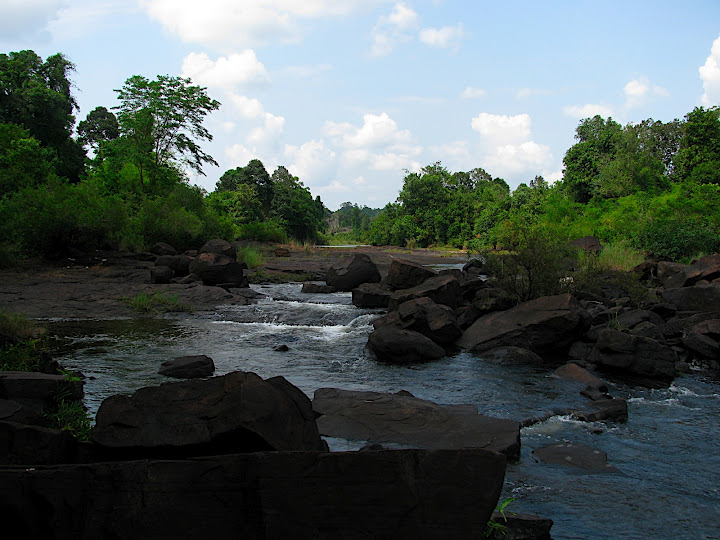
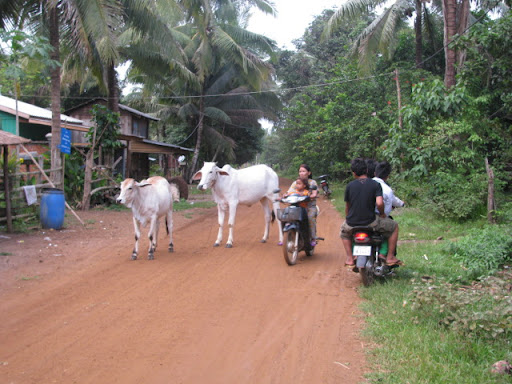
›By Hannah Marqusee // Wednesday, June 29, 2011Chi Phat is a single-dirt-road town nestled in the Cardamom Mountains of Southwestern Cambodia, one of the largest intact forests in Southeast Asia. The town is only accessible by two routes: a three-hour river boat trip up the Phipot River or, if the road isn’t flooded by the rainy season, an exhilarating 30-minute motorbike ride from Andoung Tuek, a blip on the one paved road that runs along Cambodia’s southwestern border. Since 2007, Wildlife Alliance has been running an ecotourism project in Chi Phat (full disclosure: I used to work for Wildlife Alliance in Washington, DC).
MORE
The project has been featured in The New York Times and since its inclusion in the Lonely Planet travel guide, has become a destination for backpackers looking to leave the beaten path. I recently visited the project after spending time in neighboring Vietnam and was struck by the contrast between the densely populated and urbanized Mekong Delta and the visibility of rural poverty in Cambodia.
“Cambodia’s contemporary poverty is largely a legacy of over twenty years of political conflict,” reads a 2006 World Bank Poverty Assessment. The Pol Pot regime’s agrarian collectivization forced millions into the countryside and as a result, even in today’s predominantly-urban world, Cambodia remains 78 percent rural. Today 93 percent of Cambodia’s poor live in rural areas, two thirds of rural people face food shortages, and maternal and reproductive health outcomes in the country lag far behind those in the cities. Chi Phat and the sparsely populated northeast have over ten or twenty times the rate of maternal deaths of Phnom Penh.
A Town Transformed
Before Wildlife Alliance began the Community-Based Ecotourism (CBET) project in Chi Phat, most villagers made a living by slash-and-burn farming, illegal logging, and poaching endangered wildlife. Wildlife Alliance Founder and CEO Suwanna Gauntlett described the ecological zone around the town as “a circle of death,” in an audio interview with New Security Beat last year.
Now, Chi Phat is a rapidly growing tourism destination offering treks and bike tours. In 2010 they brought in 1,228 tourists – not huge by any means, but over twice the number from 2009. The town now boasts a micro-credit association, a school, and a health clinic that offers maternal and reproductive health services. The village is also visited by the Kouprey Express, an environmental education-mobile that provides children and teachers with lessons, trainings, and materials on habitat and wildlife protection, pollution prevention, sustainable livelihoods, water quality, waste and sanitation, energy use, climate change, and adaptation.
One villager, Moa Sarun, described to me how he went from poacher and slash-and-burn farmer, to tour guide, and finally, chief accountant:Since I have started working with CBET, I realize that the wildlife and forest can attract a lot of tourists and bring a lot of income to villagers in Chi Phat commune. I feel very regretful for what I have done in the past as the poacher…I know clearly the aim of CBET is to alleviate the poverty of local people in Chi Phat, so I am very happy to see people in Chi Phat have jobs and better livelihoods since the project has established.
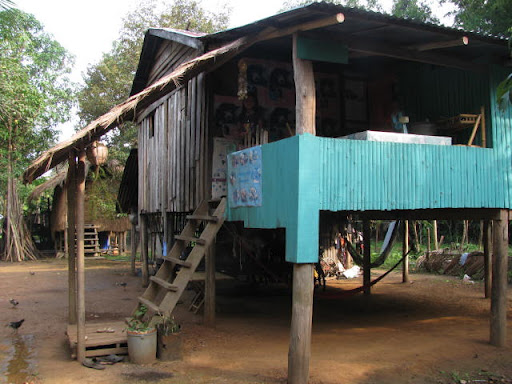
It’s hard to imagine what the town would have looked like before Wildlife Alliance arrived. The visitor center, restaurant, and “pub” (really, a concrete patio with plastic chairs and a cooler filled with beer), together make up nearly half of the town’s establishments. For two dollars a night, I stayed in a homestay and lived as the locals do on a thin mattress under mosquito netting, with a bucket of cold water by the outhouse for a shower, and a car battery if I wanted to use the fan or light (but not both). These amenities place Chi Phat above average for rural Cambodia. According to 2008 World Bank data, only 18 percent of rural areas had access to improved sanitation and only 56 percent had access to an improved water source.
Poaching Persists
Real change has certainly hit Chi Phat, but illegal activities persist, as a Wall Street Journal review of the project noted. In one Wildlife Alliance survey, 95 percent of members participating in the project made less than 80 percent of their previous income and 12 percent of people made less than 50 percent. “That, to me, is a red flag,” Director of U.S. Operations Michael Zwirn acknowledged to me. Nevertheless, he said “it is well documented that it’s the most lucrative community-based ecotourism project in Cambodia. That doesn’t mean that everyone is making money, or that they’re making enough money, but the community is clearly benefiting.”
Harold de Martimprey, Wildlife Alliance’s community-based ecotourism project manager, told me in an email interview:We monitor closely the impact of the CBET project on the diminution of poaching and deforestation. We estimate that since the beginning of the project, the illegal activities have decreased by almost 70 percent.
As Chi Phat ecotourism continues to scale up, de Martimprey expressed hope that more and more villagers would participate in the project and stop destructive livelihoods.
After four years, Chi Phat has already developed enough to operate financially on its own. Wildlife Alliance will stop funding the project later this year and transition it towards total self-sustainability. The plan is to then ramp up efforts at a neighboring project in Trapeang Ruong, due to open to the public next month.
A Land of Opportunity
So far Chi Phat lacks much of what do-gooder tourists are hoping to find when they come in search of ecotourism. There is little to no information about the work of Wildlife Alliance and how ecotourism benefits the town, or the health, education, and economic benefits the villagers have received. A little more obvious justification for ecotourism’s inflated prices might appease the average backpacker used to exploitatively lower prices elsewhere in the country. The guides, staff, and host families for the most part speak little English, which does not bode well for its tourism potential. “This is a work in progress,” said de Martimprey.
Most of my time in Chi Phat, I felt like the only foreigner to ever set foot in the town – refreshing after witnessing much of the rest of Southeast Asia’s crowded backpacker scene. As Chi Phat continues to grow, hopefully it will “bring in enough people to support the community without the adverse effects of tourism,” said Zwirn. “They don’t want it to turn into the Galapagos.” Thankfully, de Martimprey told me, “Chi Phat is far from reaching this limit and can be scaled up to much bigger operation,” without negatively impacting the environment.
Luckily, plans to build a highly destructive titanium mine near the town were recently nixed by Prime Minister Hun Sen in what was an unexpected victory over industrial interests. However, soon after, the town was again under threat – this time by a proposed banana plantation nearby.
“The Cardamom Mountains are still seen as a land of opportunity for economic land concessions for some not-so-green investors looking at buying land for different purposes, and often disregarding the interest of the local people,” said de Martimprey.
Eventually Zwirn hopes that as more tourists come to the Cardamoms, they will become “a constituency for conservation,” he said. “We need to build a worldwide awareness of the Cardamoms as a destination, and as a place worth saving.”
Sources: BBC, IFAD, Phnom Penh Post, New York Times, United Nations, Wall Street Journal, Wildlife Alliance, World Bank, World Wildlife Fund.
Photo Credit: Hannah Marqusee. -
Watch: Demographic Security 101 With Elizabeth Leahy Madsen
›By Schuyler Null // Monday, June 27, 2011“Today we are in an era of unprecedented demographic divergence, with population trends moving simultaneously in different directions. Some countries are beginning to experience population decline, while others continue to grow rapidly,” says Elizabeth Leahy Madsen, formerly the senior research associate at Population Action International (PAI). In this primer video from ECSP, Madsen explains how global demographic trends affect economic development, national security, and foreign policy.MORE
Three forces drive demographic change:- Fertility, which is the average number of children born to each woman, and has the greatest impact on demographic trends;
- Mortality, which fortunately has declined enough worldwide, so now most children survive to reach adulthood; and,
- Migration, which has much lower global impact on population size than fertility and mortality, but can have a larger impact at the local level.
Demographic projections are based on this history but also assume some convergence toward a common fertility rate (at or below replacement level). The UN projects thousands of different scenarios to come up with high, medium, low, and constant-fertility estimates for each country. For example, the constant fertility estimate for Nigeria, which assumes no change in current total fertility rate (5.61), puts population in 2050 at 504 million. But the medium variant projection, which assumes total fertility rate will fall to 3.2 by 2050, estimates a population of 390 million.
Youth and Capacity Building
“These figures provoke an important question,” says Madsen. “Do these governments have sufficient resources and sufficient willpower to provide for populations that are growing this quickly? And if not, are they likely to reach that capacity in the coming decades?”
“Today we have the largest generation of young people in history, with more than half the world’s population under 30. The vast majority of youth live in developing countries where they will continue to comprise the largest share of the population. The opportunities that are available or not available to these young people will determine their country’s futures.”
Understanding age structure can help us understand trends in governance, democracy, and civil instability. “In a country with a large youthful population, there’s little opportunity cost to joining a rebel group because there are few other alternatives and this facilitates recruitment,” says Madsen.
Adding an Arrow to the Analytical Quiver
Madsen cites the work of demographer Richard Cincotta, who has developed a model for predicting when a country is more likely to start to transition to a liberal democracy based on a historical analysis of age structure and previous transitions. Cincotta’s model predicted that Tunisia would begin such a transition this year, but the still-youthful population age structure of other Middle Eastern countries agitating for change, such as Egypt and Yemen, make a successful transition less likely or very unlikely.
“Demographic analysis, in combination with other political and economic factors, helps identify countries at risk,” Madsen explains. PAI found that 80 percent of all new civil conflict between 1970 and 2007 occurred in countries with at least 60 percent of the population under age 30.
Though Madsen cautions that age structure is never a sole factor for conflict, it does encompass a great many other indicators. And “unlike other social sciences, demography allows for a fairly informed projection into the future,” she says, which makes it a very useful tool for analysts.
“Population trends pressure governments and can facilitate the opportunities and motivation for participation in insurgency,” Madsen concludes. “To counter this, governments needs to scale up the provision of education and jobs for young people. This will be a challenge for many countries, which suggests that demographic projections should be an important component of development and foreign policy planning.”
Sources: UN Population Division. -
Why Fund Both Farm Subsidies and Foreign Aid?
›Tate Watkins, Short Sentences
By ECSP Staff // Monday, June 27, 2011The original version of this article, by Tate Watkins, appeared on the blog Short Sentences.
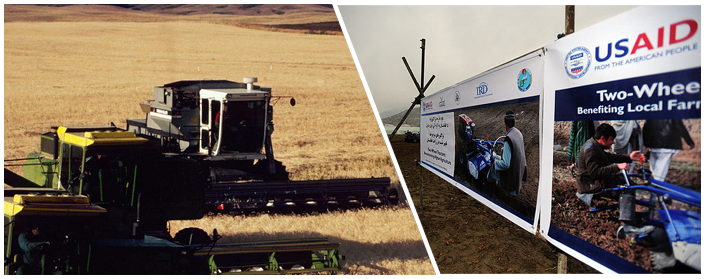
The USDA routinely disburses $10 billion to $30 billion a year in farm subsidies. President Obama has allocated $47 billion for the State Department and USAID for the next fiscal year (not including proposed expenditures for Afghanistan, Iraq, and Pakistan).*MORE
Why does the U.S. simultaneously fund domestic agricultural subsidies and foreign aid? The policies oppose each other. When it comes to promoting development opportunities for farmers around the globe, one of USAID’s ostensible goals, the left hand of the U.S. binds its right.
The origin of agricultural subsidies goes back at least to the first Agricultural Adjustment Act, enacted in 1933 as an attempt to help Depression farmers cope. Today farm interests justify subsidies in name of food security or, since 9/11, national security. But it’s widely acknowledged that the pastoral American family farmer, the image that farm interests present to the American people when the merits of subsidies are debated, do not benefit most from agricultural subsidies. Large corporate farmers do.
Continue reading on Short Sentences.
Photo Credit: Adapted from “YM009180,” courtesy of flickr user tpmartins, and “Badam Bagh Farm,” courtesy of flickr user U.S. Embassy Kabul Afghanistan. -
From the Wilson Center:
Watch ‘Dialogue’ TV on the Future of Women and the Arab Spring
›By ECSP Staff // Friday, June 24, 2011This week on Dialogue, host John Milewski discusses the role that women played in the Arab Spring and how these roles might evolve in the coming months and years with the enormous political changes sweeping the region. He is joined by Moushira Khattab, Lilia Labidi, and Haleh Esfandiari. [Video Below]
MORE
Moushira Khattab is a human rights activist who formerly served as Minister of Family and Population for Egypt. She also served as Assistant Minister of Foreign Affairs, Vice Chair of the UN Committee on the Rights of the Child, and was Egypt’s ambassador to South Africa during the Mandela era. Lilia Labidi is an anthropologist and professor at the University of Tunis who currently serves as Minister of Women’s Affairs in the Republic of Tunisia. Previously she was a visiting professor at the American University in Cairo and a fellow at the Wilson Center. Haleh Esfandiari is author of the book, My Prison My Home: One Women’s Story of Captivity in Iran. Haleh serves as the director of the Wilson Center’s Middle East Program.
Dialogue is an award-winning co-production of the Woodrow Wilson International Center for Scholars and MHz Networks that explores the world of ideas through conversations with renowned public figures, scholars, journalists, and authors. The show is also available throughout the United States on MHz Networks, via broadcast and cable affiliates, as well as via DirecTV and WorldTV (G19) satellite.
Find out where to watch Dialogue where you live via MHz Networks. You can send questions or comments on the program to dialogue@wilsoncenter.org. -
A Death Foretold
›Scott Wallace, National Geographic
By ECSP Staff // Thursday, June 23, 2011The original version of this article, by Scott Wallace, appeared on National Geographic News Watch.
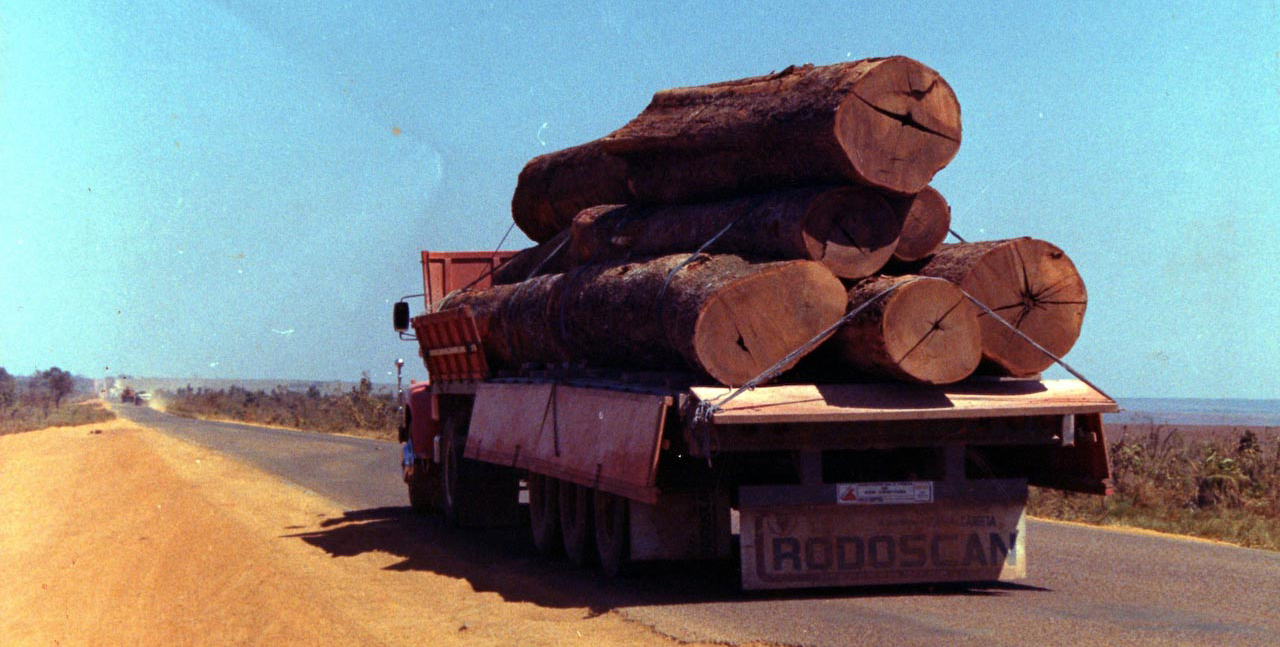
Late last month the Brazilian Congress passed a bill that if it becomes law would ease restrictions on rain-forest clearing and make it easier than ever to mow down the Amazon. That same day, 800 miles north of the parliamentary chamber in Brasilia, assailants ambushed and killed a married couple whose opposition to environmental crimes had placed them in the crosshairs of those who most stand to gain from the new legislation.MORE
It’s a nauseatingly familiar story. Over the past 20 years, there have been more than 1,200 murders related to land conflict in Brazil’s Amazon region. Most of the victims, like the married activists Zé Claudio Ribeiro and Maria do Espírito Santo, were defenders of the rain forest – people seeking sustainable alternatives to the plunder-for-profit schemes that characterize much of what passes for “development” in the Amazon.
The state of Pará – where Zé Claudio and Maria were ambushed on their motorbike as they crossed a rickety bridge – holds an especially notorious reputation for environmental destruction and organized violence. Pará is the bloodiest state in Brazil, accounting for nearly half of all land-related deaths in recent decades. It sprawls across an area larger than the states of Texas, Oklahoma, and New Mexico combined. Picture a tropical version of the Wild West, stripped of the romance, where loggers and ranchers muscle their way onto public land as though they own the place and impose a law of the jungle with their hired thugs. Those who have the nerve to protest soon find themselves the targets of escalating threats. If they persist, they find themselves staring down the gun barrels of those come to make good on the threats.
Continue reading on National Geographic.
Photo Credit: “Toras,” courtesy of flickr user c.alberto. -
Women in Agriculture: Closing the Gender Gap for Development and World Hunger
›By Kellie Furr // Wednesday, June 22, 2011Providing women with equal access to productive resources and opportunities may be the key to bolstering the struggling global agricultural sector and feeding communities living in extreme hunger, according to the UN Food and Agriculture Organization’s (FAO) latest State of Food and Agriculture report, which this year is sub-titled, “Women in Agriculture: Closing the Gender Gap for Development.”MORE
“Women are farmers, workers, and entrepreneurs, but almost everywhere they face more severe constraints than men in accessing productive resources, markets, and services,” write the authors. “This ‘gender gap’ hinders their productivity and reduces their contributions to the agriculture sector and to the achievement of broader economic and social development goals.”
Barriers to Productivity
Globally, women comprise 43 percent of the agricultural labor force, ranging from 20 percent in Latin America to 50 percent in southeastern and eastern Asia and sub-Saharan Africa, according to the report. But despite their significant global presence, female farmers face gender-specific constraints that hinder access to productive resources, financial support, information, and services required to be viable and competitive. “The yield gap between men and women averages around 20 to 30 percent, and most research finds that the gap is due to differences in resource use,” write the authors.
Generally, women are more likely than men to hold lower-wage, part-time, or seasonal positions and tend to get paid less even when they are more qualified. Furthermore, domestic and occupational lines are blurred for women, who are often not compensated for work that is closely related to domestic food preparation. Most significantly for agricultural productivity, women across the developing world often lack access to quality land, sometimes being barred from land ownership. This ban precludes female farmers from exercising managerial discretion over farming activities, such as entering contract farming agreements. Women also generally own less livestock and contract for less labor – two crucial assets for marketable agricultural production in many developing countries. Moreover, because of insufficient land and resources, women farmers are also more vulnerable to climate shocks.
Resource barriers for female farmers extend to education, finance, and technology as well. The authors observe that “female household heads in rural areas are disadvantaged with respect to human capital accumulation in most developing countries, regardless of region or level of economic development,” which represents a historical bias against females in education. Despite notable success observed in finance projects involving female farmers, gender bias exists in the financial system, which prevents women from bearing initial financial risk in order to increase long-term productivity gains. Sources of gender bias in the financial sector include legal barriers, cultural norms, lack of collateral, and institutional discrimination by public and private lenders. Due to the aforementioned lack of credit, labor, and education, women farmers are deficient in all aspects of technology, such as the acquisition of new equipment, information about new seed varietals and animal breeds, pest control measures, and management techniques.
Global Implications
Closing the gender gap could have profound implications for easing world hunger. According to the FAO, approximately 925 million people are currently undernourished, most of whom live in developing countries. If women were given all the inputs and support as men, agricultural output could increase by 2.5 to 4 percent in developing countries, potentially reducing the world’s hungry by 100 to 150 million people. “This report clearly confirms that the Millennium Development Goals on gender equality (MDG 3) and poverty and food security (MDG 1) are mutually reinforcing,” FAO Director-General Jacques Diouf argues in his introductory remarks.
Increasing the economic viability of women farmers may also translate into better infant and child health indicators – when women control additional income, they tend to allocate more of their earnings toward the health and well-being of their children. Closing the agricultural gap is “a proven strategy for enhancing the food security, nutrition, education, and health of children,” Diouf asserted. “Better fed, healthier children learn better and become more productive citizens. The benefits would span generations and pay large dividends in the future.”
Finally, the FAO notes that in addition to reducing child mortality rates, increasing female education and economic prosperity helps lower fertility rates, which over time increases human capital and can help drive a demographic transition towards lower dependency rates and higher per capita growth.
Closing the Gender Gap
“The conclusions are clear,” write the authors:1) Gender equality is good for agriculture, food security, and society; and
Though they note that “no simple ‘blueprint’ exists for achieving gender equality in agriculture,” the authors do recommend some basic principles to the development community, including working towards eliminating discrimination against women under the law, strengthening rural institutions and making them gender-aware, freeing women for more rewarding and productive activities, building the human capital of women and girls, bundling interventions, improving the collection and analysis of sex-disaggregated data, and making gender-aware agricultural policy decisions.
2) Governments, civil society, the private sector and individuals, working together, can support gender equality in agriculture and rural areas
Recognizing that “women will be a pivotal force behind achieving a food secure world,” the U.S. Agency for International Development (USAID) has actually launched initiatives aimed directly at closing the gender gap. The Feed the Future initiative, announced last spring, includes a heavy focus on gender equity and integration with small-scale farming initiatives. For example, the Office of Women in Development is supporting a three-year project in Liberia, “Integrated Agriculture for Women’s Empowerment,” that aims to train and support 1,500 small farmers in Lofa county, two-thirds of whom are women. And in Rwanda, USAID helped the Ministry of Agriculture and Animal Resources – headed by Dr. Agnes Kalibata – develop a national investment plan, which has been successful in bringing in donor support.
However, the FAO report does not offer specific feedback on programs like Feed the Future, which is arguably a crucial component of a truly comprehensive assessment on the current state of agriculture. Though they write that the State of Food Agriculture series is intended to simply be “science-based assessments of important issues,” the infancy of these food security efforts and the immediacy of the problems examined (see recent food price instability) creates an excellent opportunity for critical input. “Women in Agriculture” offers perhaps the most comprehensive report on the gender gap and development to date, but more specific critiques on the current efforts of USAID and others might make more of an impact in a field where the issues at play have been fairly clearly enumerated many times before.
Sources: Food and Agriculture Organization, The Hunger Project, International Fund for Agricultural Development, Population Action International, USAID.
Photo Credit: Adapted from “Ngurumo Village-Ntakira (Kenya),” courtesy of flickr user CGIAR Climate. -
Food Security in Kenya’s Yala Swamp
›Tim Siegenbeek van Heukelom, State-of-Affairs
By ECSP Staff // Tuesday, June 21, 2011The original version of this article, by Tim Siegenbeek van Heukelom, appeared on State-of-Affairs.
In West Kenya on the Northeastern shore of Lake Victoria, the Yala swamp wetland is one of Kenya’s biodiversity hotspots. The Yala swamp also supports several communities that utilize the wetland’s natural resources to support their families and secure their livelihoods. Even more, many people recognize the swamp’s extraordinary potential as agricultural land to significantly boost Kenya’s food security. These are three widely diverse interests, which may seem to be difficult to reconcile. Yet, with proper management, sufficient investment and effective communication, a differentiated utilization of the Yala swamp can be realized through a system of multiple land use. This will be a difficult but certainly not unrealistic objective.MORE
A Brief History
The most recent development of the Yala swamp was undertaken by Dominion Farms, a subsidiary of a privately held company from the United States investing in agricultural development. The reclamation and development of the swamp, however, is far from a new phenomenon.
The intention of the Kenyan government to transform parts of the Yala swamp into agricultural land for food production goes back as far as the early 1970s. Around that time, the Ministry of Foreign Affairs of the Netherlands was consulted extensively by the Kenyan government for technical assistance on reclamation of the swamp and the feasibility of agricultural production.
Throughout the 1980s numerous reports were commissioned by the Kenyan Ministry for Energy and Regional Development and the Lake Basin Development Authority to the Dutch Ministry of Foreign Affairs. Reports like the “Yala Integrated Development Plan” and the “Yala Swamp Reclamation and Development Project” focused in depth on the potential of the development of the swamp and made recommendations on practical matters, such as drainage and irrigation, soil analysis, agriculture, marketing, environmental aspects, employment opportunities, human settlement, management, and financial planning.
As a result, small-scale reclamation and development of the swamp land was undertaken throughout the 1980s and 1990s under the supervision of the Lake Basin Development Authority. The development of the swamp was partially successful, yet its scale was small and financial benefits were too marginal. Major investment was therefore required to extend the scale of the project.
Then, in 2003, an American investor expressed interest to make significant long-term investments into bringing parts of the swamp into agricultural production. Subsequently, a lease for 45 years was negotiated between Dominion Farms and the Siaya and Bondo County Councils to bring into agricultural production some 7,000 hectares of the Yala swamp. The whole Yala swamp wetland covers 17,500 hectares, which means that Dominion Farms is allowed to reclaim and develop roughly 40 percent of the swamp.
Protracted Conflict
Since the early days of the arrival of the foreign investor in 2004, there has been lingering tension and occasional flares of conflict between the communities surrounding the project site, third parties (i.e. government officials, politicians, NGOs, CBOs, environmentalists), and the investor.
The most commonly touted complaint is that Dominion Farms “grabbed” the communities’ land. While it is hard to trace back the exact procedures and individuals that were involved, there are clear contracts with the Siaya and Bondo County Councils that substantiate the transfer of land-use to Dominion Farms for a period of 45 years. Some claim, however, that the negotiation process for the lease was entrenched in bribery and corruption, yet no one has been able to show this author a single trace of evidence to substantiate these accusations. Similarly, there are complaints by local residents that they were never consulted in the negotiation process – where they should have been, as they rightly point out that the swamp is community trust land. However, the land is held in trust by the relevant county council for the community. The county council should therefore initiate consultations with the local communities and residents to get their approval to lease the land to third parties. So it appears that some of the resentment over the loss of parts of the swamp should not be directed at the foreign investor but rather target the local county council and their procedures.
Continue reading on State-of-Affairs. -
Eye On:
Watch: Richard Matthew at TEDxChange on Natural Resources, Conflict, and Environmental Peacemaking
›By Ramona Godbole // Tuesday, June 21, 2011“It’s not surprising that about half the time, efforts to try to stabilize countries as they come out of war fail,” said Richard Matthew, associate professor at the University of California at Irvine and founding director of the Center for Unconventional Security Affairs, at a recent TEDxChange event. “Wars today are very destructive. They may not be as big as the wars of the last century, but they do a lot of damage.”MORE
Matthew’s work focuses on the environmental dimensions of conflict and peacebuilding. Conflict can be spurred by competition over natural resources but it also contributes to further scarcity in many cases, creating a feedback loop. The natural resource aspect of conflict is particularly important in areas where livelihoods depend directly on access to land, water, and forests, he said.
In addition to discussing the benefits of including the environment in peacemaking efforts, Matthew also touched on the need for an increased proportion of national security spending to be spent on peace and development rather than defense. “It is in our interest to grow people out of the conditions that foster terrorism and extremism and infectious disease and crisis,” he said.
In particular, Matthew remains confident that an emerging group of leaders will find new and creative ways to support peacebuilding, natural resource management, and adaptation activities in the future: “Social entrepreneurs – people willing to combine their passion to make a better world with sound business tools – are developing truly innovative ways of taking daunting social problems and making them manageable.” -
From the Wilson Center:
Enhancing Public Engagement in Climate Change: The 2011 Climate Change Communicators of the Year
›By Kellie Furr // Monday, June 20, 2011“Excellence in climate communication has to do with public engagement – communication that expands the portion of the public that is engaged in this issue and enhances their degree of engagement,” said Edward Maibach, director of the Center for Climate Change Communication at George Mason University. “Enhancing Public Engagement in Climate Change: The 2011 Climate Change Communicators of the Year,” was held jointly by the Environmental Change and Security Program (ECSP) and George Mason University on June 8 to present awards for excellence in climate change communication by Naomi Oreskes and the Alliance for Climate Education. [Video Below]
MORE
Unique Challenges
Despite the weight of credible scientific evidence, polling data provided by Oreskes showed that the number of Americans who believe that humans cause climate change dropped from a peak of 72 percent in the early 2000s to only 50 percent today. According to Maibach, climate change science is difficult to translate into easily relatable terms, especially for those who struggle with basic scientific and statistical concepts. Climate change is “the ultimate abstraction,” he said, and “the power of [the award recipients’] work is that they have taken the abstract and made it concrete.”
Pic Walker, director of the Alliance for Climate Education (ACE), added that most discussion focuses on climate change effects that are too broad or distant: “The images that have been used are just not the right images. They are not localized; they are not customized to people so that they can feel the impacts of what’s happening in their communities and what’s happening around their own home. They don’t understand the connection between climate change and their daily lives,” including its economic impacts.
Engaging Tomorrow’s Leaders Today
ACE’s unique outreach program targets high school students around the country. Its presentations pair captivating animations with dynamic live presenters, who play off pop culture to engage students. Matthew Lappe, a program officer at ACE, proudly pointed out that the San Francisco Chronicle called the program a “cross between James Hanson and Lady Gaga.” In the two years since the program began, ACE has given presentations to approximately 86,000 high school students at more than 1,400 high schools nationwide.
Teenagers are an untapped resource for future leaders in climate change, said Walker. However, ACE found that there is no standardized climate change curriculum for teenagers; 54 percent of teenagers would fail a basic climate change science test today, he said. “If someone does not understand the issue, there is no reason to activate on the issue,” said Walker. The presentations are “customized in a way to really hit them where they are at in terms of issues that they are dealing with in their daily lives,” he said.
Unpacking the Political Challenge to the Climate Consensus
Oreskes’ 2010 book Merchants of Doubt, co-authored with Erik Conway, traced the roots of the current skeptic movement to a relatively small group of conservative physicists that coalesced during the ideologically heated days of the Cold War.
“It is clear…that this debate [is] not about the scientific evidence,” she said. It is about “governmental control of markets and of individual liberties and about the truly important and crucial question of when and whether governments should intervene in the marketplace to protect people from dangers,” Oreskes said.
Borrowing tactics from the tobacco industry, the movement focused on “merchantizing doubt,” said Oreskes. Despite the fact that the Intergovernmental Panel on Climate Change’s statements are consistent with peer-reviewed scientific literature, there is still a movement to challenge its authenticity.
For example, Oreskes pointed out that Republican strategist Frank Luntz, who spearheaded the George W. Bush administration’s policy of centering the climate debate on scientific uncertainty, conceded the validity of climate science. However, in strategy papers, he said the Republican party nevertheless should focus on the margin of error.
A margin of scientific doubt does not justify ignoring these crucial environmental problems, said Oreskes: “Global warming is a bill; and that bill has become due.”
Photo Credit: David Hawxhurst/Wilson Center. -
New Oxfam Report Tackles Broken Food System
›By Ramona Godbole // Friday, June 17, 2011“The global food system is broken,” reads a new report from Oxfam International. While much of Growing a Better Future: Food Justice in a Resource-Constrained World essentially reviews the major factors that contribute to food insecurity, Oxfam’s call to transform the food system is certainly timely, given this year’s high food prices (blamed in part for inflaming popular revolts in the Middle East) and fears of another global food crisis.
MORE
Despite producing enough food for everyone, one in seven people globally face chronic under-nutrition and almost one billion people are food insecure. Hunger is concentrated within rural areas in developing countries, and within families, women are often disproportionally affected, having serious implications for maternal and child health.
“We face three interlinked challenges in an age of growing crisis: feeding nine billion without wrecking the planet; finding equitable solutions to end disempowerment and injustice; and increasing our collective resilience to shocks and volatility,” write the authors of the report.
A “Perfect Storm” for Hunger
If current trends continue, population growth, natural resource scarcity, and climate change will put increasing stress on the food system in the future and create a “perfect storm” for more hunger, says Oxfam.
In the short term, oil price hikes, extreme weather, and speculative trading in markets have caused food prices to rise. With global population slated to grow to 9.1 billion and the global economy projected to be three times as big, demand for food may increase by as much as 70 percent by 2050. Food scarcity will also be deeply affected by the depletion of other natural resources including water, oil, and land.
According to the report’s predictions, child malnutrition levels in sub-Saharan Africa are expected to grow by 8 million by 2030. This estimate is before taking into account the effects of climate change, which could reduce agricultural yields by 20 to 30 percent in sub-Saharan Africa by 2080. The latest UN Population Division projections over that same time period predict an additional two billion people will be living in the region.
The Broken Food System
Up until now, many governments in developed countries have either ignored rising food prices or made it worse by imposing trade restrictions or encouraging the production of biofuels, says Oxfam. Thirty to fifty percent of all food grown is wasted, at least in part, as the result of poor consumer and business practices in rich countries, write the authors, and national governments are not doing enough to address climate change and manage scarce resources, especially water.
Another major challenge that contributes to global hunger is equitable access to land, technology, and markets, says Oxfam. In Guatemala, for example, less than eight percent of agricultural producers hold almost 80 percent of the land, and in developing countries, despite sharing an equal or larger burden of the work, women account for only 10 to 20 percent of landowners. Large companies, rather than local farmers, make the majority of decisions regarding key resources such as land, water, seeds, and infrastructure, while ignoring the technological needs of small-scale farmers.
“Growing a Better Future”
The report concludes that “from the failing food system to wider social and ecological challenges, the dominant model of development is hitting its limits.” The authors recommend three ways to effectively reduce hunger and fix the broken food system:1) Make food security a top priority for national and international governing bodies;
To make this a reality, write the authors, governments must invest in climate adaptation, disaster risk reduction, and social protection, while international governance of trade, food aid, financial markets, and climate change must work to reduce risks of future shocks and respond quickly and effectively when shocks do occur. The policies and practices of both governments and businesses should support the needs and interests of small-scale farmers, ensuring access to natural resources, technology, and markets.
2) Support small-scale food producers in developing countries; and
3) Set clear global targets for the equitable distribution of scarce resources.
While not exactly novel or ground-breaking ideas, these reforms certainly are lofty and the report avoids sugarcoating issues of food security, directly calling out governments and the private sector for their role in supporting food injustice. But, some argue that simpler solutions, like promoting fertilizers and new technologies among poor farmers, might be more effective at fighting malnutrition. Others question the validity of the reports assertion that the average food prices will more than double in the next 20 years.
Despite criticisms, this report and the corresponding GROW campaign will hopefully help further highlight the importance of food security and the need to move towards a more sustainable future.
Image Credit: “Thriving in Africa,” courtesy of flickr user Gates Foundation. -
Reading Radar:
The Implications of Urbanization on Food Security and Child Mortality of the Urban Poor
›By Kellie Furr // Thursday, June 16, 2011In the chapter, “Urban Agriculture and Climate Change Adaptation: Ensuring Food Security Through Adaptation,” of the edited volume, Resilient Cities: Cities and Adaptation to Climate Change – Proceedings of the Global Forum 2010, authors Marielle Debbeling and Henk de Zeeuw assess the viability of urban and peri-urban agriculture (UPA) as a method of climate change adaptation for the urban poor. Debbeling and de Zeeuw assert that UPA increases the resilience of cities by diversifying both food supply and income streams for the urban poor; decreasing the negative effects of “heat island effect,” air pollution, and urban flooding; conserving water and utilizing organic waste; and reducing energy use and greenhouse gas emissions. Given the scale and impact of modern urbanization, the authors write that “the integration of UPA into urban development and master plans, urban land use and zoning plans, as well as active maintenance of the protected agricultural zones…is crucial.”MORE
In “Urban Area Disadvantage and Under-5 Mortality in Nigeria: The Effect of Rapid Urbanization,” published by Environmental Health Perspectives, authors Diddy Antai and Tahereh Moradi found a significant link between the mortality rate of children under five years of age and a poor and disadvantaged urban environment; such an environment is characterized by poor sanitation, overcrowding, a lack of access to safe water, and high levels of disease-inducing air pollution and hazardous wastes. Although urban living may increase proximity to health care and other social amenities, low- and middle-income countries, such as Nigeria, have overstretched their adaptive capacities and the result is poor health indicators. Antai and Moradi predict that the rapid urbanization of Nigerian cities will bring increased infant mortality, unless individual- and community-based policy interventions are implemented to counter the adverse environmental conditions of deprived areas. -
Will Expanding “Human Security” Really Improve People’s Lives?
›Jacob Park, Our World 2.0
By ECSP Staff // Thursday, June 16, 2011The original version of this article, by Jacob Park, appeared on the UN University’s Our World 2.0.
To those working in the financial markets, the term “securitization” refers to the financial practice of pooling various types of debt, such as residential mortgages, and repackaging them as products like bonds, etc. And you can bet that most of the 2.5 million pages one gets if one searches for this term on the web probably relate to complex financial markets.MORE
Yet the use of the term “security” is not limited to the financial markets and it appears that the United Nations system and the international community seem to be caught up in its own securitization trend. At the April 2011 65th General Assembly of the United Nations, the General Assembly held an informal debate on the human security concept and why it is important to the UN and the international community.
At this meeting, UN Deputy Secretary General Asha-Rose Migiro argued that “in a world where threats could be as sudden and unpredictable as a tsunami or as protracted and unyielding as an oppressive dictatorship, an expanded paradigm of security was needed to encompass the broad range of conditions threatening people’s survival, livelihoods, and dignity.”
In light of the recent triple disaster in Japan and this year’s uprisings in the Arab World, Migiro stated that from “natural disasters and entrenched poverty to outbreaks of conflict and the spread of disease, the dramatic events of recent weeks had underscored the vulnerability of developed and developing countries alike.”
Her views reflect a trend since the 2005 World Summit, where leaders agreed that human security concerned both “freedom from fear” and “freedom from want,” and the definition of human security expanded beyond the traditional military-political paradigm of security to be inclusive of social, energy, and environmental issues.
In fact, a wide range of UN institutions have been active promoting their respective security work; the United Nations Environment Programme (UNEP) in relation to environmental security; the Food and Agricultural Organization in relation to food security; and the United Nations Development Programme/UN Trust Fund for Human Security, among others. (Similarly, the International Energy Agency, founded in response to the 1973/74 oil shocks, today plays an increasingly important role in advising its member countries on energy security.)
Real Solutions or Good Metaphors?
It’s hard to disagree with the expanded definition of security to include a wide range of social, environmental, and human development issues. But toward what ends? What will this diverse focus ultimately lead to?
Perhaps I am being overly pessimistic and need to be more patient for these various security issues to develop as possible policy solutions. However, experience with the term “sustainable development” offers a good illustration of what happens when vague concepts rather than real solutions starts the drive the institutional machinery of global governance.
It seems like at times we’re replacing solutions with metaphors or frames to discuss social, environmental, and human development global concerns. The emerging security narrative feels as if we’re waiting for some military quick fixes; as if there is some special forces unit that can be called upon to get rid of the climate-induced migration problem in the same manner as a special U.S. Navy SEAL team was dispatched to deal with Osama Bin Laden.
Unfortunately, there is a real possibility that these UN programs and initiatives (however worthwhile they may be) on energy security, food security, environmental security, climate security, and human security will attempt to deal with all of these issues at the same time and at the end, risk dealing with none. One thing is certain: more international conferences will be planned on security issues even if it is unclear what real benefits this will provide to the most vulnerable members of the international community, whom this securitization trend is designed to help.
What do you think? Will the securitization of all threats to human life make a difference to “at risk” communities across the globe? Or are we just getting caught up in language and not solutions?
Thoughts? Be sure to follow-up on Our World 2.0 as well.
Jacob Park is an associate professor of business strategy and sustainability at Green Mountain College in Vermont specializing in global environment and business strategy, corporate social responsibility, community-based entrepreneurship, and social innovation.
Photo Credit: “UN Peacekeepers Rescue School Collapse Victims,” courtesy of flickr user United Nations Photo.
Subscribe to: Posts (Atom)