Monthly archive for March 2011. Show all posts
-
Reading Radar:
The Impact of Environmental Change and Geography on Conflict
›By Schuyler Null // Thursday, March 31, 2011“Environmental Change, Strategic Foresight, and Impacts on Military Power,” published in Parameters by Chad M. Briggs, the Minerva Chair of Energy and Environmental Security at the Air University, USAF, tackles the changing definition of “environmental security” and how the concept can help planners better prepare for the effects of climate change and an elevated focus on energy security. New potentially destabilizing issues like glacial melt, sea-level rise, and Arctic ice melt are on the horizon, writes Briggs. China and others are already planning for these events, and it’s important that the United States does the same, starting with a greater appreciation for the impact of environmental security on vulnerability and risk. “Due to past practices and bureaucratic stovepipes, implementation is limited more by initiative and imagination than actual resources,” he writes.MORE
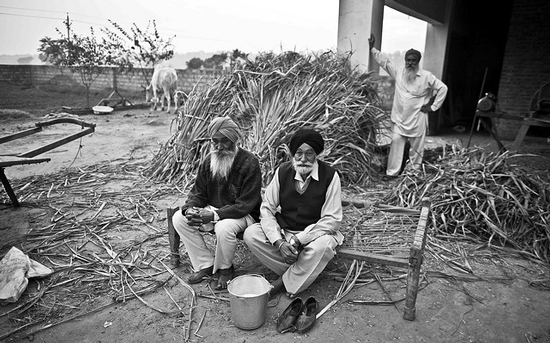
Clionadh Raleigh of Trinity College Dublin and the International Peace Research Institute finds in “Seeing the Forest for the Trees: Does Physical Geography Affect a State’s Conflict Risk?” that a region’s geography does not have a uniform effect on its likelihood of experiencing conflict. Raleigh’s conclusions, published in International Interactions, run counter to traditional histories which often emphasize the importance of physical geography, specifically with regard to civil war and insurgencies. Focusing on the Great Lakes region of Africa, Raleigh finds that other factors – like how populated an area is and its proximity to valuable natural resources – correlate higher with an area’s propensity for violence than any other factor. -
From the Wilson Center:
Book Launch: ‘The Future Faces of War: Population and National Security,’ by Jennifer Dabbs Sciubba
›By Christina Daggett // Wednesday, March 30, 2011“Demographic trends by themselves are neither inherently good nor bad. It’s really a state’s ability to address these issues that can determine the outcome,” said Jennifer Dabbs Sciubba, the Mellon Environmental Fellow with the Department of International Studies at Rhodes College. At a book launch event at the Wilson Center on March 14 for The Future Faces of War: Population and National Security, Sciubba, along with Deputy Under Secretary Kathleen Hicks of the Department of Defense, discussed the national security implications of demography and its important role in understanding and managing conflicts around the world. [Video Below]
MORE
Demography as an Indicator, Multiplier, and Resource
Demography can be thought of in three ways, explained Sciubba: as “an indicator of challenge and opportunity; a multiplier of conflict and progress; and a resource for power and prosperity.”
A country’s age structure can pose a challenge, said Sciubba, because countries with a large percentage of their population under the age of 30 “are about two and a half times more likely to experience civil conflict than states with more mature age structures.” Tunisia’s recent revolution, she said, could be understood as a “story about demography.”
The 26-year-old fruit vendor Mohammed Bouazizi, who set himself on fire on December 17 after being hassled by police, was part of one of the largest age cohorts in Tunisia, those aged 25-29. There are some 64 million young men across the Middle East-North Africa region between the ages of 15 and 30, according to UN estimates. “If his death was the spark” for the unrest in the region, Sciubba said, “it’s the underlying demographic trends that were the fodder.”
Yet, Sciubba sees opportunity within this challenge. Citing the work of Richard Cincotta, she said that “states have half a chance – literally 50 percent – of becoming a democracy once their proportion of youth declines to less than 40 percent.” Tunisia has the best chance in the region of becoming a free democracy based on its demography, followed by Libya, where youth aged 15-29 are 43 percent of the adult population.
At the other end of the age structure, some of the world’s most powerful countries, such as Japan, Germany, Italy, France, Russia, and China, are rapidly aging. This aging will “somewhat decrease the ability of these states to project political, economic, and military power” due to a shortage of labor and a smaller pool of funding, said Sciubba.
Countries with transitional age structures, such as India, Brazil, and South Africa, face different security challenges. With a majority of their populations between 15 and 60 years old, there are more people contributing to the economy than are taking away, which could bolster these countries economically and politically (the “demographic dividend”). Global institutions will have to reform and include these countries, she advised, “or else become irrelevant.”
But the defining trend of the 21st century, said Sciubba, is urbanization. While great sources of economic growth, cities are also quite vulnerable to natural disasters and terrorism because of their concentrations of people, wealth, infrastructure, and bureaucracy.
In looking to the future, Sciubba called for continued support for family planning initiatives. “At least 90 percent of future world population growth will take place in less developed countries,” which are least equipped to handle the demands of that growth, she said. In addition, Sciubba recommended that the United States seek out partnerships with countries that have transitional age structures, particularly India, which could be a stabilizing force in a tumultuous region. She also called on the United States to partner with states in the Western Hemisphere and remain open to migration.
Defense and Demography
“Understanding population is critical to our success in being able to prevent conflict, and also managing conflict and crises once we’re involved,” said Hicks, describing the Department of Defense’s (DOD) interest in demography. However, the DOD does not “treat demographics as destiny,” she said, but instead as “one of several key trends, the complex interplay of which may spark or exacerbate future conflicts.”
Recent world events, such as those in the Middle East and North Africa, “have demonstrated how critical our understanding of population is for security practitioners,” said Hicks. Similarly, the recent earthquake and tsunami in Japan dramatically illustrate the vulnerability of large urban areas. Echoing Sciubba’s comments on population aging, she cited “incredible divestments in defense” in Europe, which, she said, “puts us, as a key partner in NATO, at a thinking stage.”
Under Secretary of Defense for Policy Michèle Flournoy is “deeply interested” in demographic issues, said Hicks. She identified other demographic areas of great interest for her office: the youth bulge in Pakistan, urbanization in Afghanistan, the role of highly educated women in Saudi Arabia, the Chinese diaspora in the Americas, Russia’s shrinking population, and various trends in China, including aging, gender imbalance, urbanization, and migration.
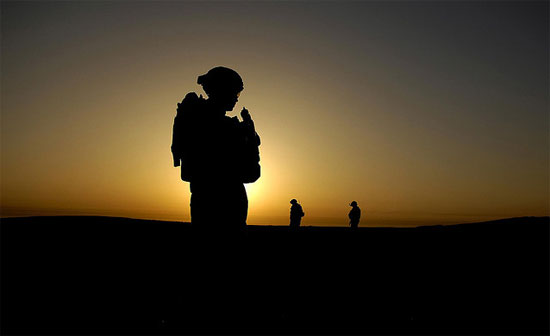
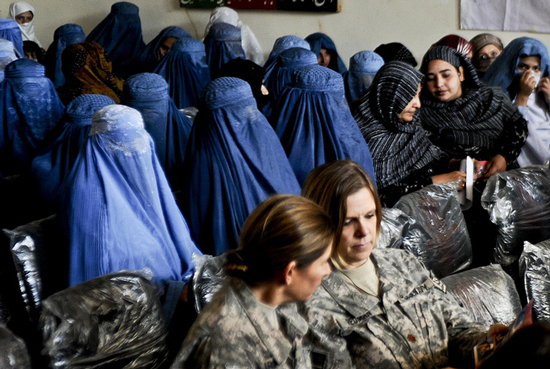
Image credit: “Iraq,” courtesy of flickr user The U.S. Army.
Sources: ECSP Report 12, Financial Times, The New York Times, Population Reference Bureau, UN Population Division. -
Eye On:
Watch Michael Renner on Improving Environmental Peacebuilding by Moving From the Technical to the Social
›By Schuyler Null // Tuesday, March 29, 2011“When we think about environmental peacebuilding opportunities…at a certain level it seems like a very straightforward, almost technical task,” said Michael Renner, senior researcher at the Worldwatch Institute, in this interview with ECSP. “But really stepping back, in a sense, this is far more than just a technical issue – it’s a broader social and, ultimately, political issue.”MORE
As well as reducing tensions in conflict-prone areas, environmental peacebuilding – like reforestation and land/water management initiatives – can have a great impact on local livelihoods. Renner discussed the importance, therefore, of working alongside affected communities to address specific, long-term needs. “You need to have a buy-in from the local communities,” he said. “If you don’t, you may well undertake these efforts, but it’s not very clear how long they can last and how successful they can be.”
“I think it’s very important to understand these as challenges from an interdisciplinary point of view, that really require us not to think in terms of just ‘what’s the best technology, what’s the best practice,’” Renner said. “But also ‘how do we ensure really that this links up with the needs on the ground of specific communities?’” -
The Gathering Global Food Storm
›Michael Kugelman, World Politics Review
By ECSP Staff // Monday, March 28, 2011The original version of this article, by Michael Kugelman, appeared on World Politics Review.
In India’s vibrant capital, food seems to be everywhere – from bustling fruit and vegetable markets and greasy kebab stalls, to sumptuous platters in rooftop restaurants and dilli ki chaat, Delhi’s ubiquitous street snacks. Poor street vendors and high-end chefs alike offer a multitude of culinary options to keep the city – and its array of visiting tourists, diplomats and business leaders – well-fed.MORE
Yet behind this apparent culinary prosperity lies rampant food insecurity. Food-related inflation in India soared above 18 percent in December, sparking street protests over high onion prices. Today, food-related inflation remains high, at nearly 12 percent. In a nation where at least 250 million subsist on less than a dollar a day, even modest price rises have a devastating impact on incomes and livelihoods. Yet, when food prices fall, India’s small farmers suffer. Already crippled by debt and encumbered by water shortages, 200,000 of them have committed suicide over the past 13 years.
India is not alone in this story. Just a few years removed from the 2007-2008 global food crisis, the world is once again experiencing the telltale drivers of acute food insecurity: rising prices of both food and oil, low agricultural yields, destructive weather and unquenchable demand. Once again, nations are banning exports in an effort to keep prices down at home – even as such policies drive up food costs in global markets. The consequences can be seen from Bolivia, where top government officials are hoarding food in their homes, to the Middle East, where the rising cost of basic foodstuffs has become a rallying cry for revolution.
Continue reading on World Politics Review.
Michael Kugelman is a program associate for the Asia Program at the Wilson Center and lead editor of Hunger Pains: Pakistan’s Food Insecurity and Land Grab? The Race for the World’s Farmland.
Sources: The Economist, India’s Contemporary Security Challenges, CNN, The Washington Post.
Photo Credit: Adapted from “India’s Food Crisis,” courtesy of flickr user lecercle. -
Building a Gender Strategy for the Afghanistan Ministry of Public Health
›Eric Zuehlke, Behind the Numbers
By ECSP Staff // Friday, March 25, 2011The original version of this article, by Eric Zuehlke, appeared on the Population Reference Bureau’s Behind the Numbers blog.
Recent media reports have focused on the stalled progress for women in Afghanistan and the shift in the international community’s focus as they take steps towards an eventual military withdrawl. Although there’s much work to be done, it’s important to note that there has been tangible improvement for women in Afghanistan. A decade ago, women weren’t allowed to go out in public alone. Girls weren’t allowed to attend school – now 57 percent of girls are in school. And gender issues are now being integrated into government policy.MORE
At an Interagency Gender Working Group (IGWG) Plenary in honor of 2011 International Women’s Day hosted by PATH in Washington DC, Karen Hardee, a senior fellow at PRB and president of Hardee Associates, presented her involvement towards developing the National Gender Strategy for the Afghanistan Ministry of Public Health for 2011-2015. Much international development program and policy advocacy calls for attention to “gender,” but what does the term mean? “Gender isn’t just about women,” said Hardee, but is defined as the social roles that men and women play because of the way society is organized. But these roles aren’t set in stone; they can change over time.
Funded by USAID, the Health Services Support Project worked with the Afghan government to create a plan to integrate gender considerations into all public health programs and policies, focusing mostly on mental health and gender-based violence. Interestingly, the impetus of the process stemmed the initiative of a male official in the Ministry of Public Health who requested assistance to write a plan to integrate gender into the Ministry’s policies and programs. Having participated in WHO-sponsored gender training workshops in the past, he understood the importance of mainstreaming gender awareness for both men and women. It’s a great example of the tangible effects of the work being done on gender by NGOs and international donors.
Continue reading on Behind the Numbers.
Sources: The Guardian.
Photo Credit: “PRT, ADT women help celebrate Women’s Day in Kunar,” courtesy of flickr user DVIDSHUB. -
From Ethiopia:
Integrated Approach Helps “Model Farmers” Increase Productivity
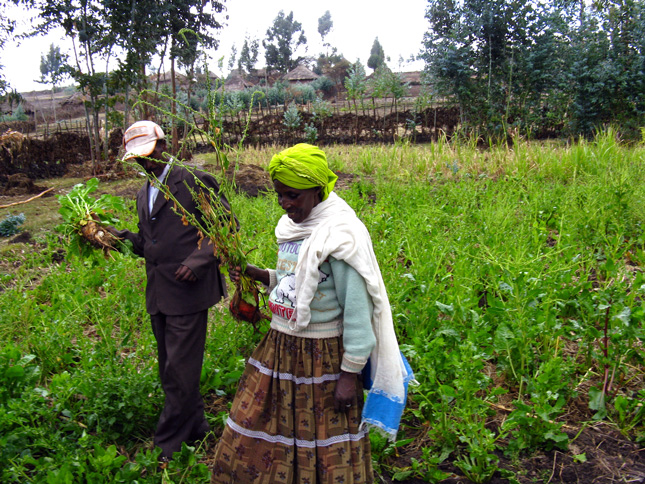
›By Schuyler Null // Thursday, March 24, 2011To reach the village of Grar Gaber from Addis Ababa, you drive up over the Entoto Mountains overlooking the capital then motor down two hours of new Japanese-built highway to the town of Fiche. From there it’s 20 minutes on a broken dirt road across rocky hills. I was joined there by about 20 others from the PHE Ethiopia Consortium’s general assembly (see also day one and day two coverage) and Population Action International, to visit an integrated population, health, and environment (PHE) development program run by LEM Ethiopia.MORE
The two-hour trip from the capital gives a first-hand look at Ethiopia’s environmental issues: The land, which has historically been fairly heavily populated by pastoralists and farmers, is noticeably degraded. Bare hillsides are carved by erosion, fields and piles of rock hint at the shallowness of the topsoil, and what little trees remain are non-native eucalyptus, which were introduced in the late 19th century to combat deforestation.
Grar Gaber
In Grar Gaber, home to 5,671 people, LEM Ethiopia has been working for five years to fill in the gaps between the different government health, environment, and agricultural initiatives serving the community, said Executive Director Mogues Worku.
Bogalech Zawde, one of the village’s health extension workers, showed us the list of more than 950 “model farmers” that have received combined health and agricultural training developed by LEM. In addition to information on child and maternal health, reproductive health, HIV/AIDS, Tuberculosis, and sanitation, the “model farmer” training provides information on optimal seed varieties (often supplied), planting techniques, and land and water management. The farmers are expected to then train their peers and report back to Zawde.
There are 30,000 health extension workers like Zawde across Ethiopia, averaging two per village, said PHE Ethiopia Consortium Director Negash Teklu. At LEM sites, they get extra help to implement cross-cutting environment and livelihood efforts, in addition to health services. In this way, LEM’s work supports the existing government structure, said Worku.
“What we’re doing is bringing together the health, agriculture, and Environmental Protection Authority workers so we can integrate the various components,” said Teklu, and help the different government ministries communicate more effectively with one another and the community.
“Model” Results
The results were impressive: We visited four households that had received and implemented LEM training. At each, the farmers pointed to marked improvements in their lives since the training. Thatched-roof, mud-walled huts stood next to new sturdier, steel-roofed houses, some with improved cook stoves inside, others with electricity and even TV.
One farmer, Obbo Mulugeta, told us how he’d started planting an apple seed variant from Spain he’d been given by LEM that was better suited for the climate and altitude – and worth more than his previous crop, to boot.
Another couple reported that after switching from one cow feed to another, they’d increased their average milk yield from two liters to nine. And now that they’re using family planning, the wife said with a grin, she had much more time to be “productive.”
Other farmers echoed her praise of family planning: A female farmer who worked her plot alone said she had 12 children (one adopted) and probably would have 13-15, if not for the family planning resources provided by LEM. Another farmer, who had eight children, said the biggest change from his grandfather’s time was the shift in number of children desired. Previously, children were seen as a sign of wealth, like livestock, but now land scarcity makes this untenable, he said, and he doesn’t expect or want his children to have as many kids as he did.
LEM is also working closely with the Ministry of Education to help build on these gains. School officials glowingly recounted how they worked with LEM to encourage environment, health, and girls’ clubs at both the primary and secondary level. The kids help run a tree nursery at the school, from which seeds are distributed. Children also bring back lessons learned about climate change, sustainability, disease, and sanitation to their households.
Room to Grow
Despite the impressive results, Worku said, challenges remain. Two of the biggest limitations are financial and human capital. Skilled personnel are rare; for example, Zawde is currently the village’s only the health extension worker because her partner is on maternity leave and no replacement was sent. This challenge is compounded by the fact that most villagers will not come to the clinic for treatment; she has to go house-to-house to visit patients.
Though the population, health, and environment model works well in Grar Gaber, there is a great deal of room to grow across Ethiopia. LEM is working in three woredas (districts) and other members of the PHE consortium are working in 26 more – but there almost 500 woredas across the country.
The role of LEM Ethiopia and other NGOs in the PHE Ethiopia Consortium is to “take the facilitation role,” said Worku. “We have to influence the decision-makers” in order to bring the benefits of the integrated approach to more communities.
See all of New Security Beat’s coverage of the 5th annual general assembly of the PHE Ethiopia Consortium.
Sources: PHE Ethiopia Consortium.
Photo Credit: Schuyler Null/Wilson Center. -
Surging on a Knife’s Edge
›The Youth of North Africa
By Christina Daggett // Wednesday, March 23, 2011The Middle East/North Africa region is experiencing a “youth surge,” said Jack Goldstone, director of the George Mason University’s Center for Global Policy, at a recent GMU event. “In the last two decades the number of people in their late teens and twenties has increased… It’s doubled in Egypt; it’s grown by half in Tunisia; and nearly doubled in Libya,” he told Warren Olney on KCRW’s To the Point.
Such youth surges are problematic because, Goldstone wrote in ECSP Report 13, “population distortions – in which populations grow too young, or too fast, or too urbanized – make it difficult for prevailing economic and administrative institutions to maintain stable socialization and labor-force absorption.”MORE
In the case of Egypt, the youth surge put enormous pressure on a government system that could no longer guarantee jobs to every college graduate, said Goldstone. When government guarantees dried up, graduates found that their poor-quality degrees were of little use, especially in a system that prioritized connections and bribery. The result was an unemployment rate of 25 percent among Egyptian youth and a mounting sense of frustration with the economic system and the government.
This frustration found a symbol when Mohammed Bouazizi, a 26-year-old Tunisian, set himself – and an entire region – on fire after his third run-in with the police cut off his only source of income. Youth across North Africa and the Middle East, Goldstone said, could identify with Bouazizi’s desperation and frustration after years of dealing with a closed economic system and a corrupt government.
While overall economic growth has been strong in the region – a fact which had misled many observers (including himself, Goldstone admits) into thinking the region was more stable – these economic gains were apparently being captured by the ruling elite to a far greater degree than previously thought, said Goldstone. For example, it is estimated that ousted Egyptian president Hosni Mubarak and his family are worth between $40 and $70 billion.
Meanwhile, a burgeoning surge of young people were struggling to get by. Goldstone pointed to a Gallup poll conducted in 2010 in which only 12 percent of Egyptians and 14 percent of Tunisians would classify themselves as “thriving” – down from 25 and 24 percent, respectively, in 2007 and 2008.
While the Ben Ali and Mubarak regimes have fallen, these revolutions do not ensure the youth in these countries will have a prosperous future. They need not only access to capital, said Goldstone, but also access to information and social networks so that they can identify market opportunities and stay connected.
Immigration to more developed countries could also be an important avenue for economic growth and education. In a Foreign Affairs article, “The New Population Bomb,” Goldstone writes, “Given the dangers of young, underemployed, and unstable populations in developing countries, immigration to developed countries can provide economic opportunities for the ambitious and serve as a safety valve for all.”
The future of Middle Eastern youth, and that of the region at large, depends on the quality of their education and their ability to be productive, said Goldstone. They stand on “a knife edge,” he said, and the transition to democracy will not be smooth or easy.
Image Credit: “Protest Face Paint,” courtesy of flickr user Ahmad Hammoud.
Sources: The Economist, ECSP Report 13, Foreign Affairs, Gallup, International Monetary Fund, KCRW, Voice of America. -
Watch: David Lopez Carr and Liza Grandia on Rural Population Growth and Development in Guatemala
›By Hannah Marqusee // Tuesday, March 22, 2011Demographers today are largely concerned with two trends: aging in the developed world, and rapid urbanization in the developing world. The majority of people in the world now live in cities, “but this tiny fraction of people that live in rural areas – concealed by the data because it’s a small fraction – still have very high fertility rates, precisely where protected areas are,” said David Lopez-Carr, associate professor of geography at the University of California, Santa Barbara in this ECSP interview.MORE
“You see a gradient. The more rural, the more remote, the higher fertility,” said Carr. In Guatemala, for example, fertility rates range from below four children per woman in Guatemala City, to as high as eight in the remote Maya biosphere reserve, which is mostly indigenous. “These are the populations that are growing the fastest and the ones who are living in direct proximity and whose livelihoods are predicated directly on the rainforest, whether it’s through resource extraction or…agricultural expansion,” said Carr.
Liza Grandia, assistant professor of international development and social change at Clark University, spent many years working in the Maya biosphere reserve with the Guatemalan NGO ProPeten to address deforestation. However, after years of alternative livelihood projects, “it became clear that many of those efforts would be undermined by population growth and continued migration into the region,” she said in an interview with ECSP.
Grandia and ProPeten conducted a study as part of the Demographic and Health Surveys to examine the linkages between health, population, and environmental trends in the Peten region. Based on these findings, Grandia founded Remedios, a program that partnered with International Planned Parenthood Foundation and the Guatemala Ministry of Health to provide family planning services to “one of the most remote places in Latin America.”
Remedios used mass media, such as the radio soap opera “Between Two Roads,” broadcast in Spanish and Q’eqchi’ Maya, to reach people across this remote region. In the popular soap opera, “the villain is a cattle rancher, the heroine is a midwife, and through the tales of daily life in this village we weave in messages about domestic violence, use of family planning, agrarian problems, like land speculation, and a whole host of other issues that come up in people’s daily lives,” said Grandia. “In three years as a result of that work, the total fertility went from 6.8 to 5.8. To date, 10 years later, it’s dropped to 4.3.” -
From Ethiopia:
The Continuing Challenges of Integrated Development
›By Schuyler Null // Sunday, March 20, 2011“How are we going to feed all these mouths?” asked Bekele Hambissa, director of the Environmental Protection and Development Organization in Addis, on day two of the PHE Ethiopia Consortium general assembly (read about day one here). Environmental resources are directly tied to Ethiopia’s population growth, said Hambissa, during a discussion of balancing efforts to address population growth, environment, and livelihoods. While poverty alleviation is an important goal of population, health, and environment integration (PHE), it must be environmentally sustainable, he said.MORE
The diversity and scope of the activities presented by eight of the consortium’s most active members was striking.. Each operates in a different part of the country, from the highlands of Tigray region in the north and Oromia in the south and central part of the country, to the coffee-producing Southern Nations and Peoples in the southwest. Though all the programs integrate some aspect of population, health, and environment in their development efforts, each emphasizes different aspects more than others and have differing implementation methods.
Farms, Forests, and Family Planning
LEM Ethiopia, headed by Mogues Worku, works in parallel with existing government infrastructure to provide sustainable income-generating opportunities and reproductive health services to women in three woredas (districts) across the country. The southern woreda of Wonago is very densely populated and severely eroded, he said, with up to 3,000 people per square kilometer. Along with agricultural training to produce “model farmers” in each community, LEM also suppers poor women by providing chickens and beehives, with one beehive capable of producing of to 45 kilograms of honey each year. These environmentally friendly alternative income sources help local families who often run short of money after the annual coffee harvest or have seen decreasing crop yields due to changing weather patterns, he said.
LEM also provides reproductive health and family planning services (RH/FP) through government clinics. Since they first started working in their target woredas two years ago, access to RH/FP services has dramatically increased from 14, 18, and 25 percent to 65, 65, and 80 percent, respectively.
The Relief Society of Tigray (REST), by contrast, integrates PHE via watershed protection plans across several woredas in the north. REST focuses their health efforts on school programs, hoping to increase students’ awareness of RH/FP, HIV/AIDS, and basic sanitation.
The Movement for Ecological and Community Action (MELCA), working in the Bale Mountains in the south, also heavily engages with youth through schools, but focuses mainly on reforestation around the Bale Mountains National Park. Befekadu Refera, program head of MELCA, said they have planted more than 60,000 indigenous trees so far, and, thanks to active youth groups, they have increased the prevalence of all forms of contraceptives.
Data for Donors
As impressive as these numbers are, said Linda Bruce of the BALANCED Project, “it’s extremely important to continue to collect data.” Without statistics, integration is a tough sell to donors who’ve never seen PHE programs in action, she said.
Anecdotes are not enough, especially to prove the cost-effectiveness of the PHE approach, said Roger-Mark De Souza of Population Action International. He advised the consortium members to demonstrate it with data. “We have to be very rigorous and critical in our approach, to hold each other accountable,” he said.
Some members saw a lack of interest and understanding by donors, who often want projects to meet specific objectives that often don’t match up well with the broad results of PHE. Bruce and De Souza said that better communication of existing programs’ results might help alleviate this reluctance.
More and more donors are becoming interested in integrated development, said Jason Bremner, but “we need to know about your projects” to increase that interest. To that end, the members agreed they need more detailed surveying and better coordination between organizations around the country.
Strong Local Support
Despite the challenges, all members reported immediate impact and strong local support for their programs. Shewaye Deribe, program officer for the Ethio Wetlands and Natural Resources Association – which has helped rehabilitate more than 22,000 hectares and provide improved FP/RH services to more than 30,000 people – told the audience about an impoverished farmer with a very small plot of land and eight children, none of whom were able to complete high school because he could not feed them. “Learn from my example,” the man told Deribe.
Integration is naturally present in every community, said Worku. Farmers do not consider their land, family, or income in isolation; the only way to meet their basic needs is through a multi-disciplinary approach.
See all of New Security Beat’s coverage of the 5th annual general assembly of the PHE Ethiopia Consortium.
Photo Credit: From right to left, Befekadu Refera of MELCA, Haddis Mulugeta, and Roger-Mark De Souza; and below, a stack of logs in the village of Gele Gaber. Schuyler Null/Wilson Center. -
From Ethiopia:
“Better Bang for the Buck” With the Population, Health, and Environment Consortium
›By Schuyler Null // Friday, March 18, 2011Hello from Addis Ababa, where I am blogging from the 5th annual general assembly of the Population, Health, and Environment (PHE) Consortium of Ethiopia (see further coverage here). Along with the Philippines, Ethiopia is the largest PHE programmer in the world, both in terms of number of programs and people affected, and for good reason: The country combines dire need, willing donors, and a great deal of local capacity and will.MORE
Ethiopia is currently home to 85 million people – second only to Nigeria as the most populated country in Africa – and the average woman has 5.4 children, according to the Population Reference Bureau. Ethiopia is also extremely rural, with only 16 percent of the population living in cities, which, combined with its rugged terrain, poses challenges for delivering health services and improving land management.
The PHE Ethiopia Consortium is a coordinating body made up of 48 organizations that implement integrated PHE development programs at more than 30 sites across the country. At the general assembly, more than 80 members from around the country reported on their efforts to improve livelihoods and communicate the effectiveness of integrated development.
“We all know where Ethiopia lies in terms of global poverty and environmental degradation indicators,” said PHE Ethiopia Consortium Executive Director Negash Teklu. “Almost 100,000 tons are being eroded from our soil every year.”
“Evidence supported by research is one of our main organization goals,” said Teklu. The consortium’s role, he said, is to help member organizations better coordinate with each other and strengthen the kind of relationships that integrated PHE development requires, both with each other and with donors. He also said the community needs to better connect the work that NGOs do with government objectives and programs.
Haddis Mulugeta of the Institute of International Education in Addis pointed out that integrated PHE advocates should beware of spending too much effort criticizing the broad sectoral structure of government at the national level, as it’s essentially an inevitability. Instead, members should concentrate on building community support and encouraging better communication between government ministries on these issues at the local level.
“Integration must start at the community level; they are the true integrators,” said Ricky Hernandez, a representative from PATH Foundation Philippines now working in East Africa. The engagement of community members determines not only the impact of the project on health, environment, and livelihood indicators, but also, most critically, its sustainability.
Jason Bremner of the Population Reference Bureau, speaking on the state of PHE across Africa and globally, showed a data chart created using Hans Rosling’s Gapminder tool that tracks the progress of poverty and life expectancy indicators over the last 50 years. He pointed out that the “world is a better place today in many ways.” But, he said, the PHE community must get better at communicating its successes. “Even by the best case scenario we will be 8 billion by 2050…and if nothing changes…we could be as large as 12 billion,” he said.
The UN’s medium variant projection estimates Ethiopia will have 174 million people in 2050 – more than twice the current population. The high fertility estimate, which projects a slower decline in total fertility, puts total population at 196 million people. Pointing to Ethiopia’s ambitious health and environment targets – such as the government’s goal of reaching zero carbon emissions in the next 15 years – Teklu said that injecting PHE integration into existing development efforts is a great opportunity to provide “greater bang for the buck.”
“Our target is improved livelihoods,” said Teklu, and to harmonize the relationship between people and the environment.
Stay tuned over the next few days for more on the challenges facing the PHE community here in Ethiopia, a look at some local PHE sites, and the community’s plans for the future.
See all of New Security Beat’s coverage of the 5th annual general assembly of the PHE Ethiopia Consortium.
Sources: Population Reference Bureau, UN Population Division.
Photo Credit: Schuyler Null/Wilson Center. -
Dot-Mom:
USAID: Maternal Deaths in Bangladesh Decline by 40 Percent in Less Than 10 Years
›By ECSP Staff // Friday, March 18, 2011The original version of this article, by the USAID Global Health Bureau, appeared on the USAID Impact blog.
Bangladesh is on track to meet the 2015 deadline for UN Millennium Development Goal 5 (50 percent reduction in maternal deaths). The Bangladesh Maternal Mortality and Health Service Survey, jointly funded by the Government of Bangladesh, USAID, Australian Aid (AusAID) and the United Nations Population Fund (UNFPA), found that maternal deaths in Bangladesh fell from 322 per 100,000 in 2001 to 194 in 2010, a 40 percent decline in 9 years.MORE
The decline in direct obstetric deaths is most likely the consequence of better care seeking practices and improved access to and use of higher-level referral care. The decline in total fertility rate due to the successful family planning program has reduced exposure to high risk pregnancies and has thus prevented a large number of maternal deaths.
Continue reading on USAID’s Impact blog.
Sources: Directorate General of Health Services – Bangladesh, UN.
Photo Credit: Adapted from “Mother & Son,” courtesy of flickr user Anduze traveller. -
Congressional Hearing: Clean Water Access Is a Global Crisis, Human Right, and National Security Issue
›By Hannah Marqusee // Thursday, March 17, 2011Unsafe drinking water causes nearly 1.8 million deaths each year from diarrhea, “a number that dwarfs the casualties associated with violent conflict,” said U.S. Representative James McGovern at a congressional human rights commission hearing earlier this month on water as a basic right. Nearly all of these deaths are children under the age of five, he said. “This is a war against families, children, and women on an ongoing basis,” said Representative Earl Blumenauer, also speaking at the hearing, titled “Realizing the Right to Safe Water and Sanitation.”
There are currently 884 million people in the world without access to safe drinking water, according to UNICEF, and 2.6 billion without improved sanitation. As population growth and climate change place added stress on fresh-water systems, by 2025, two thirds of the world’s population will live in water-stressed conditions, according to the Food and Agriculture Organization. “This is a severe global crisis,” said McGovern.
“A Human Right”
With 2011 World Water Day only weeks away, the hearing harkened back to Secretary Clinton’s widely quoted statement from World Water Day 2010, marking a commitment by the Obama administration to address global water issues:It’s not every day you find an issue where effective diplomacy and development will allow you to save millions of lives, feed the hungry, empower women, advance our national security interests, protect the environment, and demonstrate to billions of people that the United States cares. Water is that issue.
Four months after that statement, the UN passed a resolution to make access to water and sanitation a human right, not just a development priority. Said Catarina de Albuquerque, a UN independent expert who testified at this month’s congressional hearing, the resolution stipulates that water must be “available, accessible, affordable, acceptable and safe.” A “right to water” is an important “sign of political will,” that will place increased obligations on governments to improve access to water and sanitation, she said. But in the meantime, for the millions without access to safe water, “there is no change.”
According to the UN, the world is on track to meet the Millennium Development Goal target of halving the number of people without access to an improved water source by 2015. But de Albuquerque noted that the reality is not quite so optimistic. On a UN fact-finding mission, she encountered at least one family who by UN definitions had access to an “improved drinking water source,” yet their tap water was literally black. “Water quality is not being monitored” and for many of the people who do have access, it is simply “undrinkable,” she said.
In developed countries as well, there are significant barriers to access, especially for marginalized communities. On a recent mission to the United States, de Albuquerque found that America’s “voiceless” – people of color, Native Americans, and the homeless – face significant discrimination in access to water. “Society closes its eyes to them,” she said. Thirteen percent of Native Americans lack access to safe water, in comparison to 0.6 percent of non-native Americans, she said in a statement to the press releasing her findings. And in Boston, “for every one percent increase in the city ward’s percentage of people of color, the number of threatened cut-offs increases by four percent.” To make the necessary improvements to fill these gaps in America’s aging water infrastructure would cost $4 to $6 billion annually, she said.
A National Security Issue
Water “is a security issue as well as a human development issue,” said Blumenauer. Since, according to UNEP, 40 percent of the world relies on river basins that share two or more political boundaries, water management has enormous potential for both conflict and cooperation. Echoing Clinton’s World Water Day statement, McGovern championed the cross-cutting nature of water:The right to water is inextricably linked with other basic rights…including the right to food, the right to health, and the right to education.
The burden of collecting water in underdeveloped countries often creates a gender gap and exposes women and girls to violence and rape, he said. And it “has been the basis for many territorial and violent disputes between various peoples and even nations.”
Last month, a staff report by the Senate Foreign Relations Committee expressed a similar sentiment with the publication of their report, Avoiding Water Wars: Water Scarcity and Central Asia’s Growing Importance for Stability in Afghanistan and Pakistan. The report commends the Obama administration for recognizing the importance of water: “For the first time, senior government officials are recognizing the critical role that sound water management must play in achieving our foreign policy goals and in protecting our national security.” However, by exclusively focusing on Pakistan and Afghanistan’s water issues and “neglecting the interconnectivity of water issues between Central and South Asia, the U.S. approach could exacerbate regional tensions,” the report says.
To be more strategic about water assistance, the report recommends the United States: (1) provide technical support in data collection to better manage water; (2) help increase water efficiency and reduce demand for water; (3) recognize the transboundary nature of water issues and “provide holistic solutions;” and (4) “safeguard institutions against shocks to water supply and demand.”
Moving Forward
The Obama administration’s commitment to water issues, the UN’s recognition of water as a human right, and the 2005 Water for the Poor Act have all been important steps towards fulfilling the pledge of making access to safe water a human right. “We’ve come a long way,” Blumenauer (who authored the Water for the Poor Act) said at the hearing, but there is still significant work ahead.
“We’re going to have to be more strategic moving forward” in order to meet global water shortages, said Aaron Salzberg, special coordinator for water resources for the U.S. Department of State who testified at the hearing. Salzberg recommended that the U.S. government take steps to integrate water management with the food and health sectors; build political will; mobilize financial support; promote science and technology; and form partnerships with other governments and aid organizations. The United States must also “be smarter” about allocating funds based on the dual criteria of “need” and “opportunity.” Balancing efforts with partners to find out which countries have the greatest need and the least resources will allow limited U.S. funds to make the deepest impact, he said.
John Oldfield, managing director of the WASH Advocacy Initiative, urged Congress to increase funding for foreign assistance, continue appropriations for the Water for the Poor Act, and improve the effectiveness of existing water, sanitation, and hygiene (WASH) assistance. “Each dollar invested in water and sanitation leads to an 8:1 return from reduced healthcare costs and time savings,” he said. “The world does not need to bury millions more of its children in the coming years when we know how to prevent waterborne disease today.”
Sources: FAO, UNEP, UNICEF, United Nations, WHO.
Image Credit: Adapted from “School girl drinks water from new handpump,” courtesy of flickr user waterdotorg. MORE -
China’s Green Five-Year Plan: Making “Ecological Security” a National Strategy
›Hu Angang and Liang Jiaochen, ChinaDialogue
By ECSP Staff // Wednesday, March 16, 2011The original version of this article, by Hu Angang and Liang Jiaochen, appeared on ChinaDialogue.
Five-year plans (FYPs), which set down and clarify national strategy, are one of China’s most important policy tools. Just as they have helped to drive China’s economic success over recent decades, so they will play a pivotal role in putting the country on a green development path. The 12th Five-Year Plan, now under consideration by the National People’s Congress, marks the beginning of that process in earnest (Editor’s note: Since this was originally published, the National People’s Congress voted in favor of the plan).MORE
FYPs embody the concept of progressing by degrees, or developing step by step. This approach has been one of the driving forces behind China’s economic progress in recent decades and will now provide the platform for its green development. It is the methodology underpinning China’s socialist modernization: to reach a new step in development every five years. Unstinting efforts over a number of FYPs have driven China’s transformation.
Climate change presents a long-term and all-encompassing challenge for China. It demands a long-term development strategy and broad goals, as well as near-term action plans and concrete policies. Combining these is precisely the idea behind FYPs.
At the global climate change summit in Copenhagen in 2009, China demonstrated it has the long-term political will to respond to climate change; to work with the world to limit global temperatures to no more than two degrees Celsius above pre-industrial temperatures (the goal set out in the Copenhagen Accord). In November that year, the Chinese government formally put forward its medium-term targets on climate change: a reduction in energy intensity of 40 percent to 45 percent on 2005 levels by 2020, and generation of 15 percent of energy from non-fossil fuel sources by the same date.
Continue reading on ChinaDialogue.
Hu Angang is a professor at the Chinese Academy of Sciences and Tsinghua University and the director of the Centre for China Study. He has worked as the chief editor for China Studies Report, a circulated reference for senior officials. Liang Jiaochen is a PhD student at Tsinghua University’s School of Public Policy and Management.
Sources: Business Green, UN Framework Convention on Climate Change, World Resources Institute.
Photo Credit: Adapted from “China: CREME,” courtesy of flickr user IFC Infrastructure (Alejandro Perez/IFC). -
Congressional Report: Avoiding “Water Wars” in Central and South Asia
›Scarcity and Stability in Afghanistan and Pakistan
By Schuyler Null // Tuesday, March 15, 2011“Water plays an increasingly important role in our diplomatic and national security interests in [Central and South Asia], and we must ensure that our approach is carefully considered and coordinated across the interagency,” begins a new staff briefing, Avoiding Waters Wars: Water Scarcity and Central Asia’s Growing Importance for Stability in Afghanistan and Pakistan, prepared for the Senate Foreign Relations Committee. “As water demand for food production and electricity generation increases, in part as a result of the quickening pace of climate change, so too must our efforts to provide water security,” write the authors.MORE
The report focuses mainly on Afghanistan and Pakistan but also considers “the interests in the shared waters by India and the neighboring five Central Asian countries – Uzbekistan, Tajikistan, Kazakhstan, Kyrgyzstan, and Turkmenistan.”
ECSP is cited twice in the report, both from “Water Can Be a Pathway to Peace, Not War,” in ECSP Report 13:The Navigating Peace Initiative’s Water Conflict and Cooperation Working Group correctly summarized the current state of water use by saying, “water use is shifting to less-traditional sources such as deep fossil aquifers and wastewater reclamation. Conflict, too, is becoming less traditional, driven increasingly by internal or local pressures or, more subtly, by poverty and instability. These changes suggest that tomorrow’s water disputes may look very different from today’s.”
And again in breaking down the notion of impending water wars:Given the important role water plays in Central and South Asia as a primary driver of human insecurity, it is important to recognize that for the most part, the looming threat of so-called “water wars” has not yet come to fruition. Instead, many regions threatened by water scarcity have avoided violent clashes through discussion, compromise, and agreements. This is because “[w]ater – being international, indispensable, and emotional – can serve as a cornerstone for confidence building and a potential entry point for peace.”
USAID’s “Changing Glaciers and Hydrology in Asia: Addressing Vulnerabilities to Glacier Melt Impacts,” which was launched here at the Wilson Center last fall, also made an appearance:Central Asia and India face critical challenges in monitoring glaciers and tracking changes, particularly differences from year to year. As USAID’s report “Changing Glaciers and Hydrology in Asia: Addressing Vulnerabilities to Glacier Melt Impacts” noted, “[t]he review of scientific information about glacier melt in High Asia revealed, first and foremost, a lack of data and information, a lack that hampers attempts to project likely impacts and take action to adapt to changed conditions.” The United States should engage in collaborative glacier monitoring programs and those that develop local or sub-national water monitoring capacity.
The report concludes that “water scarcity, coupled with how governments address these challenges,” can either exacerbate conflict or promote cooperation in the region. It’s also worth noting that the authors specifically mention the links between increased water use and growing populations in the region, specifically with regard to India and Pakistan:With a population already exceeding 1.1 billion people and forecasts indicating continued growth to over 1.5 billion by 2035, India’s demand for water is rising at unprecedented rates.
The drive to meet energy and development demands from both countries has led to plans for extensive hydrological projects that could spark tensions between the two over the Indus Waters Treaty (which has withstood four Indo-Pakistani wars).
The authors praise the attention given to the matter thus far by the Obama administration, but they also write that “although it is still too early to determine the impacts of our efforts in the broader region, now is the time to begin evaluating water-related trends” at a more systematic level.
Sources: U.S. Senate Committee on Foreign Relations. -
Somali Piracy Shows How an Environmental Issue Can Evolve Into a Security Crisis
›Shannon Beebe, Los Angeles Times
By ECSP Staff // Monday, March 14, 2011The original version of this op-ed, by Shannon Beebe, appeared in the Los Angeles Times.
It has become apparent that real piracy is far different from the lighthearted subject sometimes portrayed in popular culture, and the problem is growing much worse. Besides the tragic cost in lives, the United States, many other nations, and NATO spent roughly $2 billion combined last year to safeguard the busy international sea lanes off the Horn of Africa from Somali pirates. According to the International Maritime Bureau, “hijackings off the coast of Somalia accounted for 92 percent of all ship seizures last year,” and the price tag does not include the costs of reallocating critical military resources.
Sadly, much of this could have been avoided had the world made a stronger commitment to conservation and environmental protection years earlier. Somalia provides a classic example of how problems related to poverty and the environment are increasingly evolving into traditional international security risks.MORE
For example, the issue of overfishing, particularly by foreign vessels, was very low on the international community’s radar when the government of Somalia collapsed in the 1990s. The combination of rich fishing opportunities and a complete inability of the government to police its waters drew fleets from countries far and near, setting the stage for the instability to come. The greatest harm was done by European and Asian vessels that plundered the fisheries off Somalia’s coast.
Once Somalia’s fish populations were depleted, the international ships moved on. But local fishermen obviously could not. As economies along the coast collapsed, whole communities of Somalis became jobless, hungry, and willing to exploit the only assets they had: boats with a strategic launching point into one of the world’s most important commercial sea lanes. And what would have seemed unthinkable to many Somali villagers just a short time before — transforming small fishing boats into pirate vessels — has since become a way of life.
Continue reading at the Los Angeles Times.
For more on Somalia’s myriad environmental and security issues, see The New Security Beat’s “As Somalia Sinks, Neighbors Face a Fight to Stay Afloat.”
Shannon Beebe is a lieutenant colonel in the U.S. Army and co-author of The Ultimate Weapon Is No Weapon: Human Security and the New Rules of War and Peace. The opinions expressed here are his own and do not represent those of the Department of Defense.
Sources: International Maritime Bureau, Maritime Domain Awareness Information Exchange.
Subscribe to: Posts (Atom)