Yearly archive for 2011.
Show all posts
-
The Unconquered: In Search of the Amazon’s Last Uncontacted Tribes
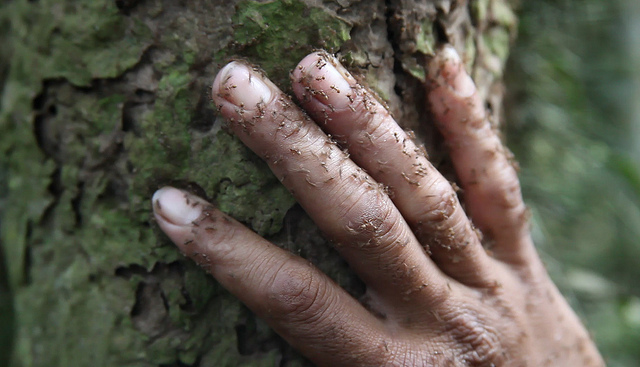
›In the far west of the Brazilian Amazon reside some of the last indigenous tribes on Earth untouched by modern society. In 2002, writer and photographer Scott Wallace, on assignment for National Geographic magazine, undertook a three month journey through the Javari Valley Indigenous Land on an expedition to map and protect the territory of the flecheiros, or Arrow People, named for the poison-tipped arrows they use. Wallace turned the chronicles of his adventure into a book while in residence as a Public Policy Scholar at the Wilson Center.
On November 21, Wallace returned to the Center to present his finished book, The Unconquered: In Search of the Amazon’s Last Uncontacted Tribes.
Over the past 40 years, Brazil’s policies towards indigenous tribes have changed dramatically, said Wallace – from initially wanting to “civilize” tribes through contact, to a modern hands-off approach. He explained that globalization and demand for rubber in the twentieth century meant more contact with indigenous tribes and, ultimately, more upheaval. As a result, many tribes took up hostile attitudes towards outsiders and retreated as far into the wilderness as possible.
Today, the Brazilian Department of Isolated Indians is attempting to map out the extent of uncontacted peoples’ lands in order to better protect them from intrusion. Over the last eight years since the book was written, the official number of uncontacted tribes has increased from 17 to 26. Javari Valley alone hosts eight distinct ethnic groups, making it the largest concentration of uncontacted tribes in the world.
The leader of Wallace’s expedition, Sydney Possuelo, is an explorer who was formerly the head of the Department of Isolated Indians and once one of Brazil’s most famous sertanistas (“agents of contact”). Possuelo is now a champion of the vision that we should no longer contact tribes, said Wallace, but only “identify them and get legal protection for [their] lands and erect control posts to keep intruders out.”
Old Tensions, New Threats
Although Wallace holds up Brazil as one of the countries with the most enlightened policies for native Indians in the Americas, he said there is cause for concern as intrusions continue. As Wallace notes on his blog, isolated Indians are known to travel extensively by foot during the dry season, appearing along the riverbanks as they search for turtle eggs buried in nests along the sandy beaches of the western Amazon. Mounting pressure from logging crews, wildcat gold prospectors, and seismic teams exploring for oil and gas are flushing these isolated indigenes out of the forests.
During their trek to map the flecheiros, Wallace’s group ran into an illegal gold mining operation, and, although they managed to take the dredge to the local authorities, Wallace said he fears corruption may have stymied justice.
Rights-Based Conservation
On the positive side, Wallace pointed out that by protecting indigenous tribes, the government is also protecting tens of thousands of acres of virgin rainforest in what is a mutually beneficial intersection of conservation and human rights. “Indians are the rightful owners of the land and the most efficacious guardians of the rainforest,” he said.
While there are many obstacles threatening the survival of uncontacted tribes, Wallace said that the situation is not hopeless and that conservation through protecting indigenous-rights in Brazil is a good starting point. “When there is a commitment to do something and resources are made available,” he said, “what seems like inevitable development, like the overrunning of forests, can be stopped.”
Event ResourcesPhoto Credit: “Brazil Amazon adventure,” courtesy of jonrawlinson. -
Engaging Faith-Based Organizations on Maternal Health
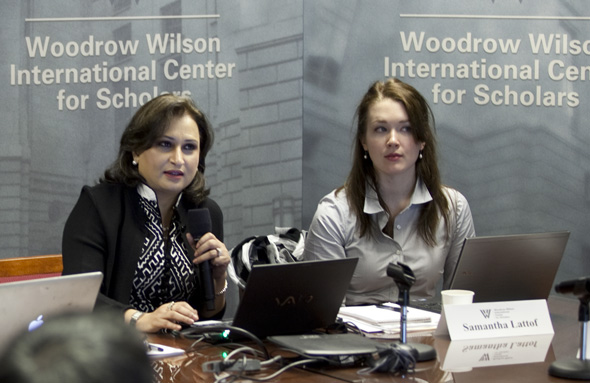
›“Faith-inspired organizations have many different opportunities [than non-faith-based NGOs]. The point that is often reiterated is that religions are sustainable. They will be there before the NGOs get there and will be there long after,” said Katherine Marshall, executive director of the World Faiths Development Dialogue at the Wilson Center on November 16. Marshall noted in her opening remarks that maternal health should be an easy issue for all groups, regardless of religious tradition, to stand behind. Yet, in reality, maternal health is a topic that “very swiftly takes you into complex issues, like reproductive health, abortion, and family planning,” she said.
As part of the Advancing Dialogue on Maternal Health series, the Woodrow Wilson International Center for Scholars’ Global Health Initiative collaborated with the World Faiths Development Dialogue and Christian Connections for International Health to convene a small technical meeting on November 15 with 30 maternal health and religious experts to discuss case studies involving faith-based organizations in Bangladesh, Nigeria, Pakistan, and Yemen. The country case studies served as a springboard for group discussion and offered a number of recommendations for increasing the capacity of faith-based organizations (FBOs) working on maternal health issues.
Engaging Religious Leaders in Pakistan
“When working with religious leaders to improve maternal health there are some do’s and don’ts,” said Nabeela Ali, chief of party with the Pakistan Initiative for Mothers and Newborns (PAIMAN). Ali described a PAIMAN project that worked with 800 ulamas (religious leaders) to increase awareness about pregnancy and promote positive behavior change among men.
One of the “do’s” highlighted by Ali was the need to build arguments for maternal health based on the Quran and to tailor terminology according to the ulamas preferences. The ulamas who worked with PAIMAN did not want to utilize the word “training,” so instead they called their education programming “consultative meetings.” More than 200,000 men and women were reached during the sermons and the strategy was been picked up by the government as one of the best practices written into in the Karachi Declaration, signed by the secretaries of health and population in 2009.
Despite the successes of the program, Ali warned against having unrealistic expectations for religious leaders interfacing with maternal health. She stressed the importance for having a long-term “program” approach to the issue, as opposed to a short-term “project” framework.
Behavior Change in Yemen
“Religion is a main factor in decisions Yemeni people make about most issues in their lives and religious leaders can play a major role in behavior change,” said Jamila AlSharie a community mobilizer for Pathfinder International.
Eighty-two percent of Yemeni women say the husband decides if they should receive family planning and 22 percent say they do not take contraception because they belief it is against their religion and fertility is the will of God, said AlSharie. Therefore, the adoption of healthy behavior change requires the involvement of key opinion leaders and the alignment of messages set in religious values. Trainings with religious leaders included family planning from an Islamic perspective, risks associated with early pregnancy, nutrition, education, and healthcare as a human right.
Male Participation a Key Strategy
“As a faith-based organization we believe it is a God-given right to safe health care and delivery so we mobilize communities to support pregnant women to address their needs, educate families about referrals and existing services in the community,” said Elidon Bardhi, country director for the Bangladesh arm of the Adventist Development and Relief Agency (ADRA).
Through female-run community organizations, ADRA educates men and women about the danger signs of labor and when to seek care. For example, many men in Bangladesh hold the belief that women should eat less during pregnancy to ensure a smaller baby is born, thereby making delivery easier, said Bardhi. ADRA addressed such misconceptions through a human rights-based approach and emphasized male participation as a key strategy, ensuring there were seven male participants for every one female.
A Culturally Nuanced Approach in Nigeria
The Nigerian Urban Reproductive Health Initiative (NURHI) is a public-private partnership that identifies and creates strategies for integrating family planning with maternal health. According to Kabir Abduallahi, team leader of NURHI, “family planning” is not as acceptable a term as “safe birth spacing” in Nigeria, so the project highlighted how family planning can help space births and save lives.
Religion and culture play an important role in the behavior of any community. The introduction of a controversial healthcare intervention (such as family planning) in a religiously conservative community requires careful assessment of the environment and careful planning for its introduction, said Abduallahi. Baseline surveys and formative research data helped NURHI understand the social context and refine intervention strategies.
Ten Ways to Increase the Capacity of FBOs
Faith-based organizations’ close links to communities provide them with an opportunity to promote behavior change and address other cultural factors contributing to maternal mortality rates such as early marriage and family planning.
Working in collaboration with FBOs and other stakeholders is critical to promoting demand for maternal and reproductive health services; however, there is limited knowledge about faith-based maternal healthcare and FBOs are often left off the global health agenda. In conclusion, Marshall noted 10 areas the group identified as areas to focus on:- Move projects to programs: Projects are often donor driven and limited in scope and duration. Donors and policymakers should move from project-oriented activities to local, regional, and national-level advocacy programs to build sustainable change.
- Coordinate, coordinate, coordinate: Significant resources are wasted due to a lack of coordination between FBOs and development agencies. A country-level coordinating mechanism should be developed to streamline efforts not only between agencies but also across faiths.
- Context, context, context: A thorough understanding of the local culture and social norms is imperative to successful program implementation.
- Terminology is important: In Pakistan, religious leaders redefined sensitization meetings around family planning and maternal and child health as “consultative meetings” not “trainings.” In Nigeria, the culture prefers “child birth spacing” over “family planning.” In Yemen, it’s “safe age of marriage” instead of “early childhood marriage.”
- Most religious leaders are open and with adequate information can produce behavior and value changes. Utilizing the Quran, Hadith, and Bible can support arguments and emphasize the issue of health and gender equity.
- Relationship building: Winning the trust of religious leaders can be difficult and time-consuming but is necessary for opening doors to patriarchal societies.
- Rights-based approach: A human rights-based approach can be a very powerful agent of change for addressing negative social structures such as violence against women, but it can also create controversy. In Bangladesh, ADRA utilized the approach to educate men about nutrition, dowry and child marriage, and education of women.
- Networks: There is a significant need to create forums that bring together the various FBO and global development communities in order to share knowledge and enhance advocacy messages. Networks are needed to streamline resources and inventory existing research, projects, and faith-based models that work.
- Monitoring and evaluation systems: There is a striking lack of data about the impact and outcomes of FBOs. Increasing the monitoring and evaluation skills of FBO workers can improve evaluation systems and meet the demand for new data.
- There needs to be greater political will for engaging the faith-inspired community.
Event ResourcesPhoto Credit: David Hawxhurst/Wilson Center. -
Managing the Planet: The Road to Rio+20
›“We still see people thinking about the environment as if it is something apart. The idea of a synergy, a balance of development still, I think, eludes us both in theoretical, but especially in practical terms. And that is what Rio+20 is about,” said Ambassador Luiz Alberto Figueiredo Machado, under-secretary for environment, energy, science, and technology at the Brazilian Ministry of Foreign Affairs.
The Rio+20 conference next year, marks the 20th anniversary of the 1992 UN Earth Summit. It will be an opportunity to generate new answers to the question of how to collectively develop in a more sustainable and balanced way, said Figueiredo. Jacob Scherr, director of strategy and advocacy at the Natural Resources Defense Council, Richenda Van Leeuwen, senior director for energy and climate at the UN Foundation, and Thomas Lovejoy, biodiversity chair at the Heinz Center for Science and professor of environmental science and policy at George Mason University, joined the ambassador at the Wilson Center on November 16 for a discussion about preparations for the upcoming conference. The event was part of the Managing the Planet seminar series, coordinated jointly by George Mason University and the Wilson Center.
Sustainable Development Goals
Rio+20 should reaffirm the sustainable development vision of the first Earth Summit, said Scherr, “of our ability to deal with all of these issues at once: to move forward on economics, and dealing with poverty, of being equitable, and protecting and preserving the environment for future generations.”
Figueiredo said he sees the concept of a “green economy” as an “instrument to promote sustainable development and eradicate poverty. And in that sense, it seems clear that we will not find one green economy as such, but probably as many green economies as countries in the world, because each country will find its way of using that kind of tool.”
One proposal for the conference, supported by Brazil, is to devise a set of sustainable development goals, which would “embrace the Millennium Development Goals and instill a certain sustainability viewpoint to all of them,” Ambassador Figueiredo said. Furthermore, they would be global in nature, rather than geared towards developing countries, providing a vision for collective development.
“The Millennium Development Goals were good in some ways [but] they were fairly weak on the environmental side,” said Thomas Lovejoy. “This is a chance to actually improve on that, to really bring these elements together.”
Action and Accountability
Through “sustainable development dialogues,” Brazil is working to provide a new mechanism for civil society input at the conference. According to Figueiredo, Brazil hopes to “create a bridge between those who understand the issues, those who have a deep knowledge of the issues, and those who have the power again to do something about it.”
“We have been talking about these issues for 40 years, what we really need is a meeting that, as the Secretary General recently said, is a conference about implementation…to really start moving us down the path towards a sustainable future,” said Scherr.
“You might argue that everything that happened 20 years ago was an absolute failure, but of course it was not, because an awful lot has happened in the interim, it’s just that it hasn’t happened on a big enough scale or fast enough,” Lovejoy said.
“What gives me a lot of reason for hope going into Rio+20 is there are a lot of very practical, very pragmatic efforts involved,” he said.
Richenda Van Leeuwen pointed to the UN Secretary General’s Sustainable Energy for All initiative as a potential agenda to follow. The initiative has three objectives: ensuring universal access to modern energy services; doubling the rate of improvement in energy efficiency; and doubling the share of renewable energy in the global energy mix.
“We are using Rio, and the seminal opportunity that it represents, as a mechanism to be able to bring these new commitments together…to show that there is an opportunity for concrete actions,” Van Leeuwen said.
A robust accountability framework is vital to that effort, Van Leeuwen said. “It’s easy to make a pledge at a pledging conference, but really what we are looking at is a whole new way of doing business, a whole new action agenda,” she said. “So we are very optimistic and very excited about the opportunity for Rio, but Rio not as an end really, but as a beginning and as an opportunity to be a springboard to get much further global action.”
Photo credit: “Brazil!,” courtesy of Flickr user sparktography.
Event Resources -
IRP Editors Cover Rwanda’s Population, Health, and Environment Challenges
›The original version of this article appeared on the International Reporting Project website.
The International Reporting Project (IRP) and 12 senior editors and producers from across the United States traveled to Rwanda this year to learn about issues affecting Rwanda and other countries in Africa and to help them improve their news organizations’ international coverage. Some of the editors focused on Rwanda’s extensive population, health, and environmental challenges:
Nicholas Aster, founder and publisher of San Francisco’s Triple Pundit, covered sustainable development in Kigali, coffee’s empowerment potential, and eco-tourism sites like Volcanoes National Park. Aster also became interested in Rwanda’s efforts to avert disaster by corralling Lake Kivu’s CO2 reserves into a power supply. At the close of his trip, Aster reflected on Rwanda’s sustainability goals in a photo essay.
Tom Paulson, host and reporter for KPLU’s Humanosphere, discovered the positive side of aid and development in Rwanda, including girls’ education initiatives and coffee farming improvements. Moreoever, Paulson documented the Gatekeepers’ trip to Volcanoes National Park, including a visit from a mountain gorilla who became a little too friendly. Paulson has also posted several questions the Gatekeepers asked President Paul Kagame when they met with him, including his policies on restricting free speech, curbing population growth, and preventing another genocide. At the close of the trip, Paulson composed a photo slideshow that shows a growing, vibrant Rwanda, and he also outlined 10 reasons why the complex and sometimes contradictory country can’t be described in a sound-bite.
Sue Horton, op-ed and Sunday Opinion editor of the Los Angeles Times, began chronicling her trip with a survey of Rwanda’s history on genocide, governance, and gorillas. On the road to meet Rwanda’s famed gorillas, Horton noted Rwanda’s strengths and challenges: its ambitious vision for the future encourages a growth in infrastructure and the country has showed impressive gains in healthcare provision and access, but Kigali is relocating residents who don’t fit the image.
The deputy managing editor of Global Post, Andrew Meldrum, also found a note of optimism in witnessing how far Rwanda has come since the genocide, particularly after hearing the testimonies of the genocide’s youngest victims: children born of sexual violence during the genocide. And his Global Post colleague Jon Rosen delves into the country’s population growth and the government’s approach to family planning.
In addition to the Gatekeeper Editor Trips, the IRP offers individual Fellowships to U.S. reporters to travel overseas on five-week reporting trips. In 2009, IRP Fellow Perry Beeman discovered a Rwanda similar to that which the Gatekeepers encountered: a country that has made much progress, but still has many challenges ahead. Beeman, who also was a public policy scholar at the Woodrow Wilson Center, created a multimedia series, “Renewal in Rwanda”, for The Des Moines Register; his reporting garnered him an Overseas Press Club citation for Best Reporting in 2010.
Rwandans, Beeman found, are dedicated to conservation. President Kagame is committed to the environment and is driven to develop clean, sustainable power and to convert from subsistence agriculture to a stronger, more diversified economy. But everyone has a hand in this effort, including schoolchildren who report on conservation in song, dance, and dramatic arts. Beeman also examined efforts to preserve the Gishwati Forest, including gorilla and chimpanzee preservation efforts from villagers to businessmen to researchers. Beeman emphasized the importance of immersing oneself in an environment in order to report on it, and he did so by, among other things, tracking wild chimpanzees in the forest.
For more information about IRP’s Fellowships and Gatekeeper Editor trips, visit their website at InternationalReportingProject.org.
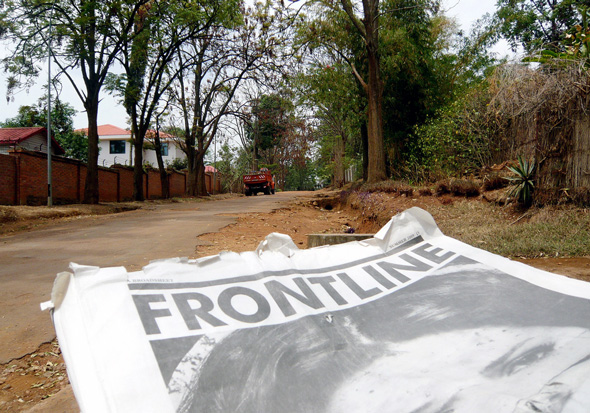
Photo Credit: “The Broadsheet in Kyovu, Kigali,” courtesy of flickr user noodlepie (Graham Holliday). -
Ambassador Melanne Verveer, U.S. Department of State
Ambassador-at-Large for Global Women’s Issues on Durban and the Role of Women in Combating Climate Change
›December 23, 2011 // By Wilson Center StaffThe original version of this article, by Ambassador Melanne Verveer, appeared on the White House Council on Environmental Quality blog.
Last week I traveled to Durban, South Africa to participate in the Conference of the Parties to the United Nations Framework Convention on Climate Change to highlight the critical and largely untapped potential of women to combat climate change. Studies have shown that it is often women who are on the frontlines of, and suffer disproportionately from, the impacts of climate change. This is certainly important. But we must remember that women are also a powerful force for finding solutions to climate change across the board, including in areas such as agriculture, sustainable forest management, and energy access.
Agriculture, which accounts for approximately 14 percent of global greenhouse gas emissions and is a sector that can be particularly sensitive to climate variability and change, is one key area where women can play a major role. A recent FAO report shows that women, in many places, are the main producers of the world’s staple crops, particularly in developing countries and regions likely to be adversely affected by climate change impacts. However, globally, only a small minority of women farmers have access to land tenure. This is a problem for many reasons – including that it limits women’s potential to combat climate change. Studies have shown that women with the right to property are significantly more capable of investing in climate-smart agricultural productivity; we have a lot of work to do to unlock women’s potential in this area.
Women also have untapped potential for increasing energy access, which directly relates to climate change. For example, nearly three billion people globally still rely on traditional cookstoves and open fires to prepare food for their families. In most instances, women are responsible for cooking – not to mention also spending many hours per week collecting fuel, which often puts women at risk of gender based violence. The resulting smoke exposure causes an estimated two million premature deaths annually, with women and young children the most affected. Cookstoves also impact the climate through emissions of greenhouse gases and short-lived particles such as black carbon. Engaging women is critical to tackling this problem. As we work to build a global market for clean cookstoves, integrating women into the cookstoves supply chain will help increase clean cookstove adoption rates while also creating new economic development opportunities. And as Secretary Clinton has noted, women create a multiplier effect in local communities because they disproportionately spend more of their earned income on food, healthcare, home improvement, and schooling.
The United States recognizes the power of women’s potential in these areas and many others, and is investing in major initiatives including Feed the Future and the Global Alliance for Clean Cookstoves, where women’s role in generating transformative change is front and center.
I went to Durban to highlight the critical role of women in combating climate change. While there, I worked with U.S. negotiators on the Durban texts and participated in public engagement events. Our efforts to build on the gender equality and women’s empowerment language in the Cancun agreements are reflected in several crucial institutional developments, including language on gender balance related to the composition of the board of the new Green Climate Fund, the Standing Committee, and the Adaptation Committee. We also worked to reflect gender considerations in the mission of the Climate Technology Center and Network. USAID Assistant Administrator Eric Postel and I solicited input during a meeting with leading non-governmental organizations working on gender and climate issues, and I hosted a high-level side event at the U.S. Center focused on unlocking women’s potential to combat climate change. The level of enthusiasm among my fellow panelists and the audience at the event was inspirational.
We made progress in Durban, but we can’t stop here. To achieve the future we all seek, we must do more. As the late Wangari Maathai, founder of the Green Belt Movement and ground-breaking advocate on women and the environment said, “We must not tire, we must not give up, we must persist.” The future of not only women, but our planet, depends on it.
Ambassador Melanne Verveer is U.S. Ambassador-at-Large for Global Women’s Issues.
Sources: Food and Agriculture Organization, Intergovernmental Panel on Climate Change, The White House.
Photo Credit: “Melanne S. Verveer,” courtesy of the U.S. Embassy, Kabul. -
In Somalia, Beyond the Immediate Crises, Demography Reveals a Long-Term Challenge
›December 21, 2011 // By Elizabeth Leahy MadsenIn the nearly 20 years since the infamous intervention that resulted in the deaths of dozens of American and UN peacekeeping soldiers on the streets of Mogadishu, Somalia has become the epitome of a “failed state.” Neighboring countries, global bodies, and aid agencies are rushing to respond to the country’s rapidly evolving political, security and humanitarian crises.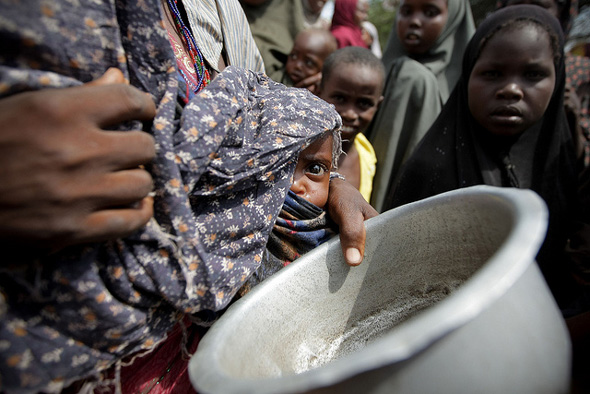
Diplomatic attention has focused on decentralized, weak governance that is divided among the Al Shabab insurgency, clan warlords, and a hamstrung and largely ineffective Transitional Federal Government, whose control does not extend beyond the capital. Foreign militaries have had to devote naval resources to curtailing daring and far-reaching acts of piracy against civilian and military vessels from networks based in Somalia. Aid groups have been stymied in their efforts to stem famine as access to populations in the hardest-hit areas has been cut off by Al Shabab and food aid has been stolen. Most recently, Kenyan and, reportedly, Ethiopian forces have crossed the border, extending the reach of the country’s political crisis. Hundreds of thousands of have fled conditions of hunger, illness, and violence into neighboring countries.
Perhaps the deepest woe of a “failed state” is that its problems are deep-seated and cannot be solved during the brief span of a UN meeting or the news cycle following the latest terrorist attack. Amid the extraordinary efforts to battle the country’s crises, one of the most important underlying structural factors is often overlooked: the country’s unusual demographic picture.
A Demographic Outlier
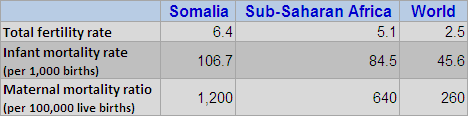
Somalia is a global outlier in demographic terms, with rates of fertility (6.4 children per woman), infant mortality (107 deaths per 1,000 births), and maternal mortality (1,200 deaths per 100,000 live births) all above the already-high averages for sub-Saharan Africa. These demographic indicators are both a reflection of the abysmal state of health care in the country and a warning that its economic and security challenges are unlikely to be easily resolved.Research shows that where at least 60 percent of the population is younger than 30 years old, countries are more prone to outbreaks of civil conflict, and the risk increases as the proportional size of the “youth bulge” grows. In Somalia, 70 percent of the population is younger than 30, a level comparable to Iraq and the Palestinian Territories. With little to no improvements in health care, Somalia’s age structure has remained unchanged over the past 40 years. Unlike dozens of other countries where fertility has declined significantly in recent decades, Somali women have nearly as many children on average today as they did in the 1970s. The current total fertility rate of 6.4 children per woman is only a 12 percent decline from the 1970 rate.
Despite high infant mortality – more than 10 percent of children die before turning one – this sustained high fertility rate has generated rapid population growth, with each successive generation larger than the next. Somalia’s population has almost tripled since 1970, from 3.6 to 9.3 million, although population density remains low (one-third the world average). If the fertility rate remains constant at the current level – not an unreasonable projection considering how stagnant it has been over past decades – Somalia would be home to 33 million people by 2050. Even if the fertility rate drops to near four children per woman, as projected in the UN’s medium variant, the population would still triple to 28 million by mid-century given the demographic momentum of decades of high fertility.The fertility decline built into the UN’s medium variant projection – which would still place Somalia among the highest total fertility rates in the world by 2050 – is unlikely without steady and major improvements in the country’s health system, particularly women’s health. But with decades of conflict, weak governance and little investment, the environment for reproductive health services is dire.
A recent World Health Organization assessment described “unacceptable levels of unmet need, extreme inequities in access…slow progress…[and] underinvestment and poorly coordinated actions.” Pregnancy and childbirth are major risks to women’s well-being. Somali women have a one in 14 chance of dying from maternal causes over their lifetimes, the second-highest risk in the world. Funding to improve reproductive and maternal health care remains too low to meet demand. The United Nations Population Fund reports that donors spent about $6 million on population and reproductive health programs in 2008, about one-third as much as was spent in Benin and Burundi, which have smaller populations.
The Future for Youth
Instability and violence have become entrenched in Somalia; according to the Armed Conflict Dataset, civil conflict occurred in 12 of the past 20 years. The direct causes of the conflict are typically recorded as struggles for power and resources among competing clans. But in considering the underlying causes of conflict, demographic security scholars have suggested that very young age structures such as Somalia’s can create both motive and opportunity for recruitment into a violent uprising. As ever-growing numbers of young people face adulthood with few prospects for employment, hopelessness or desperation can make them vulnerable to the promise of well-being and identity offered by a political faction or rebel group.
There are 1.7 million people between the ages of 15 and 24 in Somalia today, with another 2.5 million following in the next ten-year age cohort. With opportunities for education, jobs, and equitable participation in society, these youth would represent a promising future for their country. Unfortunately, such opportunities are not afforded to most of them. A United Nations survey found that the secondary school enrollment rate is just six percent, with poverty and early marriage keeping many young people out of school. World Bank data from 2002 show that two-thirds of urban working-age adults and 41 percent of those in rural areas were unemployed. Nearly half of the population lives on less than $1 per day.
Youth Education, Economic Opportunities Could Increase Stability
While global attention centers on the government’s commitment to a new roadmap for peace and the efforts of the African Union’s peacekeeping forces to drive Al Shabab out of Mogadishu, development agencies have recognized demographic security as an important component of Somalia’s future.
The United Nations Children’s Fund is supporting schools for displaced children in Mogadishu, saying in a press release that “providing them with learning opportunities in a safe environment is critical for the country’s long-term stability and growth.”
The U.S. Agency for International Development (USAID) has announced plans for a new program called the Somali Youth Leaders Initiative, which aims to improve young people’s access to secondary education and economic opportunities and to increase their civic participation. In designing the program, USAID noted “the recruitment of boys and men by extremist organizations and piracy networks” and “the common perception that an increasing youth population is a potentially destabilizing force.”
As the October 4 bombing at the Education Ministry in Mogadishu showed, young people are often the victims of the country’s instability. Programs such as those of UNICEF and USAID that empower young people to capitalize on their potential should be a greater focus among initiatives to address Somalia’s long-term future as well as its immediate crises.
Elizabeth Leahy Madsen is a consultant on political demography for the Wilson Center’s Environmental Change and Security Program and former senior research associate at Population Action International.
Sources: BBC, Population Action International, The New York Times, UCDP/PRIO, UNICEF, UNESCO, UN Population Division, UN Population Fund, Urdal (2006), USAID, World Bank, World Health Organization.
Image Credit: “Somalia Suffers from Worst Drought in Century,” courtesy of flickr user United Nations Photo/Stuart Price; charts arranged by Elizabeth Leahy Madsen, data from the UN Population Division and World Health Organization. -
Climate Diplomacy in Perspective
›December 20, 2011 // By Lukas RüttingerClimate policy on the international level often seems to be largely limited to negotiations within the United Nations Framework Convention on Climate Change (UNFCCC). However, in the shadow of these negotiations, a new approach merging climate and foreign policy is developing. Calling it “climate diplomacy,” proponents of this approach argue that tackling climate change is inherently a political struggle and one in which classic diplomatic instruments should play a role. This is especially true, since the challenges posed by climate change are so huge and the solutions so far reaching that the climate conversation also has to be a diplomatic one. Yet negotiations and treaties are just one instrument of foreign policy and they are only as successful and strong as the political foundation upon which they are built.
The German Federal Foreign Office, supported by adelphi, invited representatives from the European Union, the Organization for Security and Cooperation in Europe, and the United Nations, as well as over 30 countries for a two-day conference in Berlin this October, “Climate Diplomacy in Perspective – From Early Warning to Early Action,” to discuss what climate diplomacy looks like in practice, what its added value is, and what challenges it is best suited to address.
In working groups on water diplomacy, food security, and coastal stability, common themes and questions quickly emerged. In particular, the value and danger of securitizing the climate change discourse was a prominent issue.
On the one hand, the securitization of issues such as transnational water sharing can raise threat perception to a level that makes it very hard to tackle and may even foster conflict. On the other hand, participants noted that framing climate change as a security challenge might help to finally create the political leverage needed for far-reaching action.
Confronting Complexity
Another common theme was the complexity and linked nature of the climate challenges faced. Although covering different aspects, each working group quickly recognized systems with multiple feedback loops, such as the water-food-energy nexus. The same point was underlined in discussions around complex emergencies and crises, such as the 2010 floods in Pakistan.
However, the discussion did not stop at an analysis of challenges, the working groups also developed many suggestions of what climate diplomacy could and should look like.
One shared recommendation was that the complexity of and links between issues require sectoral policies and institutions to reach beyond their traditional, thematic, and even geographic focus. In regards to cross-border water cooperation, for example, this means that regional political institutions are often better suited than water institutions because of their broader mandate and focus. Where classic diplomacy and regional cooperation do not work, for example because national governments are blocking these efforts, participants proposed that informal diplomacy, track two initiatives, and cooperation on lower administrative levels such as municipalities can provide alternatives.
The complexity of the challenges is daunting but when asked to summarize why diplomats should tackle climate change, John Ashton, the special representative for climate change for the British Commonwealth Foreign Office, summed up his understanding in a simple but to-the-point answer: “Because it is our job.”
Lukas Rüttinger is a project manager for adelphi, mainly focusing on the fields of conflict analysis and peacebuilding as well as resources and governance.
Photo Credit: German Federal Foreign Office. -
From Dakar: Explaining Population Growth and Family Planning to Environmentalists
›December 19, 2011 // By Sandeep Bathala“There is a growing recognition that population is a key driver of environmental, development, governance, and security challenges; however, family planning is not a traditional tool, nor is it often considered an ‘appropriate’ one, for responding to food, water, climate, or conflict,” said Roger-Mark De Souza at a November 30 panel discussion at the 2011 International Conference on Family Planning in Dakar, Senegal. “This presents a challenge for us: How can we change perceptions of family planning so that it becomes part of the solution to wider problems, including natural resource scarcity, lack of economic development, gender inequity, and instability?”
De Souza, vice president of research and director of the climate program at Population Action International (PAI), was joined by Sandeep Bathala, program associate with the Wilson Center’s Environmental Change and Security Program; Robert Engelman, president of Worldwatch Institute; and Daisy Magaña, fellow with the GoJoven Program, for a session on “Reaching Out at Rio: Explaining Population Growth and Family Planning to Environmentalists.”
Population Dynamics Part of Climate Vulnerability
“Advocates…need to communicate that empowering women to make their own reproductive choices will improve both their individual well-being and our collective environment,” said Engelman. According to research conducted on behalf of Americans for UNFPA, messages that focus on women – their health or empowerment – resonate well with American environmentalists, as they do with broader audiences.
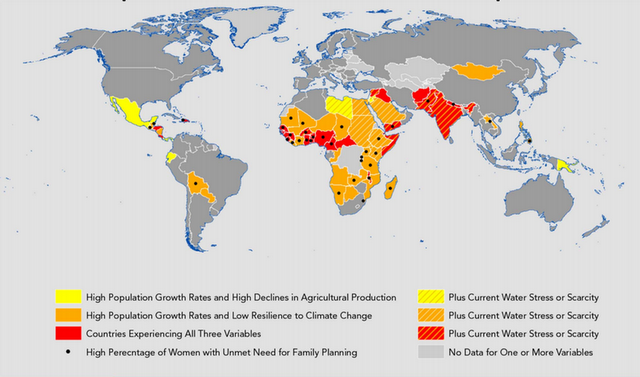
PAI’s interactive mapping website shows that high levels of unmet need for family planning and rapid population growth rates are common in countries with low levels of resilience to climate change and high levels of projected decline in agricultural production, said De Souza. “Family planning services can be one element of a multi-pronged strategy to reduce especially women’s vulnerability to these interlocking vulnerabilities,” he said.
“Currently, population growth is viewed as a challenge to addressing climate change-related vulnerabilities, but family planning services are commonly left out of conversations about ways to reduce these vulnerabilities.” This is a lost opportunity, said De Souza: “We can integrate family planning into wider environmental, development, and peace-building efforts.”
At the recent UN Climate Change Conference in Durban, a side event on reproductive health and climate was well-attended. However, as panelist Esther Agbarakwe of the Africa Youth Initiative on Climate Change noted, population was not part of the conference‘s official discussion, due to lack of knowledge and fears of population control. PAI is currently working with UNFPA to produce a series of training modules on population and climate change that will help environmentalists, climate change activists, and researchers better understand and explore these connections.
Tapping the Youth Base
Bathala, formerly the Sierra Club’s Global Population and Environment Program director, discussed how the Sierra Club, one of the only major grassroots conservation organizations with a population program, uses youth outreach to raise awareness on the links between the environment, reproductive health, and women’s rights.
Because young people constitute over half of the world’s population, the Sierra Club focuses on empowering youth leaders to make the connection between environmental issues and sexual and reproductive health and rights. The Population and Environment Program reaches youth directly by organizing summits and multi-state campus tours featuring young people from around the world sharing compelling stories with their peers.
“The program provides youth and adult activists with materials, communication strategies, and leadership training,” Bathala said. “With these tools, the activists then educate their community members, campus, and decision-makers about the need for measures that increase access to family planning while addressing poverty, women’s empowerment, and environmental protection.”
In April, fellow panel member and Belize-native Daisy Magaña joined one of the Sierra Club’s U.S. tours to discuss the GoJoven program, which convenes and support youth reproductive health champions throughout Latin America. Through GoJoven, Magaña has worked to expand adolescent reproductive and sexual health choices, services, policies, and programs in Belize.
In a blog post, Magaña discussed how her message was simple: Don’t give up. “If you think being active on environmental and sexual rights issues is hard to do here, imagine doing it in a deeply conservative [Catholic] country like mine,” she told U.S. students.
Sierra Club also leads story tours to functioning population, health, and environment programs in the field, including a 2009 trip to Guatemala and Belize in conjunction with GoJoven. Through visits to 10 project sites, two U.S.-based youth advocates witnessed first-hand the challenges and opportunities associated with community-based sexual and reproductive health programs, significantly enhancing their ability to be pro-active messengers in their own communities. The tour helped the Sierra Club build an international network of young people committed to social and policy change in their countries.
Looking Forward: Finding Ways To Highlight Integration
While recognition of the connections between population growth and environmental impacts is growing, the experience of the panelists shows that it takes innovative methods to reach both the environmental and family planning communities. A similar panel later this winter at the Wilson Center will include representatives of Americans for UNFPA discussing their research on talking to environmentalists about reproductive health and population growth.
With the UN Conference on Sustainable Development (Rio+20) coming in June of next year, highlighting successful strategies is crucial in order to pave the way for better integration in the future.
Event ResourcesImage Credit: Roger-Mark De Souza/Population Action International.