Monthly archive for November 2010. Show all posts
-
From the Wilson Center:
Changing Glaciers and Hydrology in Asia
›Developing a Blueprint for Addressing Glacier Melt in the Region
By Ramona Godbole // Tuesday, November 30, 2010“Glacier melt is part of larger hydrologic and climate systems, so effective programs will be cross-sectoral and yield co-benefits,” said Elizabeth L. Malone, senior research scientist at the Joint Global Change Research Institute and Pacific Northwest National Laboratory, speaking at the Wilson Center on November 16. “Looking more closely at glacier melt, we come to understand that upstream actions and choices have a potentially huge effect on downstream communities,” added Kristina Yarrow, health advisor at the U.S. Agency for International Development’s Asia and Middle East Bureaus.MORE
Malone and Yarrow were joined by Mary Melnyk, senior advisor for natural resource management at USAID’s Asia and Middle East Bureaus, to discuss the agency’s new report, “Changing Glaciers and Hydrology in Asia: Addressing Vulnerabilities to Glacier Melt Impacts,” prepared by Malone in collaboration with CDM International and TRG. “This report is a move towards mainstreaming climate change across the development portfolio to ensure enduring success of our investments,” Melnyk said.
Mainstreaming Climate Change
Providing information about the science, vulnerabilities, and current efforts to respond to environmental change and glacier melt in Asia, the new report also features a number of practical, cross-sectoral approaches to addressing glacial retreat in Asia that, if implemented well, could produce multiple benefits. The report highlights the complexity of the issues surrounding glacier melt in the region, and the critical need to prepare today for future environmental changes.
“Climate change in general, and glacier melt specifically, can potentially impact all sectors: economic growth, governance, and health,” Melnyk said. Because there is a lack of scientific knowledge on glacial retreat in Asia and limited financial and human resources to address these issues, it is critical to maximize results through programs that will provide environmental, health, and development co-benefits.
“The challenge is that, in practice, addressing issues of climate change and other environmental security issues still are not a part of the day-to-day business across sectors,” Melnyk said. This report is a first step in the right direction to raise awareness and action on these issues and “although there is uncertainty, we need to move forward – the time to act is now,” she concluded.
Multiple Sectors, Multiple Benefits
“Cross-sector collaboration and programs, when done correctly, can have a much greater impact than when doing a vertical program within a specific sector,” Yarrow said, stressing the importance of multidisciplinary approaches to address environment, health, and development issues. Understanding the health impacts of climate-related environmental change now can help prepare us to address these specific impacts in the future.
“On a global scale, there is indeed a relationship between population growth, environmental change, and development,” Yarrow said. In Asia, stress on water resources due to climate change and rapid population growth will likely exacerbate health problems caused by lack of clean water. Proactively expanding and improving programs that address the causes and effects of diarrheal disease and under-nutrition can help address these vulnerabilities and make communities more resilient.
“Finding innovative ways to improve access to and integrate family planning messages and services into climate adaptation programs will also yield some important co-benefits,” Yarrow said. Family planning can slow population growth, which could help reduce projected demand for water supplies, as well as potentially reduce the amount of water pollution.
Yarrow also added that “population growth affects glacier melt indirectly through the consumption of resources that exacerbate black carbon.” Black carbon, which is produced by cooking and heating with biomass fuels, contributes to regional climate change and severe health problems, including respiratory illness and pneumonia. Accompanied by efforts to promote alternative fuels, family planning could reduce black-carbon emissions, significantly improve health, and strengthen community resilience to climate change.
“Though challenging, integrating across sectors is absolutely essential – we’re not experts yet, but we’re definitely getting better,” Yarrow said. “Understanding and addressing the multiple issues like climate change, poor health, poverty, dependence on natural resources, and governance challenges that these communities are dealing with in a comprehensive and holistic fashion will improve results.”
Responding to Glacier Melt
“We simply do not have the kind of broad-scale knowledge that we would like to have,” Malone said. Current data on glacier melt is scarce and very few direct measurements of glacier volume exist, making calculations of glacier retreat difficult. Moving forward, it is critical to respond to this lack of information by improving regional scientific cooperation on glaciers, snowpack, and water resources in High Asia, and strengthening climate and water monitoring capacity.
“Even the smallest amounts of glacier-melt contribution correspond to the regions of the highest population, so any change in water supply has large implications,” Malone said. Glaciers may not be disappearing as fast as had been previously thought, but “climate change is happening in the Himalayas and is having an effect.”
“If systems – both human and ecological – are already stressed, they are less able to be resilient in the face of changes. But the good news is that we can take actions now that will be crucially important to how societies can respond in the future,” Malone said.
Implementing cross-sector projects can help to target places where environmental, economic, health, and even security issues overlap. Focusing on water resource management, ecosystems, and the needs of high-mountain communities, as well as mitigating climate change by reducing emissions of black carbon, can help reduce both direct and indirect vulnerabilities and improve resilience to future changes.
“The results of this report allow USAID and others to grasp the complexity of these issues, understand the critical gaps, and to respond to the changes in the glaciers to come,” Melnyk said. The next step is applying the knowledge gathered in the report to practitioners in the field and in policy discussions.
“A crucial role USAID can play is to link partners in the government and private sectors to build capacity and spark synergies among new initiatives to really integrate new initiatives with concerns about glacier melt,” Malone concluded.
Photo Credit: “Nepal Sagamartha Trek,” courtesy of flickr user mckaysavage. -
IGWG’s K4Health Gender and Health Toolkit Is a One-Stop Shop for Integration
›By Ramona Godbole // Tuesday, November 30, 2010
Addressing and analyzing gender norms, roles, and relations is increasingly viewed as critical in the development of equitable, effective, and sustainable health care. However, there has been relatively little integration of gender into health policies, programs, and systems.
The Interagency Gender Working Group (IGWG) – founded in 1997 as a way to bring together NGOs and parts of USAID to share best practices – has partnered with K4Health to create a Gender and Health Toolkit specifically designed to bridge this gap.IGWG’s Gender and Health Toolkit provides access to hundreds of tools, databases, training modules, websites, and publications in one place. Broadly divided into sections including program design, implementation approaches, capacity building, monitoring and evaluation, health systems, best practices examples, and even country-specific case studies, the toolkit provides nearly everything needed to begin integrating gender into new or existing public health programs.MORE
Practitioners can also post questions and comments about the toolkit through an integrated discussion board. The toolkit even has a database to share gender-related photos.
While designed primarily for gender and health specialists and practitioners, the scope of the toolkit extends beyond typical public health issues like maternal health, family planning, HIV/AIDS, and reproductive health. The toolkit links to resources and training modules covering a wide range of cross-cutting topics including gender-based violence; nutrition and food security; integrated population, health and environment; and conflict/post-conflict humanitarian assistance.
The accumulated wealth of knowledge presented in the IGWG Gender and Health Toolkit is an impressively comprehensive resource, and it should be bookmarked by environment, health, and gender specialists and interested policymakers alike.
Image Credit: K4Health. -
Climate-Proofing Development: An Interview With Karen Hardee
›By Hannah Marqusee // Monday, November 29, 2010While expectations are deflated for broad international consensus at the UN Climate Change Convention in Cancun, the need to “climate-proof” development efforts has been gaining ground in recent years as a necessary preventative measure to help developing countries adapt to the adverse effects of climate change.
In 2001, The UN Framework Convention on Climate Change (UNFCCC) created National Adaptation Programmes of Action (NAPAs) to help 49 “Least Developed Countries” adapt to climate change. Statements by the World Bank, OECD, and UN over the last decade have similarly reflected a need for adaptation, yet so far, there has been a distinct lack of funding and programming drive to actually integrate climate change and development efforts on the ground.The New Security Beat interviewed Karen Hardee, visiting senior fellow at the Population Reference Bureau, to ask her about NAPAs and how the international community can better address the climate adaptation needs of the developing world. She recently spoke at the Population Reference Bureau, arguing for a new language, funding structure, and global architecture to address climate change and development.MORE
New Security Beat: Despite widespread agreement that climate change and development should be linked, NAPAs remain seriously underfunded. What is the cause of this discrepancy and do you think this could change in the near future?Karen Hardee: NAPAs were introduced to help countries meet immediate and pressing needs related to climate change. In developing NAPAs, countries need to first determine their baseline situation to help identify the “additional” components needed to address climate change issues.
NSB: Many NAPA coordination teams are housed within a ministry of environment, making it difficult for multi-sectoral cooperation. Who should have responsibility for coordinating climate change adaptation, and how could the architecture be restructured to achieve this?
This concept of “additionality” is important because climate change funds can be used to fund activities that are directly related to climate change – like building a seawall – or to fund the “additional” climate change-related aspects of ongoing activities – like for example, agricultural diversification. Identifying the baseline situation and the additional costs related to climate change is often a very difficult, if not impossible, task. Furthermore, if some issues that should be funded through traditional development funds are not funded, or are underfunded, determining the additional burden associated with climate change will not necessarily bring additional funds. Only around a quarter of NAPAs are well-linked with development plans. One clear lesson is that the programmatic and funding links between climate change and development need to be strengthened.
Funding for NAPAs, which relies on voluntary contributions by developed countries, continues to be insufficient. Around $220 million has been pledged out of an estimated total cost of $2 billion. Additional funding mechanisms for adaptation, including the Adaptation Fund, which just announced funding for its first two projects, will help, but many questions on funding remain.KH: Understandably, the climate change movement began through attention to the weather. But departments of meteorology and ministries of the environment are not necessarily the best suited to address the human dimension of climate change, including social sectors such as health. I think coordinating mechanisms should be established in offices of the president or prime minister. These should not be implementation bodies but should ensure that climate change, development plans, and funding are linked in ways that ensure effective and efficient programs that build resilience among individuals and communities.
NSB: What have been the biggest impediments to getting adaptation projects with a reproductive health/family planning (RH/FP) component proposed and funded?
To respond to the effects of climate change will take all sectors. For example, education of children, and particularly girls, is a proven development strategy and could help build resilience in families that might face difficulties, like migration, because of climate change. Yet education is not eligible for funding with climate change funds unless schools need to be climate-proofed, or perhaps if children are missing school due to drought brought on by climate change. Clearly there is a need to ensure close collaboration between climate change adaptation programming and development programming.KH: Since 2001, 49 Least Developed Countries and Small Island States have been eligible to develop NAPAs. Analysis of the first 41 programs submitted to the UNFCCC found that 37 noted that population growth exacerbated the effects of climate change, but only six explicitly stated that meeting an unmet demand for RH/FP should be a key priority for their adaptation strategy and only two proposed projects that included RH/FP. Neither of the two proposals has been funded. Furthermore, only around seven percent of NAPA projects proposed so far are in the health sector.
NSB: With the UN Climate Change Conference in Cancun on the doorstep, what are your hopes for improved integration of climate into the development sector?
Community-based adaptation (CBA) programs have arisen recently to engage the poorest communities that are highly reliant on natural resources for their livelihoods and who live in countries most vulnerable to the effects of changing climate. UNDP is implementing CBA projects in 10 pilot countries and none of the projects include health components, let alone family planning and reproductive health (although UNDP does support separate pilot projects on health in eight countries). Yet, in the 10 countries in which projects are being implemented, unmet need for contraception is above 15 percent in half of them and over 10 percent in seven of the 10 countries.
Population, health and environment (PHE) programs offer an alternate approach to CBAs and include attention to natural resources and the environment, livelihoods, health, and the effects of rapid population growth on communities and individuals.KH: While certainly the world is going into the Cancun meeting with scaled-down expectations because of COP-15, one positive outcome from Copenhagen was renewed attention on funding for climate change, including adaptation. Ban Ki-moon’s high level panel on climate funding is an example of this attention to funding. Also, the World Bank’s press release this summer, in appointing Andrew Steer as special envoy on climate change, quoted Robert Zoellick, saying, “This appointment comes amid unprecedented demand from developing countries for World Bank support in their efforts to address development and climate change as interlinked challenges.”
Sources: Adaptation Fund, Adaptation Learning Mechanism, GEF, OECD, Population Action International, Population Reference Bureau, UN, UNDP, UNFCCC, World Bank.
We need to remember that adaptation programming is still new. It will be important to include strong evaluation components in these programs and to evaluate them jointly for climate change and development outcomes.
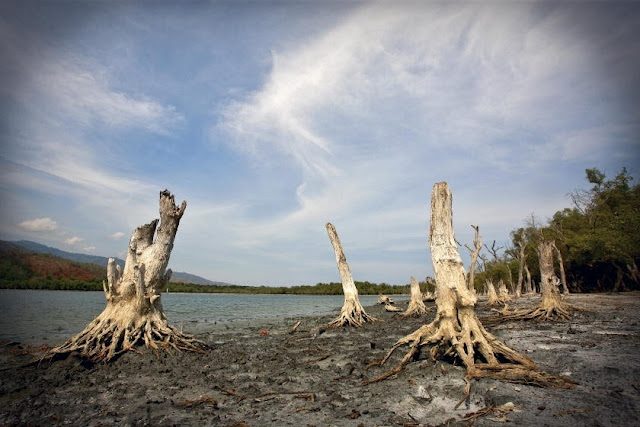
Photo Credit: “Trees Dead on Shore of Timor-Leste Lake” courtesy of flickr user United Nations Photo. -
PRB’s Jay Gribble at Kenya’s National Leaders Conference on Population and Development
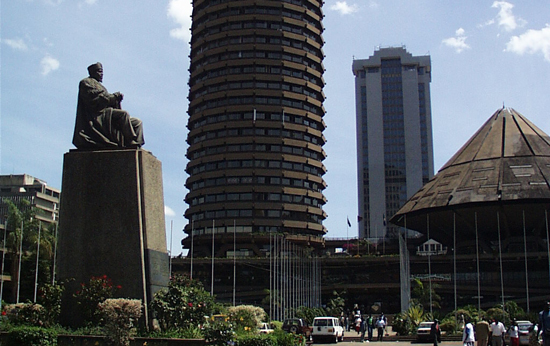
›By ECSP Staff // Monday, November 29, 2010Jay Gribble, vice president of International Programs at the Population Reference Bureau (PRB), recently attended the Kenya National Leaders Conference on Population and Development, November 15-17, at the Kenyatta International Conference Center in Nairobi. During the conference, he produced a series of posts for PRB’s Behind the Numbers on some of his impressions. Gribble focuses on Kenya’s resurgent interest in integrating population issues into the development agenda, the country’s ongoing HIV/AIDS epidemic, and the importance of family planning.MORE
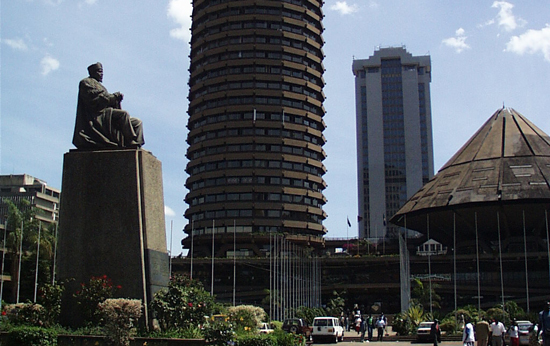
Below are the introductory excerpts from his posts; to read the full posts, please visit Behind the Numbers.
“Anticipating Change in Kenya”
Sitting in the hall where Kenya’s National Leaders Conference will be starting in a few minutes, I can’t help but feel that there is an opportunity to refocus national attention to development…to the goal that I have heard repeatedly of becoming a Middle Income country. And to achieve this goal, they must first recognize that population is an underpinning development issue that cannot be ignored.
In the 1980s and 1990s, Kenya was a leader in reproductive health and maternal health, really setting a pace for the continent. But during the 2000s, Kenya turned its attention to other pressing issues – namely HIV/AIDS – and began to give less attention to population issues. Though HIV continues to be a plague, it is now time to return to the importance of slowing population growth, for until this fundamental issues is addressed, there will be less opportunity for education, jobs, and better health. At the same time, as a predominantly rural country with agriculture representing a major part of the economy, smaller families will be critical to maintaining farms that are large enough to feed families and the country.
Continue on PRB.
“As the Rich Get Richer, the Poor Get Children”
The Kenya National Leaders Conference has begun, representing the first time since 1989 that Kenya’s national population policy has been discussed in a large, open forum. With a new national constitution, Kenya is poised to redress many of the social and economic inequalities that have stood in the way of its development. In fact, the current population policy expires in December, 2010, and one of the purposes of this conference is to gather the input from leaders throughout the country on how a new policy should be framed. I find it impressive that such a large conference is convened to ensure that a new policy reflects the needs of the nation. The conference is also a forum for reaching leaders with important information about the need to address population growth through family planning if Kenya is to achieve its Vision 2030 development plan.
Continue on PRB.
“In Kenya, Prioritizing Population…and Family Planning”
As Kenya’s National Leaders Conference on Population and Development winds down today, it offers leaders an opportunity not only to think and talk about how population growth is an issue that underlies the country’s development, but to act on it too. Whether thinking about business, agriculture, or the environment, it is impossible to be strategic about Kenya’s future without also considering how rapid population growth will affect it.
In talking with Kenyans who grew up in the 1970s and 1980s – back when family planning and population growth were a priority – they remember the messages that were at the tips of people’s tongues – smaller families live better. Before the HIV/AIDS epidemic, family planning and slowing population growth was a priority and a source of national pride because it put Kenya on track for prosperity and development.
Continue on PRB.
Photo Credit: Adapted from “King Kenyatta?” courtesy of flickr user rogiro. -
Food and Environmental Insecurity a Factor in North Korean Shelling?
›By Schuyler Null // Wednesday, November 24, 2010Just two days before dozens of North Korean artillery shells fell on the island of Yeonpyeong off the west coast of Korea, a UN study reported that the DPRK was facing acute food shortages heading into the winter.
In a New York Times report, Choi Jin-wook, of the Korea Institute for National Unification in Seoul, called food “the number one issue.” While Choi just last month praised the resumption of food aid from the South to the North as a “starting point of a new chapter in inter-Korean relations,” she told the Times Wednesday that the North is “in a desperate situation, and they want food immediately, not next year.”MORE
North Korea’s motives are notoriously indecipherable and this latest incident is no exception, but the regime has in the past sought to distract from domestic problems by inciting the international community (the sinking of the Cheonan being the other latest prominent example).
Infrastructure has always been primitive in the North under the DPRK regime, but the country’s tenuous food security situation was made worse this last year by an unusually long and severe winter followed by heavy flooding in the summer. Flooding was so bad during August and September, that the normally silent regime publically announced details of rescue operations around the northern city of Sinuiju. The joint FAO/WFP report put out by the UN does not predicate production will significantly recover in the next year and estimates an uncovered food deficit of 542,000 tons for 2010/11.
“A small shock in the future could trigger a severe negative impact and will be difficult to contain if these chronic deficits are not effectively managed,” Joyce Luma of the World Food Program told The New York Times.
For more on the severe weather events of this summer, including the flooding that impacted the DPRK and pushed the Three Gorge Dam to its stress limits in China, the impact of scarcity and climate change on the potential for conflict, and the intersection of food security and conflict elsewhere, see our previous coverage on The New Security Beat.
Sources: Christian Science Monitor, Food and Agriculture Organization, Los Angeles Times, The New York Times, UN, Washington Post, World Food Program.
Image Credit: Google Maps. -
Beat on the Ground:
Watch: Blue Ventures PHE Program in Madagascar
›By Hannah Marqusee // Wednesday, November 24, 2010“All conservation efforts will be in vain if family planning issues aren’t addressed,” says Rebecca Hill, project manager for the Sexual and Reproductive Health Programme at Blue Ventures in a video highlighting their population, health, and environment (PHE) programming in Madagascar.
While primarily a marine conservation group, Blue Ventures also recognizes the need for integrating population into their efforts. They began a family planning program in southwestern Madagascar in 2008 as part of a “holistic approach to conservation.” The project aims to address the high unmet need for family planning, high fertility and maternal and infant mortality, and conserve the coastal environment. “We are directly saving lives,” Hill says.MORE
Rapid population growth is creating an unsustainable strain on natural resources, as Matthew Erdman of Blue Ventures wrote in a previous post on The New Security Beat:The average total fertility rate in Velondriake is 6.7 children per woman, according to our data. On average women are only 15 years old when they first conceive. To compound this problem, a majority of the population is under the age of 15 – at or approaching reproductive age. At the current growth rate, the local population will double in only 10 to 15 years. The local food sources, already heavily depleted, barely feed the current population, let alone twice that amount. Without enabling these coastal communities to stabilize their population growth, efforts to improve the state of marine resources and the community’s food security are considerably hindered.
Hill describes the situation in the village when she joined the Blue Ventures in 2008 as “alarming,” with women “having up to 17 children despite not wanting children.” Many people in the town had never heard of condoms and had no idea how to use them, she said, and “they are desperate to have access to contraception.”
Today, the initial family planning program has been scaled up to the surrounding region and generated significant community involvement by peer educators teaching community members about sexual and reproductive health. It’s also become the first PHE project to receive support from the UNFPA within Madagascar.
There are currently 18 community-based distributors who give out two types of contraception in their villages. The fact that the community has so fully embraced the project shows that it can be replicated elsewhere, says Hill in the video. “Communities themselves have harnessed the ideas and consider that what we’re doing is vitally important.”
“Addressing family planning needs and issues is inextricably linked with conservation issues,” says Hill. “All conservation efforts will be in vain, if family planning issues are not addressed.”
Video Credit: Blue Ventures Family Planning Project from Alexander Goodman on Vimeo. -
ECSP Seeking Interns for Spring 2011
›By ECSP Staff // Tuesday, November 23, 2010Apply today by sending cover letter, resume, and writing sample to ecsp@wilsoncenter.org.
The Environmental Change and Security Program is seeking interns to:- Write for our award-winning blog
- Network with leading experts in the environment, population, and security fields
- Work closely with the friendly, dynamic “Green Team” to explore new media while seeking a sustainable future
Assignments may include:MORE- Drafting posts for The New Security Beat and ECSP’s website
- Assisting with events and conferences
- Researching environment, population, and security information
- Assisting the preparation of publications and/or outreach materials
- Updating contact databases
- Performing administrative assignments in support of ECSP activities
Potential interns should be students and/or recent graduates with an interest in, coursework related to, and/or experience working on environmental and human security.
In addition, applicants should:- Possess strong research, writing, and/or administrative skills
- Be detail-oriented
- Be able to work both independently and as part of a group
- Be enrolled in a degree program, recently graduated (within the last year), and/or have been accepted to enter an advanced degree program within the next year
How to Apply
To apply, please submit a resume, cover letter, and short writing sample (between two and five pages in length). Please indicate in your cover letter whether you are applying for a paid or unpaid internship.
Please submit application via e-mail to ecsp@wilsoncenter.org with “Spring 2011 Internship” in the subject line.
The deadline is rolling. Applications will be accepted until the position is filled. Due to the high volume of resumes ECSP receives, only those candidates selected for interviews will be contacted.Topics: meta -
Friday Podcasts:
Robert Walker on Family Planning Promotion and Global Population Growth
›By ECSP Staff // Tuesday, November 23, 2010
“Expanding voluntary family planning access and ensuring that all women have access to reproductive health services is, to me at least, a no brainer,” said the Population Institute’s Robert Walker in this interview with ECSP. “I think it’s a win for women, for their health, for their welfare, the welfare of their families, for their communities, for the environment, and for the planet at large.”MORE
While China and India dominate much of the global headlines about population growth, other parts of South Asia – namely Afghanistan and Pakistan – and sub-Saharan Africa receive comparatively little attention. For Walker, a renewed global effort to boost the quality and quantity of reproductive healthcare tools and services in these areas of the developing world is essential.
“This is very, very doable. We face a lot of really incredible challenges in the world today, particularly with respect to food, energy, water, and poverty. But if we can increase what we spend on international family planning assistance by three or four billion dollars a year, we can literally change the world,” Walker said. “And I think we desperately need to.”
The “Pop Audio” series is also available as podcasts on iTunes. -
Guest Contributor:
What’s Good for Women Is Good for the Planet
›By Kavita Ramdas // Monday, November 22, 2010Ammi, my mother-in-law, was 16 years old when her marriage was arranged. Before she was 18, she had borne her first child, who died within the year, and by 30, she had given birth to six more. She had a fourth-grade education, and like other women in the new state of Pakistan, she knew little about contraceptive choices.
More than 50 years later, contraception still remains inaccessible for millions of women in Pakistan, such as Rani, the young woman who cleans Ammi’s Karachi home. Illiterate and married off to a cousin at age 15, Rani already has three children, and, like the majority of married Pakistani women who have never used modern contraception, will most likely have at least one more.MOREGiving women the ability to determine whether and when to become pregnant is fundamental to the realization of their basic human rights. It is also a proven health and development strategy, substantially reducing maternal and infant mortality by allowing women to space their pregnancies. And now, for the first time, two studies offer compelling evidence that it has another benefit: What is good for women is also good for our planet.
These groundbreaking studies have rigorously quantified the effect on the environment of helping women and girls control their reproductive destinies. The studies – “The World Population Prospects and Unmet Need for Family Planning,” by the Futures Group, and, “Global Demographic Trends and Future Carbon Emissions,” by the National Center for Atmospheric Research and the International Institute for Applied Systems Analysis – demonstrate that giving women and girls access to contraception offers a precious co-benefit: a substantial reduction in carbon emissions.
The logic is simple: When women have the power to plan their families, populations grow more slowly, as do greenhouse gas emissions. The cost of providing these needed family planning services worldwide is minimal compared with other development and emissions reductions strategies – roughly $3.7 billion per year.
More than 200 million women in the United States and developing countries are sexually active and do not want to become pregnant, yet are not using modern contraception. The results are staggering: One in four births worldwide is unplanned, leading to 42 million abortions each year (half of them clandestine) and 68,000 women’s deaths.
Moreover, the large number of women who become pregnant when they do not want to is a significant source of population growth. Read in tandem, the studies show that a reduction of 8-15 percent of essential carbon emissions can be obtained simply by providing modern contraception to all women who want it. This reduction would be equivalent to stopping all deforestation or increasing the world’s use of wind power 40-fold. Although this is just one piece of the emissions reduction puzzle, it is a substantial piece.
The world is now facing multi-layered challenges of economic distress, rising inequality, and environmental devastation caused by climate change. International climate negotiations have repeatedly stalled as powerful nations play the blame game and block progress. Meanwhile, a series of severe weather events has buffeted the earth from Moscow to Iowa to Pakistan, each one hitting women and children hardest. This is the reality that rich nations must reckon with – and commit to changing – today.
In my 14 years at the Global Fund for Women, I have observed the wave of change that comes from empowering women – what some call the “girl effect.” Making information, education, and contraception easily available offers us an affordable, no-regrets strategy that can be implemented now.
Meeting the need for family planning services is not a complex challenge. We know how to provide the commodities, services, and education that women and their families want. There are thousands of programs around the world with successful track records in every conceivable religious, cultural, and political setting.
Investing in family planning has already been proven as an essential strategy to ensure the health, safety, and development of societies. Now we know that it is also an effective way to safely steward Mother Earth through one of her most challenging crises.
Kavita N. Ramdas is chair of the Expert Working Group of the Aspen Institute’s Global Leaders Council for Reproductive Health and senior adviser and former president and CEO of the Global Fund for Women.
Sources: Futures Group, National Center for Atmospheric Research and the International Institute for Applied Systems, Science, UNFPA, WHO.
Photo Credit: “Chaco: Madre pilagá,” courtesy of flickr user Ostrosky Photos, and Kavita Ramdas, courtesy of Global Fund for Women. -
Nigeria’s Future Clouded by Oil, Climate Change, and Scarcity [Part Two, The Sahel]
›By Schuyler Null // Friday, November 19, 2010If southern Nigeria’s demographic and environmental problems have helped fuel today’s conflicts, it’s the north’s issues that may feed the conflicts of tomorrow.
Nigeria’s lack of development and poor governance is not exclusive to the delta region, only more well-known because its oil reserves. The north of the country, which is predominately Muslim and accounts for more than half of Nigeria’s population, faces many of the same problems of environmental degradation, lack of jobs, and inadequate infrastructure. Northern Nigeria is also growing much faster than the south, with a total fertility rate of 6.6 children per woman, compared to 4.6 in the southern states. The median age of first-time mothers in northern Nigeria is only 18 years old.Nigeria holds nearly a fifth of the entire population of sub-Saharan Africa. By 2050, it’s expected to pass Indonesia, Brazil, and Bangladesh and take its place among the top five most populous countries in the world, according to UN estimates. But a litany of outstanding and new development, security, and environmental issues – both in the long-troubled Niger delta in the south and the newly inflamed north – present a real threat to one West Africa’s most critical countries.MORE
If southern Nigeria’s demographic and environmental problems have helped fuel today’s conflicts, it’s the north’s issues that may feed the conflicts of tomorrow.
Nigeria’s lack of development and poor governance is not exclusive to the delta region, only more well-known because its oil reserves. The north of the country, which is predominately Muslim and accounts for more than half of Nigeria’s population, faces many of the same problems of environmental degradation, lack of jobs, and inadequate infrastructure. Northern Nigeria is also growing much faster than the south, with a total fertility rate of 6.6 children per woman, compared to 4.6 in the southern states. The median age of first-time mothers in northern Nigeria is only 18 years old.
Climate, Culture, and Discontent in the North
Last summer, in an offensive that stretched across four northern states, a hardline Islamist group called Boko Haram emerged suddenly to challenge the government, attacking police stations, barracks, and churches in escalating violence that claimed more than 700 lives, according to The Guardian. The government responded with a brutal crackdown, but recent targeted killings and a prison break seem to indicate the group is back.
Perhaps most distressingly, Boko Haram appears to have won some local support. Said one local cloth trader to The New York Times in an interview this October, “It’s the government’s fault. Our representatives and our government, they are not sincere. What one person acquires is enough to care for a massive amount of people.”
As in the south, mismanagement of natural resources has also played a role in creating a dangerous atmosphere of distrust in the government. After gold was discovered this spring in northwestern Nigeria, many under- and unemployed flocked to the region to try their luck, but they also unwittingly contaminated local water with high levels of lead. Although the state health officials say they have now identified more than 180 villages thought to be affected, the epidemic was only discovered after a French NGO stumbled upon it while testing for meningitis in June. More than 400 infant deaths have been connected to the mining, according to Reuters.
Contributing to natural resource-related misery in the north are climatic changes. Declining rainfall in the West African Sahel over the last century has pushed rain belts successively south, driving pastoralists into areas often already occupied. According to Anthony Nyong’s work, presented in ECSP Report 12, these changes have elevated competition over natural resources to the single most common cause of conflict in northern Nigeria in recent years.
In addition to the long-term trend of declining rainfall, an acute drought in 2009 and another this year in neighboring Niger and Chad have created the worst food security crisis in 30 years. The droughts have also driven a great deal of cross-border migration into Nigeria, which itself saw lower than usual rainfall in the north, especially the northeast, around the ever-disappearing Lake Chad (see map above for resulting migration patterns).
What rain did fall in the border areas fell suddenly and torrentially, causing rampant flooding that affected two million people. The floods not only caused physical damage but also came just before harvest season, destroying many crops and further reducing food security. Made more vulnerable by the number of displaced people and flooding, the area was then hit with its worst cholera outbreak in years, which has killed 1,500 people so far and spread south.
Cholera is not the only preventable disease to flourish in northern Nigeria in recent years. In 2003, cleric-driven fear of a U.S. plot to reduce fertility in Muslim women caused the widespread boycott of a UN-led polio vaccination drive. The fast-spreading disease then emerged in six of Nigeria’s neighbors where the disease had previously been eradicated. The northern states today remain the only consistently polio-endemic area in Africa, according to the Global Polio Eradication Initiative.
“A Stable Nigeria Is a Stable Africa”
Nigeria’s size and its wealth of natural resources make it a strategically important country for the future of the region. “A stable Nigeria is a stable Africa,” said Wilson Center scholar and former NEITI officer Uche Igwe in an interview. “Nigeria is 150 million people and the minute Nigeria becomes unstable, the West Africa sub-region will be engulfed.”
While there have been some strides in recent years in reducing corruption and addressing infrastructure needs (for example, NEITI’s work to promote revenue transparency), the development, health, environmental security, and human security situations remain dire in many parts of the country. With one of the fastest growing populations in the world and severe environmental problems in both the north and the south, scarcity will almost certainly be a challenge that Nigeria will have to face in the coming years. How the government responds to these challenges moving forward is therefore critical.
In 2008, in response to high oil prices, British Prime Minister Gordon Brown announced his intentions to send military aid to help combat Niger Delta militants. The statement was met with dismay from humanitarian organizations and caused the collapse of a ceasefire (which was then resumed for a time and now seems to be falling apart again). Brown was forced to backtrack into simply offering training support to Nigerian security forces.
In terms of U.S. assistance, USAID requested $560 million for Nigeria in FY 2010 – 75 percent of which is allocated towards HIV/AIDS – and the U.S. military has engaged in joint exercises with Nigerian forces. But so far, little has been done to integrate U.S. aid in a cohesive manner. Given the breadth of these issues, such integration is crucial.
“We need partners, like the United States and Europe, who have a stake in stability – in Nigeria, the Niger Delta, the Gulf of Guinea, and the world,” Igwe said. It remains to be seen what the Nigerian reaction would be to an offer of aid from the West that addresses not only the country’s security issues but also its myriad other problems, in a substantial and integrated fashion.
Part one on Nigeria’s future – The Delta – addresses oil, insurgency, and the environment in the south.
Sources: AFP, AFRICOM, AP, BBC, Global Polio Eradication Initiative, The Guardian, Independent, The New York Times, ReliefWeb, Reuters, SaharaReporters, USAID.
Photo Credit: “The Ranch,” courtesy of flickr user Gareth-Davies, and “Niger and Nigeria: Food security drives population movement,” courtesy of the U.S. State Department. -
Nigeria’s Future Clouded by Oil, Climate Change, and Scarcity [Part One, The Delta]
›By Schuyler Null // Thursday, November 18, 2010Nigeria holds nearly a fifth of the entire population of sub-Saharan Africa. By 2050, it’s expected to pass Indonesia, Brazil, and Bangladesh and take its place among the top five most populous countries in the world, according to UN estimates. But a litany of outstanding and new development, security, and environmental issues – both in the long-troubled Niger Delta in the south and the newly inflamed north – present a real threat to one of West Africa’s most critical countries.
MORE
A 400-Year Curse
Nigeria collected $46 billion in oil revenue during FY 2009, trailing only Saudi Arabia, Iran, and the United Arab Emirates. Despite their country’s mineral wealth, however, roughly 70 percent of Nigerians live below the poverty line, with the oil-producing south facing particularly abject deficiencies.
“I have never worked in an area as bereft as the Niger Delta – it is shockingly undeveloped,” said former Wilson Center fellow Deirdre Lapin, in a phone interview with ECSP (listen to the audio embedded above for the full interview). Lapin worked in community development for Shell in Nigeria from 1997-2003 and also spent time at USAID and UNICEF. “Compared to everywhere else I have been, it is without question the most neglected and the least advanced in terms of general development and welfare for the ordinary person,” she said.
According to the UN, the Niger Delta accounts for upwards of 80 percent of Nigeria’s foreign exchange earnings and about 70 percent of total government revenues. Instead of benefiting from its mineral wealth, the delta has suffered tremendous environmental damage that has spurred a grassroots anti-oil (and later anti-government) insurgency. During the oil companies’ drilling drive in the 1970s, it was not uncommon to see large amounts of tar collected on the roots of mangroves and the sides of creeks, and oil slicks were frequent, Lapin said.
The environmental situation in the delta improved as production plateaued, but due to oil theft, poor maintenance, and derelict equipment and pipelines scattered across the delta, spills continue. According to The New York Times, by some estimates, the delta has endured the equivalent of an Exxon Valdez spill every year, for the last 50 years. But there has never been an impartial, empirically based environmental study of the impact of the oil and gas industry on the delta, Lapin said, which would be an important step forward. (A UNEP study is currently underway but has already been criticized for alleged inaccuracy.)
Southern Nigeria’s infamous duality – miserable lack of infrastructure, services, and security in the midst of abundant natural resources – helped give rise to the term “resource curse” among development specialists, a term which has since been applied to similar situations in the Democratic Republic of Congo, Sierra Leone, and even Afghanistan. Lapin pointed out that in the eastern part of the delta, the resource curse actually goes back 400 years, to the slave trade and palm oil.
“Blood Oil” and Scarcity in the Delta
The sophisticated insurgency in the delta began as a response to the oil and gas industry, but has in many ways become dependent on it. Groups of armed “boys” – some of whom are remnants of political-intimidation efforts during the 2003 elections – have become notorious in the delta and abroad, often putting on shows for the media. Some of these groups are loosely organized under the moniker MEND (Movement for the Emancipation of the Niger Delta), with the stated intent of driving the oil companies out of the delta in response to environmental destruction and lack of revenue sharing, but others simply profit through extortion, racketeering, and oil theft (also known as “bunkering”). At the peak of their activities, insurgent activity has cut oil production between 25 and 35 percent, Lapin said, prompting oil companies to move further and further off-shore in recent years.
With unemployment in the delta at 90 percent by some estimates, militancy has become a viable way of life for many. Bunkering can net up to $60 million a day, according to a BBC report. The practice, which former president Umaru Yar’Adua called Nigeria’s “blood oil,” costs the government up to $5 billion annually, and many gangs are rumored to have political connections that protect them in exchange for their services.
Contributing to the delta’s propensity for conflict is the region’s demography.
“There are probably 120 mutually unintelligible languages and dialects that are spoken [in the Niger Delta] and 40 major identifiable ethnic groups,” Lapin said. Because of the number of creeks and lack of infrastructure, the region’s 20 million inhabitants are fractured into many small communities – roughly 80 percent are under 1,500 people, according to Lapin. In addition to its splintered social structure, population growth and years of conflict have left a mass of unemployed delta residents who have adopted a “siege mentality,” as a UN report puts it (a feeling especially prevalent among the young). With three percent population growth and local fish and agriculture sectors on the decline, it is likely the Niger Delta will face increased scarcity in the coming years, further fueling discontent.
“What is truly needed in order to put Nigeria on a solid footing for the future is a government with very clear objectives for the economic and social development of the country, putting those forward as the priorities, changing the style in which governance is taking place today,” Lapin said. “And that will require something of a revolution, a major sea-change.”
Part two on Nigeria’s future – The Sahel – addresses conflict, scarcity, and demographics in the northern part of the country and concludes with recommendations for the future.
Sources: BBC, CIA, Energy Information Agency, The Guardian, The New York Times, Population Reference Bureau, Reuters, UN.
Photo Credit: “Niger Delta oil disaster,” courtesy of flickr user Sosialistisk Ungdom – SU, and a NASA Space Shuttle Overflight photo of the Niger Delta, courtesy of NASA. -
Reading Radar:
Human and Climate Security in Africa
›By Hannah Marqusee // Wednesday, November 17, 2010A new study by the Strauss Center’s program on Climate Change and African Political Stability, “Locating Climate Insecurity: Where Are the Most Vulnerable Places in Africa?,” maps the regions of Africa most vulnerable to climate change based on four main indicators: (1) physical exposure to climate-related disasters; (2) household and community vulnerability; (3) governance and political violence; and (4) population density. Across all indicators, they found that the “areas with the greatest vulnerability are parts of Madagascar, coastal West Africa, coastal Nigeria, Ethiopia, and the Democratic Republic of Congo.” The authors hope this paper will serve as a launching point for future research on the diverse regional causes of climate change vulnerability, ultimately guiding adaptation strategies across the continent.MORE
“After the Rain: Rainfall Variability, Hydro-Meteorological Disasters, and Social Conflict in Africa,” by Cullen Hendrix and Idean Salehyan of the University of North Texas, examines how extreme weather events, rainfall, and water scarcity affect political stability in Africa. The authors found that rainfall has a “significant effect” on political conflict and that wetter years are also the more violent ones. However, they also found extreme variability between countries, with Tanzania, Zimbabwe, Swaziland, Mauritania, and Mozambique showing the strongest correlation between rainfall and conflict. This suggests that many local environmental and social factors were also affecting levels of violence. “Water scarcity can lead to resource competition, poor macroeconomic outcomes, reduced state capacity, and ultimately, social conflict,” the authors concluded. -
Friday Podcasts:
Colin Kahl on Demography, Scarcity, and the “Intervening Variables” of Conflict
›By ECSP Staff // Wednesday, November 17, 2010
“One of the major lessons of 9/11 is that even superpowers can be vulnerable to the grievances emanating from failed and failing states,” said Colin Kahl, now deputy assistant secretary of defense for the Middle East, at an ECSP event at the Wilson Center in October 2007. However, “if poverty and inequality were enough to lead to widespread civil strife, the entire world would be on fire.”
“I think any in-depth examination of particular cases shows that there’s a complex interaction between demographic pressures, environmental degradation and scarcity, and structural and economic scarcities – that they tend to interact and reinforce one another in a kind of vicious circle,” Kahl said.
“It’s really important to keep in mind that any attempt to address…environmental and demographic factors should focus not just on preventing environmental degradation, or slowing population growth, or increasing public health. They must also focus on those intervening variables in the middle that make certain societies and countries more resilient in the face of crisis.”
The “Pop Audio” series is also available as podcasts on iTunes. MORE -

Former Botswana President Champions Health, Governance Issues
›By ECSP Staff // Tuesday, November 16, 2010Originally featured in the Scholar Spotlight, Centerpoint, November 2010.
His Excellency Festus Mogae, who served as president of Botswana from 1998–2008, recently spent several months at the Wilson Center as a public policy scholar. During his stay, he conducted research, networked with senior policy officials in the U.S. government, the United Nations, and with NGO representatives in Washington and New York, and attended Wilson Center seminars related to health and governance.MORE
Since leaving office, Mogae has advocated for governance reform in Africa, notably presidential term limits, and efforts to mitigate the effects of climate change. Another critical initiative he is pursuing actively is HIV/AIDS prevention across Africa.
Mogae is the founder and chairman of Champions for an HIV-Free Generation, a group that assists current African presidents in dealing with the AIDS pandemic. This year, the delegation visited South Africa, Namibia, Mozambique, and Swaziland and, most recently, Zambia in October. The group seeks policy and attitude changes among the leaders of these nations and also advocates for increased financing for AIDS prevention in their health budgets. “If [these countries] allocate their own resources, the donor agencies will see they are serious about this problem” and match funds, said Mogae.
“We take the view that a more outspoken leadership must come from the continent regarding the AIDS epidemic,” he said. “African leaders must not only care but also be seen by donor countries and agencies as leading from the front on these matters.”
The group includes Mozambique’s Joaquim Chissano, Tanzania’s Benjamin Mkapa, Zambia’s first president Kenneth Kaunda, former Vice President of Uganda Speciosa Wandira, and former Chairperson of Kenya’s National AIDS Control Council, Miriam Were. Also in the coalition are two notables from South Africa, Nobel Laureate Archbishop Desmond Tutu and Constitutional Court judge, Justice Edwin Cameron.
The Champions coordinate with local health representatives based in Africa, from UNAIDS, the World Health Organization, PEPFAR, and the Gates Foundation, which prepare country reports on the status of AIDS. Then, armed with this research, the group meets with African leaders, including the presidents, finance and health ministers, local government and parliamentary officials, private sector, union, and civil society representatives, and church groups to lobby for policy changes.
“We highlight success stories on the continent so others can emulate them,” Mogae said. “We are calling for social behavioral change, but that can only happen if advocated and led by the top religious and traditional leadership.”
One particular challenge has been mother-to-child transmissions. He said in sub-Saharan Africa, in 2000, 40 percent of children born to HIV-positive mothers got infected but by 2008, the figure was down to three percent. The target is zero, he said.
Another major initiative chaired by Mogae is the Coalition for Dialogue on Africa, or, CoDA, a joint venture among the African Development Bank, the African Union Commission, and the UN Economic Commission for Africa. This global effort focuses on education, agriculture and conservation, energy and natural resources, and helping women. CoDA currently is organizing a symposium on women’s empowerment, he said, that will focus on education, and reforming land ownership and marriage laws.
These and other organizations with which he is affiliated aim to help shape policies and set priorities for Africa. He said, “We can’t ask the international community for help unless we first help ourselves.”
Dana Steinberg is the editor of the Wilson Center’s Centerpoint.
Photo Credit: AIDS sign in Gaborone, Botswana, courtesy of flickr user cordelia_persen. -
Poverty, Politics, and Pollution
›Disease in the Developing World
By Ramona Godbole // Monday, November 15, 2010A look at the most common illnesses that kill people in the developing world reveals, for the most part, easily preventable and/or treatable diseases and conditions, highlighting the deep disparities between health systems in rich and poor countries. But many of the causes and solutions to these common diseases are also linked to political and environmental factors as well as economic.MORE
Cholera: “A disease of poverty”
Ten months after the earthquake that killed more than 230,000 people, Haiti is facing yet another disaster – a cholera outbreak. The current health crisis highlights broader structural and political issues that have plagued Haiti for years.
Cholera, an intestinal infection caused by bacteria-contaminated food or water, causes severe diarrhea and dehydration, but with quick and effective treatment, less than one percent of symptomatic people die according to the World Health Organization. According to BBC, as of November 15, more than 14,000 people have been hospitalized and over 900 deaths have been attributed to cholera in Haiti thus far.
Even before the earthquake, conditions in Haiti, the poorest country in the Western hemisphere, were bleak. The country has very high maternal and child mortality rates (again, highest in the Western hemisphere), and is in the midst of an ongoing environmental crisis, due to deforestation, soil loss, and flooding.
Less than 40 percent of the Haitian population has access to appropriate sanitation facilities and clean water is scarce, according to UNICEF. Displacement, rapid population growth, and destroyed infrastructure in the wake of the earthquake exacerbated already poor conditions and public health officials warned of the increased risk of cholera and other diarrheal diseases after the disaster.
Today these fears have become reality. While public health messages urging Haitians to wash their hands, boil drinking water, and use oral rehydration salts are working to control the current outbreak, long-term solutions to prevent future outbreaks will require much more systematic changes.
As Partners in Health Chief Medical Officer Joia Mukherjee puts it, cholera is “a disease of poverty.” Citing a joint report from Partners in Health and the Robert Kennedy Center for Human Rights, Mukherjee notes that in 2000, loans from the Inter-American Development Bank to improve water, sanitation, and health (including the public water supply in the Artibonite Valley, where the cholera outbreak originated) were blocked for political reasons by the U.S. government, in an effort to destabilize former President Aristide.
The failure of the international community to assist Haiti in developing a safe water supply, writes Mukherjee, has been a violation of the basic human right to water. To halt the current cholera epidemic and prevent future outbreaks, providing water security must become a priority in the reconstruction efforts of the international community.
Politics and Polio
Recent reports have indicated that the global incidence of polio, a highly infectious, crippling, and potentially fatal virus, is significantly declining and a new vaccine is renewing hopes of eradication. Nigeria, one of the few countries where polio continues to be endemic, has also made major progress over the last few years.
But the situation was very different just a few years ago. In 2003 religious and political leaders in Northern Nigeria banned federally sponsored polio immunization campaigns, citing “evidence” that the polio vaccine was contaminated with anti-fertility drugs intended to sterilize Nigerian women. The boycott led to an outbreak of the disease that spread to 20 countries and caused 80 percent of the world’s cases of polio during the length of the ban, according to a study in Health Affairs.
While the boycott was eventually stopped through the combined efforts of local, national, and pressure, the boycott serves as a useful reminder that global health problems can have political, rather than biological or behavioral, origins.
Combating Climate Change and Pneumonia
Studies from the World Health Organization indicate that exposure to unprocessed solid fuels increases pneumonia risk in children by a factor of 1.8, but today more than three billion people globally continue to depend on coal and biomass fuels for their cooking and heating needs.
Cooking and heating with these fuels creates levels of indoor air pollution that are up to 20 times higher than accepted WHO guidelines, putting people at considerable risk for lower respiratory infections. Women, who are often responsible for collecting fuel and performing household tasks like cooking, and their children, are particularly at risk. Today, exposure to indoor air pollution is responsible for 1.6 million deaths globally including more than 900,000 of the two million annual deaths from pneumonia in children under five years old, representing the most important cause of death in this age group.
A recent study from The Lancet shows improved cooking stoves could simultaneously reduce greenhouse gas emissions and the global burden of disease caused by indoor air pollution in developing countries. Such an intervention, the authors argue, could have substantial benefits for acute lower respiratory infection in children, chronic obstructive pulmonary disease, and ischemic heart disease. The potential health benefits don’t stop there: fuel-efficient stoves can also improve the security of women and children in conflict zones and decrease the risk of burns while improving local air quality.
There would be significant environmental benefits as well. A World Wildlife Fund project in Nepal, which provided loans to purchase biogas units and build improved cookstoves, curbed deforestation for firewood and grazing as well as reduced the incidence of severe cases of acute respiratory infection among under-five children.
Overall, greater access to modern cooking fuels and improved cooking stoves in the developing world could both mitigate climate change and make significant contributions to MDGs 4 & 5, which focus on the reduction of child and maternal mortality.
Prescription for Change
The international community’s experience with cholera in Haiti, polio in Nigeria, and pneumonia around the world shows that health issues in developing countries rarely occur in a vacuum. As these three cases demonstrate, politics, environmental, and structural issues, for better or worse, play an important role in health affairs in the developing world. Yet efforts to combat these conditions often focus only on prevention and treatment.
Antibiotics and vaccines alone cannot provide solutions to these problems. Employing economic, diplomatic and policy tools to address health and development challenges can save lives. More specifically, public health efforts should not only focus on poverty reduction, but also target environmental, political, and structural issues that contribute to disease globally.
Sources: BBC, Bill and Melinda Gates Foundation, CIA World Factbook, Health Affairs, The Lancet, Scientific American, UNICEF, United Nations, USAID, World Health Organization, and World Wildlife Fund.
Photo Credit: “Lining up for vaccination,” courtesy of flickr user hdptcar.
Subscribe to: Posts (Atom)