Reading Radar:
Assessing Our Impact on the World's Rivers

Tuesday, October 19, 2010

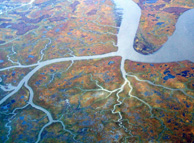
In a special “Rivers in Crisis” issue of Nature, the lead article, “Global Threats to Human Water Security and River Biodiversity," presents damning evidence that manipulation of river systems — through the construction of canals, levees, hydroelectric projects, and other infrastructure — has caused serious and lasting biological damage to watersheds throughout both the developing and developed worlds. The authors (all 11 of them!) report that key rivers have become shadows of their former selves in terms of the amount of aquatic life they can support. Without drastically improved stewardship of waterways, “we are pushing these river systems toward catastrophe,” warns Peter McIntyre, an article co-author.

The human impact on the world’s river systems will be hard to reverse, says Margaret Palmer, author of a second Nature article on freshwater biodiversity loss, “Beyond Infrastructure.” Human-induced changes to watersheds affect local hydrology at a fundamental level, she contends, weakening rivers’ ability to deliver crucial “ecological goods and services” — such as clean water and nutrient-rich sediment loads — that help maintain the health of local environments and the human populations that depend on them. To fully understand the scope of the problem, Palmer says more research is needed to explore the linkages between biodiversity levels and “ecosystem services” that healthy rivers provide.


1 comments:

Chris Holehouse said...

Hi there,

I'm the Environment editor at Before It's News. Our site is a People Powered news platform with over 1,000,000 visits a month and growing fast.

We would be honored if we could republish your blog RSS feed in our Environment category. Our readers need to read what The New Security Beat has to say.

Syndicating to Before It's News is a terrific way spread the word and grow your audience. Many other organizations are using Before It's News to do just that. We can have your feed up and running in 24 hours. I just need you to reply with your permission to do so. Please include the full name and email of the person who will be attached to the account, and let me know the name you want on the account (most people have their name or their blog name).

You can also have any text and/or links you wish appended to the end or prepended to the beginning of each of your posts on Before It's News. Just email me the text and links that you want at the beginning and/or ending of each post. If you know html you can send me that. If not, just send me the text and a link to your site. It should be around 200 characters or less (not including links).

You can, if you like, create a custom feed for Before It's News that includes multiple links back to your blog or web site. We only require that RSS feeds include full stories, not partial stories. We don't censor or edit your work.


All the best,

Chris Holehouse
Editor, Before It's News
www.beforeitsnews.com
chris.h@beforeitsnews.com

Post a Comment

Search

Loading
Across My Desk adaptation Afghan DHS Afghanistan Africa aging agriculture Algeria Arctic Asia Australia Backdraft Bangladesh Beat on the Ground biodiversity biofuels Bolivia Brazil Building Commitment Burundi Cambodia Campus Beat Canada Chad China climate change Colombia community-based conflict Congress conservation consumption cooperation COP-15 COP-16 COP-17 Crossroads Cuba democracy demography development disaster relief Dot-Mom DRC eco-tourism economics Ecuador education Egypt energy environment environmental health environmental peacemaking environmental security Ethiopia Europe Eye On family planning Feed the Future flooding FOCUS food security foreign policy forests From Durban From Ethiopia From Wilson funding GBV gender geoengineering Ghana global health GMHC-10 Haiti HIV/AIDS humanitarian ICFP India Indonesia international environmental governance Iran Iraq Israel Japan Jordan JPR Kazakhstan Kenya Korea Kyrgyzstan land Latin America Lebanon Liberia Libya livelihoods Madagascar Malawi Mali maternal health MDGs media Mexico Middle East migration military minerals mitigation Morocco Mozambique NATO natural resources NCSE 2012 Nepal Nicholas Kristof Niger Nigeria Nigeria Beyond nutrition oceans On the Beat Pakistan Papua New Guinea peace parks Peru PHE PHE Champion Philippines Planet 2012 podcast Pop Audio Pop Tweets population poverty protected areas QDDR QDR Reading Radar Reading the QDDR REDD Rio+20 Russia Rwanda Sahel sanitation Saudi Arabia security Senegal Sierra Leone Somalia South Africa South Asia Sri Lanka State Sudan SXSW Syria Tajikistan Tanzania Thailand Top 10 Tunisia Turkey U.S. Uganda UK UN urbanization USAID Uzbekistan video Vietnam water World Bank Yemen Yemen Beyond the Headlines You Are Invited youth Zimbabwe