Monthly archive for August 2010. Show all posts
-
Middle East at the Crossroads:
Iraq: Water, Power, Trash, and Security
›Interview With Mishkat Al Moumin, First Iraqi Minister of the Environment
By Schuyler Null // Tuesday, August 31, 2010The Middle East is home to some of the fastest growing, most resource-scarce, and conflict-affected countries in the world. New Security Beat’s “Middle East at the Crossroads” series takes a look at the most challenging population, health, environment, and security issues facing the region.
As the final American combat brigade pulls out of the country, the prevailing opinion in the United States about Iraq at the moment seems to be one of “bad politics are better than no politics,” and that despite continued violence (albeit significantly lessened from 2006-2007 levels), the American mission is largely finished. However, serious challenges remain, one of the most significant being the government’s continued inability to supply basic services to a growing population.
The New York Times recently reported that despite billions of dollars spent on energy infrastructure in the seven years since the invasion – $5 billion by the U.S. – Iraqi power plants still average only 53 percent of total capacity. In Baghdad, where temperatures routinely reach well over 100 degrees Fahrenheit during the summer, electricity theft is common and usage is limited to five hours a day.
South of the capital, protests over energy shortages and inaction by the stalled government turned deadly last month after police opened fire on protestors, killing two. The incident caused the resignation of Electricity Minister Karim Waheed who claimed he needed more time to develop projects and said Iraqis were “not capable of being patient in their suffering,” according to the BBC.
Investment in the country’s water infrastructure is dangerously lacking as well, to the point of threatening national security, according to Water Minister Abdullatif Jamal Rashid. As reported by Reuters, Rashid cites depleted resources, lack of rainfall, desertification, and a growing population as threats to the country’s already stressed water supply, which went through catastrophic drought in 2008-2009.
Perhaps the most worrying aspect of Iraq’s current water and electricity shortfall is the outlook for the future: the country is set to double in population by 2050. According to the Population Reference Bureau, Iraq along with Yemen and the Palestinian Territories, are the clear outliers in Middle Eastern demographics. In each, youth represents greater than 40 percent of the population, average total fertility rate is higher than four, and total population is expected to more than double over the next 40 years.
Speaking to The New York Times, top U.S. commander in Iraq General Ray Odierno said, “Everybody considers 1 September, we’re abandoning Iraq. We’re not abandoning Iraq. What we’re doing is changing our commitment from a military-dominated commitment to one that is more civilian-led, which is what I think they need more.”
The New Security Beat contacted Iraq’s first Minister of the Environment, Mashkat Al Moumin – now working in Washington, DC – to discuss these issues and how they may effect the country’s continuing security and development challenges.
New Security Beat: You mention on your blog True Stories about Security that the situation in Basra, where two Iraqis protesting electricity shortages were recently killed, is really an environmental security problem. How do you think that situation could have been avoided?Mishkat Al Moumin: I think the situation could have been avoided by taking two steps: 1) Provide electricity locally by allowing each governorate to build the local infrastructure to supply electricity within the governorate itself; 2) Provide a sense of public ownership to electricity stations.
NSB: Iraq’s water minister recently called the water infrastructure situation “a threat to national security.” Would you agree with that assessment? What was the water supply situation like when you took office and how has it changed?MM: I definitely agree with Minister Latif Rasheed on his analysis. The lack of proper infrastructure to supply water aggravates the population against the government.
NSB: Where else do you see environmental security issues in Iraq playing a larger role than is perhaps well known?
The water supply situation was critical when I was in office. For example, according to the Ministry of Water Resources only 32 percent of the Iraqi population enjoys access to safe drinking and 19 percent enjoys access to a good sewage system. However, during my time the Ministry of the Environment provided safe drinking water to marginalized communities such as Sadr City and Fallujah City. You can find a note of appreciation from the communities in Sadr posted on my blog.MM: There are two environmental policies that need to be reformed to encompass security threats: trash-pick up policy and safe drinking water policy.
NSB: You have also done a great deal of work on women’s issues in Iraq, heading up the Women and the Environment Organization (WATEO) non-profit. What specific connections between gender issues, demographics, the environment, and security do you see in Iraq?
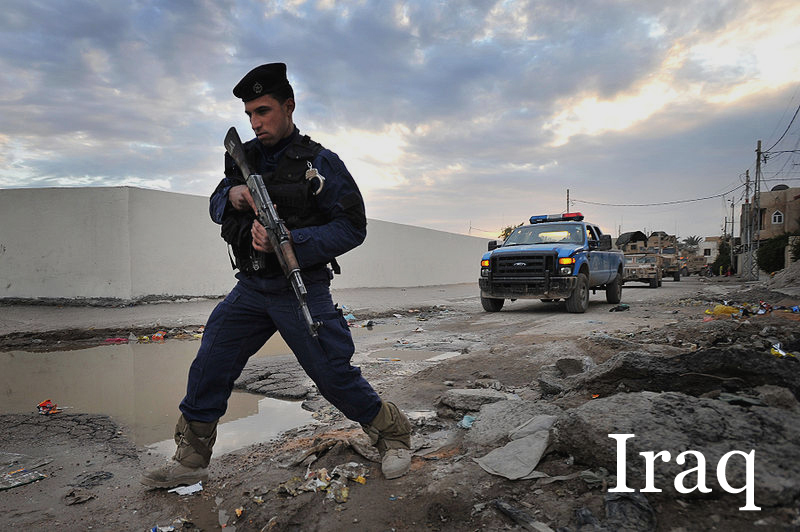
Piles of trash provide strategic hiding places for bombs and explosive devices and the lack of safe drinking water is increasing distrust and opposition to the government.MM: Environmental management can be utilized as a policy tool to bridge gender gaps, as well as security gaps. To effectively protect water resources and other environmental resources and services, the primary stakeholders should be involved in any policymaking that is designed to regulate them.
NSB: Iraq’s population is expected to double over the next 40 years. What steps do you see as necessary to prevent conflict over the country’s finite natural resources in the future?
In Iraq a major stakeholder in that respect are women, especially marginalized women. In order to achieve security in a certain community, all members of that community must be involved in security planning and implementation. For example, women are the primary users of water resources. During their walks to collect water, they may encounter suspicious activities, such as insurgents hiding a bomb or an IED. When they try to report these activities to the men in their communities, the men do not believe them. However, in one of the communities where WATEO operates, the community leaders listened to the report of an 18 year old woman and the perpetrators were arrested.
For WATEO, developing this trust is the keystone in bridging gender, environment, and security issues in the rural communities of Iraq.MM: First, enact environmental policies at the local level rather than at the national level, which would provide more resources for the people. Enacting policies at the local level establishes a sense of ownership among local communities and provides them with an incentive to protect their environmental resources. Moreover, it provides a better opportunity to involve the main stakeholders in policymaking.
Sources: BBC, Foreign Policy, New York Times, Population Reference Bureau, Reuters, USA Today.
Second, invest in new technologies which can preserve and maintain current resources. New technologies will enable Iraq to protect and add more to its environmental capital. For example, Iraq would benefit greatly from new technology to better utilize ground water for domestic and agricultural use.
Photo Credit: Adapted from “An Iraqi policeman steps over trash and mud during a walking patrol” in the Rashid district of Baghdad, courtesy of the U.S. Navy and Wikimedia Commons. MORE -
Dot-Mom:
GMHC 2010: Empowering the Next Generation
›By Calyn Ostrowski // Tuesday, August 31, 2010“We do not need new legislation… we need affordable, effective, and scalable solutions,” said Shn Gulamnabi Azad, Minister of Health, India, at the opening ceremony of the first-ever Global Maternal Health Conference in New Delhi. Co-hosted by the Maternal Health Task Force and the Public Health Institute of India, this three-day technical meeting builds upon the momentum of Women Deliver and the G8 summit by bringing together 700 researchers, program managers, advocates, media, and young people to exchange ideas, share data, develop strategies, and identify solutions for reducing maternal mortality.
In order to reduce India’s maternal mortality rates, Azad called for the repositioning of family planning programs to include maternal and child health and not limit the scope of services to population control as historically executed. Improving family planning and maternal health services must also address the reproductive health needs of adolescent girls, and India is currently developing a new ministry that will target gender inequality, poverty, early child marriages, as well as other critical health issues important to young girls such as the dissemination of sanitary napkins.
“Although the legal age of marriage is 18, there are districts in India where 35 percent of the population is married between the ages of 15-18,” said Azad. During the side event “Adolescent Girls: Change Agents for Healthy Mother and Child,” technical experts such as Anil Paranjap of the Indian Institute of Health Management presented evidence that girls who marry between 15-18 are five times more likely to die during childbirth than women in their early 20’s.
“We still have deep-rooted subordination that makes it very difficult for young women to realize their sexual and reproductive health rights,” said Sanam Anwar with the Oman Medical College. Interventions such as the UDAAN project – a private-public partnership between the Center for Development and Population Activities (CEDPA) and the Government of India – demonstrate promising solutions for empowering young people through the use of existing infrastructure. In collaboration with teachers, parents, principals, and students, this project successfully increased leadership skills and improved youth knowledge on menstruation, health, friendship, peer pressure, early marriage, and reproductive health, said Sudipta Mukhopadhyay of CEDPA.
Empowering “young people” to improve maternal health also requires that the community support committed new thinkers and future leaders. The Young Champions of Maternal Health Program is a unique and refreshing group of young professionals from 13 countries dedicated to improving maternal health, and I look forward to learning how this new energy will further the maternal health agenda.
Originally posted at Maternal Health Task Force, by Calyn Ostrowski of the Woodrow Wilson International Center for Scholars, Coordinator of the Maternal Health Dialogue Series in partnership with the Maternal Health Task Force and UNFPA.
Photo Credit: “Indian Girl” courtesy of flickr user Jarek Jarosz. MORE -
Dot-Mom:
‘NSB’ Blogs from the 2010 Global Maternal Health Conference in New Delhi
›By Schuyler Null // Monday, August 30, 2010The 2010 Global Maternal Health Conference kicked off today, perhaps fittingly, in India – one of the world’s fastest growing nations but one that also faces serious reproductive health challenges. The Wilson Center’s Calyn Ostrowski is in New Delhi for the conference and will be providing updates to The New Security Beat throughout the week.
Those interested can also find a schedule of events and list of participants on the conference website as well as live webcasted events on the main page. Stay tuned!
Photo Credit: “Mumbai, India, November 2009” courtesy of flickr user travelmeasia. MORE -
The Complexities of Decarbonizing China’s Power Sector
›By ECSP Staff // Friday, August 27, 2010Over the past year, there have been a series of new initiatives on U.S.-China energy cooperation. These initiatives have focused primarily on low-carbon development, and have covered everything from renewables and energy efficiency to clean vehicles and carbon capture and storage. Central to the long-term success of these efforts will be strengthening the U.S.’s incomplete understanding of China’s electricity grid, as all of the above issues are inextricably linked to the power grid itself.MORE
As both the United States and China try to figure out how to decarbonize their power sectors with a mixture of policy reform and infrastructure development, China’s power-sector reforms could present valuable lessons for the United States. At a China Environment Forum meeting earlier this summer, Federal Energy Regulatory Commission (FERC) Chairman Jon Wellinghoff joined power sector experts Jim Williams, Fritz Kahrl, and Ding Jianhua from Energy and Environmental Economics (E3) to address the subject, discussing gaps related to electricity sector analysis and presenting research on decarbonizing China’s electricity sector.
Addressing Shared Challenges
Chairman Wellinghoff kicked off the presentation with an overview of the similarities and differences in the U.S. and Chinese power sectors. Wellinghoff stressed that both countries face common obstacles in expanding renewables, namely that wind- and solar-energy sources are located inland, far away from booming coastal cities where energy demand is highest. He added that market and regulatory incentives to integrate renewables into grids are currently insufficient.
However, Wellinghoff also made the point that each side has comparative advantages. For instance, while China has superior high-voltage grid transmission technologies, the United States has been developing advanced demand-side management practices and markets to spur energy efficiency and renewable integration in the power sector. Wellinghoff argued that mutual understanding of each others’ power sectors is important for trust-building and effective cooperation, and can result in net climate and economic benefits for both sides.
Achieving these benefits will not be easy. E3’s Jim Williams noted that the Chinese power sector is currently in transition, a process that is producing some increasingly complicated policy questions. How these questions are answered has the potential to drastically shift the outlook for China’s carbon emissions. For instance, if the United States can help push China’s power sector to become less carbon-intensive, there could be substantial benefits for lowering global greenhouse gas emissions.
One of the major issues at the moment is assessing the cost-benefit analysis of renewable and low-carbon integration and trying to ascertain what the actual cost of decarbonizing the power sector would be. Due to a lack of “soft technology” — analytical methods, software models, institutional processes, and the like — policymakers in China still do not have a good sense of what level of greenhouse gas reductions could be achieved in the power sector for a given cost.
More Intensive Research Needed
Fritz Kahrl and Ding Jianhua, also from E3, went on to explain that for China, as with the United States, the underlying issues of how to decarbonize the power sector will demand considerable quantitative analysis. The United States has more than three decades of experience with quantitative policy analysis in the power sector, driven in large part by regulatory processes that require cost-benefit analysis. In China, policy analysis in the power sector is still at an early stage, but there is an increasing demand among policymakers for this kind of information.
For instance, over the past five years, China’s government has allocated significant amounts of money and attention to energy efficiency. However, standardized tools to assess the benefits and costs of energy efficiency projects are not widely used in China, which has led to a lack of transparency and accountability in how energy efficiency funds are spent. This problem is increasingly recognized by senior-level decision-makers. Drawing from its own experience, the United States could play an important role in helping Chinese analysts develop quantitative approaches for power sector policy analysis.
Pete Marsters is project assistant with the China Environment Forum at the Woodrow Wilson Center.
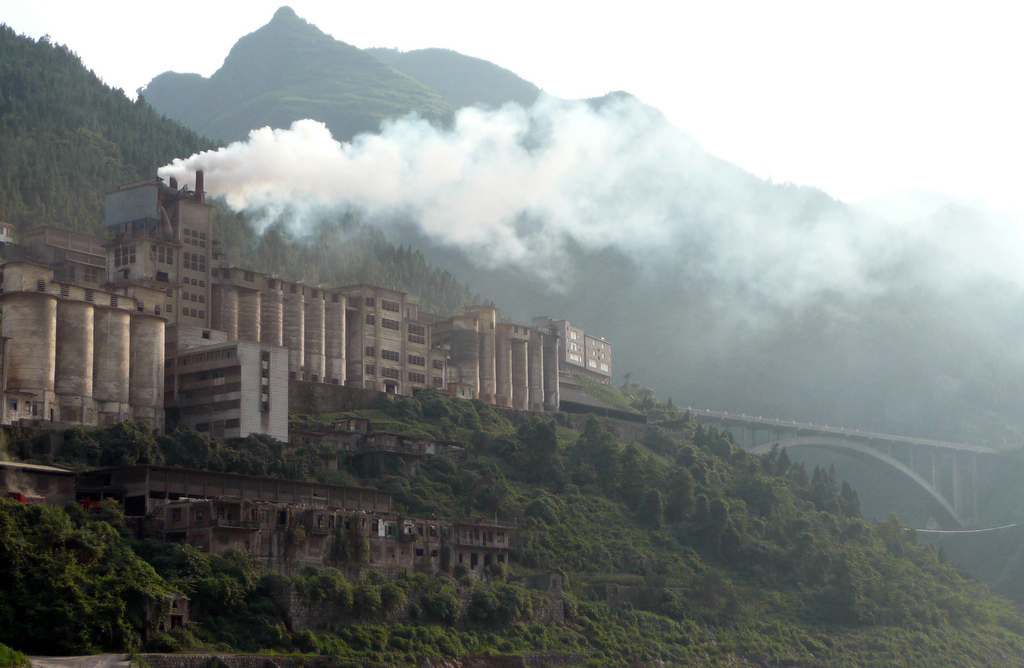
Photo Credit: “Coal Power Plant (China),” courtesy of flickr user ishmatt. -
The Future of Sub-Saharan Africa’s Tentative Fertility Decline
›By Richard Cincotta // Wednesday, August 25, 2010In her recent post on The New Security Beat, Jennifer Sciubba argues that the medium-fertility variant projection published in the UN Population Division’s biennial projections — the source of most future data published in the Population Reference Bureau’s 2010 World Population Data Sheet — forecasts an unrealistically low total fertility rate (TFR) for sub-Saharan Africa in 2050, at a rate of 2.5 lifetime childbirths per woman.
She’s not alone in her skepticism. Despite the UN Population Division’s remarkable record of projecting transitions from high to low fertility in East Asia, the Caribbean, South America, and, most recently, North Africa, a pair of challenges for projection methods could make “getting it right” in sub-Saharan Africa a formidable task.MORE
Stalled Fertility Transitions Complicate Projections
The most immediate challenge for UNPD projections is the region’s propensity for “stalling.” Several demographic studies (such as John Bongaarts’ 2008 paper, “Poverty, Gender, and Youth,” or a 2009 UNPD policy brief) have noted a tendency in sub-Saharan countries and other lesser developed countries for fertility to remain very high, or decline from pre-transition levels (6 to 8 children per woman) and then stabilize at a somewhat lower level.
That latter trend, known as a stalled fertility transition or a sustained partial transition, defies the very assumption that defines the UN series of medium, low, and high fertility-variant projections. Once fertility declines from a high level, UN demographers assume that TFR will decrease continuously until the decline ends at a low level — at 1.85 lifetime childbirths per woman in the UN medium-fertility variant, 1.35 in the low variant, and 2.35 in the high-variant projection.
While it’s true that several South American countries stalled between a TFR of 3.0 and 4.0 during the 1980s and early 1990s, by and large, the “continuous decline assumption” has served the UN projections quite well. In fact, TFR has fallen so fast and far in most regions since the 1970s that, in 2002, the UNPD lowered each of these TFR endpoints by 0.25 children per woman.
The countries of sub-Saharan Africa have proved to be exceptions, however. For these countries, the continuous decline assumption could buttress over-optimism if most continue to stall at levels far above the high-variant projection’s endpoint, a TFR of 2.35.
The Impact of Heterogeneous Populations
The intense ethnoreligious diversity of sub-Saharan African states may eventually present UN demographers with a second challenge. Rather than proceeding homogeneously through a country’s population, the fertility transition typically advances through ethnoreligious groups at varying paces. TFR tends to decline slowest among communities that are intensely religious, where women’s social status is low, or among low-income rural groups. And when rapidly growing, high-fertility minorities become significantly large — as they have in India, Pakistan, Israel, and in the central Andean states of South America — country-level TFR can stall, or even rise.
In many ethnically diverse states, the age structure’s configuration is the sum of several reproductively independent populations, each at a different stage of the fertility transition. Nonetheless, current UNPD methods treat each country as a homogeneous population. For most ethnically diverse states, UN demographers have little choice. Ethnic and religious data, when and where they exist, tend to be politically sensitive and inordinately hard to access (for example, the inclusion of census questions on religion and ethnicity are currently forbidden in France’s census, and the requirement for such questions in Lebanon’s census has caused it to be politically blocked since 1932). As a result, the implications of compositional shifts are virtually ignored in projections.
If these demographic twists could be captured by projections, what might they mean for the sub-Saharan African security environment? Unfortunately, it’s hard to imagine a more adverse scenario than the one currently spelled out by the UN projections.
Looking at the Youth Bulge from Another Angle
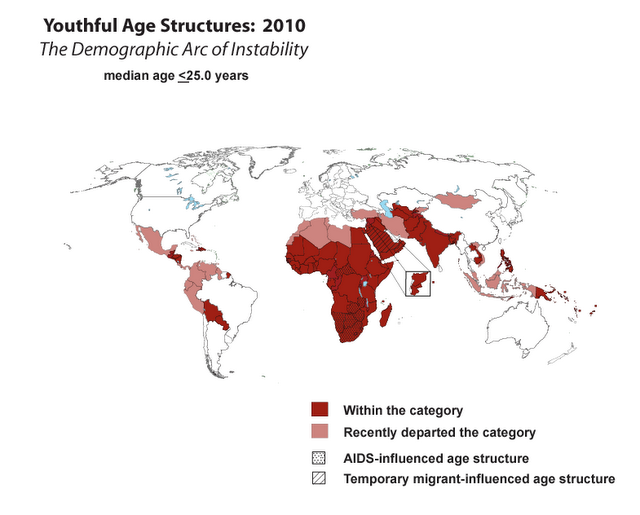
Today, 45 of sub-Saharan Africa’s 46 independent states have youthful age structures — a median age less than or equal to 25 years. These age structures cut a familiar pyramidal-shaped profile of a population with a large proportion of young adults in the working-age population (greater than or equal to 42 percent), a rapidly growing school-age population, and high rates of workforce growth, typically exceeding 3 percent per year. These qualities tend to be associated with rampant unemployment, institutional failures, and political instability.
And here’s the bad news. Unless African governments and their development partners can stimulate quick reversals in fertility trends, the passing of two decades will only slightly modify this situation. According to the UN medium-variant projection, by 2030, only Botswana, South Africa, Cape Verde, and Djibouti are expected to have matured significantly beyond this conflict-vulnerable stage of the age-structural transition, leaving sub-Saharan Africa as the remaining epicenter of the “demographic arc of instability” (see map above for 2010, and below for 2030).
Jennifer Sciubba’s criticisms, and the warnings of other political scientists and demographers, should alert policymakers that the reality could turn out to be even bleaker than current UN projections suggest. Stalling fertility transitions and ethnoreligious compositional shifts threaten to further intensify sub-Saharan Africa’s ongoing instability and prolong its countries’ vulnerabilities for decades, particularly in its western, central, and eastern sub-regions.
Richard P. Cincotta is a demographer-in-residence at the Stimson Center, and a consultant on political demography for the Woodrow Wilson Center’s Environmental Change and Security Program.
Maps courtesy of Richard P. Cincotta. -
When National Security Overlaps With Human Security
›Derek S. Reveron, The New Atlanticist
By ECSP Staff // Tuesday, August 24, 2010The original version of this article appeared on the Atlantic Council’s New Atlanticist blog. By Derek S. Reveron.
For the second time this year, naval forces have been involved in major operations that have little to do with combat at sea. Instead, Sailors and Marines operating from dozens of warships have responded to natural disasters.
Earlier this year in Haiti, traditional warships delivered food, water, and medical supplies. On amphibious ships, the large flight decks designed to move Marines ashore via helicopters proved to be temporary airports for search and rescue teams; medical facilities designed to treat wounded infantry became floating clinics for sick and injured civilians. The use of naval ships as airports, hospitals, or as refugee camps must be temporary, but in a crisis, temporary relief is what is necessary.
Similar uses of militaries are occurring in response to flooding in Pakistan and wildfires in Russia today. NATO is planning and executing responses to alleviate human suffering created by natural disasters, which are certainly non-traditional.
But militaries around the world are being called to serve their people and others in distress. Increasingly, militaries are including humanitarian assistance and disaster relief as a core concept in how they train, equip, and organize. Militaries have reluctantly embraced these new roles because their governments expect them to provide responses to humanitarian crises, support new partners, and reduce underlying conditions that give rise to instability.
At the same time that military aircrews rescue stranded people or military engineers erect temporary housing, critics worry that development is being militarized. But, they miss the larger point that military equipment like helicopters, medical facilities, and logistic hubs are necessary for providing humanitarian assistance during a crisis. Additionally, NGOs increasingly partner with militaries in North America and Europe because militaries have the capacity to reach populations in need where NGOs can deliver their services.
Given the real stress on militaries created by operations in Iraq and Afghanistan, these non-traditional operations are not needed to prove relevance for militaries in a difficult fiscal period. Instead, the inclusion of humanitarian assistance in military doctrine are driven by countries’ national strategies that increasingly link human security and national security. As I wrote in Exporting Security: International Engagement, Security Cooperation, and the Changing Face of the U.S. Military, militaries are being directed to be involved in humanitarian operations.
Far from preparation for major war, humanitarian activities rely on a unique blend of charitable political culture, latent civil-military capacity, and ambitious military officers who see the strategic landscape characterized by challenges to human security, weak states, and transnational actors. Further, changes are informed by international partners that conceive of their militaries as forces for good and not simply combat forces. The United States has been slow to catch up to European governments that see the decline of coercive power and the importance of soft power today.
This change is not only about the state of relations among governments today, but also the priority of human security. Security concerns over the last twenty years have been shifting away from state-focused traditional challenges to human-centered security issues such as disease, poverty, and crime. This is reflected in the diversity of ways by which NATO countries protect their national security. While there are remnants of Cold War conflicts on the Korean Peninsula and in the Persian Gulf region, these are largely the exception. Instead, sub-national and transnational challenges increasingly occupy national security professionals.
Within the United States, the government has embarked on a program to illustrate that its military superpower capabilities can be used for good. The same capability that can accurately drop a bomb on an adversary’s barracks has been used to deliver food aid in the mountains of Afghanistan. The same capability used to disembark Marines from Navy ships to a foreign shore have been used to host NGOs providing fisheries conservation in West Africa. And the same capability to track an enemy’s submarines can detect changes in the migration of fish stocks in response to climate change. To be sure, swords haven’t been beaten into plowshares, but military capabilities once used for confrontation are now used for cooperation.
Derek S. Reveron, an Atlantic Council contributing editor, is a Professor of National Security Affairs and the EMC Informationist Chair at the U.S. Naval War College in Newport, Rhode Island.The views expressedare his own and do not reflect those of the Navy or the U.S. government.
Photo Credit: “100304-F-2616H-060” courtesy of flickr user Kenny Holston 21. MORE -
Pop Tweets:
The Feed for Fresh News on Population
›By ECSP Staff // Tuesday, August 24, 2010RT @NewSecurityBeat: New: Royal Society Calls for Submissions: “People and the Planet” Study – http://ht.ly/2oOju #Population @royalsociety
RT @NewSecurityBeat: New: #Land, #Education, and #Fertility in Rural #Kenya – http://ht.ly/2nvJL #Demography #Population #Youth #ECSP #fb
Spoke on need for integration in climate, food, water, & health on #USAID @PressClubDC panel. @NewSecurityBeat coverage http://ow.ly/2n0K4
Great to see Colin Kahl this morning. Here’s a @NewSecurityBeat podcast w/ him on environment, demography, & conflict http://ow.ly/2n0qG
My take on @Revkin on @dotearth asking how much is enough? Look to Durning & Pirages to help redefine the good life http://ow.ly/2mG2T
Follow Geoff Dabelko and The New Security Beat on Twitter for more population, health, environment, and security updates. MORE -
“All Consuming:” U of M’s ‘Momentum’ on Population, Health, Environment, and More
›By Schuyler Null // Monday, August 23, 2010Minnesota’s Institute on the Environment is only in its third year of operation but has already established itself as an emerging forum for population, health, and, environment issues, due in no small part to its excellent thrice-a-year publication, Momentum. The journal is not only chock-full of high production values and impressively nuanced stories on today’s global problems, but is also, amazingly, available for free.
MORE
Momentum has so far covered issues ranging from food security, gender equity, demographic change, geoengineering, climate change, life without oil, and sustainable development.
Highlights from the latest issue include: “Girl Empower,” by Emily Sohn; “Bomb Squad,” with Paul Ehrlich, Bjørn Lomborg, and Hans Rosling; and “Population Hero,” on the fiscal realities of stabilizing growth rates.
The lead story featured below, “All Consuming,” by David Biello, focuses on the debate over whether consumption or population growth poses a bigger threat to global sustainability.Two German Shepherds kept as pets in Europe or the U.S. use more resources in a year than the average person living in Bangladesh. The world’s richest 500 million people produce half of global carbon dioxide emissions, while the poorest 3 billion emit just 7 percent. Industrial tree-cutting is now responsible for the majority of the 13 million hectares of forest lost to fire or the blade each year — surpassing the smaller-scale footprints of subsistence farmers who leave behind long, narrow swaths of cleared land, so-called “fish bones.”
Continue reading on Momentum.
In fact, urban population growth and agricultural exports drive deforestation more than overall population growth, according to new research from geographer Ruth DeFries of Columbia University and her colleagues. In other words, the increasing urbanization of the developing world — as well as an ongoing increase in consumption in the developed world for products that have an impact on forests, whether furniture, shoe leather, or chicken fed on soy meal — is driving deforestation, rather than containing it as populations leave rural areas to concentrate in booming megalopolises.
So are the world’s environmental ills really a result of the burgeoning number of humans on the planet — growing by more than 150 people a minute and predicted by the United Nations to reach at least 9 billion people by 2050? Or are they more due to the fact that, while human population doubled in the past 50 years, we increased our use of resources fourfold?
Photo Credit: “All Consuming” courtesy of Momentum. -
Reading Radar:
Climate Change Adaptation and Mitigation in the Agricultural Sector
›By Schuyler Null // Friday, August 20, 2010“Climate Change and China’s Agricultural Sector: An Overview of Impacts, Adaptation and Mitigation” from the International Centre for Trade and Sustainable Development (ICTSD) explores mitigation and adaptation strategies to avoid the worst effects of climate change in China’s farming sector. The authors, Jinxia Wang, Jikun Huang and Scott Rozelle, point out that, although often overlooked in favor of the industrial sector, a disproportionate amount (greater than 15 percent) of China’s greenhouse gas emissions come from agriculture. Challenges include over-fertilization, high methane levels, water pollution, and water scarcity. Wang, Huan, and Rozelle predict that trade “can and should be used to help China mitigate the impacts of climate change” and programs promoting better calibration of fertilizer dosages and “conservation tilling” practices will help farmers reduce emissions.MORE
Also from ICTSD comes another study on climate adaptation and mitigation, this time focusing on the developing world. Globally, agriculture accounts for only 4 percent of GDP but according to the IPCC it also accounts for more than 25 percent of greenhouse gas emissions, making climate adaptation and mitigation in the sector particularly important. “Agricultural Technologies for Climate Change Mitigation and Adaptation in Developing Countries: Policy Options for Innovation and Technology Diffusion” by Travis Lybbert and Daniel Sumner examines some of the more promising innovations that may help those countries most vulnerable to climate change to cope with and minimize risk. The authors suggest that most policies that target economic development and poverty reduction will also naturally lead to improvements in agriculture, accordingly most of their recommendations center around improving market efficiency, communication of technologies and best practices, and investment in research and development. -
Historic Floods Plague Pakistan
›By Shawna Cuan // Thursday, August 19, 2010“Staggered by the scale of destruction from this summer’s catastrophic floods, Pakistani officials have begun to acknowledge that the country’s security could be gravely affected,” reports the Washington Post. The Pakistani government – already cash-strapped between fighting “the war on terror” and trying to prevent an economic collapse – now faces recovering from the worst flooding in over 80 years.MORE
Security Implications of Slow International Relief Efforts
Aid and relief have been scarce. According to the United Nations, not even a third of the estimated $459 million needed has been met. So far, the United States ranks as the largest contributor, at $71 million. Individual donors, Islamic charities, the Pakistani military, and the United States have been the most prominent actors in relief efforts so far.
The lack of international aid has become a major concern. As Ahmed Rashid wrote recently in The New York Review of Books, aid is needed immediately, for rebuilding bridges, restoring power, and reopening roads, particularly in the Khyber Pakhtoonkhwa province – a haven for Pakistani and Afghan insurgents.
Islamic charities have partially filled the void, providing substantial aid in some of the worst affected regions. “The patchy government response has given room for Islamist groups, some allegedly linked to militant outfits, to step in and offer their own aid to displaced and hungry flood victims,” reports the Associated Press.
Varied Government Responses
The Pakistani military has been just about the only competent component of state-run relief efforts. Tens of thousands of soldiers have been dispatched to assist in rescue operations. Already, 75,000 stranded people have been rescued, although rescue attempts have been heavily restricted due to challenging terrain.
The relatively weak government response – notably a lack of presence from the civilian side – has only further undermined its legitimacy in the eyes of ordinary Pakistanis, who have faced government incompetence before. “There is no silver lining, just misery for many,” concludes Bruce Riedel, a counterterrorism expert and senior fellow at the Brookings Institute.
The U.S., for its part, has dispatched helicopters to assist in the rescue operations and have managed to rescue 3,089 people and drop 322,340 pounds of emergency relief supplies so far. The United States has also allocated $3 million for 15 waterborne illness treatment centers.
A New Opening for Pakistani Insurgents
Existing concerns over Pakistan’s fragility as a state have been compounded by the unfolding disaster. Ahmed Rashid warns that “unless the international community takes immediate action to provide major emergency aid and support, the country risks turning into what until now has remained only a grim but remote possibility—a failed state with nuclear weapons.”
Redirecting 60,000 of Pakistan’s 500,000 troops to assist in rescue operations has constrained the army in its fight against insurgents. Although extremists were expelled in a major military operation a year ago, the floods in the Swat Valley have overturned bridges, removed hundreds of miles of electricity pylons and gas lines, and destroyed nearly 50 percent of the valley’s livestock and standing crops, creating fears of a possible resurgence in violence.
“There is now a lot of breathing space for the Pakistani Taliban and their allies in the tribal areas,” Hasan-Askari Rizvi, a political and defense analyst, told the Washington Post. “They know they will soon be able to cash in on the ammunition that develops as the people are alienated from the government.”
The Specter of Food Shortages
Food security concerns have been heightened by the devastation in the Sindh and Punjab provinces, which provide a critical component of Pakistan’s food supply and economy. Already, in central Punjab province alone, “1.5 million hectares of valuable farmland [has been] destroyed,” according to Dawn. Meanwhile, according to Punjab Governor Salmaan Taseer, “a total of $2-3 billion worth of crops had been destroyed in the province including 650,000 acres of cotton and rice, maize and other cash crops.”
While worsened by the crisis, “food security in Pakistan has been under constant threat during the last few years,” according to a report by the Wilson Center’s Asia Program, “Hunger Pains: Pakistan’s Food Insecurity.” The report points out that in 2008 nearly half the country’s population – 77 million out of 168 million people – was going hungry, up 28 percent from March 2007. Of Pakistan’s 121 districts, 95 were suffering from hunger and malnutrition-related disease.
The full effect of the flooding has yet to be determined, but the situation has certainly become even more grim. “With the chronic shortage of foodstuffs and the beginning of the fasting month of Ramadan,” writes Rashid, “food prices have already doubled, raising the prospect of social tensions and even food riots.” Given that the country was beset by debilitating food-security issues prior to the flooding, how or when Pakistan will recover from this disaster remains unclear.
Shawna Cuan is a former intern for Woodrow Wilson Center scholar Maria Ivanova.
Sources: Associated Press, BBC, DAWN, Guardian, New York Review of Books, New York Times, Reuters, U.S. State Department, United Nations, Washington Post.
Photo Credit: “Flooding in Punjab Province, Pakistan,” courtesy of flickr user United Nations Photo. -
Fire in the Hole: A Look Inside India’s Hidden Resource War
›By Schuyler Null // Wednesday, August 18, 2010This month’s Foreign Policy has two features on India’s ongoing internal conflict with Maoist and tribal rebels – perhaps the least known insurgency and resource conflict in the world.
“Fire in the Hole,” by authors Jason Miklian and Scott Carney, provides a fascinating on-the-ground account of what they call a “perpetual-motion machine of armed conflict that is grimly familiar in places like the oil-soaked Niger Delta, but seems extraordinary in the world’s largest democracy.” Paired with the article is a photo essay by the authors with some striking images of mining and conflict in Chhattisgarh and Jharkhand states.MORE
Of particular note in their coverage is Miklian and Carney’s account of how India’s thirst for resources fuels the conflict on both sides:Mining companies have managed to double their production in the two states [Chhattisgarh and Jharkhand] in the past decade, even as the conflict has escalated; the most unscrupulous among them have used the fog of war as a pretext for land grabs, leveling villages whose residents have fled the fighting. At the same time, the Maoists, for all their communist rhetoric, have become as much a business as anything else, one that will remain profitable as long as the country’s mines continue to churn out the riches on which the Indian economy depends.
ECSP recently co-hosted “The ‘Gravest Threat’ to Internal Security: India’s Maoist Insurgency” with the Wilson Center’s Asia Program on the situation, with representatives of the Indian press, civil society, and defense communities. The New Security Beat has also covered the conflict in “India’s Maoists: South Asia’s ‘Other’ Insurgency,” with particular attention to the resource management and development issues that have driven strong local support for this latest incarnation of a longstanding Maoist revolt.
Photo Credit: “A woman dumps rubble into a crusher at a mine in India’s Jharkhand state. Jharkhand has an estimated 2,500 off-the-books mining operations, an underground industry that has both built sympathy for the state’s Maoist rebels and provided a source of income for their rebellion.” Courtesy of Jason Miklian and Foreign Policy. -
Eye On:
Floods, Fire, Landslides, and Drought: The Guardian’s “Weather Crisis 2010”
›By Schuyler Null // Monday, August 16, 2010
From the Guardian’s DataBlog comes an excellent overview of some of the extreme weather affecting the globe this summer, from the devastating floods in Pakistan which have inflicted “huge losses” to crops and exacerbated an already tenuous security situation, to the wildfires in Russia which have smothered the capital in dangerous smog and crippled domestic wheat supplies.
“Global temperatures in the first half of the year were the hottest since records began more than a century ago,” writes author and graphic artist Mark McCormick.MORE
The orange areas of the map represent high pressure systems and the blue, low pressure systems, which as explained by Peter Stott of the Met Office, are important indicators of the rare climatic conditions that caused this summer’s abnormal conditions across Eurasia.
The flooding in Pakistan has garnered the most international attention, having now affected more people than the 2004 tsunami, 2010 Haiti earthquake, and 2005 Kashmir earthquake combined. Other highlighted areas of the map include flooding in Poland and Germany, drought in England, mudslides in Latin and South America, record-breaking drought and hunger in West Africa, and flooding and landslides in China, which recently pushed the world’s largest hydroelectric dam to its limit and have now been blamed for more than 1,000 deaths.
Although it does a good job highlighting the frequency and severity of extreme weather events this summer, it’s important to note that the map only covers events in July and August. That leaves out the “1000-year” floods in Tennessee this May as well as the heavy snowfall seen in the Northeast United States and the winter of “white death” in Mongolia earlier this year, which also severely disrupted local and national infrastructure as well as a great many people’s livelihoods.
Sources: Agence France-Presse, BBC, Guardian, National Oceanic and Atmospheric Administration, New York Times, Telegraph, UN Dispatch.
Image Credit: “Weather Crisis 2010” by Mark McCormick, courtesy of Scribd user smfrogers and The Guardian. -
‘Interview with Maria Ivanova, Wilson Center Scholar:’ Engaging Civil Society in Global Environmental Governance
›By Russell Sticklor // Friday, August 13, 2010From left to right, the five consecutive Executive Directors of the United Nations Environment Programme: Achim Steiner, Klaus Toepfer, Elizabeth Dowdeswell, Mostafa Tolba, and Maurice Strong, at the 2009 Global Environmental Governance Forum in Glion, Switzerland.
In the eyes of much of the world, global environmental governance remains a somewhat abstract concept, lacking a strong international institutional framework to push it forward. Slowly but surely, however, momentum has started to build behind the idea in recent years. One of the main reasons has been the growing involvement of civil society groups, which have demanded a more substantial role in the design and execution of environmental policy—and there are signs that environmental leaders at the international level are listening.MORE
On the heels of the UN Environment Programme’s Governing Council meeting earlier this year in Bali, a call was put out to strengthen the involvement of civil society organizations in the current environmental governance reform process. To that end, UNEP is creating a Civil Society Advisory Group on International Environmental Governance, which will act as an information-sharing intermediary between civil society groups and regional and global environmental policymaking bodies over the next few years. (The application deadline has been extended; applicants interested in joining the Advisory Group should submit their materials via e-mail by Sunday, August 15, 2010—full instructions are listed at the end of this post.)
Maria Ivanova, a fellow at the Woodrow Wilson Center and director of the Global Environmental Governance Project, played a key role in ensuring civil society engagement in the contemporary political process on international environmental governance reform. Ivanova recently sat down with the New Security Beat to talk about the future prospects for global environmental governance, the Rio+20 Earth Summit in Brazil in 2012, and how to foster a more open and sustained dialogue between the worlds of environmental policymaking and academia.
New Security Beat: What are the pitfalls of a regional approach to addressing climate change and other environmental issues, as opposed to an international approach?
Maria Ivanova: Global environmental problems cannot be solved by one country or one region alone, and require a collective global response. But they can also not be addressed solely at the global level because they require action by individuals and organizations in particular geographies. The conundrum with climate change is that the countries and regions most affected are the ones least responsible for causing the problem in the first case. We cannot therefore simply substitute a national or regional response for a global action plan, as more often than not, it would be a case of “victim pays” rather than “polluter pays”—the fundamental principle of environmental policy in the United States and most other countries. Importantly, however, our global environmental institutions do not possess the requisite authority and ability to enforce agreements and sanction non-compliance.
NSB: What are some of the inherent difficulties in getting countries to see eye-to-eye and collaborate on the development of institutions for global environmental governance?
MI: The most important difficulty is perhaps the lack of trust and a common ethical paradigm accompanied by a pervasive suspicion about countries’ motives. Secondly, there is a perceived dichotomy between environment and development that has lodged in the consciousness of societies around the world. Thirdly, there’s the inability of current institutions to deliver on existing commitments. The resulting blame game feeds suspicions and restarts the whole cycle again.
NSB: Do you see the 21st century’s various environmental challenges as being a driver of international conflict or cooperation?
MI: After the fall of the Berlin Wall, it was expected that global environmental (and other) issues would be a driver for cooperation. A green dividend was expected, and the 1992 Rio Earth Summit fostered much hope. But quite the opposite happened. Global environmental challenges such as climate change, for example, have caused more conflict than cooperation. Other concerns, such as whaling and biodiversity loss, have also triggered conflicts as governments have become fiercely protective of their national sovereignty. On the other hand, civil society groups and even individuals around the world have come together in new coalitions and formed new alliances. So while at a governmental level we observe increased tension, at a civil society level, we witness unprecedented mobilization and collaboration, especially through social media. Obviously, we live in a new world.
NSB: There has been a lot of talk about bridging the gap between the academic and policy worlds—two communities that do not typically have much interaction, but likely have a lot to learn from one another. What steps do you think can be taken regarding environmental governance that might facilitate a sustained dialogue and interaction between the two sides?
MI: Many academics have thought, debated, and written about global environmental governance. Fewer have presented their analysis to policymakers and politicians. At the Global Environmental Governance (GEG) Project that I direct, we seek to bridge that gap and provide a clearinghouse of information, serving as a “brutal analyst,” and acting as an honest broker among various groups working in this field. Moreover, we are in the process of launching a collaborative initiative among the Global Environmental Governance Project, the Center for Law and Global Affairs at Arizona State University, and the Academic Council on the UN System to collect, compile, and communicate academic thinking on options for reform to the ongoing political process on international environmental governance. We are creating a Linked-In group where we hope to engage in discussions with colleagues from universities around the world with the purpose of generating ideas, developing options, and testing them with policymakers. Moreover, we are engaging with civil society beyond academia. The GEG Project is sponsoring five regional events on governance in Argentina, China, Ethiopia, Nepal, and Uganda that are taking place in August and September. Led by young environmental leaders in those countries who attended the 2009 Global Environmental Governance Forum in Glion, Switzerland, these consultations are generating genuine engagement in thought and action on governance. So, new initiatives are certainly emerging and the results could be visible by the Rio+20 conference in May 2012.
NSB: What are your expectations for Rio+20?
MI: Given that governance is a major issue on the agenda for Rio+20, my hope is that the conference will bring about a new model for global governance, which reframes the environment-development dichotomy, cultivates shared values, and fosters leadership. Indeed, I am convinced that leadership is the most important necessary condition for change. We need to encourage more bold, visionary, entrepreneurial behavior rather than conformity.
My hidden hope for Rio+20 is that it will dramatically shift the narrative and move us from sustainable development to sustainability. Sustainability builds on sustainable development but goes further than that. As a concept it allows for new thinking, new actors, and new politics. It avoids the North-South polarization of sustainable development, which is so often equated with development and is therefore understood as what the North has already attained and what the South is aspiring to. By contrast, no one society has reached sustainability, and learning by all is necessary. Moreover, much of the innovative thinking about sustainability is happening in developing countries, which are trying to improve quality of life without jeopardizing the carrying capacity of the environment. Progressive thinking is also taking place on campuses in industrialized countries, which are creating a new sense of community and collaboration. Indeed, young people around the world are engaging in finding new ways of living within the planetary limits in a responsible and fulfilling manner.
Maria Ivanova is director of the Global Environmental Governance Project, a fellow at the Woodrow Wilson International Center for Scholars, and an assistant professor of global governance at the McCormack Graduate School of Policy and Global Studies, University of Massachusetts Boston.
If you wish to nominate yourself or someone else as a candidate for the Civil Society Advisory Group on IEG, you need to submit materials to civil.society@unep.org by Sunday, August 15, 2010 (please copy info@environmentalgovernance.org). You can find the nomination form and the Terms of Reference for the group at the Global Environmental Governance Project’s website.
Photo Credit: “UNEP Leadership,” courtesy of the Global Environmental Governance Project. -
‘UK Royal Society: Call for Submissions’ “People and the Planet” Study To Examine Population, Environment, Development Links
›By ECSP Staff // Thursday, August 12, 2010By Marie Rumsby of the Royal Society’s In Verba blog.
In the years that followed the Iranian revolution, when Ayatollah Khomeini returned from exile to Tehran and the country went to war against Iraq, the women of Iran were called upon to provide the next generation of soldiers. Following the war the country’s fertility rate fell from an average of over seven children per woman to around 1.7 children per woman – one of the fastest falls in fertility rates recorded over the last 25 years.
Iran is an interesting example but every country has its own story to tell when it comes to population levels and rates of change. The global population is rising and is set to hit 9 billion by 2050. And whilst fertility rates in Ethiopia are on the decline, its total population is projected to double from around 80 million today, to 160 million in 2050.
Earlier this month, the Royal Society announced it is undertaking a new study which will look at the role of global population in sustainable development. “People and the Planet” will investigate how population variables – such as fertility, mortality, ageing, urbanization, and migration – will be affected by economies, environments, societies, and cultures, over the next 40 years and beyond.
The group informing the study is chaired by Nobel Laureate Sir John Sulston FRS, and includes experts from a range of disciplines, from all over the world. With names on the group such as Professor Demissie Habte (President of the Ethiopian Academy of Sciences), Professor Alastair Fitter FRS (Professor Environmental Sciences, University of York) and Professor John Cleland FBA (Professor of Medical Demography, London School of Hygiene and Tropical Medicine), there’s bound to be some lively discussions.
Linked to the announcement of the study, the Society held a PolicyLab with Fred Pearce, environmental journalist, and Jonathon Porritt, co-founder of Forum for the Future, to discuss the significance of population in sustainable development.
Both speakers have been campaigning against over-consumption for many years. Jonathon Porritt has been a keen advocate for fully funded, fully engaged voluntary family planning in every country in the world that wants it.
“In my opinion, that would allow us to stabilize global population at closer to 8 billion, rather than 9 billion. And if we did it seriously for forty years, that is an achievable goal.” Porritt thinks that stabilizing global population at 8 billion rather than 9 billion would save a large number of women’s lives, and suggests “you cannot ignore the gap between 8 billion and 9 billion if you are thinking seriously about climate change.”
Fred Pearce acknowledges that population matters, but stresses that it is consumption (and how we produce what we produce) that we need to focus on. He feels it is too convenient for us to focus on population.
According to Fred, the global average is now 2.6 children per woman – that’s getting close to the global replacement level of 2.3 children per woman.
“It is no longer human numbers that are the main threat……It’s the world’s consumption patterns that we need to fix, not its reproductive habits,” said Pearce.
The Society will be taking a long look at some of these issues, assessing the latest scientific evidence and uncertainty around population levels and rates of change. The “People and the Planet” study is due for publication in early 2012, ahead of the Rio+20 UN Earth Summit. The Society is currently seeking evidence to inform this study from a wide-range of stakeholders.
The deadline for submissions is October 1, 2010. For more information on submissions, please see the Royal Society’s full call for evidence announcement.
Image Credit: “In Verba” courtesy of the Royal Society. MORE -
Guest Contributor:
Misguided Projections for Africa’s Fertility
›By Jennifer Dabbs Sciubba // Thursday, August 12, 2010By assuming that sub-Saharan Africa’s total fertility rate will decrease to 2.5 children per woman by 2050, the most recent population projections issued by the Population Reference Bureau likely continue to underestimate fertility for Africa. Though northern Africa has significantly lowered fertility, sub-Saharan Africa’s TFR is still 5 children per woman. Achieving the levels projected by PRB or the United Nations will largely depend on whether the conditions that led to past fertility declines for other states can be established in sub-Saharan Africa.
Demographers have identified numerous factors associated with fertility decline, including increased education for females, shifting from a rural agricultural economy to an industrial one, and introduction of contraceptive technology. Sub-Saharan Africa is only making slow progress in each of these areas.MORE
Surveying Obstacles to Development
Primary school enrollment is up, but the pace of improvement is declining. Meanwhile, gender gaps persist: Enrollment for boys remains significantly higher than for girls. Girls’ education is associated with lower fertility, partly because education helps women take charge of their fertility and also because education influences employment opportunities. Increased female labor force participation has been shown to increase the cost of having children, and is therefore associated with initial fertility declines.
Disease is one wildcard for Africa that limits the utility of past models of demographic transition in the African context. HIV/AIDS is decimating sub-Saharan Africa’s adult workforce and creating shortages of teachers that will impede future efforts to boost primary school enrollment. According to the United Nations, the number of teachers in sub-Saharan Africa needs to double in the next five years to reach Millennium Development goals.
Development that would shift the region’s economies from agriculture to industry is also lagging. While several West African countries are seeing some gains, the African continent on the whole faces major structural impediments to development. In The Bottom Billion, Paul Collier points out that many of these countries may have “missed the boat” to attract investment and industry that would pull the region out of poverty, partly because the least developed countries are still not cost-competitive enough when compared with current centers of manufacturing, like China.
Finally, there remains a high unmet need for family planning. One in four women aged 15 to 49 who are married or in union –- and who have expressed an interest in using contraceptives — still do not have access to family planning tools. In general, maternal mortality remains high and adolescents in the poorest households are three times more likely to become pregnant and give birth than those in the richest households, according to the most recent UN Millennium Development Goals report.
Sub-Saharan Africa: Off the Radar?
Sub-Saharan Africa suffers from a lack of attention by the international community and lack of political capacity at home. Many countries in the region are plagued by civil strife and poor governance, and developed countries continue to fall short of development assistance pledges. There is not the same sense of urgency today among developed countries about the global population explosion as there once was. Cold War politics and the environmental and feminist movements motivated much of the study of fertility and funding of population programs during the second half of the 20th century. Attention by governments and NGOs sped the fertility transition among many countries.
Today, the world’s wealthiest countries are not concerned primarily with Africa’s problems, but rather are more concerned with their own population decline and with the national security implications of population trends in areas associated with religious extremism. The recession has further hindered the flow of development funds.
Fertility is the most difficult population component to predict, and demographers must draw on the experiences of other regions to inform assessments of Africa’s population patterns. Demographers seem to be overconfident that Africa’s fertility will follow the pattern of recent declines, particularly in Latin America, which were more rapid than Western Europe’s decline due to the diffusion of technology and knowledge.
Once states begin the demographic transition towards lower fertility and mortality, they have tended to continue, with few exceptions. Therefore, most projections for Africa assume the same linear pattern of decline will hold. Yet, the low priority of Africa’s population issues among the world’s wealthiest states, combined with shortfalls in education, development, and contraception, may mean that the demographic transition in Africa will be slower than predicted.
Projections are useful to give us a picture of what the world could look like if meaningful policy changes are made. In the case of sub-Saharan Africa, prospects for these projections are dim.
Jennifer Dabbs Sciubba is the Mellon Environmental Fellow in the Department of International Studies at Rhodes College in Memphis, Tenn. She is also the author of a forthcoming book, The Future Faces of War: Population and National Security.
Photo Credit: “Waiting,” ECWA Evangel Hospital, Jos, Nigeria, courtesy of flickr user Mike Blyth.
Subscribe to: Posts (Atom)