Monthly archive for December 2009. Show all posts
-
‘DotPop: ’ New Toolkit for Population, Health, and Environment
›By ECSP Staff // Tuesday, December 29, 2009The PHE Toolkit, launched by Building Actors and Leaders for Advancing Community Excellence in Development (BALANCED), is a new source of information and resources on Population, Health, and Environment (PHE).
The interactive online library of documents, videos, and other resources will provide “one-stop shopping” for the target audience of program managers working on health, family planning, development, and conservation programs—as well as policymakers, researchers, academics, and educators. All users can contribute resources and participate in discussions through the toolkit.
The Environmental Change and Security Program, along with several PHE partner organizations, helped build the framework and will contribute its PHE resources to the toolkit. ECSP is also a member of the PHE Gateway, which can be accessed through the toolkit.
The PHE toolkit is one of five public toolkits housed on the Knowledge for Health (K4Health) website, which is supported by USAID’s Bureau of Global Health. Together, the current and forthcoming toolkits will form an updated and vibrant community for information on health, including family planning, HIV/AIDS, and reproductive health.
The PHE toolkit is made possible through the collaboration of Johns Hopkins University Center for Communication Programs (JHU/CCP) and the BALANCED Project. BALANCED is spearheaded by the Coastal Resources Center (CRC) at the University of Rhode Island and its partners, PATH Foundation Philippines Inc. and Conservation International. MORE -
Price of Coal Surges!
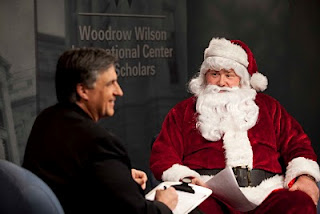
›By Geoff Dabelko // Wednesday, December 23, 2009The price of coal surged this morning as a new buyer entered the market. A high-volume rush order came in from the North Pole in the last few hours, accounting for the surge. Shaking his head, one dazed trader said the size of the order was equivalent to the yearly total of a medium-size country with no green energy sector.
MORE
When pressed to reveal the source of the demand, traders grudgingly admitted a white-bearded man clad in red had suddenly appeared, agitated and mumbling about those who simply couldn’t be good for goodness’ sake. He had come straight from the Bella Center and was scrolling through a long list of names on his Blackberry. “It just keeps getting longer and longer!” he cried. With a bottle of Carlsberg in hand, he made some final calculations and proclaimed he had a sudden need for coal ready for delivery in two day’s time.
Satisfied he’d have adequate supplies ready for pickup in every country from the North to the South, he made his way up to the roof of the trading house. Those close at hand overheard him say, “Good night to you all, but I won’t see you next year. I’ll have to come up with something else for these naughty types. They will probably just burn this stuff.”
“At least Mexico City will be warmer!”
Photo: Courtesy David Hawxhurst, Woodrow Wilson Center -
‘DotPop:’ Copenhagen’s Collapse: An Opportunity for Population?
›By Gib Clarke // Tuesday, December 22, 2009While the negotiators failed to reach a comprehensive agreement in Copenhagen, the population and reproductive health community might find a silver lining in the stormclouds that derailed COP-15.
Developing countries’ strong protests of their lack of culpability for the climate problem, on one hand, and the dramatic examples of their vulnerability on the other, have focused the world on the problems of poor people—and on potential solutions, including family planning.MORE
The Case of the Missing “P”
The New York Times’ Andrew Revkin complained that population was the “The Missing ‘P’ Word in Climate Talks,” but PAI’s Kathleen Mogelgaard argues in New Security Beat that “there is encouraging evidence that voices of those advocating for increased attention to the role of population and reproductive health and rights in climate change responses are being heard” in Copenhagen, including new funding from the Danish government for family planning.
At a breakfast last week, luminaries including Gro Harlem Brundtland and IPCC Chairman Rajendra K. Pachauri discussed UNFPA’s latest report, Facing a Changing World: Women, Population and Climate in Copenhagen.
According to lead author Robert Engelman, the report is “helping many more people to see population and climate in a more hopeful light, linked as they are through the right of women to equal standing with men and access to reproductive health care for all.”
Women, Population, and Climate
“Climate change is ultimately about people,” declared Congresswoman Carolyn Maloney at the recent Washington, DC, launch of the report. Though the issues are complex and multi-faceted, Engelman said that the report’s message is “stark and optimistic”: that “women in charge of their own lives” can have positive impacts on change climate mitigation and adaptation.
“Women are more sustainable consumers,” said UNFPA’s José Manuel Guzmán at the launch, noting that in many cases women make buying decisions for their families, so empowering them with information and tools is a wise approach to combating climate change.
Inequitable Impacts
Women – especially poor women – contribute fewer greenhouse gas emissions than men, yet are more vulnerable to the impacts of climate change. Unfortunately, this fundamental inequality is difficult to quantify, since most data sources are not disaggregated by gender. The report recommends improving data quality to better informing policy decisions.
Tim Wirth, president of the UN Foundation and the Better World Fund, noted that women face a “double whammy”: they are already less likely to go to school and to have access to paying livelihoods, and more likely to have HIV. Climate change will only increase the inequity.
People Power
PAI’s Karen Hardee called on the population community to focus their efforts on the next phase of negotiations – adaptation. A recent PAI report found that while 37 of 41 National Adaptation Plans of Action say that population pressures exacerbate the effects of climate change, only six include slowing population growth or addressing reproductive health and family planning as a key priority.
“The focus has been on where and what the impacts of climate change will be,” said Guzman, but the conversation needs to shift to who will be affected, and an analysis of their vulnerabilities and their capacities to adapt.
For real progress to occur, said Engelman, “climate needs to be seen through a more human lens.” -
Guest Contributor:
Eco-Tourism: Kenya’s Development Engine Under Threat
›By Justine Lindemann // Tuesday, December 22, 2009
Africa’s elephants and black rhinos—already at risk—are increasingly threatened as the price of black market ivory rises, global markets contract, and unemployment rates rise. To fight poaching of these tusked animals, Ian Craig, founder of the Lewa Conservancy in Kenya and the brains behind the Northern Rangelands Trust, takes a unique approach to conservation that involves both local community members and high-level government officials, as well as private and public sector investors.

In the 1970s the black rhino population was at about 20,000. Less than three decades later, it had fallen to 200. Today, the population is about 600, of which 79 live in the Lewa Conservancy. The vast regions of Kenya covered by the Northern Rangelands Trust and the Lewa Conservancy are difficult to govern, so the conservancies partner with local communities to ensure the security necessary to protect the animals from poachers. By investing in community institutions, the conservancies create long-term sustainability and self-sufficiency.
But why should local communities—often beset by poverty, disease, and hunger—care about saving elephants or rhinoceroses rather than killing them for their tusks or meat? Revenue from tourism can total hundreds of thousands of dollars, especially because of the high cost and exclusive nature of tourism facilities in the area. This money is then injected back into community programs to improve adult literacy, school nutrition, health care, micro-credit, water and irrigation systems, community livestock and agriculture, and forestry and aquaculture.
In some politically volatile areas, the conservancy serves not only as a platform for ecological security, but also as a mediator of disputes. Where livestock theft is rampant, multi-ethnic anti-poaching teams have been able to act as intermediaries. Community elders and other traditional leaders serving on the conservancies’ boards have bi-annual meetings to further intra- and inter-regional cooperation. Along with regular managerial and council meetings, the board meetings set standards for good practices, open dialogue for policymaking and cooperation, and act as a unique platform for communication between different ethnic and regional groups.
Community members understand they have a stake in protecting not only the animals, but in ensuring security and building trust within the country. With its unique combination of local-level engagement, the cooperation and support of the Kenyan Wildlife Service and the national government, and with the resources available to the conservancies as a group, the Lewa Wildlife Conservancy hopes to create a model of conservation that can be used across Africa and in other at-risk regions.
The future is shaky: ivory prices continue to rise, the migration of animals has facilitated poaching, and small arms are abundantly available. However, the new community-focused approach has helped to create positive attitudes that aren’t just about saving animals, but about developing the nation.
Justine Lindemann is program assistant with the Africa Program at the Woodrow Wilson International Center for Scholars.
Photo: Elephants in Lewa Conservancy area, courtesty Flickr user Mara 1 MORE -
Guest Contributor:
Science and Geopolitics in Copenhagen
›By Cleo Paskal // Friday, December 18, 2009
The Copenhagen COP-15 was not a stand-alone event. It was a product of years of ongoing work around the globe, from the trenches of climate research laboratories to the highest levels of government. As a result, apart from anything else, it gave valuable insight into the current state of two of the most dynamic and overarching issues of the coming decades: the science of environmental change (and in particular the potential impacts) and dynamics of shifting geopolitics.
In both cases, based on what was seen in Copenhagen, the situation is disconcerting.
In terms of the science, the COP-15 had a dangerously narrow focus. Carbon emission-related issues, the main topic of the COP, are just one component of anthropogenic greenhouse gas emissions (GHG). Other include, for example, livestock-related methane emissions and the release of exponentially potent industrial GHGs.
Due to feedback loops and other factors now in play, anthropogenic GHG emissions themselves are just one component of changing atmospheric GHG concentrations. Others include, for example, methane released from thawing permafrost and CO2 saturation in the oceans.
Meanwhile, GHG concentrations in the atmosphere are themselves just one potential component of major environmental change. Others include, for example, massive changes in consumption patterns, soil exhaustion, and groundwater depletion. Even without climate change, those factors alone are destabilizing.
While unquestionably important, from a scientific point of view, what was on the table at Copenhagen was severely limited. This was acknowledged by those involved, many of who talk in terms of a 2 degree C temperature rise as being a win.
The implications are staggering. Already, critical energy infrastructure, for instance, is feeling the effects of environmental changes. In some cases, such as French nuclear power stations, U.S. Gulf Coast infrastructure, and Indian hydroelectric installations, environmental change periodically severely affects production.
If an infrastructure that is as well-designed and funded as the energy sector is starting to feel the effects, it is hard to imagine the potential for disruption that the science now tells us is inevitable.
Meanwhile, geopolitically, the conference quickly took on the developed-versus-developing world framing that has increasingly paralyzed other global negotiations. As one Zambian delegate told me, “This is even worse than the WTO.”
While the Financial Times called Lumumba Di-Aping, the Sudanese head of the G-77 group of developing countries, “belligerent,” the largest circulation English language newspaper in the world, the Times of India, ran a headline reading: “India suspects foul play on draft declaration.”
In some cases the day-to-day management of the COP incited and inflamed the feeling of fragmentation. The location itself was criticized from the start: Copenhagen is lovely, but very expensive. Many stakeholders from the developing world could not afford to attend, assuming they could get visas.
Once they did arrive, the long registration lines in the cold took a toll on those just off long flights from the tropics, and some just gave up as coughs set in. It is worth noting that on several key days, members of negotiating parties had to wait in line with the NGOs, severely limiting their ability to contribute to the work going on inside.
Some of those who braved the lines, including an Indian journalist colleague, got inside and to the registration desk after hours only to find that their accreditation had been unilaterally cancelled.
The restrictions on NGOs hit the developing world particularly hard, as many of the government negotiating teams were actively supported by think tanks and others who were registered as NGOs.
In an atmosphere already rife with distrust, those sort of organizational issues were not helpful, to say the least, and they fed into conspiracy theories about a deliberate concerted effort by the developed world to bulldoze through secret drafts. It doesn’t matter if it is not true, what matters is that it is now widely believed – and on the front page of the Times of India.
The implications are troublesome. The government officials and negotiators involved will be sitting across the table from each other in a wide range of other treaties and agreements. The distrust resulting from COP15 will feed into existing geopolitical tensions and will be carried in the hearts and minds of those involved for years.
This is not good. When we combine the two trends – a failure to manage (or even acknowledge) the scientific importance of non-carbon environmental change factors and increasingly polarized geopolitics – it is easy to see some very unsettling times on the near horizon.
As we start to experience accelerating problems with everything from water scarcity (including in the United States and Europe) to infrastructure failure (including along the U.S. coasts), we are all going to need as many friends as we can get. If the Titanic is going down, it doesn’t help to compete over who can steal the most silverware.
The sort of behavior on show in Copenhagen may suit some narrow interests, but unless the full complexity of environmental change is addressed, those interests will lose out—as will we all.
Cleo Paskal is a fellow at Chatham House, a consultant to the Department of Energy’s Global Energy and Environment Strategic Ecosystem (GlobalEESE) and author of Global Warring: How Environmental, Economic, and Political Crises Will Redraw the World Map. MORE -
VIDEO—Alexander Carius, Adelphi Research: Finding Empirical Evidence for Environmental Peacebuilding
›By Dan Asin // Friday, December 18, 2009“One of the shortcomings of the entire debate on natural resources, climate security, and conflict is the question of empirical evidence,” Adelphi Research co-director Alexander Carius told ECSP’s Geoff Dabelko in a video interview.MORE
The German government, UNEP, and others are investigating transboundary natural resource cooperation initiatives, also known as “environmental peacebuilding” programs. But before fully committing to the idea, they want more information. “Empirical evidence cannot be created just by outlining the usual cases that we know where it has worked,” said Carius, who indexed successful environmental peacebuilding programs in ECSP Report 12.
In some cases, empirical evidence is already available—it’s just unapparent. Conflict analytical frameworks and environmental peacebuilding protocols exist, but they “reside in different programs,” said Carius, rendering the information inaccessible. Packaging this already available information into coherent messages and delivering it to relevant agencies is “the next step,” he said.
In addition, efforts to collect new data are already underway. UN post-conflict analysis teams are combining their academic expertise with on-the-ground experiences to find not only empirical evidence, but also “usable, practical tools” that can be used by agencies at home, said Carius.
Carius sees a bright future for environmental peacemaking: “The largest potential is with the bilateral donor agencies, because they do much more practical projects on the ground,” he said. New and reformulated evidence, Carius hopes, will give environmental peacebuilding the traction it needs to take hold in bilateral aid agencies like USAID. -
Guest Contributor:
Amid Blizzards, Protests, and Lock-downs, Population Gets Stunning Moments in the Sun in Copenhagen
›By Kathleen Mogelgaard // Thursday, December 17, 2009The second week of negotiations here in Copenhagen has been marked by dramatic events, as the deadline for a new global agreement to address climate change approaches.
Blocs of negotiators from developing countries have walked out, and returned. Thousands of NGO representatives who have been denied access to the proceedings are shivering in the cold. Observers inside the Bella Center have staged sit-ins. And yet slivers of hope remain for some form of a global deal that is fair, ambitious, and binding as negotiators prepare for the arrival of more than 100 heads of state on Friday.
Amid this chaos, there is encouraging evidence that voices of those advocating for increased attention to the role of population and reproductive health and rights in climate change responses are being heard.
This afternoon, in a side event organized by Iceland on “Women as Agents of Change,” Danish Minister for Development Cooperation Ulla Tørnæs announced new funding for the United Nations Population Fund in the amount of $5.9 million, stating:
“The combination of climate change and high population growth adds to the pressure on resources in many developing countries. Population growth puts tremendous pressure on a sustainable management of natural resources, which indicates an indirect link between climate change and women’s sexual and reproductive health and rights…More than 200 million women in developing countries want to avoid pregnancy, but do not have access to modern contraception. It is crucial that we accelerate our efforts to meet these unmet needs.”
At a closed-door meeting yesterday, more than 50 members of parliament (MPs) from developed and developing countries discussed the role of voluntary family planning programs in reducing vulnerability to the impacts of climate change. Hosted by the Population and Climate Change Alliance, a collective including Population Action International (PAI) and other NGOs working together to promote sexual and reproductive health and rights as critical components of climate change responses, the event encouraged informal, frank discussions among MPs about the opportunities to bring population into the Copenhagen conference.
Earlier in the week, the issue of reproductive health got a worthy boost during a high-level panel marking the close of “Development and Climate Days,” a parallel conference outside the negotiating venue. President Nasheed of Maldives, Tanzania’s Minister for Environment Batilda Burian, and Kenya’s Minister for Water and Irrigation Charity Kaluki Ngilu, and other panelists identified what the most vulnerable countries need out of Copenhagen to help them adapt to climate change. Minister Ngilu unequivocally stated that reproductive health should be central to development and climate change efforts in these countries. In Kenya, where the population has grown rapidly, she asserted that reproductive health should be a key strategy to help cope with development challenges, including climate change, by ensuring that “women are empowered and have control of their health needs, including desired family sizes.”
Nobel Laureate and chairman of the IPCC Rajendra Kumar Pachauri also recognized the importance of reproductive health. At a United Nations Foundation event on UNFPA’s State of the World report, “Facing a changing world: women, population and climate,” Pachauri and Mary Robinson, former President of Ireland, noted that issues of gender and population are back on the global agenda. Robinson pointed out that the report’s focus on women’s lives will be an important stepping stone in 2010.
Pachauri remarked that issues of population and consumption are “critical to actions related to global greenhouse gas emissions and mitigation” and that the intersection of these issues affects both industrialized and developing countries. Unfair distribution and aggregate levels of consumption leave the world’s poor vulnerable, he said, and resources for health care, education, and social services should be mobilized to address inequities and fertility.
Looking forward, Pachauri called on countries to examine issues of population and consumption, provided that industrialized leaders demonstrate the necessary global leadership at COP-15 and other forums.
While the outcome from these two weeks of negotiations remains foggy, it has become eminently clear that issues of population, reproductive health, family planning, and gender equity have gained a strong foothold in discussions on the global response to climate change. Despite the hours we have spent shivering in the cold, our voices are resonating in the halls of the Bella Center, and will continue to call for comprehensive solutions in Copenhagen and beyond.
Kathleen Mogelgaard is senior program manager for population and climate change at Population Action International (PAI). Read more about PAI’s work around Copenhagen. MORE -
Dot-Mom:
Integrating HIV/AIDS and Maternal Health Services
›By Calyn Ostrowski // Thursday, December 17, 2009 Integrating maternal health and HIV/AIDS services “includes organizing and providing services that meet several needs simultaneously…focusing not only on the condition, but also the individual,” argued Dr. Claudes Kamenga, Senior Director of Technical Support and Research Utilization at Family Health International, during the first event of the Advancing Policy Dialogue on Maternal Health series co-convened by the Wilson Center’s Global Health Initiative, Maternal Health Task Force (MHTF), United Nations Population Fund (UNFPA), and technical support from U.S. Agency for International Development (USAID). Joined by Michele Moloney-Kitts, assistant coordinator at the Office of the U.S. Global AIDS Coordinator, and Harriet Birungi, a program associate with the Population Council in Kenya, the panelists discussed how integration of HIV/AIDS and maternal health services not only improves health outcomes, but also increases program efficiencies, strengthens health systems, and saves money.
MORE
Integrating Access to Contraception: Best Kept Secret in HIV Prevention
“We need to integrate [services] because clients seeking HIV services and those seeking reproductive health services share common needs,” argued Kamenga, especially those women who have HIV/AIDS and become pregnant. The United Nations’ prevention of mother-to-child transmission (PMTCT) programs are currently serving as a framework for integrating maternal and HIV services in many developing countries. However, Kamenga noted that the second approach within this model–preventing unintended pregnancy among HIV-positive women–has the greatest potential for success.
“Contraception is a cost-effective intervention…and the best kept secret in HIV prevention,” maintained Kamenga. Demographic health surveys demonstrate that HIV-positive women want immediate access to family planning services to prevent unintended pregnancies, which also decreases transmission and the risk of maternal mortality.
The international donor community, including the Global Fund and President’s Emergency Plan for AIDs Relief (PEPFAR), is increasingly recognizing the need to integrate maternal health and HIV services. However, additional research and evidence is needed to further support integration. “What gets measured gets done,” maintained Kamenga, noting that this is a major challenge as donors support initiatives that demonstrate successful outcomes.
Comprehensive Plan: Integrating Gender and Linking Services
“Women who are HIV-infected have maternal mortality rates that are five times higher than non-infected women…we have to come together around a cohesive approach,” maintained Michele Moloney-Kitts, assistant coordinator at the Office of the U.S. Global AIDS Coordinator. “You can’t talk about integrating reproductive and sexual health without considering a broader and more robust gender element,” argued Moloney-Kitts. In order to reach men who do not regularly visit primary health care facilities, PEPFAR is experimenting with integrating HIV and reproductive health services through local post offices.
Maternal and child health services provide an entry point for integrating other HIV services, shared Moloney-Kitts. Co-locating and linking initiatives should be strengthened to widen the platform of comprehensive services for women and their families. “Many women have expressed a need for contraception and family planning services,” and through streamlined funding efforts with AIDS, Population and Health Integrated Assistance (APHIA), PEPFAR found that “when you offer family planning services on site with HIV services you have a huge uptake in family planning use,” shared Moloney-Kitts.
“We’ve made a lot of headway and we are making steps to better and more integrated programs,” stated Moloney-Kitts. Looking towards the Millennium Development Goals, she also discussed PEPFAR’s commitment to integrate HIV/AIDS with other female-specific global health issues–such as cervical cancer–that will maximize impact on health systems and increase overall data availability which can then be utilized to improve service delivery and future policy decisions.
Integrating Reproductive Health Services for HIV-Positive Adolescents
Young people born with HIV/AIDS are maturing into adults, and the available “maternal and HIV health services are not adolescent-friendly… this situation becomes even more complex for adolescents living with HIV,” stated Harriet Birungi, program associate with the Population Council in Kenya. Current policies and programs fail to include HIV-positive adolescents because of the stigma associated with the disease and the failure to acknowledge the rights of intimacy among this cohort. However, leaving this cohort out of reproductive health programs has serious health consequences, including high unintended pregnancy and maternal mortality rates, and increased rates of infants born with HIV.
“We cannot talk about integration if service providers are not respecting the rights of young people,” maintained Birungi. In order to address this challenge, Birungi described several tools that help counselors work with HIV-positive adolescents including the ‘fertility and sexuality desire assessment survey’ and ‘counselor’s guidelines’ that screen young people for their reproductive health and HIV needs.
Integrating sensitization tools for service providers, coupled with increased linkages between HIV/AIDS centers and maternal health clinics, helps bridge pediatric and adult care for adolescents and prevent further transmission of the disease. “There is a lot of opportunity for integration for this particular group…many of the HIV-positive adolescents are already receiving anti-retroviral therapy (ART) and visit [HIV] clinics regularly,” which provides a unique opportunity to strengthen these linkages and integrate services. -
Guest Contributor:
Climate Combat? Security Impacts of Climate Change Discussed in Copenhagen
›By Oli Brown // Thursday, December 17, 2009
Leaders from the African Union,the European Union, NATO, and the United Nations have agreed unanimously that climate change threatens international peace and security, and urged that the time for action is now. MORE
In Copenhagen Tuesday, Anders Fogh Rasmussen, the secretary-general of NATO; Jean Ping, the chairperson of the Commission of the African Union; and Helen Clark, the administrator of the UN Development Programme, were joined by Carl Bildt and Per Stig Møller, foreign ministers of Sweden and Denmark respectively, to take part in a remarkable public panel discussion organized by the Danish Ministry of Foreign Affairs.
The leaders agreed climate change could hold serious implications for international security, both as a “threat multiplier” of existing problems and as the cause of conflict, under certain conditions.
Møller suggested there is evidence that higher temperatures in Africa could be directly linked to increases in conflict. Ping emphasized that African emissions make up only 3.8 per cent of the climate problem, though Africa will likely suffer some of its most serious impacts. Fogh Rasmussen warned of the dangers of territorial disputes over the Arctic as the sea ice recedes. “We need to stop the worst from happening,” said Clark.
While there was broad agreement on the seriousness of the challenge, the participants differed on what should be done. Responding to a question from the audience, Bildt argued that Europe should not necessarily throw open its doors to climate migrants, but that the bloc needed to help countries deal with climate change so people can stay at home. Clark argued that enlightened migration policy could meet two sets of needs: reversing declining populations in the North while providing a destination for unemployed workers from the South.
Fogh Rasmussen said militaries can do much to reduce their use of fossil fuels. He noted that 170 casualties in Afghanistan in 2009 have been associated with the delivery of fuel. There is no contradiction, he argued, between military efficiency and energy efficiency.
However, the real significance of the climate-security event lay not in what these leaders said, but that they were there to say it at all. Not many issues can gather the heads of the AU, NATO, and the UNDP on the same platform, alongside the foreign ministers of Sweden and Denmark. This event proved that climate change has become a core concern of international policymakers.
The only way to tackle global problems, as Ping argued, is to find global solutions. And a clear understanding of the potentially devastating security implications of climate change might be one way to bring about those global solutions.
“We are all in the same ship, and if that ship sinks, we will all drown,” said Ping.
Oli Brown is senior researcher and program manager at the International Institute for Sustainable Development (IISD). Read more of IISD’s postings on its blog.
Photo: Courtesy United Nations Photo. -
Eye On:
Google’s Fight Against Climate Change
›By Dan Asin // Wednesday, December 16, 2009After erroneous reports last January that “two Google searches generate the same carbon dioxide as boiling a kettle for a cup of tea,” Google is making environmental news for the right reasons, with the launch of its Google Earth-integrated climate change “tours.”
Narrated by the “Governator” himself, the most recent tour combines stunning graphics, images, and data to illustrate how climate change will impact California over the next century and outlines current and future mitigation and adaptation efforts.MORE
Other Google Earth tours delve into how climate change projections work; climate and health connections in Africa; and projects to reduce deforestation in Borneo, the Amazon, and Madagascar.
In addition, Google has partnered with CNN to create a COP15 YouTube Channel where users can explore behind-the-scenes videos from the Copenhagen summit and watch highlights from a December 15 debate featuring world leaders, climate activists, and user-generated questions.
For up to the minute information on Google’s environmental work and initiatives, check out the following sites:- Google’s Official Blog: Sorted by the “green” tag for all news on Google tools, events, and technology related to the environment
- Google Earth Outreach Showcase: Home to Google Earth tools and tours created by third-party organizations working on climate, the environment, disease, and other issues
- The Unofficial Google Earth Blog: A source for all things Google Earth, with a dedicated section to the environment.
-
Guest Contributor:
The Ambivalent Security Agenda in Copenhagen
›By Saleem Ali // Tuesday, December 15, 2009To communicate a sense of urgency, the security paradigm is being used to push for self-sufficiency in energy, and hence “national security,” at COP-15. Such a connection, if configured with carbon-free energy sources, could provide a win-win outcome for many.
This argument has been embraced both by the left and the right of the political spectrum in the United States. But compelling as it may be politically, there is a discomforting insularity and isolationism embedded in this approach, as emphasized by the delegations from some countries that export fuels (e.g., OPEC members, emergent oil and gas economies, and uranium exporters such as Namibia and Niger).
The Canadian delegation, which was targeted by activists with a “fossil of the day” award, used the security argument to show how it could send relatively “conflict-free” fuels to the United States by developing its oil, uranium, and bituminous tar sands.
Australia played a similar security card behind the scenes. The former Environment Minister Robert Hill also served as defense minister and is now head of Australia’s Carbon Trust–connections which he suggested were very valuable in an onsite interview with journalist Giles Parkinson.
Nuclear energy was prominently discussed as a solution by numerous delegations. At a side event organized by the Danish Federation of Industries, Energy Secretary and Nobel physicist Steven Chu indicated that his biggest concern about nuclear energy was not the waste problem but rather, the potential dangers to national security from the proliferation of radioactive materials.
The other security connection that environmentalists like to make–but is empirically more tenuous–concerns the increased pressures on existing strife in resource-scarce communities potentially inflicted by climate change. I attended a presentation by an OECD research team that empirically considered the impact of climate change on the security of the vulnerable states of the African Sahel. While generally rejecting the direct linkage between climate change and the threat of violent conflict, the OECD study, launched with UK Rear Admiral Neil Morisetti, identified three hotspots where existing resource scarcity and population pressure could be exacerbated by climate change, especially agropastoralist communities, who are highly sensitive to any climatic fluctuations.
So far, the rather meandering encounter with the security agenda I’ve witnessed here in Copenhagen could greatly benefit from further integrative work such as that offered by the Wilson Center.
Saleem H. Ali is associate professor of environmental planning at the University of Vermont and the author most recently of Treasures of the Earth: Need, Greed and a Sustainable Future. MORE -
Development Seeking its Place Among the Three “Ds”
›By Dan Asin // Tuesday, December 15, 2009“By one count, there are now over 140 goals and priorities for U.S. foreign assistance,” Senator John Kerry said during the nomination hearing for USAID Administrator-designate Rajiv Shah. If Shah is confirmed, his principal tasks will be moving development out from the shadow of defense and diplomacy and bringing definition to USAID’s mission.
“USAID needs to have a strong capacity to develop and place and deploy our civilian expertise in national security areas,” Shah said at his nomination hearing. USAID “has a responsibility to step up and offer very clear, visible, and understood strategic leadership,” as well as clarify “the goals and objectives of resources that are more oriented around stability goals than long-term development goals.”MORE
A difficult task—and whether Shah wants it or not, he’ll get plenty of help from State, the Obama Administration, and Congress.
State Department Reviews Diplomacy and Development
The State Department’s Quadrennial Diplomacy and Development Review (QDDR)—launched in July by Shah’s impending boss, Secretary of State Hilary Clinton—will certainly inform his USAID vision. Modeled after the Defense Department’s Quadrennial Defense Review (QDR), the QDDR is designed to enhance coordination between USAID and State.
Anne-Marie Slaughter, director of policy planning at the State Department and co-leader of the review process, laid out the QDDR’s specific goals at a recent event hosted by the Center for American Progress:- Greater capacity for, and emphasis on, developing bilateral relationships with emerging nations, working within multilateral institutions, and working with non-state actors
- Capability to lead “whole-of-government” solutions to international challenges
- More effective coordination between top-down (diplomatic) and bottom-up (development) strategies for strengthening societies
- Greater capacity to launch on-the-ground civilian responses to prevent and respond to crises
- Flexible human resource policies regarding the hiring and deployment of contractors, foreign service officers, and development professionals
Obama Administration, Congress Also Join In
Details on the Presidential Study Directive (PSD) on Global Development Policy—outside its broad mandate for a government-wide review of U.S. development policy—are similarly sparse. The directive’s fuzzy parameters leave open the potential for its intrusion into the QDDR’s stated objectives.
But from what little is available, both the QDDR and PSD appear to be part of complementary efforts by the Obama administration to elevate development’s role in U.S. foreign policy, using whole-of-government approaches.
Lest Congress be left out, each chamber is working on its own development legislation. Senators John Kerry and Richard Lugar’s Foreign Assistance Revitalization and Accountability Act of 2009 (S. 1524) seeks “to strengthen the capacity, transparency, and accountability of United States foreign assistance programs to effectively adapt and respond to new challenges.” The act would reinforce USAID by naming a new Assistant Administrator for Policy and Strategic Planning, granting it greater oversight over global U.S. government assistance efforts, and strengthening its control over hiring and other human resource systems.
Congressmen Howard Berman and Mark Kirk’s Initiating Foreign Assistance Reform Act of 2009 (H.R.2139) would require the president to create and implement a comprehensive global development strategy and bring greater monitoring and transparency to U.S. foreign assistance programs.
Successful legislation in the Senate and House could pave the way for the reformulation of the Foreign Assistance Act of 1961, whose message has been rendered complicated and sometimes contradictory by decades of amendments.
And all these ambitious efforts are complicated by the involvement of 25 independent government agencies in U.S. foreign assistance—a formidable challenge to any administrator.
Photo: Courtesy of the USDA. -
Eye On:
NATO Says Don’t Fight the Planet
›By Geoff Dabelko // Tuesday, December 15, 2009Climate and security are under discussion today in Copenhagen at the Danish government’s side event, which brings together heavyweights such as NATO Secretary-General Anders Fogh Rasmussen, Swedish Foreign Minister Carl Bildt, African Union Chair Jean Ping, and Danish Foreign Minister Peter Stig Møller.MORE
Fogh Rasmussen, the former prime minister of Denmark, delivered his remarks the new-fashioned way: today’s Huffington Post. He says NATO is ready to “do its part” by lowering its own carbon bootprint and responding to the increasing humanitarian challenges of a warmer world. He suggests the threat of climate change does not allow powerful institutions like NATO the luxury of sitting on the sidelines.
The post even includes this embedded “Climate Change and NATO” video with an unfortunate screen grab that reads “Fighting the Planet.” Not exactly a reassuring message for those who argue that framing climate change as a security issue will militarize the environment rather than green security (to paraphrase an excellent 1994 edited volume by Finn Jyrki Kakonen).
The video’s actual message is that some security threats can be fought and others shouldn’t be. Climate change will present a security threat, but “Fight the planet and we all lose,” says NATO. Even when the video makes all the right points, those pesky screen grabs can undermine your case! -
Dot-Mom:
Tackling the Biggest Maternal Killer: How the Prevention of Postpartum Hemorrhage Initiative Strengthened Efforts Around the World
›By Calyn Ostrowski // Tuesday, December 15, 2009On Friday, November 20th, 120 representatives from the maternal health community, the U.S. and around the world, gathered for an all day meeting at the Woodrow Wilson International Center for Scholars to discuss the report, Tackling the Biggest Maternal Killer: How the Prevention of Postpartum Hemorrhage Initiative Strengthened Efforts Around the World. This report describes the challenges and successes of the U.S. Agency for International Development (USAID) funded Prevention of Postpartum Hemorrhage Initiative (POPPHI).
The five-year POPPHI project was executed through the support of many partners whose main goal was to catalyze the expansion of active management of the third stage of labor (AMTSL) worldwide. The conference convened experts and advocates in the field of maternal health, to share best practices, new innovations, and future challenges for tackling maternal health’s leading killer: postpartum hemorrhage (PPH). Panelists included POPPHI field partners such as International Federation of Gynecology and Obstetrics, The International Confederation of Midwives, the World Health Organization, and international researchers.
Preventing Postpartum Hemorrhage: AMTSL
“We need to work on women postpartum–after birth we leave them,” argued Deborah Armbruster, POPPHI Project Director. Due to the fact that many women in the developing world give birth at home or in local clinics that lack the sufficient resources to prevent postpartum hemorrhaging, approximately 132,000 women die annually. Fortunately, effective and feasible interventions such as those established by POPPHI have been proven to save lives.
Active management of the third stage of labor (AMTSL) includes three factors that, when used together, can avert postpartum hemorrhage, including:1. Administration of uterotonic drugs (including oxytocin – the most preferred drug)
POPPHI’s “BOLD” Approach
2. Controlled cord contraction
3. Uterine massage after the delivery of the placenta
In collaboration with its partners, POPPHI implemented country-level and global programs to scale up AMTSL. Driven by the “BOLD” approach, Armbruster described how the initiative provided overall frameworks and approaches for strengthening PPH interventions by Building on evidence, Obtaining consensus, Linking partners, and Demonstrating to policymakers AMTSL’s feasibility.
Additionally, POPPHI provided learning materials such as toolkits, fact sheets, posters, and guides that were used to train providers and increase their use of AMTSL. A pilot project on Uniject (a single use needle pre-prepared with oxytocin) was also executed in Mali. Uniject was shown to be acceptable and successful with birth attendants there, and the study is now being replicated in Honduras.
Voices from the Field
Representatives from Argentina, Bangladesh, Ghana, Guatemala, Peru, and Mali presented their country results with the POPPHI project–concluding that the initiative served as a catalyst for upscaling AMTSL. Dr. Abu Jamil Faisel, Project Director and Country Representative of EngenderHealth in Bangladesh, discussed how the project helped to break through misperceptions that often prevented women from wanting to use misoprostol. In Ghana, policymakers worked with program managers and drug suppliers to register misoprostol in the country’s essential medicine list and updated guidelines to reflect best practices. While each country’s experiences were unique, the importance of partnerships was common to successfully upscaling AMTSL in all locations.
Partnerships: Critical to Success
Integrating maternal health indicators directly into program design is imperative to upscaling AMTSL, argued Niamh Darcy, Director of POPPHI Monitor and Evaluation. Additionally, Darcy argued that the success of POPPHI is due to the project’s emphasis in working with all levels of partners, particularly facility providers. Working with the supportive supervisors at facilities is necessary according to Darcy because this group is ultimately responsible for executing active management and recording project outcomes.
Identifying African experts who have taken leadership and ownership of the project has been instrumental in POPPHI successfully disseminating results at the regional, national and international levels argued Doyin Oluwole, Director, Africa’s Health in 2010. Partnering with local champions as well as policymakers has enabled many of the country projects to build capacity and upscale AMTSL.
Building on Lessons Learned
“A key lesson we have learned is that, when there is political commitment, AMTSL is rapidly scalable,” stated Lily Kak, Senior Maternal and Newborn Health Advisor, USAID. Changing behaviors and practices takes significant amount of resources and time commitment, however, POPPHI demonstrates that partnerships and research can be used to upscale AMTSL and change policies more efficiently.
Photo: Women wait outside a maternity ward in Chad. Courtesy of Flickr user mknobil. MORE -
On the Beat:
Climate Reporting Awards Live From COP; Revkin To Quit NYT
›By Meaghan Parker // Monday, December 14, 2009It’s a good news/bad news day for climate-media watchers. The Earth Journalism Awards honor some of the best climate coverage from around the world, while arguably the world’s most respected climate reporter announces he’s leaving journalism.
Earth Journalism Awards
Tune in now to watch the Internews Earth Journalism Awards webcast live from Copenhagen. The spectacularly impressive winning entries span the globe from Kenya, Brazil, Pakistan, and Papua New Guinea.
Two top-notch stories illustrate how nuanced, in-depth reporting can compellingly and accurately portray climate-security links: Lisa Friedman’s 5-part series on Bangladesh for ClimateWire untangles the knotty problem of climate-induced migration, while William Wheeler writes in GOOD Magazine about the increasingly difficult role of Indus Water Treaty in mitigating conflict between India and Pakistan.
The 15 winners are blogging from the summit, as well 40 reporters from 26 developing nations, as part of the Climate Change Media Partnership.
Revkin Frustrated With Journalism; Will Leave NYT
On the bad news side, Yale Forum on Climate Change and Media announced this morning that Andrew Revkin, the NYT’s climate reporter, will leave the paper on December 21. He cites “frustration with journalism,” but will continue writing his popular DotEarth blog.
Maybe Revkin’s frustration is with the disintegration of environmental coverage in the mainstream media? The Internews winners demonstrate the high quality of climate coverage at niche publications like ClimateWire or funded by non-profits like the Pulitzer Center on Crisis Reporting.
Let’s hope Revkin finds a more comfortable home and continues his pioneering work on DotEarth, specifically his efforts to cover population, poverty, consumption, and development connections to climate. MORE
Subscribe to: Posts (Atom)